Christmas Day in Zimbabwe is 25 December. It is a public holiday.
How to say it
Shona
Muve nekisimusi
Muve nekisimusi
Kisimusi is a borrowed word, and the borrowing is recent enough to be datable: an 1897 London Missionary Society dictionary of the Tebele and Shuna languages, the Ndebele and Shona of its day, carries no headword for Christmas in either. The written form has not settled since. One source prints the greeting with a small k and another with a capital.
Useful Shona phrases — Omniglot; Shona phrases contributed by Emma Thembani and Ernest Mdende
A synthesised voice — not a recording of a person — saying Merry Christmas
in en-GB.
English is one of the sixteen languages the constitution recognises, and it is the language Zimbabwe's own newsrooms use to wish their readers a merry Christmas.
The city that fills up at Christmas is filled from another country
Bulawayo's December is shaped by the return of the injiva, Zimbabweans working in South Africa who come home for Christmas. Buses, minibus taxis and private cars come north, the city fills with South African number plates, and the trailers behind them carry groceries rather than presents: cooking oil, soap, the things a household runs on. The pattern is old enough to have a lineage. It repeats, in a different economy, the one annual homecoming of Matabeleland men who worked South African mines and farms.
The A6 from the Beitbridge border post to Bulawayo carries the festive traffic and, alongside it, coffin-shaped trailers: Zimbabweans who died in South Africa being brought back for burial. Burial at home is understood as returning the dead to the lineage so that the spirit can be settled, and families borrow, pool and collect to make it possible. The anthropologist who followed both journeys reads them as one movement: the able-bodied coming home for Christmas and the dead coming home at the same time, on the same road.
A rural Christmas morning began with work. Children swept the yard and fed the animals, went down to the river to wash, and were at the service by nine. The service was held in whatever room there was: in one village, the Grade 2 classroom of the primary school. An hour of singing and a sermon on the birth of Jesus, and then they ran home.
In a village where children went barefoot, shoes were what Sunday and Christmas meant, and they did not have to fit. Relatives arriving from the city a few days before were recognisable by their clothes and their shoes before anything they carried was unpacked.
The last thing on Christmas night is a prayer for rain
Zimbabwe's Christmas falls in the wet season, and the rains are the year's biggest variable for a farming household. After the meal came hymns, sung loudly, and then prayers: for good rains, for anyone who was ill, and for the family members who had not come.
Bulawayo raises a Christmas fund, and the mayor asks in person
The city of Bulawayo runs a Mayor's Christmas Cheer Fund, raised each December for the poorest households and handed out as cash and in kind. In 2022 the target was set at US$100,000 at a public launch where councillors, a wholesaler, a brewery and a granite company all put in. The following year a new mayor admitted the appeal had gone out late and asked anyway, with days to go.
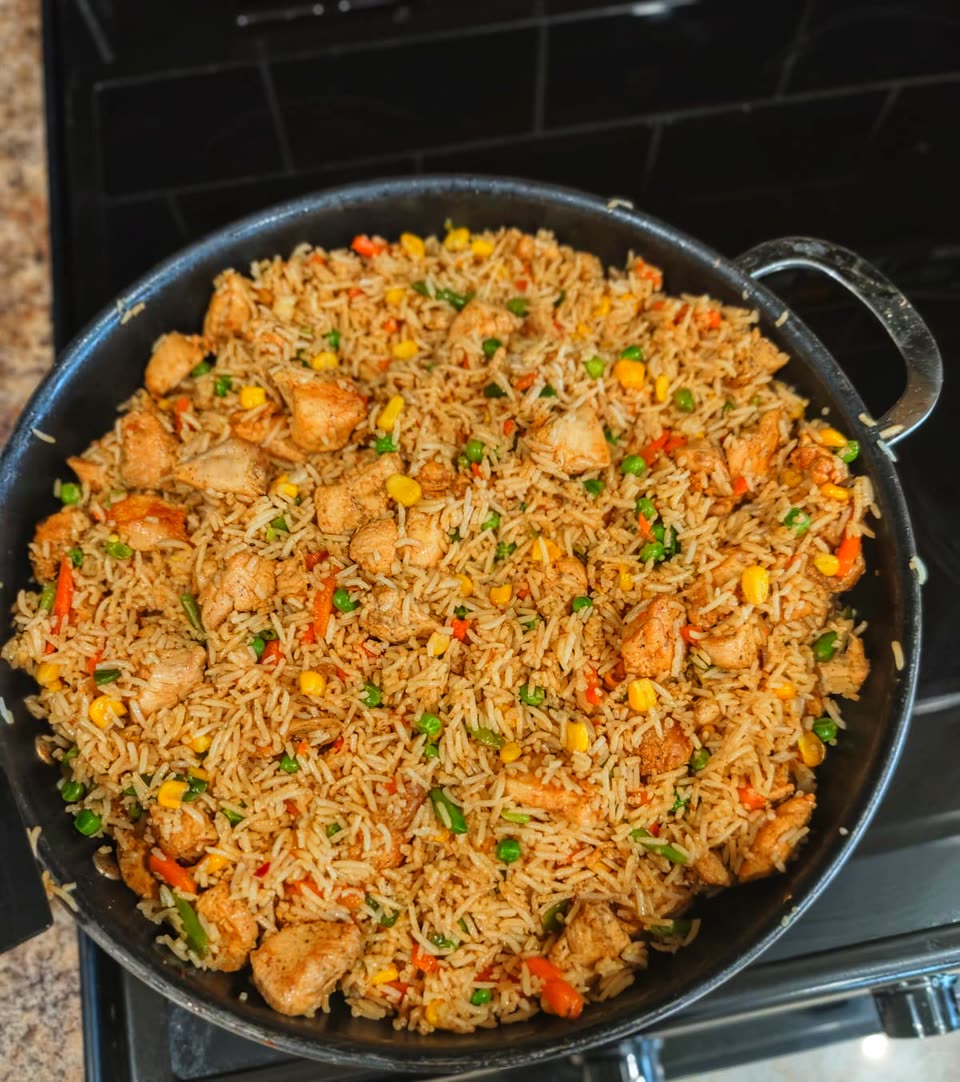
The festive plate is rice, which is not what Zimbabwe eats on an ordinary day, with chicken or a goat stew. It is the one meal of the year with seconds in it.
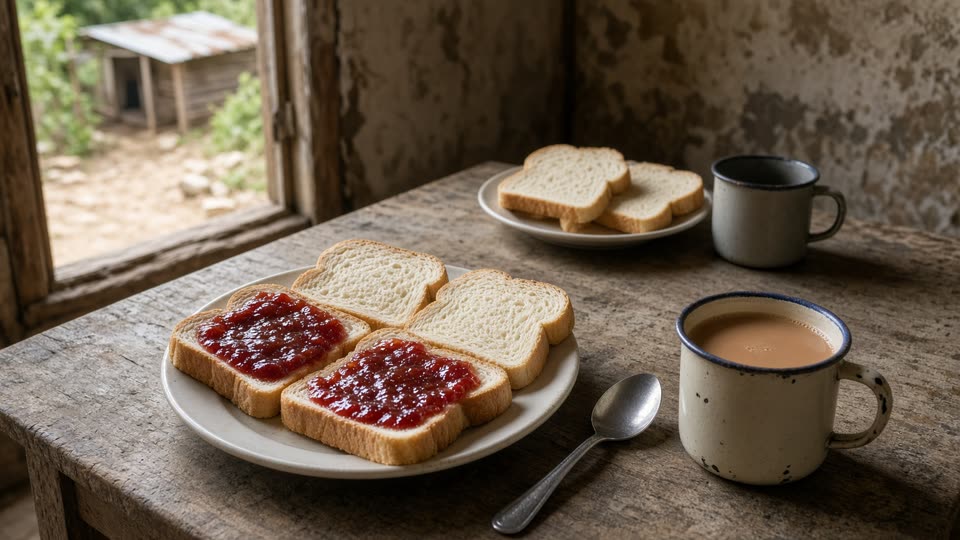
Before the dinner came a late breakfast built entirely out of things that were not ordinary: white bread instead of maize porridge, a bright red canned plum jam spread thickly, and Zimbabwean black tea taken with condensed milk instead of plain.
Widely repeated claims about Christmas in Zimbabwe that do not survive
checking. Each one says what is actually the case, because a correction
with nothing in its place leaves you worse off than before.
Unsupported
Santa Claus brings Zimbabwean children their presents early on Christmas Day.
What is actually the case. The claim comes from a compilation that lists a gift bringer for every country, and the only first-person account of a Zimbabwean childhood Christmas says the opposite in as many words: no new toys and no new clothes, and none expected. What made the day was the food. Presents are plainly part of an urban Zimbabwean Christmas, and nothing establishes a figure who brings them.
Zimbabwe is 85 per cent Christian, so Christmas is kept in almost every household.
What is actually the case. The census figure is right and the inference does not follow from it. Two in five Zimbabweans belong to the Apostolic churches, which the census counts separately from Catholics, Protestants and Pentecostals and which are larger than all three together. How December is kept across those six million people is not something the English-language accounts of Zimbabwean Christmas raise at all.
Unity Day, three days before Christmas, is Zimbabwe's day of national reconciliation.
What is actually the case. It is the day the state set aside to mark the Unity Accord of 22 December 1987, and one of the two parties that signed it now says there is no unity to warrant a holiday. ZAPU withdrew from the Accord in 2009. A Matabeleland pressure group marks the date with a march rather than a celebration. And a Bulawayo newspaper offers a quieter explanation for the holiday fading: it sits inside the festive season, next to a day people would rather keep.
Zimbabwean law contains one sentence whose only purpose is to stop the country losing a day of Christmas. The ordinary rule moves a public holiday falling on a Sunday to the Monday. But a second rule says that when 26 December falls on a Monday it moves to the Tuesday instead, because Christmas Day is then the Sunday, the Monday is already a holiday under the first rule, and without the second the two December holidays would collapse into one. No other day in the Act gets a proviso of its own.
Zimbabwe is 85.3 per cent Christian by its own census, and the largest single grouping inside that figure is not Catholic, Protestant or Pentecostal. It is the Apostolic churches, at 40.3 per cent of the whole population - 6,112,503 people, more than the Catholics, Protestants and Pentecostals counted together.
Zimbabwe's constitution recognises sixteen languages, and sign language is one of the sixteen - listed between Shona and Sotho, in the same sentence, with no distinction drawn. There is no single Zimbabwean way to say merry Christmas, and the one the country's own newspapers print is the English one.
Every claim carries its own citation. They are collected below, so you
can see what the page rests on and how much of it comes from where.
Byo mayor launches Christmas Cheer Fund — CITE, Bulawayo, 2 December 2022. Retrieved 2026-11-13.Mayor Solomon Mguni at the 2022 launch: «Our target for the year 2022 has been set at US$100 000, ladies and gentlemen, we cannot achieve this without your support and participation.»And what he asked of households rather than companies: «I also urge each one of us in various communities to share what we have with our friends and neighbours during the Christmas period.»
ZAPU: Deeper division, not unity, marks national holiday — CITE, Bulawayo, 22 December 2023. Retrieved 2026-11-13.ZAPU, four years later, on the holiday commemorating its own accord: «ZAPU says Zimbabweans are more divided than ever before as there is no unity whatsoever, to warrant a whole public holiday, under the guise of commemorating the pivotal signing of the Unity Accord between PF ZAPU and ZANU on 22 December 1987.»
Merry Christmas to our valued audiences — CITE, Bulawayo, 25 December 2025. Retrieved 2026-11-13.A Bulawayo newsroom's own Christmas Day greeting to its readers: «Merry Christmas! Thank you for trusting us as your source of credible, independent journalism throughout the year. May this season bring you peace, hope, and joy.»
A Village Christmas Story: No Gifts But Lots Of Joy — Edward Mabaya, agricultural economist, Cornell University; NPR Goats and Soda, 23 December 2016. Retrieved 2026-11-13.Edward Mabaya, who grew up the sixth of ten children in a Zimbabwean village, on the order of the morning: «my siblings and I woke up early to do our morning chores: sweeping the yard and feeding the animals. Then we’d go down to the river for a bath.»And where the service was: «By 9 a.m. we were ready to go to the Grade 2 classroom at the primary school where church services were held»
'We do not recognise Unity Day' — Mandla Tshuma, CITE, Bulawayo, 17 December 2019. Retrieved 2026-11-13.What the day is, and what has happened to it: «The National Unity Day, commemorated on December 22 to mark the signing of a unity accord between ZANU-PF and PF-ZAPU in 1987»The paper's own reading of why: «The other contributing factor the day losing lustre could be the fact that it falls within the festive season when the majority of people would be looking forward to celebrating the Christmas holiday instead.»Mbuso Fuzwayo of Ibhetshu Likazulu, a Matabeleland pressure group, on what they mark instead: «“To us it is not Unity Day, but a day that marks the end of the spilling of the blood of innocent Zimbabweans from Matabeleland,” he told CITE.»And the political analyst Khanyile Mlotshwa: «The day needs a new narrative, new content to make it relevant and useful,»
Useful Shona phrases — Omniglot; Shona phrases contributed by Emma Thembani and Ernest Mdende. Retrieved 2026-11-13.The phrase the page gives in its Christmas greetings row is «Muve nekisimusi», with «Goredzva zvakanaka» for the New Year and the Easter row left blank.Who supplied it is printed at the foot of the page: «Shona phrases provided by Emma Thembani and Ernest Mdende»
Public Holidays and Prohibition of Business Act [Chapter 10:21] — Parliament of Zimbabwe, revised and consolidated by the Law Development Commission of Zimbabwe; via the Zimbabwe Legal Information Institute. Retrieved 2026-11-13.The Schedule makes a public holiday of «Christmas Day and the day following.»Three days earlier the Schedule carries «National Unity Day, being the 22nd December.»
Constitution of Zimbabwe Amendment (No. 20) Act 2013, section 6 — Republic of Zimbabwe, via the Comparative Constitutions Project. Retrieved 2026-11-13.Section 6, in full: «The following languages, namely Chewa, Chibarwe, English, Kalanga, Koisan, Nambya, Ndau, Ndebele, Shangani, Shona, sign language, Sotho, Tonga, Tswana, Venda and Xhosa, are the officially recognised languages of Zimbabwe.»
The price of going home: Christmas boxes and the final return from South Africa to Zimbabwe — Saana Hansen, Postdoctoral Researcher in Social and Cultural Anthropology, University of Helsinki; The Conversation, 15 December 2025. Retrieved 2026-11-13.What arrives: «Each December, long-distance buses, minibus taxis and private cars stream northwards from South Africa as Bulawayo, Zimbabwe’s second biggest city, prepares for its annual ritual: the seasonal homecoming of “injiva” – migrants returning for Christmas.»And what is in the trailers: «Trailers are loaded with remittances known as “Christmas boxes” containing cooking oil, soap and other groceries. A jumping castle is erected in the park, and popular music merges with laughter in the restaurants.»And the lineage, in the author's words: «They are a refashioned form of the festive season of colonial-era injivas: men from the Matabeleland region of Zimbabwe who worked in South African mines and farms, returning home typically once a year with gifts.»
Mayor's Christmas Cheer Fund seeks assistance for Bulawayo's needy — Senzeni Ncube, CITE, Bulawayo, 19 December 2023. Retrieved 2026-11-13.Mayor David Coltart, a year later and openly behind: «I need to make an admission or confession on the onset, I have only been in office for three months»And the appeal itself, made with days left: «My appeal to one of you, it’s not late, I appeal that you dig deep in cash or kind, we have publicized the bank account details, and we have an efficient team that would take whatever donation whether in cash or kind and make sure that those gifts get to the most vulnerable of our city.»
Dictionary of the Tebele and Shuna Languages, with illustrative sentences and some grammatical notes — W. A. Elliott, London Missionary Society, 1897; scan at the Internet Archive. Retrieved 2026-11-13.The 1897 dictionary sets an English headword, then the Tebele, then the Shuna in capitals, and among its headwords for the religious calendar are «Sunday, n.» and an entry for the verb to feast, while Christmas and Easter appear nowhere in it in either language.
Christmas in Zimbabwe — WhyChristmas.com. Retrieved 2026-11-13.The same phrase with a capital, in a list of five Zimbabwean forms: «Izilokotho Ezihle Zamaholdeni (Ndebele), Muve neKisimusi (Shona), Krismesi emnandi (Xhosa/isiXhosa), uKhisimusi oMuhle (Zulu)»
Zimbabwe 2022 Population and Housing Census, National Report — Zimbabwe National Statistics Agency (ZIMSTAT). Retrieved 2026-11-13.The national report, in one sentence: «The census depicted that 85.3 percent of the population were Christians, 8.3 percent did not identify with any religion, 5.0 percent were of African traditional religion with the remainder belonging to Islam, Judaism and Hinduism.»And the breakdown inside it: «With respect to Christianity, 40.3 percent of the population belonged to the Apostolic Sect, 17 percent were Pentecostal and 13.8 percent were Protestants respectively»
Zimbabwe 2022 Population and Housing Census, Gender thematic report — Zimbabwe National Statistics Agency (ZIMSTAT). Retrieved 2026-11-13.Its own summary of them: «The census revealed that overall, the Apostolic sect is the dominant religion for both men and women whether in rural or urban areas, followed by Pentecost churches.»