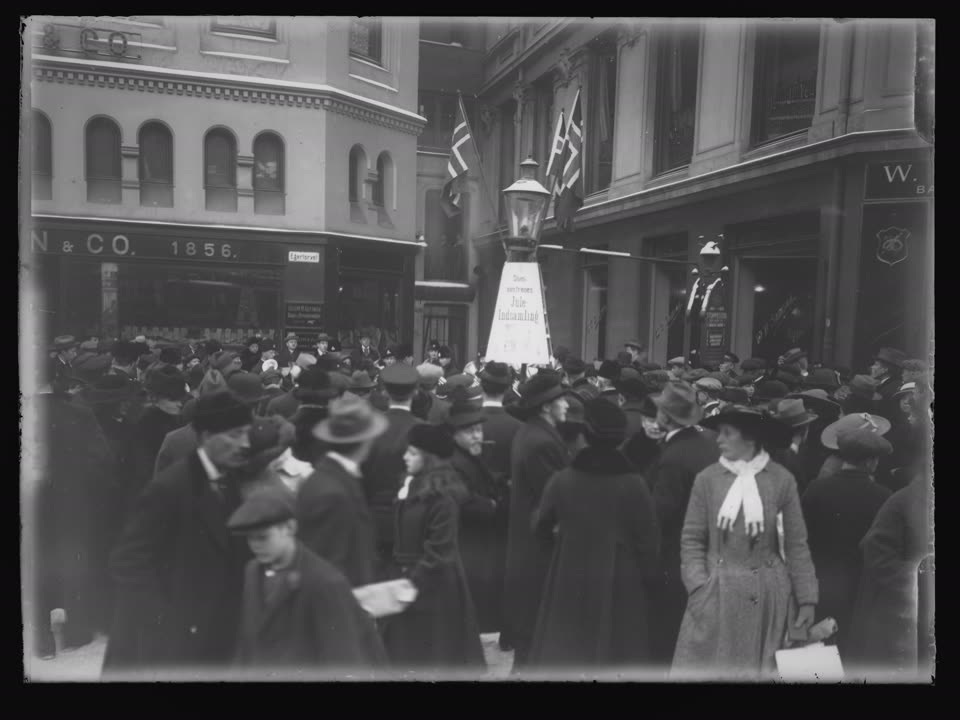
Christmas Day in Norway is 25 December. It is a public holiday.
How to say it
Norwegian Bokmål
God jul
God jul
say it: goo YOOL
A synthesised voice — not a recording of a person — saying God jul
in nb-NO.
Bokmål. The d in «god» is silent and the j is a y, so it is roughly «goo yool».
Nynorsk writes it the same way. Norway has two written standards and this greeting is one of the places they do not differ, which is why only one form is given.
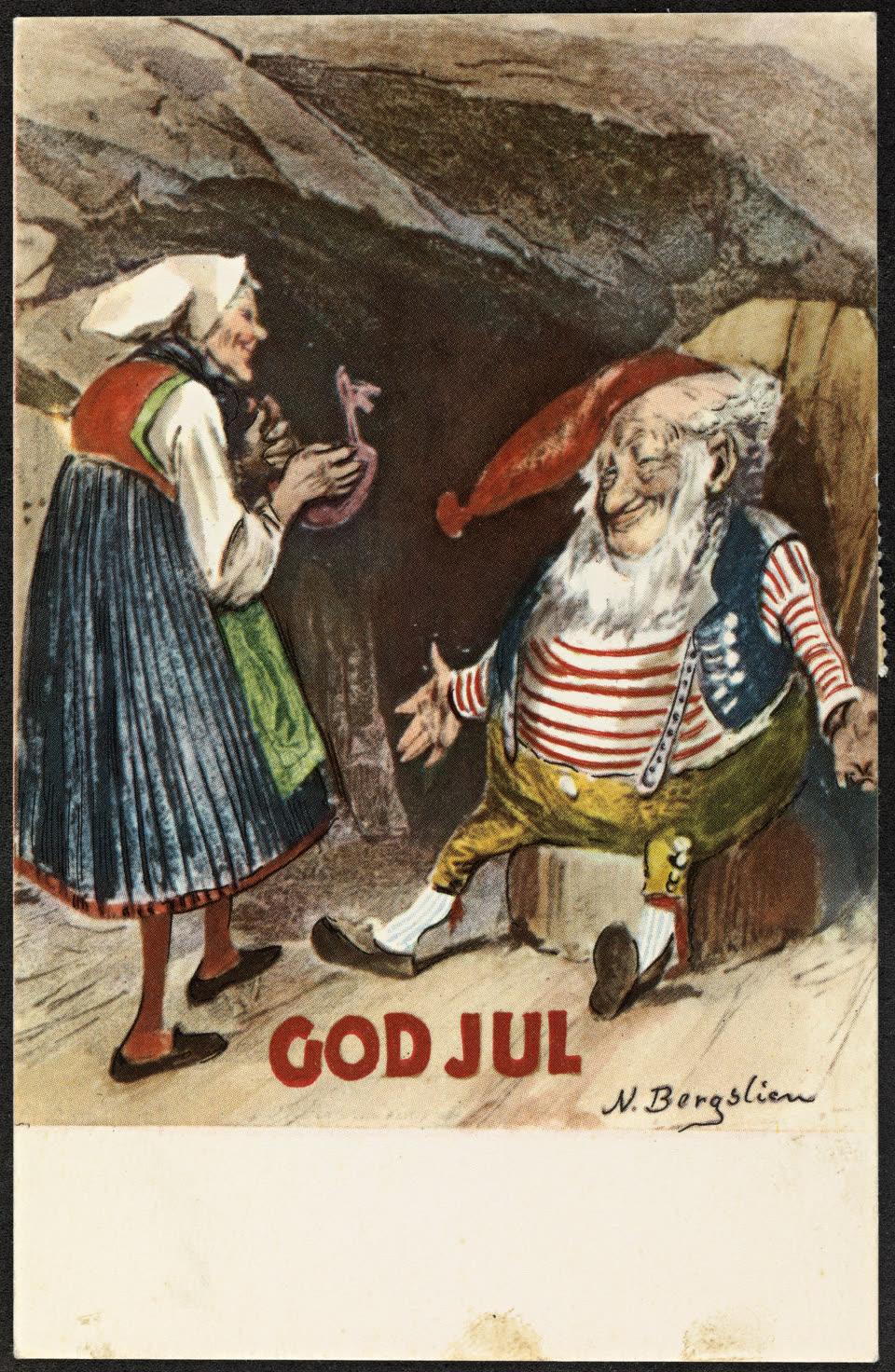
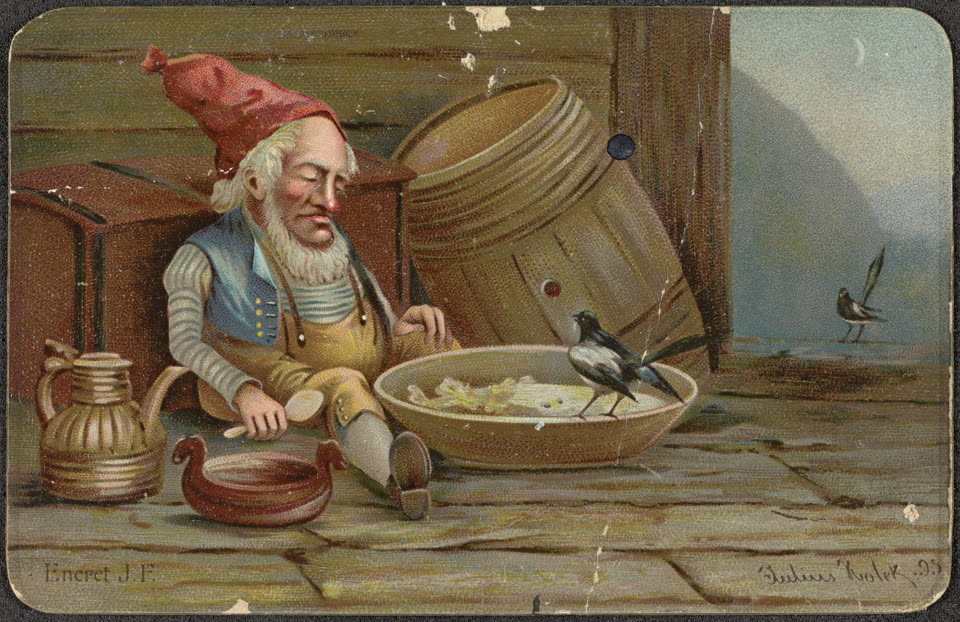
Norway has a gift bringer and a household spirit, and they are not the same creature however much they look alike now. Store norske leksikon says it in one line: «Nisser har opprinnelig ingenting med julenissen å gjøre.»
The nisse of folk belief is the farm’s own — he took over from the gardvorden, the house spirit who watched the farm — and what he wanted was food: «Det var viktig å sette ut julegrøt med smørøye til nissen på låven julaften», a bowl of Christmas porridge with a knob of butter in the eye of it, put out in the barn on Christmas Eve. Julenissen comes instead from the legends of Saint Nicholas, and the encyclopedia says the name is in principle all the two have in common.
What merged them was pictures. Christmas cards and book illustrations did it over the nineteenth century, and the first Norwegian paintings of a nisse attached to Christmas are dated to the 1830s.
The bells ring Christmas in at five, and the law has already stopped the shops at four
Christmas Eve in Norway runs to a clock. The helligdagsfredloven puts the holy-day peace from four in the afternoon on Christmas Eve and closes the shops at the same hour — «På jul-, påske- og pinseaften skal de stenge kl. 16.» An hour later the church bells start.
Store norske leksikon: «Julen ringes inn på julaften klokka 17.00.» The encyclopedia’s explanation is that five o’clock was once the end of the working day.
Then the television. «Hver julaften siden 1966 har Sølvguttene synger julen inn blitt vist på NRK» — the boys’ choir Sølvguttene singing Christmas in, on the state broadcaster, every Christmas Eve for sixty years.
Churchgoers light candles on the graves on the way
The Church of Norway holds its Christmas services on the afternoon of the 24th, before the dinner rather than at midnight, and a second thing happens around them.
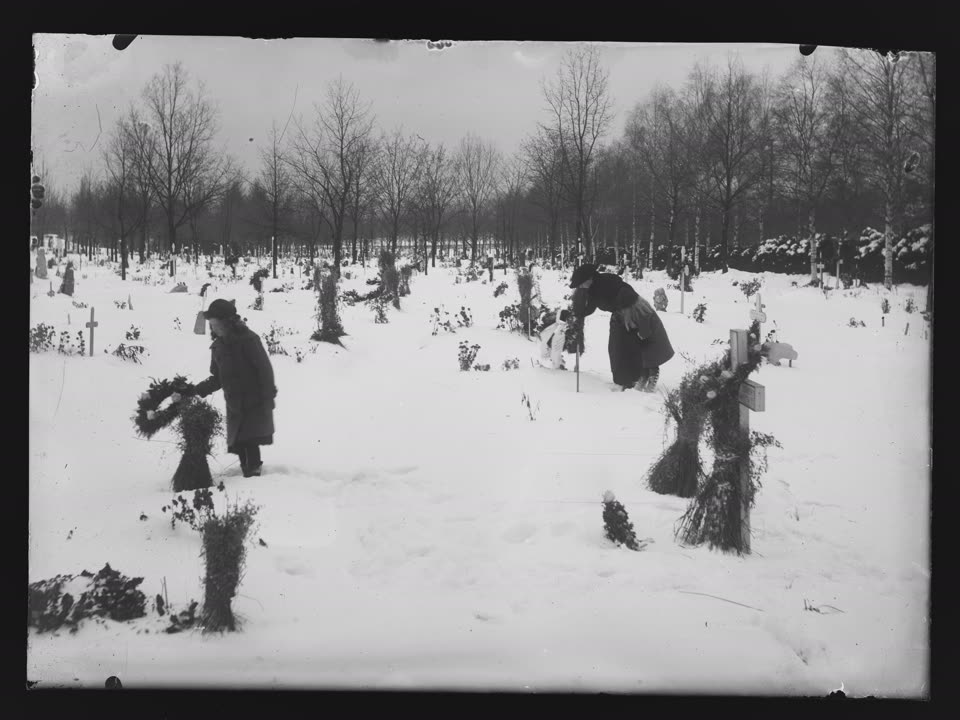
Store norske leksikon: «Mange som går i julegudstjenesten kombinerer dette med å tenne lys på gravene til døde slektninger for å minnes dem» — many of those who go to the Christmas service combine it with lighting candles on the graves of dead relatives, to remember them.
A sheaf of corn goes up for the birds, and it is now a town custom
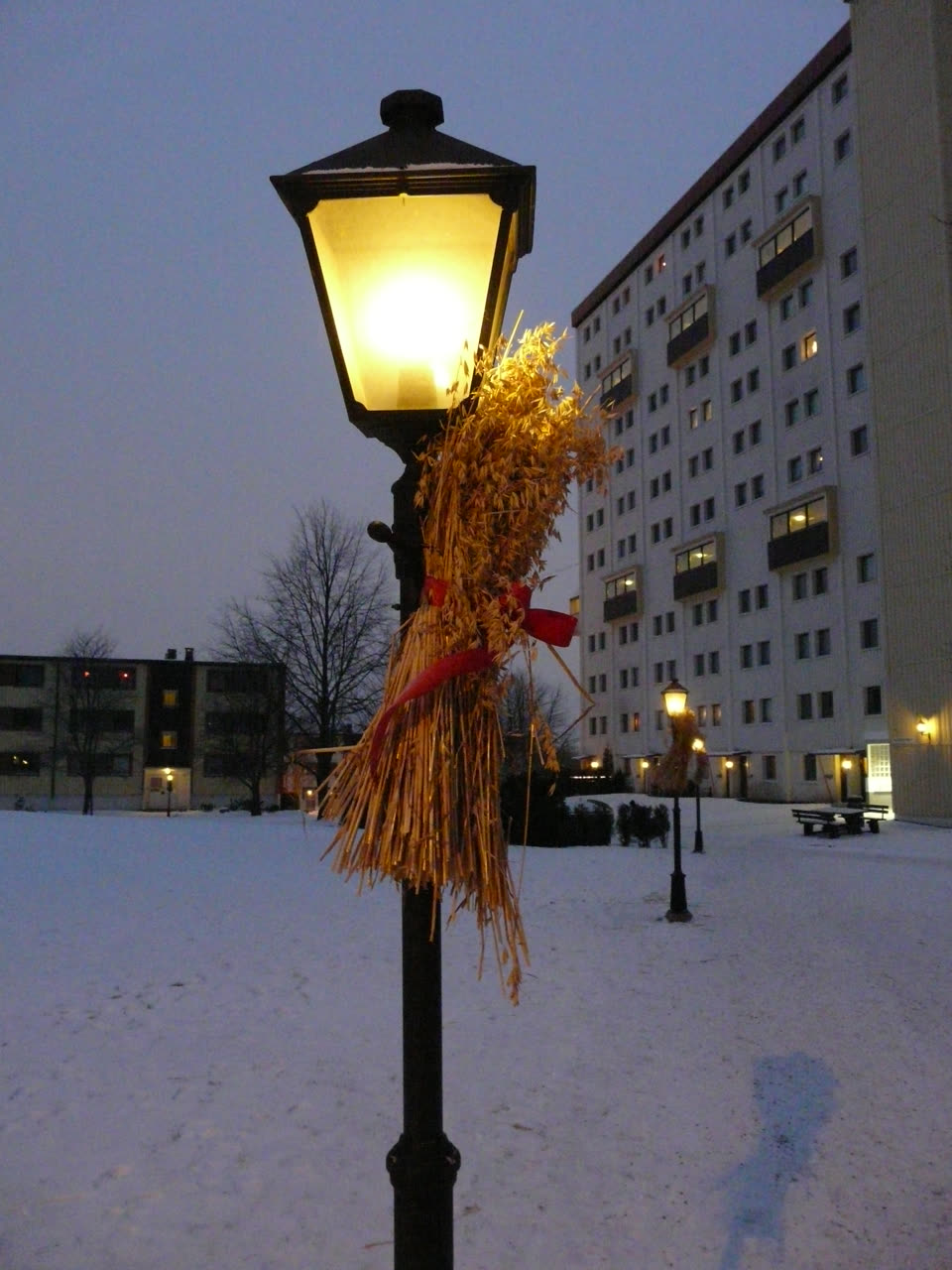
The julenek is an unthreshed sheaf of grain put up outside on a pole for the birds to eat over Christmas. Old tradition held that it should be large, of the best grain, and in some accounts the last sheaf cut in the autumn.
What is unusual is that it is still here. Store norske leksikon: «I motsetning til mange andre gamle juletradisjoner fra landsbygda har skikken med julenek overlevd til i dag, og den er like utbredt i bystrøk som på landet» — unlike many other old rural Christmas traditions the julenek has survived, and it is as widespread in town districts as in the country.
Where it came from is not known and the encyclopedia says so. Eighteenth-century clergy condemned the sheaf as heathen, and that condemnation is itself what later generated the theory that it must be a pre-Christian winter offering. Older scholars read it as a sacrifice to Odin or to fertility spirits; SNL’s verdict on that is «det finnes ikke noe direkte belegg for en slik tolkning» — there is no direct evidence for such a reading. The first written record of the custom is Erik Pontoppidan’s Norges Naturlige Historie of 1753, and the custom is older than the record.
Children still go julebukk, and somebody counted how many
To «gå julebukk» is to dress up and go from house to house in the days between Christmas and New Year, singing for sweets. Today’s julebukker wear a nisse hat with red cheeks and freckles painted on, and the children sing Christmas songs for their reward. In Bergen the custom belongs to New Year’s Eve instead and is called nyttårsbukk.
It is a live custom rather than a remembered one, and there is a number: Sentio polled for the newspaper Nationen in 2017, and «14 prosent svarte at de selv eller barna deres skulle gå julebukk det året» — 14 per cent said that they or their children would be going julebukk that year.
The older form was not for children. Adults went, with their faces covered so as to be unrecognisable, and in places it could start on 13 December and run to the twentieth day of Christmas.
Lucia belongs to the kindergartens, and she is an import
13 December is marked in Norway, and almost entirely by children: «I Norge feires luciadagen særlig i barnehager og på skoler» — Lucia’s day is kept above all in kindergartens and schools, with a candle procession and saffron buns.
It is not an old Norwegian custom in its present form. Store norske leksikon dates the modern procession to Sweden in the 1920s, so what Norwegian children are doing is a twentieth-century Swedish invention about a Sicilian saint.
Nine Christmas cards were confiscated from every post office in the country
In the Christmas of 1941, under German occupation, the Stavanger publisher Åsmund S. Lærdal issued a series of nine Christmas cards on which the nisser wished a good Christmas to all Norwegians — «Forlaget Åsmund S. Lærdal i Stavanger ga ut en serie på ni julekort julen 1941, der nissene ønsket god jul til alle nordmenn.»
They did not stay on sale: «22. desember samme år ble alle landets postkontor pålagt å inndra disse kortene» — on 22 December that year every post office in the country was ordered to withdraw them.
Reading the nisse as a figure of resistance is Store norske leksikon’s interpretation. The confiscation and its date are not.
Pork belly with the rind scored and crisped, and the single most common thing on a Norwegian table on 24 December. Store norske leksikon, on a 2014 survey: «I 2014 spiste 55 prosent ribbe på julaften.»
Between it and pinnekjøtt there is very little room for anything else: «Hele 88 prosent spiste enten ribbe eller pinnekjøtt.» Eighty-eight per cent of the country ate one of two dishes on the same evening.
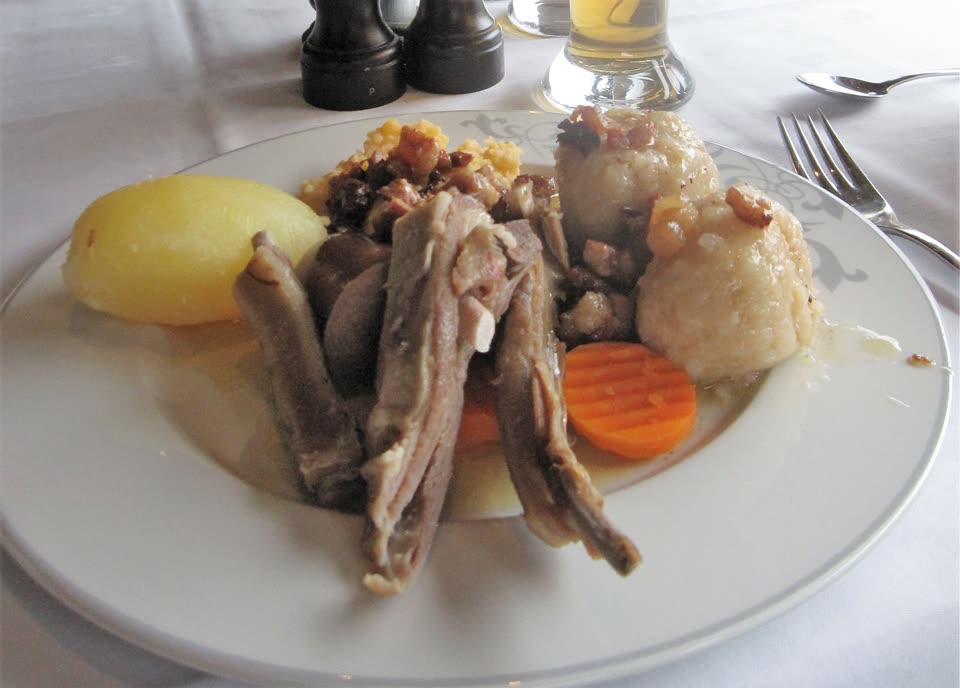
Salted and dried lamb ribs, steamed over birch sticks — the pinner the dish is named for — and the other half of the Norwegian Christmas table.
Which one you eat depends on which side of the mountains you live on, and the two figures are mirror images. Store norske leksikon: «Hele 76 prosent av vestlendingene spiser pinnekjøtt på julaften, mot 14 prosent på Østlandet» — 76 per cent of west Norwegians eat pinnekjøtt on Christmas Eve against 14 per cent in the east. The ribbe article prints the same sentence the other way round: 76 per cent of easterners eat pork rib against 14 per cent in the west.
In northern Norway pinnekjøtt takes 26 per cent of Christmas Eve, so the split is a west-east one rather than a north-south one.
Rice porridge, eaten earlier in the day or on one of the days before, with one almond hidden in the pot.
Store norske leksikon: «Det har lenge vært skikk å gjemme en mandel i julegrøten, og den som finner mandelen, får en marsipangris i premie» — it has long been the custom to hide an almond in the Christmas porridge, and whoever finds it gets a marzipan pig as the prize.
The same porridge is what the farm nisse was owed. A bowl of it with a knob of butter went out to the barn on Christmas Eve, which is the older of the two things the dish does.
Thin, hard, dark spice biscuits, and they are German.
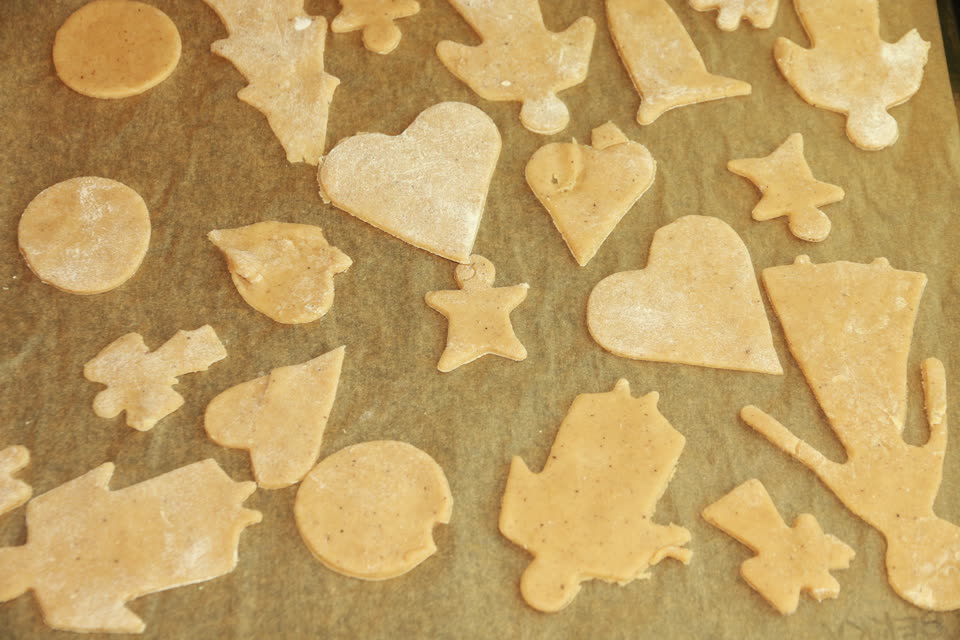
Store norske leksikon’s article, written by Eva Narten Høberg of NIBIO, puts the arrival in the seventeenth century and through one city: «Det finnes kilder fra 1600-tallet som viser at pepperkaker ble importert til norske byer i et relativt stort omfang, sammen med både peppernøtter og rent pepper. Bergen står i en særstilling som den store handelsbyen, og en kilde fra 1650-årene forteller om innførsel av 200 tønner pepperkaker fra Tyskland.» Sources from the 1600s show them imported into Norwegian towns in some quantity, with Bergen the great trading city, and one source from the 1650s reports two hundred barrels brought in from Germany.
The biscuit that goes with them came the other way, from Sweden. Gløgg reached Norway with the Swedish Christmas traditions — «I likhet med mange andre svenske juletradisjoner, for eksempel Luciadagen, julestjerner og halmbukker, tok også gløgg veien til Norge» — and SNL names it in the same breath as Lucia’s day, the Christmas star and the straw goat. It is served with pepperkaker or with lussekatter.
Widely repeated claims about Christmas in Norway that do not survive
checking. Each one says what is actually the case, because a correction
with nothing in its place leaves you worse off than before.
Oversimplified
Lutefisk is what Norwegians eat for Christmas dinner.
What is actually the case. Lutefisk is a real Norwegian Christmas dish, eaten the length of the country — Store norske leksikon is explicit that it is not a regional speciality: «Lutefisk har ingen påviselig regional tilhørighet og spises over hele landet.»
What it mostly is not is the Christmas Eve dinner. That evening belongs to ribbe and pinnekjøtt, which took 88 per cent of it between them on a 2014 survey. Lutefisk tends to be eaten at a julebord or a lutefisk dinner in the weeks BEFORE Christmas — «Mange arrangerer lutefiskmiddag før jul» — rather than on the night itself.
So the dish is Norwegian, the season is right, and the day is wrong.
On a 2014 survey, 55 per cent of Norwegians ate ribbe on Christmas Eve, and «Hele 88 prosent spiste enten ribbe eller pinnekjøtt» — a full 88 per cent ate either pork rib or dried lamb rib.
A country of five million, sitting down on the same evening, eating one of two things.
Christmas Eve is not a holy day in Norwegian law. It is something more specific: § 5 of the helligdagsfredloven says «På jul-, påske- og pinseaften skal de stenge kl. 16», and § 3 starts the holy-day peace at the same hour.
There are a good many exemptions — small grocers under 100 square metres, petrol stations, designated tourist areas — so the country does not stop dead. But the hour is in statute, and an hour after it the church bells ring Christmas in.
jul, Bokmålsordboka (article 27950) — Språkrådet and the University of Bergen, ordbokene.no. Retrieved 2026-11-01.The entry for «jul» gives «ønske god $» as an example of use, where $ is the dictionary’s placeholder for the headword — so the printed phrase is «ønske god jul», to wish a good Christmas.
jul — Store norske leksikon. Retrieved 2026-11-01. archived 24 October 2026The «every Christmas Eve since 1966» claim is the encyclopedia’s and was not checked against NRK’s own archive.
ribbe — Store norske leksikon. Retrieved 2026-11-01.The ribbe article, for the eastern half of the regional split: «76 prosent av østlendingene spiser svineribbe på julaften, mot 14 prosent på Vestlandet».