Ježíšek — the Christ ChildJežíšek · arrives 24 December
—days
—hrs
—min
—sec
Next: Friday 25 December 2026
When is Christmas in Czechia?
Christmas Day in Czechia is 25 December. It is a public holiday.
How to say it
Czech
Veselé Vánoce
Veselé Vánoce
say it: VEH-seh-leh VAAH-no-tseh
A synthesised voice — not a recording of a person — saying Veselé Vánoce
in cs-CZ.
Extended, as the Czech state says it: «Velvyslanectví ve Švédsku vám přeje veselé vánoce a šťastný Nový rok 2020!» — the embassy in Stockholm wishing a merry Christmas and a happy New Year. Note that it prints vánoce in lower case; the Academy of Sciences’ reference capitalises the noun, «dělení: Vá-no-ce».
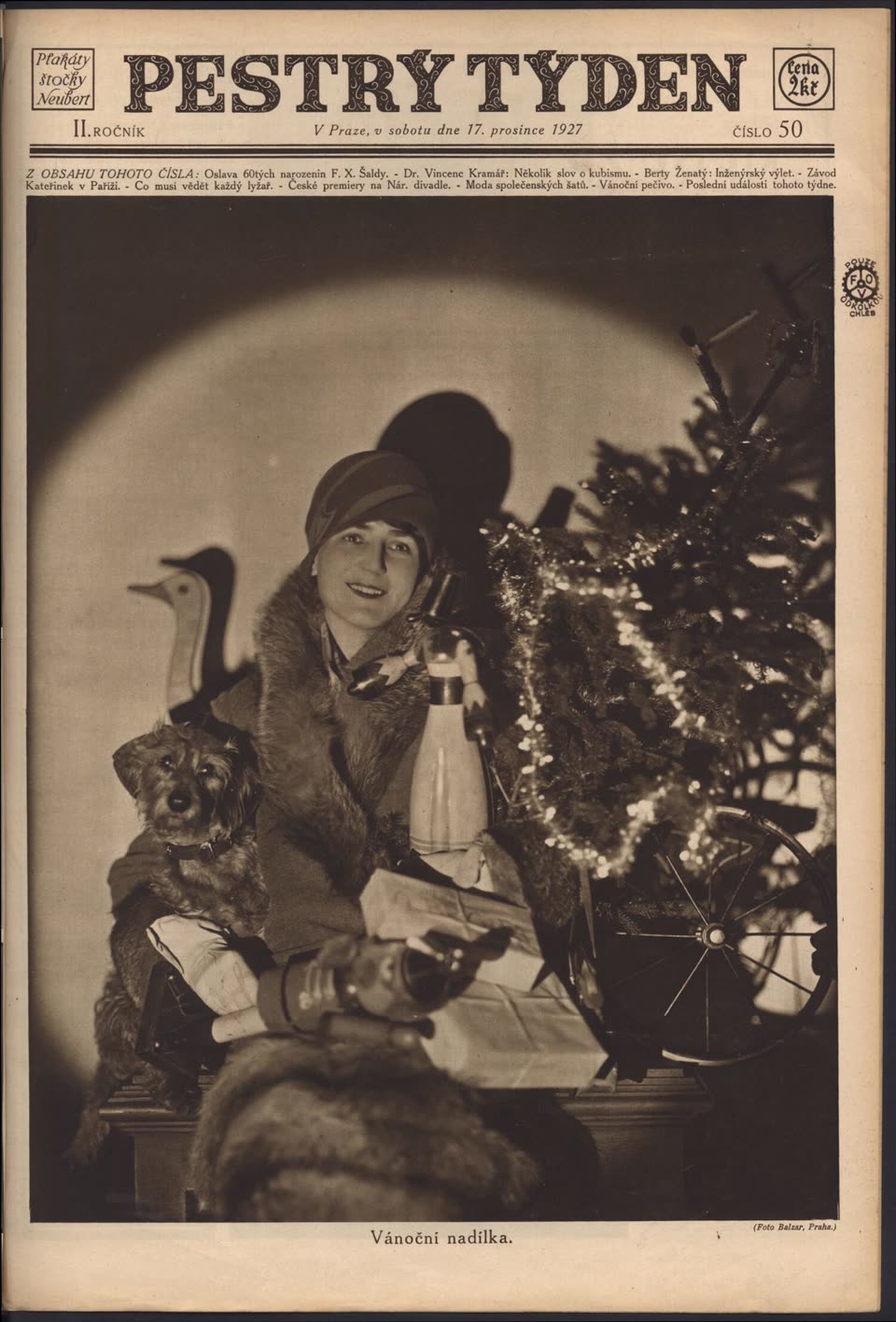
The presents come on the evening of 24 December and they come from Ježíšek, the diminutive of Ježíš, Jesus. No sleigh, no chimney, no list, and no picture: the Czech gift bringer is a child nobody sees.
He is the German Christkind, and the sources say so. The Jihočeské muzeum: «Postava vánočního dárce – Ježíška – tedy vznikla někdy v 16. století v Německu a k nám přišla o několik století později.» — the figure of the Christmas giver arose somewhere in sixteenth-century Germany and reached the Czech lands several centuries later. It arrived with the Reformation’s attack on the saints: «Dávání dárků v předvečer Kristova narození se začalo více prosazovat až za reformace v německých oblastech.», and «Německý kazatel Martin Luther tehdy ostře vystoupil proti oslavě svátku sv. Mikuláše.».
The German word is still inside the Czech story. When Alois Jirásek wrote the scene that made the Czech Christmas tree famous, his character says the hostess hands out «co Kristkindle přineslo» — what the Kristkindle brought.
The country closes for three days, and the law does not call them state holidays
Czechia takes 24, 25 and 26 December off — Christmas Eve, the first Christmas feast and the second — and all three are statutory days of rest. Czech law sorts its holidays into two lists, and Christmas is on neither of the patriotic ones: the state holidays are the dates of national history, and the three December days sit in a second category with New Year, Easter and May Day. In labour law the two lists behave identically. The difference is what the state is marking, not whether anybody works.
České svátky — Velvyslanectví České republiky v Bruselu — Ministry of Foreign Affairs of the Czech Republic
Nobody eats until the first star, and the children are promised a golden pig
Christmas Eve is a fast day, and the fast ends when the first star appears. The supper is the event of the Czech Christmas — the table set after dark, a lit candle on it, the family seated — and the children are told that whoever gets through the day without eating will see the golden piglet, zlaté prasátko, for a moment at the window. The public broadcaster still prints the bargain as a live one.
Štědrá večeře — Národní muzeum v přírodě, Rožnov pod Radhoštěm
The fast was once total, and an ethnographer wrote down what it cost
An early twentieth-century account from Moravian Slovakia records the fast as absolute: adults ate nothing at all on Christmas Eve and children were given a piece of bread. The golden piglet is in the same paragraph, as the inducement — and so is the threat used on children who would not wait. The day before was the baking day, the housewife at the oven from morning to night.
The nativity scene is the Czech Christmas symbol, and the tree was the Lutheran one
The betlém came first and stayed. In Catholic lands the Christmas tree was known as the Lutheran tree — a Protestant object — while the Catholic household’s main symbol of Christmas was the crib, and Bohemia, Moravia and Silesia have been building them for more than four hundred years. The earliest nativity scene north of the Alps is claimed for Prague: the Jesuits set one up in the Church of St Clement in 1562.
A schoolmaster’s mass from 1796 is still what Christmas sounds like
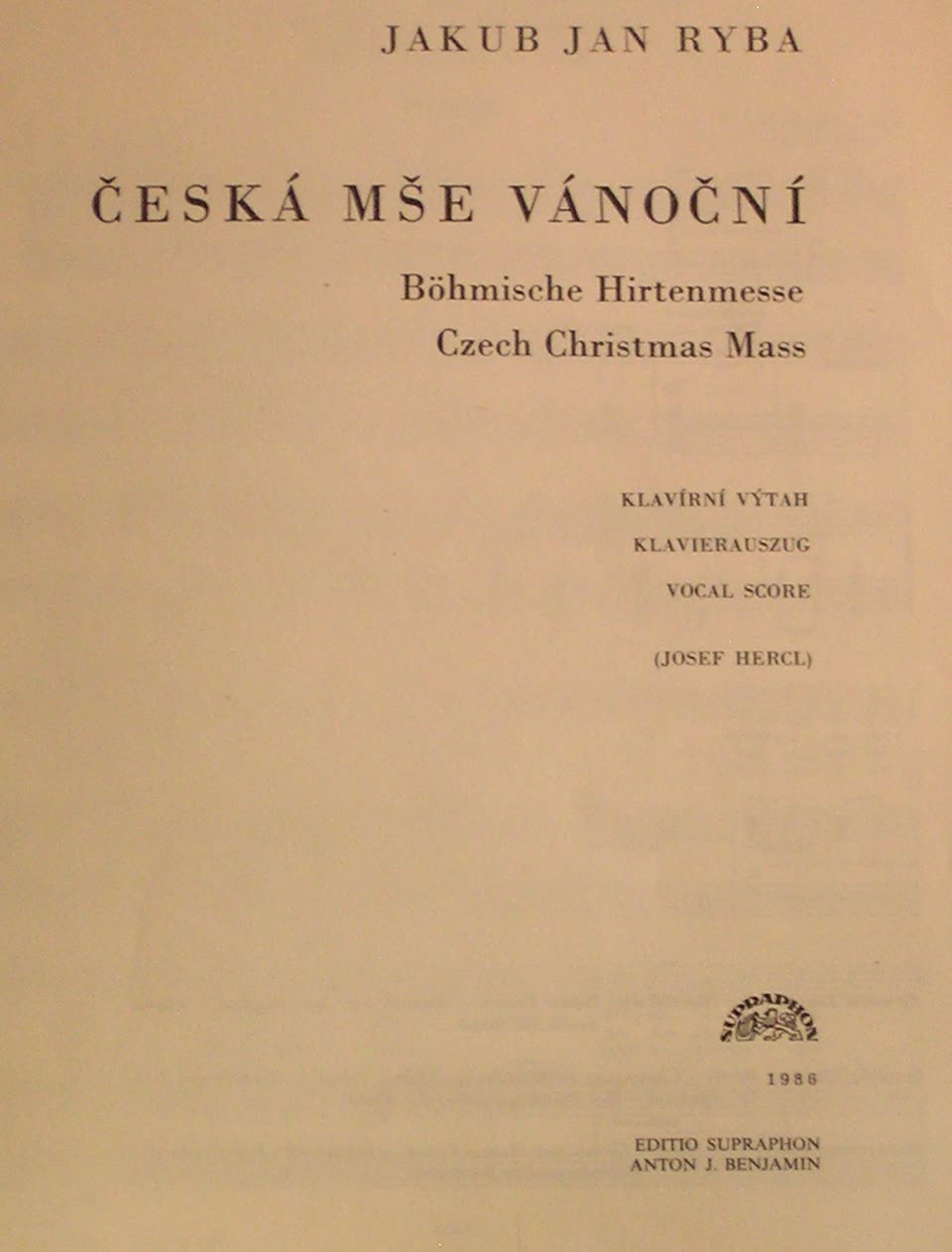
Jakub Jan Ryba was a village schoolteacher at Rožmitál pod Třemšínem. In 1796 he wrote a Christmas mass in Czech rather than Latin, telling the nativity in the manner of the folk crib plays, and it opens by shaking a shepherd awake: Hej mistře, vstaň bystře. He left many Latin masses and exactly one Czech one, and the Czech one is still widely performed two hundred and thirty years later.
One mechanical crib is a national cultural monument, and three villagers spent forty years on it
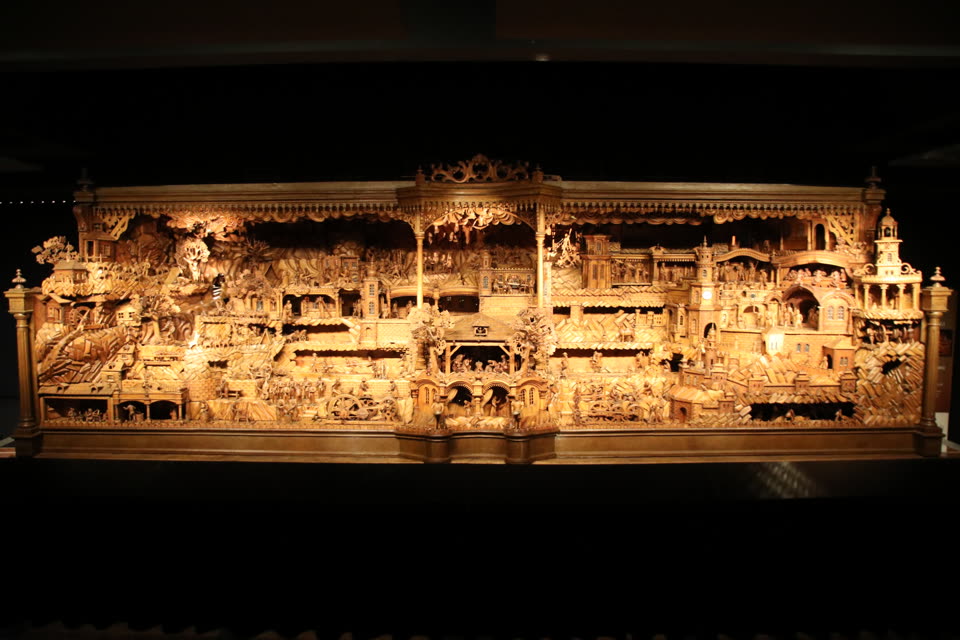
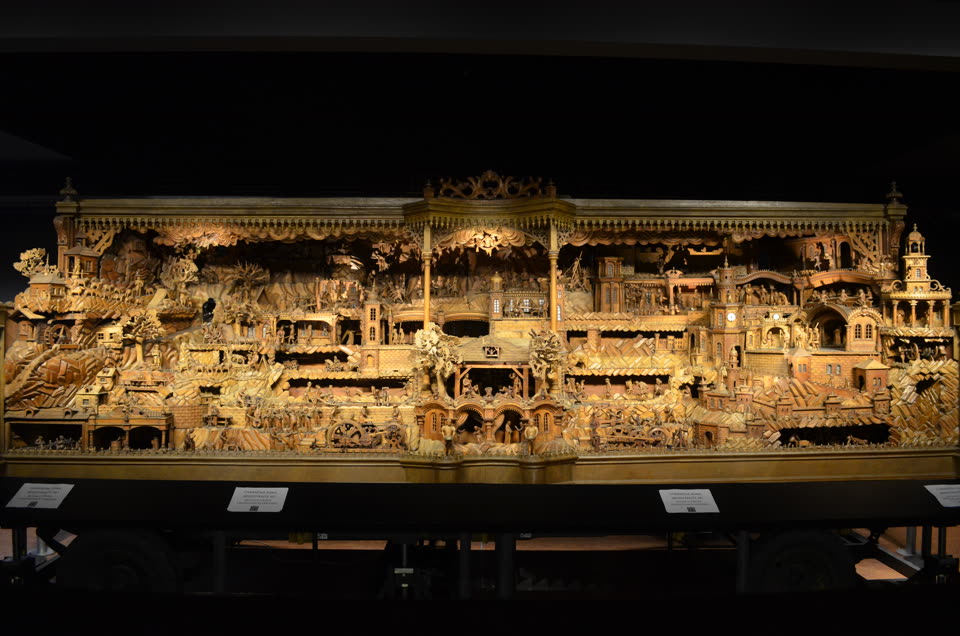
At Třebechovice pod Orebem stands a nativity scene made entirely of wood by a farmer, a carver and a millwright: Josef Probošt, Josef Kapucián and Josef Friml, who designed the mechanism that moves it. It is 6.9 metres long, holds more than two thousand carved parts and 371 figures, and took forty years. It was first shown at a craft exhibition in 1906 and had its greatest success at Expo 67 in Montreal. In 1999 it was declared a national cultural monument — the only nativity scene in the country that is one.
The glass beads on the tree are a UNESCO craft, and one workshop survived socialism
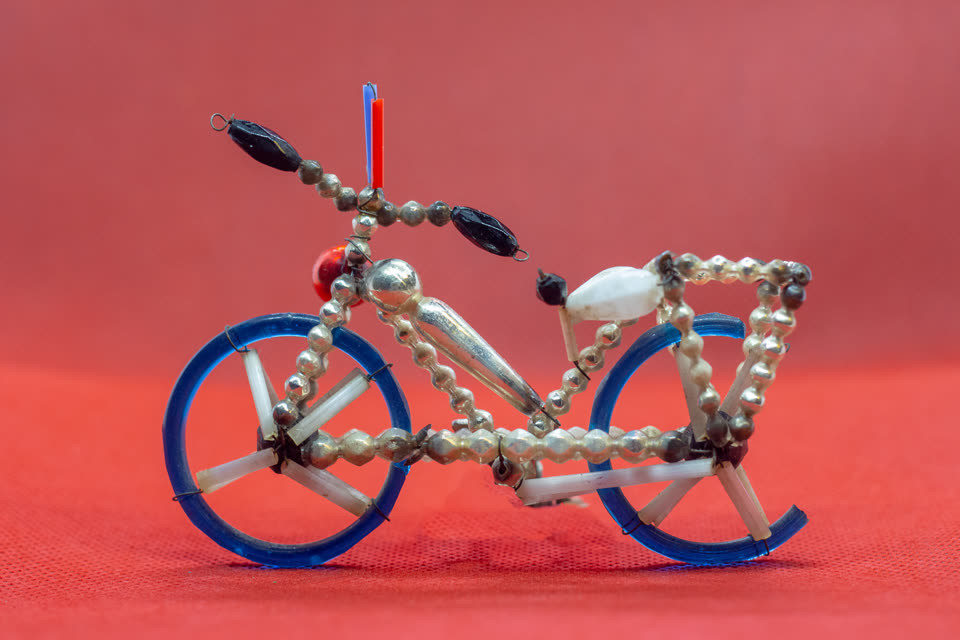
In the Krkonoše and Jizera mountains of north Bohemia, Christmas ornaments are made by blowing a heated glass tube into a brass mould so that it comes out as a string of beads, then silvering, colouring and threading them onto wire. The beads have been blown there since the late eighteenth century. UNESCO inscribed the craft in 2020. Of the small workshops that carried it, only one came through the end of the socialist economy.
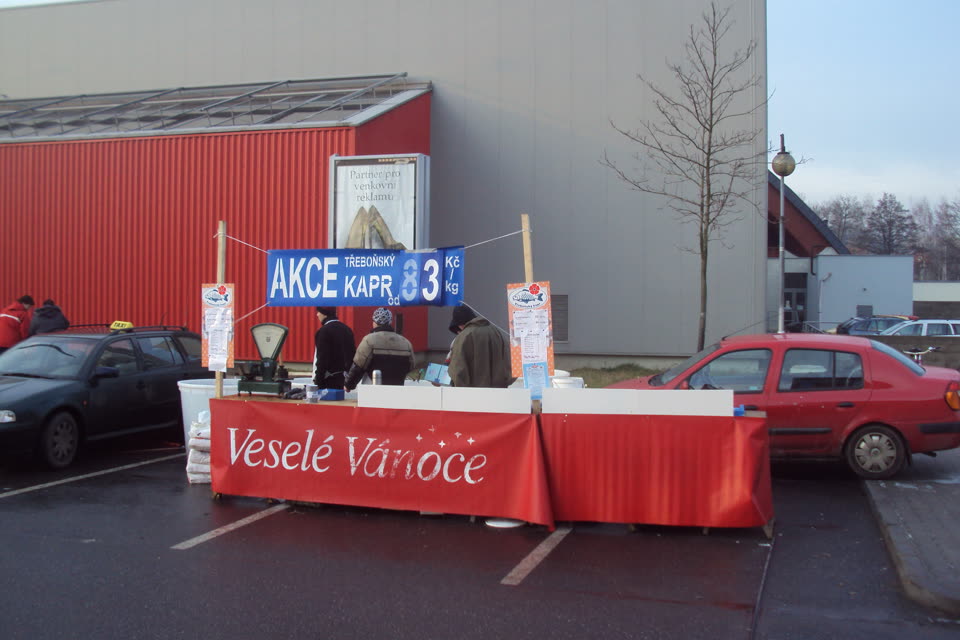
The Christmas Eve supper is fried carp, and it is carp because the evening is a fast day and fish is what a fast day allows. This is not a Christmas novelty: carp is the fish of Czech pond farming, which produces around twenty thousand tonnes of market fish a year, of which about seventeen thousand tonnes are carp — half for the home market and half for export. The ponds are drained in autumn, and the association that represents the farmers publishes which of those harvests the public may come and watch.
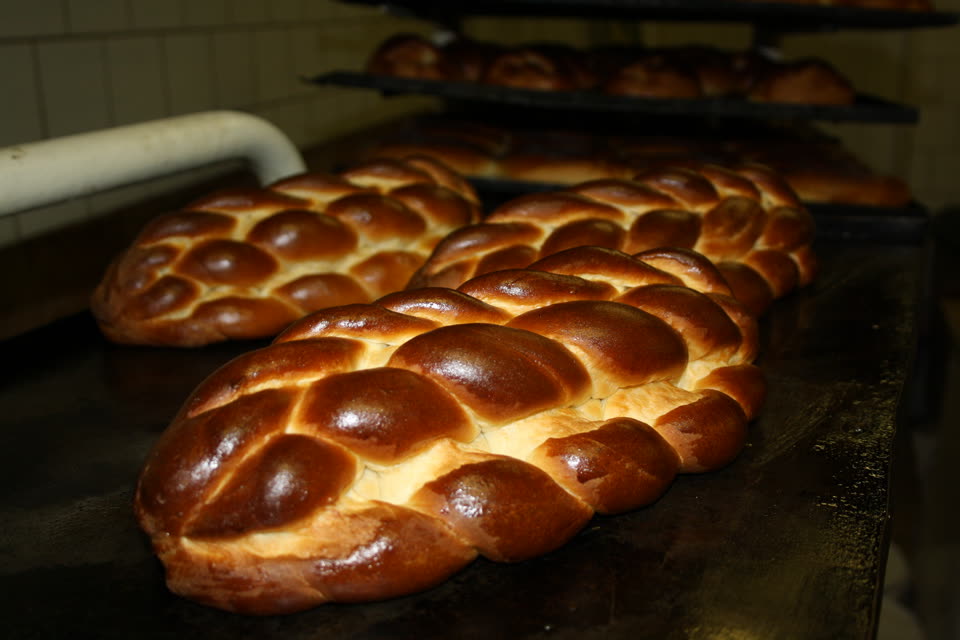
A plaited sweet bread, carrying the Christmas word in its name. In the museum’s reconstruction of the old Christmas Eve table it lies beside the lit candle with the bread. In the German-speaking households of Bohemia the same loaf was the Weihnachtsstrietzel or the Weihnachtssemmel, and an estate rent-roll from the start of the eighteenth century lists one among the Christmas dues owed to the manor.
Štědrá večeře — Národní muzeum v přírodě, Rožnov pod Radhoštěm
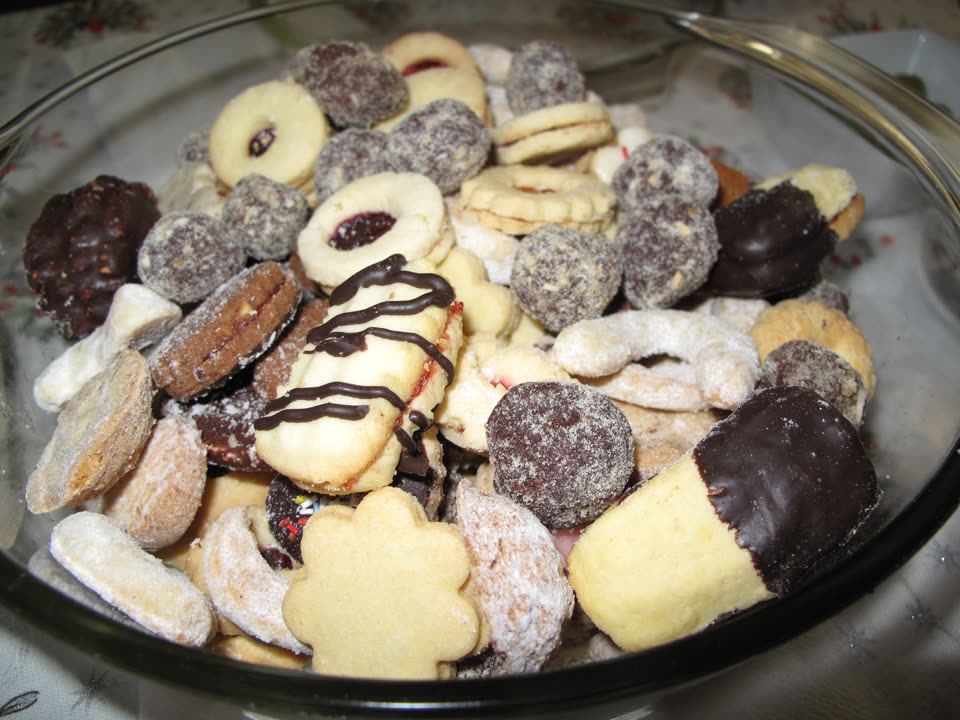
Czech Christmas is a baking project, and the baking day before Christmas Eve is a fixture in the earliest descriptions of it: the housewife at the oven from morning to night, turning out vdolečky, poppy-seed cakes and plum-filled pastries. Many of the names are German names in Czech clothes, baked on both sides of the language line from the same recipe books — vanilkové rohlíčky are Vanillekipferl, karlovarské věnečky are Karlsbader Ringerl.
Widely repeated claims about Christmas in Czechia that do not survive
checking. Each one says what is actually the case, because a correction
with nothing in its place leaves you worse off than before.
Oversimplified
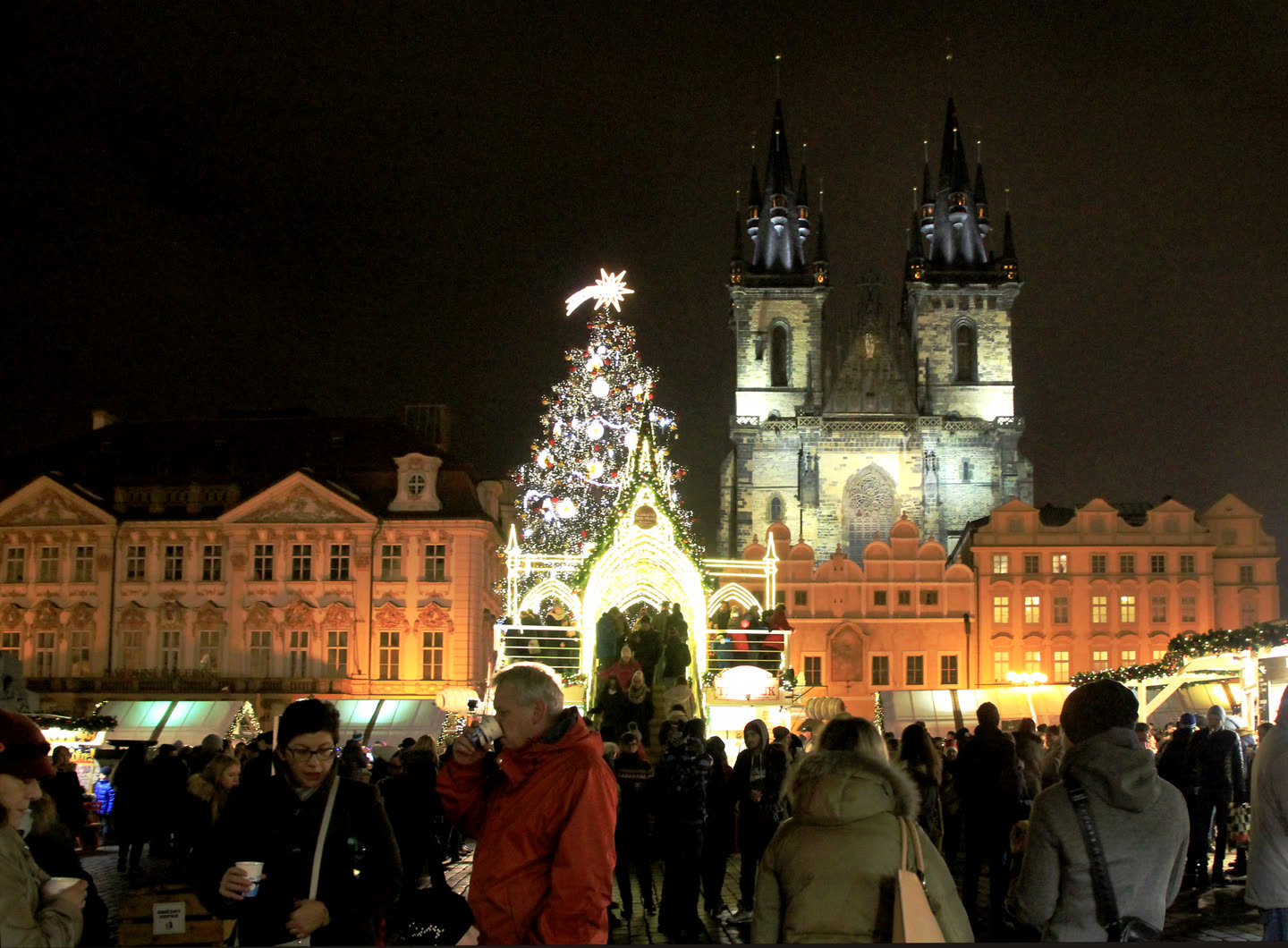
The Christmas tree came to the Czech lands in 1812, when the director of Prague’s Estates Theatre put up the first one.
What is actually the case. The party happened and the date is not the point. The ethnographic literature says in so many words that no reliable information about the first Christmas tree on Czech territory exists, and it records an earlier one: a German merchant from Munich with a decorated tree at his house in Brno in 1773. The 1812 evening is described as the turning point, not the beginning — and the reason everybody can name it is that Alois Jirásek put it in a novel. The tree then took decades to spread, carried first by German-speaking families, and reached the villages later still.
Ježíšek is the old Czech gift bringer, which the Czechs kept while the rest of the world went over to Santa Claus.
What is actually the case. The gift bringer the Czechs kept is a German import. The figure of the Christmas giver arose in sixteenth-century Germany, out of the Reformation’s campaign against the cult of the saints and specifically against the feast of St Nicholas, and it reached the Czech lands some centuries later; Ježíšek is the Christkind translated. The German word is still visible in the Czech telling, where Jirásek’s characters speak of what the Kristkindle brought. What is distinctive is not the figure’s age but that Czechia still has it, which is the point the museum makes in passing: Czech children unwrap presents from Ježíšek, and their contemporaries near and far mostly have no idea who that is.
The Czech word for Christmas is half a German loanword. Vánoce is a partial calque of Weihnachten: the first half was taken over as it stood and the second was translated into Czech — weihen, to consecrate, and Nacht, night — giving, roughly, the consecrated nights. It is a plural-only noun, like the Czech word for Easter.
Nobody knows where the first Czech Christmas tree stood. The famous answer is a Prague party of 1812 at which the director of the Estates Theatre surprised his guests with a lit and decorated tree, and the ethnographic literature is blunt that no reliable information about the first one exists — there is an earlier mention from 1773, of a German merchant from Munich who held a Christmas party with a decorated tree at his house in Brno. By 1843 Prague newspapers were reporting conifers on sale at the markets for the purpose.
When the German-speaking population of Bohemia and Moravia was expelled after 1945, nativity scenes went in the luggage. The collection of the Isergebirgs-Museum in Neugablonz — the Bavarian town built by the expelled glassmakers of Jablonec, Gablonz — is made up mostly of cribs that came out that way, often the one valuable thing somebody carried. The museum hangs the exhibition on one sentence of Otfried Preußler’s: some habits sit very deep, and for us now living in Bavaria a Christmas without a crib would be no Christmas at all.
Every claim carries its own citation. They are collected below, so you
can see what the page rests on and how much of it comes from where.
Odkud přišlo zlaté prasátko? Jeho vánoční cesta byla dlouhá — ČT24, Česká televize, 24 December 2013. Retrieved 2026-10-26. archived 4 January 2023For the golden piglet as a living promise: «Ti, kteří se během dnešního svátku poctivě postí, by měli podle štědrovečerní magie s první hvězdou aspoň na okamžik zahlédnout pověstné zlaté prasátko.» — those who fast honestly today should, by Christmas Eve magic, glimpse the famous golden piglet with the first star.
Alois Menšík, Veselé vánoční hody na Mor. Slovácku, Český lid — digitised by the Národní ústav lidové kultury. Retrieved 2026-10-26.The fast: «Jak velcí, tak malí zachovávají celý den přísný půst. Dospělí nepojídají ničeho, děti dostanou jenom kousek chleba.» The promise: «že uvidí zlaté prasátko anebo zlatého beránka» — that they would see a golden piglet or a golden lamb. And for the children who would not wait, «že uvidí na stěně svini nebo pod stolem berana» — that they would see a sow on the wall or a ram under the table. The baking day: «Den před Štědrým dnem sází celý den do peci», and the list begins «Peče vdolečky, makovníky, canetky».
Krippen aus der alten und der neuen Heimat — Isergebirgs-Museum Neugablonz, Kaufbeuren. Retrieved 2026-10-26. archived 6 October 2026The 1562 claim is this museum’s and is quoted as its claim: «Nördlich der Alpen stand in Prag nachweislich die erste Krippe. Sie wurde 1562 in der dortigen Clemenskirche von den Jesuiten errichtet.» — north of the Alps the first crib demonstrably stood in Prague, erected by the Jesuits in the Church of St Clement in 1562. It continues «In der Folgezeit verbreiteten sich die figürlichen Darstellungen von der Geburt Christi in ganz Süddeutschland, Böhmen, Mähren und Schlesien.» and «Folglich besitzen diese Gegenden eine mehr als 400 Jahre alte Krippentradition.».
Ó, svatá dobo vánoční — Jihočeské muzeum v Českých Budějovicích, 2019. Retrieved 2026-10-26.On the giver: «Postava vánočního dárce – Ježíška – tedy vznikla někdy v 16. století v Německu a k nám přišla o několik století později.» Also «Dávání dárků v předvečer Kristova narození se začalo více prosazovat až za reformace v německých oblastech.» and «Německý kazatel Martin Luther tehdy ostře vystoupil proti oslavě svátku sv. Mikuláše.».
Štědrá večeře — Národní muzeum v přírodě, Rožnov pod Radhoštěm. Retrieved 2026-10-26. archived 18 February 2026The open-air museum on the supper: «Lidé usedali ke štědrovečernímu stolu po setmění, když na obloze vyšla první hvězda.» On the table: «Na stole byly oplatky, které hospodář po modlitbě mazal medem a podával všem členům rodiny.» and «rozžatá svíce, vedle položený chléb, vdolek nebo vánočka». And «Nohy stolu byly obepnuty řetězem, který měl zaručit soudržnost rodiny a pevné zdraví.» — the table legs bound with a chain for the family’s cohesion and health. It also refuses to make the meal grand: «Množství a rozmanitost jídel záviselo na zámožnosti rodiny, v chudých domácnostech bývala i štědrá večeře velmi skromná.».The museum’s texts are published under CC BY-NC-ND 3.0 CZ with a request for a link and the credit «zdroj: Národní muzeum v přírodě», which is what the citation above is.
Rybářské sdružení ČR — produkce — Rybářské sdružení České republiky (Fish Farmers Association of the Czech Republic). Retrieved 2026-10-26. archived 25 October 2026The producers’ own association: «V posledních letech se v České republice ročně vyprodukuje kolem 20 tisíc tun tržních ryb.» «Rozhodující rybou českého produkčního rybářství je tradiční kapr (ročně kolem 17 tisíc tun)». On the two markets: «oba trhy jsou vyrovnané v poměru zhruba 1:1». And the autumn harvests, as a heading on the same site: «Přehled vybraných výlovů rybníků pro veřejnost».
Zákon č. 245/2000 Sb., o státních svátcích, o ostatních svátcích, o významných dnech a o dnech pracovního klidu — Sbírka zákonů ČR, reproduced by Zakony pro lidi (AION CS). Retrieved 2026-10-26. archived 25 November 2025The act’s own text. § 2 lists the «24. prosinec - Štědrý den, 25. prosinec - 1. svátek vánoční a 26. prosinec - 2. svátek vánoční» — 24 December Christmas Eve, 25 December the first Christmas feast, 26 December the second. § 3: «Státní svátky a ostatní svátky jsou dny pracovního klidu, kromě dnů nepřetržitého odpočinku zaměstnance v týdnu.» — both kinds of holiday are days of rest, except where a week’s continuous rest already falls there.Its title separates «o státních svátcích, o ostatních svátcích, o významných dnech a o dnech pracovního klidu» — state holidays, other holidays, significant days, days of rest. § 1 gives the state holidays and every one of them is a date in national history, beginning «1. leden - Den obnovy samostatného českého státu». The act is dated «ZÁKON ze dne 29. června 2000».
O muzeu — Proboštův mechanický betlém — Třebechovické muzeum betlémů, Třebechovice pod Orebem. Retrieved 2026-10-26.The museum that keeps it: «Mechanický betlém je dílem rolníka Josefa Probošta a řezbáře Josefa Kapuciána, důmyslný pohyblivý mechanismus navrhl sekerník Josef Friml». «Celý betlém je vyřezán ze dřeva, měří 6,9 × 1,9 × 2,2 metru a skládá se z více než dvou tisíc dílů. Betlém vznikal 40 let.» «Poprvé byl vystaven roku 1906 na řemeslnické výstavě v Chrasti u Chrudimi.» «Největší úspěch sklidil na Světové výstavě EXPO 67 v Montrealu». The figure count is given as «371 figurek», and the collection around it as «Ve sbírce je přes 600 betlémů z papíru, dřeva, keramiky i skla».
Handmade production of Christmas tree decorations from blown glass beads — element 01559 — UNESCO, Representative List of the Intangible Cultural Heritage of Humanity. Retrieved 2026-10-26. archived 7 September 2026«Inscribed in 2020» on the Representative List, reference 01559. How it is made: «blowing a heated glass tube inserted in a brass mould shaped into a string of beads called klaustschata and silvered, coloured and hand decorated». Where: «Considered as a key cultural element of the Giant and Jizera Mountain regions in North Bohemia, where blown glass beads have been produced since the late eighteenth century». And the part that is a history rather than a technique: «Small production workshops were also bearers of the element, but only one survived the era when the socialist economy was undergoing transformation.» «The Kulhavý family workshop managed to rescue the knowledge and continues to work with domestic bead makers to safeguard the tradition.» The file also notes that «The creation of Christmas ornaments such as these appear in folk tales about Krakonoš, the legendary ruler of the mountains.» — Krakonoš is the mountain spirit of the Giant Mountains, Rübezahl on the German side.
České svátky — Velvyslanectví České republiky v Bruselu — Ministry of Foreign Affairs of the Czech Republic. Retrieved 2026-10-26. archived 17 May 2026The ministry states the equivalence in its own words: «Z hlediska pracovněprávního mají stejný význam i ostatní svátky, které jsou stejně jako státní svátky, dny pracovního klidu.»
Nalaďte si s námi Českou mši vánoční — Velvyslanectví České republiky v Bruselu, 14 December 2020. Retrieved 2026-10-26. archived 14 July 2025On the man: «svůj životní osud spojil s působením ve školských službách v malém městečku Rožmitále pod Třemšínem» — he tied his life to the school service in the small town of Rožmitále pod Třemšínem. On the work: «Jakuba Jana Ryby (1765-1815)», the subtitle «Hej mistře, vstaň bystře», and «V jeho skladatelském odkazu nalezneme řadu mší na latinský text, ale jen jednu na text český.» — many masses on a Latin text, only one on a Czech one. On the telling: «Ryba v tomto případě použil vlastní české podání příběhu o narození Krista v Betlémě po vzoru lidových jesličkových her.». On the first performance and what became of it: «Od prvního provedení o Vánocích roku 1796» and «se Rybova česká mše postupně stala symbolem českých vánočních svátků». The baroque organ of the church is the one «na něž Jakub Jan Ryba každou neděli 27 let hrával» — which Ryba played every Sunday for twenty-seven years. And the mass is «provozována dodnes», performed to this day.
PF 2020 — Velvyslanectví České republiky ve Stockholmu, 20 December 2019. Retrieved 2026-10-26.The phrase in use by a Czech state body: «Velvyslanectví ve Švédsku vám přeje veselé vánoce a šťastný Nový rok 2020!»
Vánoce — Czech entry — Wiktionary. Retrieved 2026-10-26. archived 30 August 2026For the pronunciation: «[vɛsɛlɛː vaːnot͡sɛ]» for the phrase and «[ˈvaːnot͡sɛ]» for the noun on its own.