Christmas Day in Mozambique is 25 December. It is a public holiday.
How to say it
Portuguese
Feliz Natal
Feliz Natal
say it: fe-LEESH na-TAL
A synthesised voice — not a recording of a person — saying Feliz Natal
in pt-PT.
Portuguese, which is Mozambique's official language and the one the shop windows are painted in: Lusa records them «engalanando as montras com a árvore e o Pai Natal e os dizeres típicos da época: Feliz Natal e Próspero Novo Ano» — dressing the windows with the tree and Father Christmas and the season's usual words.
It is the language of the state and the shopfront rather than of most homes. More Mozambicans speak Makhuwa, Changana or Sena at home than speak Portuguese.
Father Christmas, under his Portuguese name. He arrives on the street before he arrives in the house: Lusa describes city-centre vendors working in Pai Natal hats through the days before the holiday, and the shop windows done out with a tree and his figure.
The holiday is real, and the law calls it Family Day
25 December is one of nine compulsory holidays in Mozambique's Labour Law, and the statute names it «i) 25 de Dezembro – Dia da Família» — Family Day. None of the nine is named after a religious feast.
The two names run side by side in ordinary use. The state daily Notícias opened its holiday report with both at once: «Moçambique celebra hoje o Dia da Família (Natal para os cristãos)» — Mozambique today celebrates Family Day, Christmas for the Christians.
The law itself gives no reason for the name, and neither does the press that uses it.
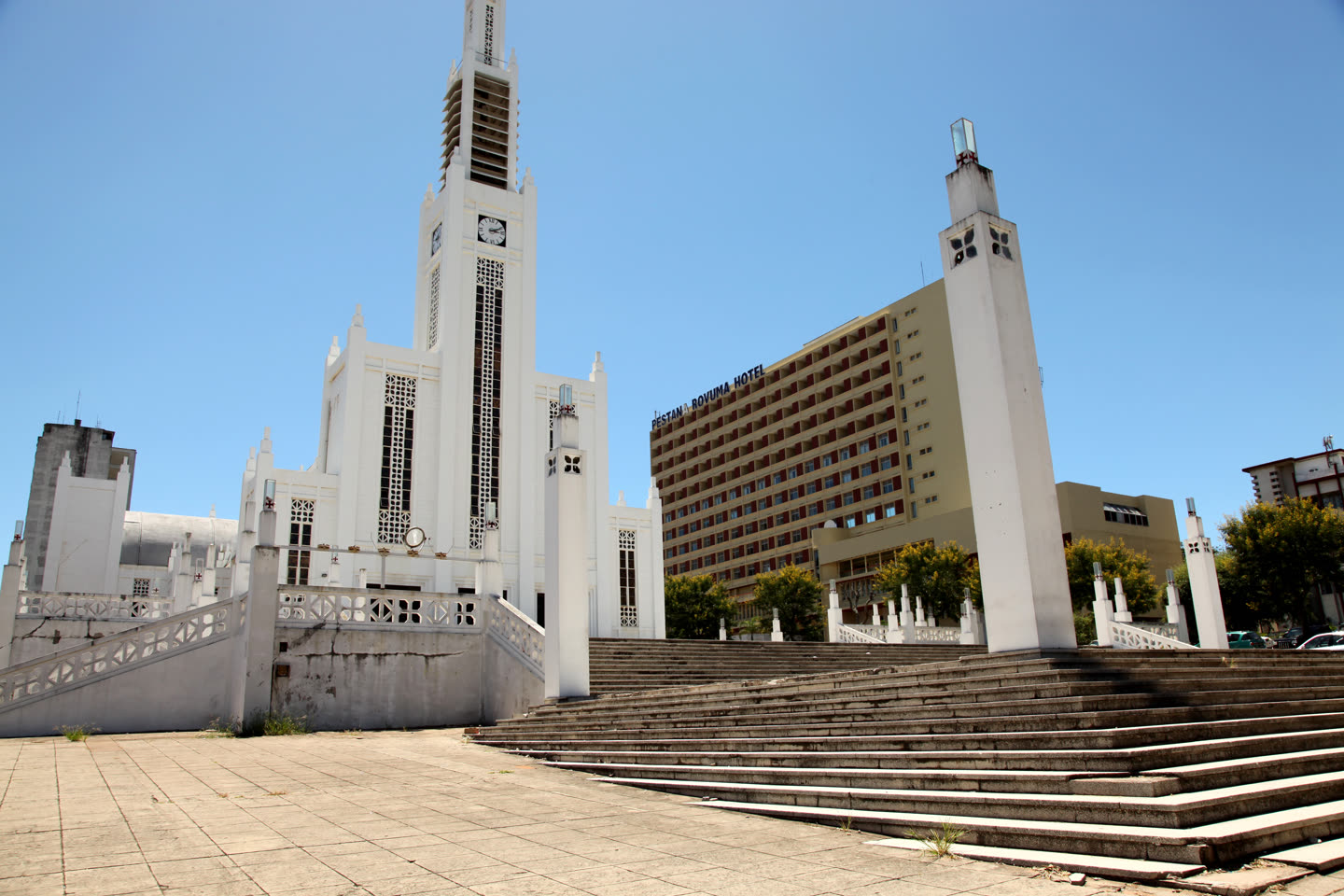
Catholics keep Christmas Eve with the missa do galo — the cock's Mass, the Portuguese name for the midnight Mass — at the Sé Catedral in Maputo, the white concrete cathedral on Praça da Independência. In 2019 the paper O País recorded it running about two hours: «Na Sé Catedral de Maputo, os católicos oraram por mais ou menos duas horas» — the Catholics prayed for roughly two hours, at a Mass led by the archbishop.
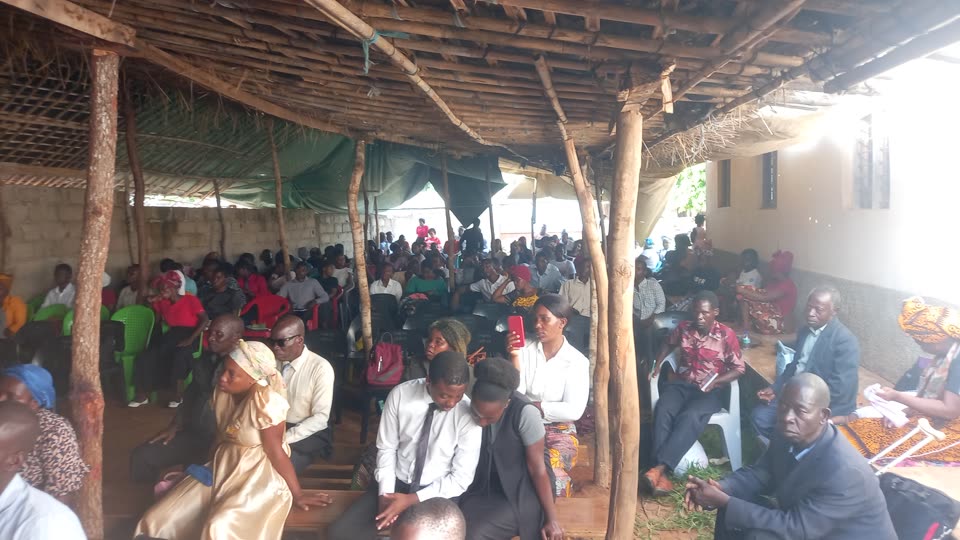
Maputo's Catholics are not the only ones out that night. O País has also covered the Anglicans of the Diocese of Lebombo, the Presbyterians and a Methodist pastor in the same season.
The Anglicans baptise first, and bring the new souls in
On Christmas Eve 2023 the Anglicans of the Diocese dos Libombos kept the missa do galo like everybody else — but first they did what John the Baptist did to Jesus. O País: «Mas antes fez o que João Batista fez a Jesus, o baptismo de novas almas» — but first it did what John the Baptist did to Jesus, the baptism of new souls. «Já puras, as novas almas entraram na igreja para esperar pela chegada de Jesus Cristo»: made clean, the new souls went into the church to wait for Christ to arrive.
Then the candles — «as velas que caracterizaram a chegada do menino Jesus, em Belém», the candles that stood for the child’s arrival in Bethlehem.
One year’s reporting, and the archbishop was not at the altar. Dom Carlos Matsinhe, head of the Anglican Church of Mozambique and Angola, was kept away by what the paper calls a last-minute flu, and the message of the night was carried by Alda Nhabinde, an assistant parish priest of the diocese: peace, and «deve começar nas famílias» — it has to start in the families.
Chicken and beer, in shirtsleeves, often at the beach
The holiday meal is an improved family lunch. Lusa puts it plainly: «o Natal em Moçambique é uma data de encontro familiar, geralmente em torno de um almoço melhorado, com muita galinha e cerveja» — a family occasion, generally around an improved lunch, with a lot of chicken and beer.
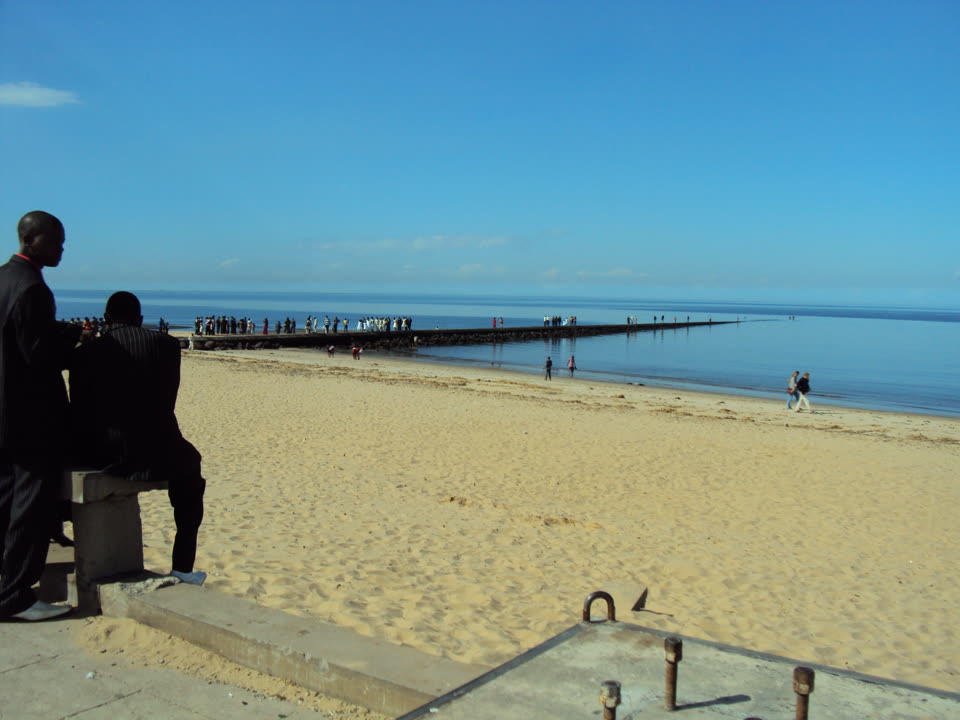
It is the height of summer, so a good deal of it happens outdoors and a good deal of it happens at the beach. A Mozambican speaker describing a southern Christmas table named chicken, grilled fish, feijoada, local greens and matapa — cassava leaves cooked with crab — alongside the wine and beer. That is one person's account of one region, and matapa is an everyday Mozambican dish rather than a Christmas one.
New clothes for the children, and a capulana for their mother
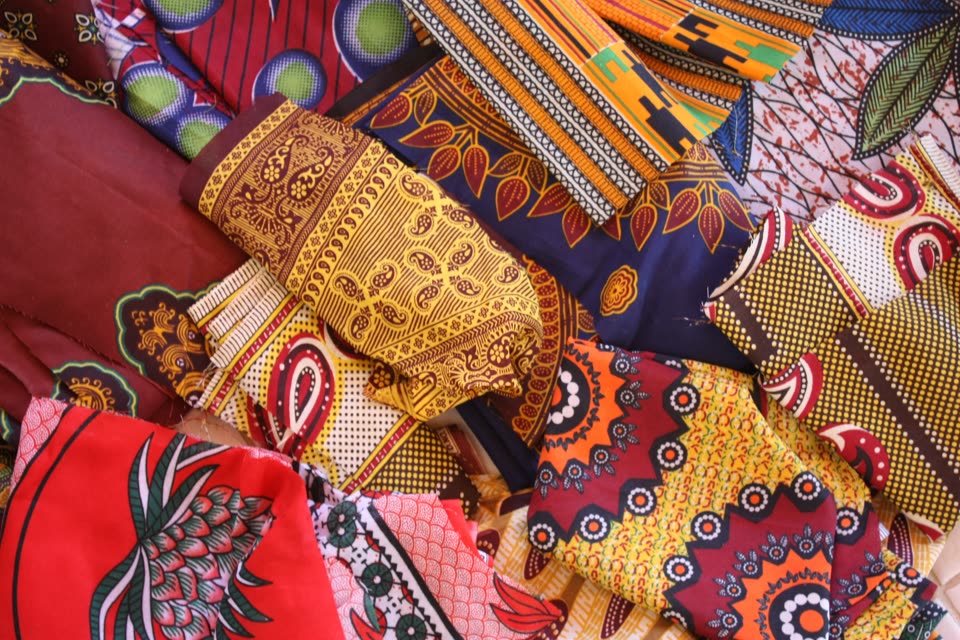
Christmas is when clothes get bought. Lusa: «o Natal, como de resto toda a quadra festiva, é aproveitado também para a compra de roupa nova, sobretudo aos filhos, e a capulana para as esposas e mães» — Christmas, like the whole festive season, is also taken as the moment to buy new clothes, above all for the children, and a capulana for wives and mothers.
A capulana is a printed cotton wrap, two metres of it, worn as a skirt, tied as a sling for a baby, used as a headwrap or a tablecloth. Giving one is a Mozambican present rather than an imported one.
Some congregations keep it outdoors, by firelight, until morning
The most distinctive Christmas described to Lusa belongs to the African independent churches, and it reaches us at second hand through that one agency.
One independent church described to Lusa — the agency gives its name as Jekenisheni and says it worships under the trees — gathers all its congregations in one open place at Christmas, lights fires, preaches around them, and sings and dances to very large drums until dawn: «acende fogueiras e ao redor prega o evangelho, e os devotos cantam e dançam ao som de enormes tambores, até ao amanhecer». In the morning, in red robes and barefoot, the members cook and share food, and there are baptisms and weddings.
It rests on a single undated agency report, with no place named, which is why it is set down as that report's account rather than as an established custom.
On 24 December 2024 the Ministry of Labour gave civil servants the whole day off — a tolerância de ponto — «para as celebrações do Natal e do Dia da Família», for the celebrations of Christmas and Family Day. The ministry said why: «A medida é em resposta ao pedido formulado pelo Conselho Cristão de Moçambique» — the measure answers a request from the Christian Council of Mozambique.
It is a discretionary grant for one year rather than a law.
The 2020 figures from the National Statistics Institute, as reported by the US State Department, put the country at «62 percent of citizens are Christian, 19 percent Muslim». Within the Christian share, evangelical and Pentecostal churches are the largest group, then Catholics, then a small Anglican community.
The 19 per cent is not agreed. Muslim leaders in the same report put their own number at 25 to 30 per cent.
«The northern province of Cabo Delgado is the only province with a Muslim majority, but significant Muslim minority communities live throughout the country.» Cabo Delgado has also been fought over since 2017 by an insurgency that the same report records attacking Muslims and Christians alike — which is why the report itself warns against reading the conflict there as a religious war.
«An accord between the national government and the Holy See governs the Catholic Church's rights and responsibilities in the country.» Mozambique was Portuguese until 1975, and the Catholic Church arrived with that rule; the accord is the modern instrument.
The December 2024 holiday fell during the protests and barricades that followed the general election. Notícias reported the consequence for the cathedral in one line: «É neste contexto que a Sé Catedral adiou os baptismos para Janeiro» — it is in this context that the Sé Catedral put its baptisms off until January. The Presbyterian Church of Mozambique moved its own celebrations forward to 22 December that year.
A Presbyterian minister, Felicidade Cherinda, told the paper why the disruption mattered: «celebrar o Natal sem ir à igreja ou passar o Dia da Família sem juntar as pessoas é difícil para os moçambicanos» — to keep Christmas without going to church, or to spend Family Day without bringing people together, is hard for Mozambicans.
Every claim carries its own citation. They are collected below, so you
can see what the page rests on and how much of it comes from where.
O Natal Lusófono — Fundação Verakis — a talk by Manuel Simbine. Retrieved 2026-11-04. archived 13 July 2026«Os alimentos que nunca faltam são o frango, peixe grelhado, feijoada, verduras típicas, matapa (folhas de mandioca com caranguejo), vinho e cerveja.»
Um Dia da Família atípico — Jornal Notícias (Maputo), 25 December 2024. Retrieved 2026-11-04. archived 3 December 2025The state daily puts both names in one line: «Moçambique celebra hoje o Dia da Família (Natal para os cristãos)» — Mozambique today celebrates Family Day, Christmas for the Christians.
Artigo 105 — Feriados obrigatórios, Lei do Trabalho — Lei n.º 13/2023, de 25 de Agosto (Mozambique), text on leismz.com. Retrieved 2026-11-04.The statute's own list of compulsory holidays ends «i) 25 de Dezembro – Dia da Família» — 25 December, Family Day.
Natal — Dia da família com muito frango e cerveja — Lusa, reposted on SAPO Moçambique. Retrieved 2026-11-04. archived 11 July 2025The Portuguese news agency's account of a Mozambican Christmas: «o Natal em Moçambique é uma data de encontro familiar, geralmente em torno de um almoço melhorado, com muita galinha e cerveja» — a family occasion, generally around an improved lunch, with a lot of chicken and beer.
Anglicanos celebram missa do galo sem Bispo Matsinhe — O País (Maputo), Afonso Chavo, 25 December 2023. Retrieved 2026-11-04. archived 12 June 2026«Na Diocese dos Libombos, da Igreja Anglicana, desta vez não foi Dom Carlos Matsinhe, devido a uma gripe “de última hora”.» The baptisms: «Na noite que antecede o dia em que Jesus Cristo nasceu, a Ireja Anglicana não fugiu à regra e celebrou a missa do galo. Mas antes fez o que João Batista fez a Jesus, o baptismo de novas almas.» Then «Já puras, as novas almas entraram na igreja para esperar pela chegada de Jesus Cristo» and «Havia as velas que caracterizaram a chegada do menino Jesus, em Belém.» Alda Nhabinde is given as «pároco assistente da Diocese dos Libombos».