A synthesised voice — not a recording of a person — saying እንኳን ለእየሱስ ክርስቶስ የልደት በዓል አደረሳችሁ
in am-ET.
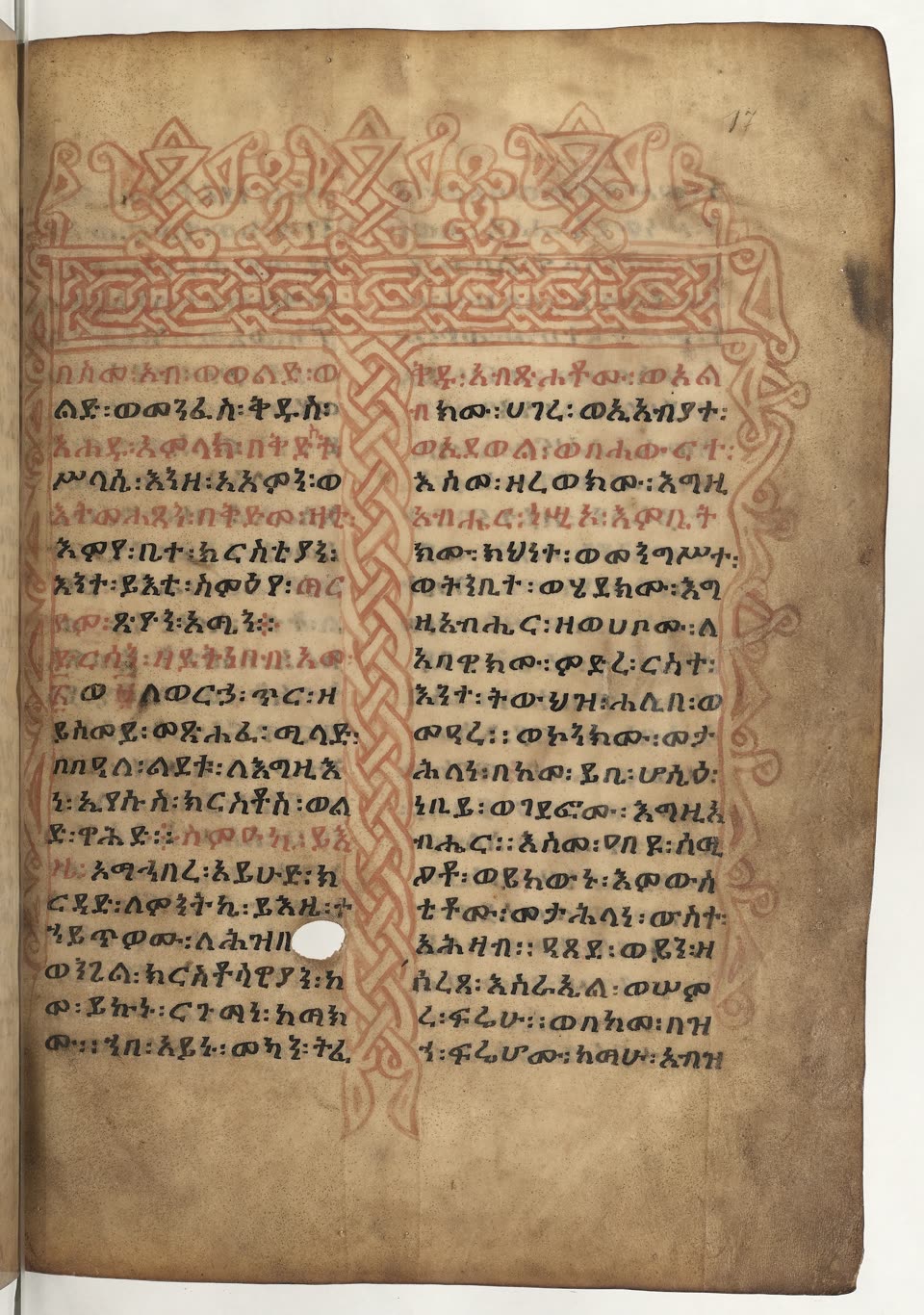
What the President of Ethiopia said on the feast. The construction is a split one — እንኳን … አደረሳችሁ wraps the name of the feast — and it does not mean merry Christmas. It means something closer to: you have been brought to the feast of the Nativity of Jesus Christ, and congratulations on that. The wish is about arrival, not about merriment, and the same formula serves Easter, Meskel and the anniversary of Adwa with the feast name swapped in.
The same presidential message, published by the same agency on the same day in Tigrinya — one utterance, two languages, one publisher, which is the strongest corroboration a greeting can get. Tigrinya names the feast በዓል ልደት, the feast of the Nativity, where Amharic says ገና. ENA's own headline and body differ on one letter, ኣብጸሐኩም against ኣብፀሐኩም — ጸ against ፀ — which is ordinary orthographic variation in Tigrinya and is recorded rather than silently tidied.
An Oromo speaker, via Wikimedia Commons, saying Baga — the first word of the greeting, not the whole phrase.
Wikimedia Commons, CC0.
Oromo, in Qubee — the Latin orthography, which is why this greeting is recorded in Latin script where the other two are in Ethiopic. The formula has the same shape as the other two languages': baga … isin gahe, congratulations on the feast having reached you. ENA's Afaan Oromoo service carries 769 articles on Ayyaanni Qillee and glosses the name itself — «Ayyaanni dhaloota Iyyasuus Kiristoos (( Qillee )», the feast of the birth of Jesus Christ — and the same greeting also appears with the feast named in full: «baga ayyaana dhaloota Iyyasuus Kiristoosiin isin gahe». Oromo is the largest first language in Ethiopia.
The fast of the prophets — forty-three days without meat, milk or eggs
ጾመ ነቢያት, Tsome Nebiyat, the Fast of the Prophets, is one of the seven canonically acknowledged fasts of the Ethiopian Orthodox Tewahedo Church. It begins on Hidar 15 and ends on Tahsas 28, the eve; the feast is the next day. Through it the faithful abstain from all animal products — meat, dairy, eggs — and from alcohol. The Church calls it forty-three days. It is also called ye-Lidet Tsome, the Christmas Fast, because Christ is born at the end of it, and it carries the name of the prophets because their prophecy was fulfilled.
The Fast of Prophets — Mahibere Kidusan — Ethiopian Orthodox Tewahdo Church Sunday School Department
The Gregorian date is fixed and the Ethiopian one moves
The feast is Tahsas 29 and falls on 7 January — but which Ethiopian day it is shifts, because the Ethiopian leap day is inserted in the thirteenth month and the Gregorian one is not. The Church states it directly: the fast «begins every year on Hidar 15 (November 25) and ends on Christmas Eve 29th of Tahsas, while in the evangelical year of John — it rotates in a four-year cycle — ends on Christmas Eve 28th of Tahisas». The years themselves are named for the evangelists: Luke takes the leap year, then John, Matthew, Mark.
ገና is also a game, played with curved sticks between villages
ገና is also a game, and it is played at Christmas because of what the shepherds are said to have done when they heard. Ye Genna Chewata is closer to field hockey than to anything else: two teams, a stick of wood called a gena, and a hard round wooden ball called an erur.
Two old men are chosen out of the crowd as referees. It starts in the afternoon and ends when the sun goes down. It is rare in the cities now and ordinary in the countryside, and the Ethiopian Traditional Sports Federation has written rules for it.
The licence it grants is part of the point. Begena chawata aykotum geta — at the Genna game, lords do not take offence.
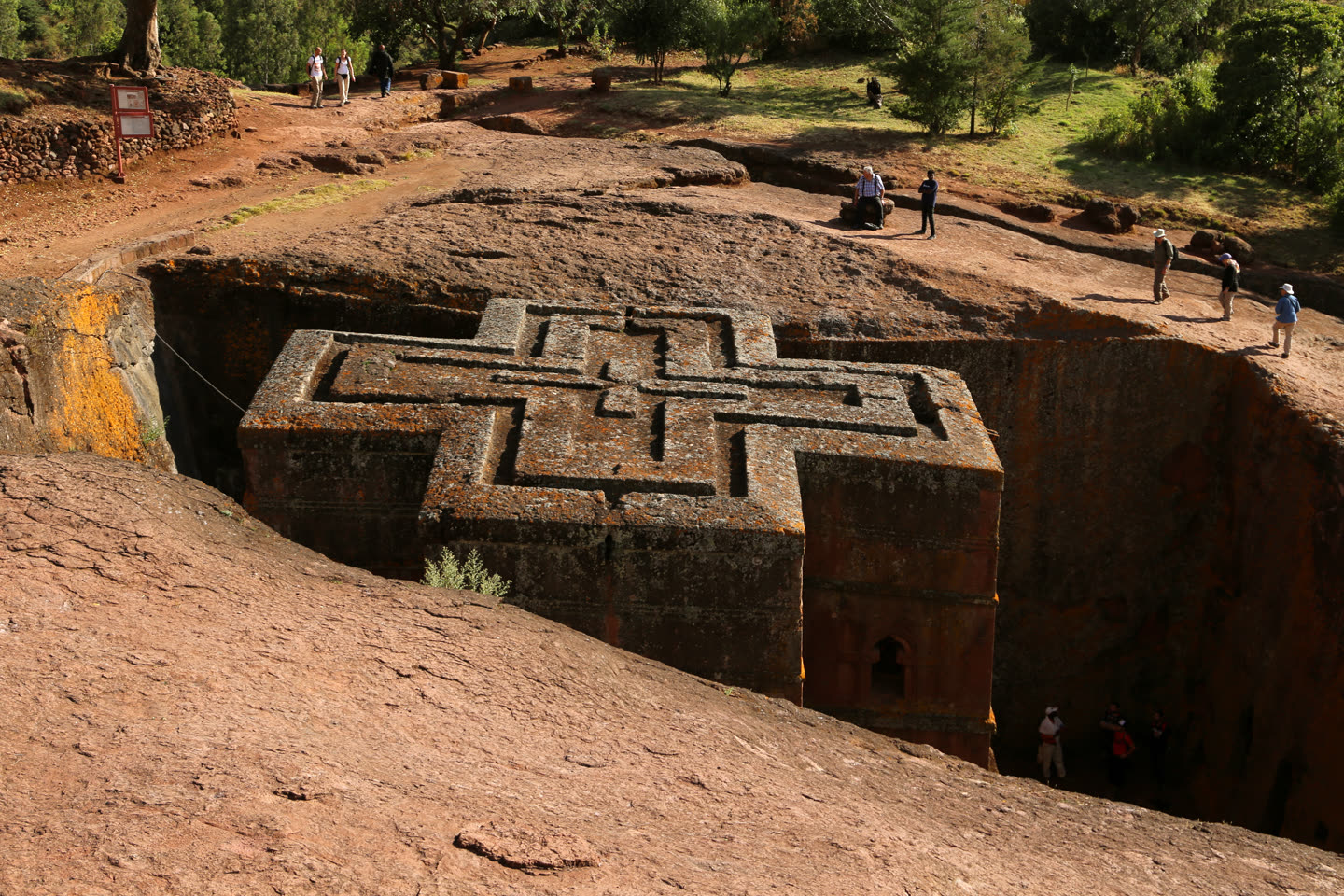
On the eve the faithful go to church for a service that runs through the night, beginning around six in the evening and ending near three in the morning. People form a long looping procession around the circumference of the church, carrying candles. A thin white cotton garment, the netela, is worn. At Lalibela, where eleven churches are cut down into the rock rather than built up from it, the feast draws pilgrims in their tens of thousands.
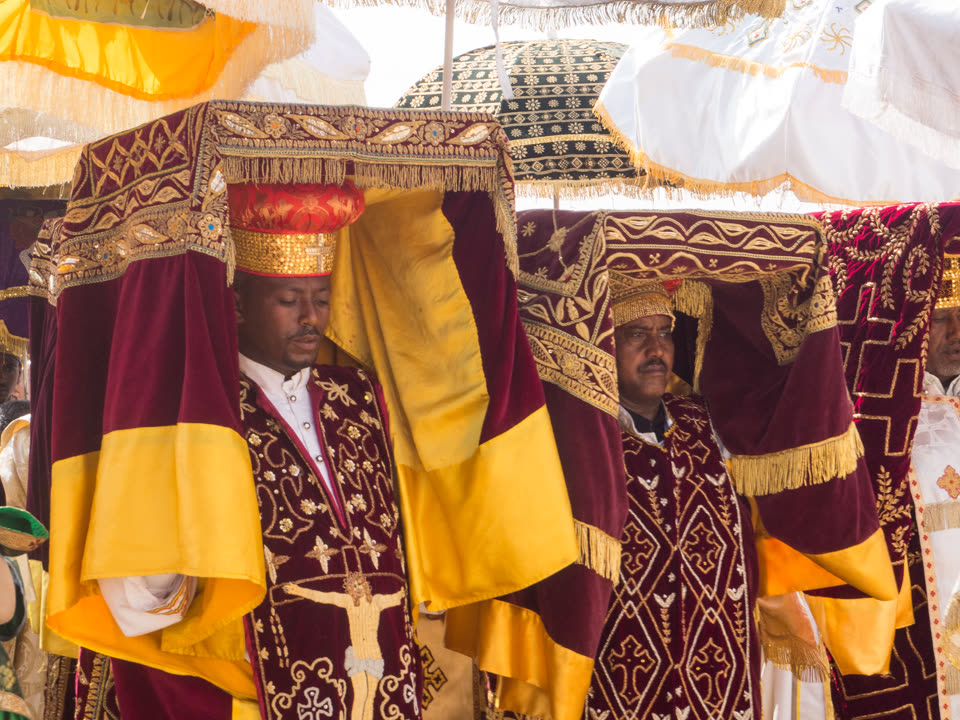
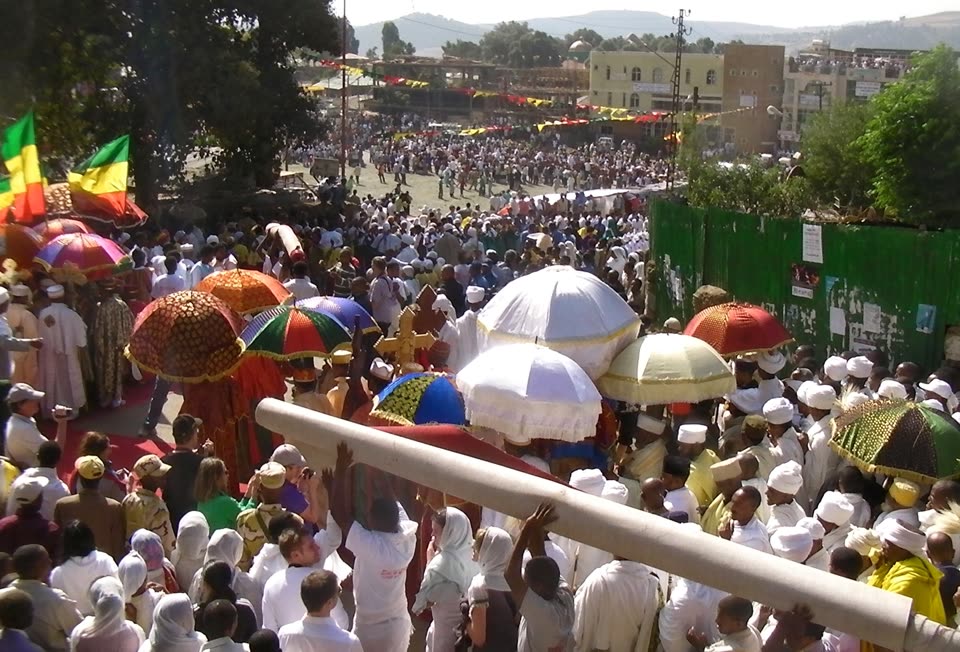
The Christmas season does not end at the feast. On 19 January — Tir 11 in the Ethiopian calendar — comes Timkat, ጥምቀት, a Geʽez word meaning immersion in water. It is the Ethiopian Epiphany and the larger celebration of the two. Priests carry the tabot, the replica of the Ark of the Covenant that every Ethiopian church holds, out of the sanctuary and down to a river or a pool, escorted by thousands; the water is blessed and the people are sprinkled with it. The feast runs two days, the eve and the day, and extends to a third only in churches whose tabot is dedicated to Archangel Michael, where the miracle at the wedding of Cana is kept.
The Festival of Timket — Mahibere Kidusan — Ethiopian Orthodox Tewahedo Church Sunday School Department
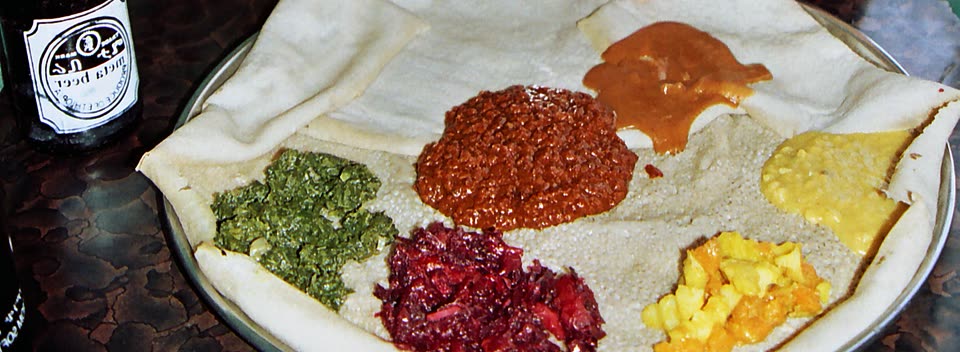
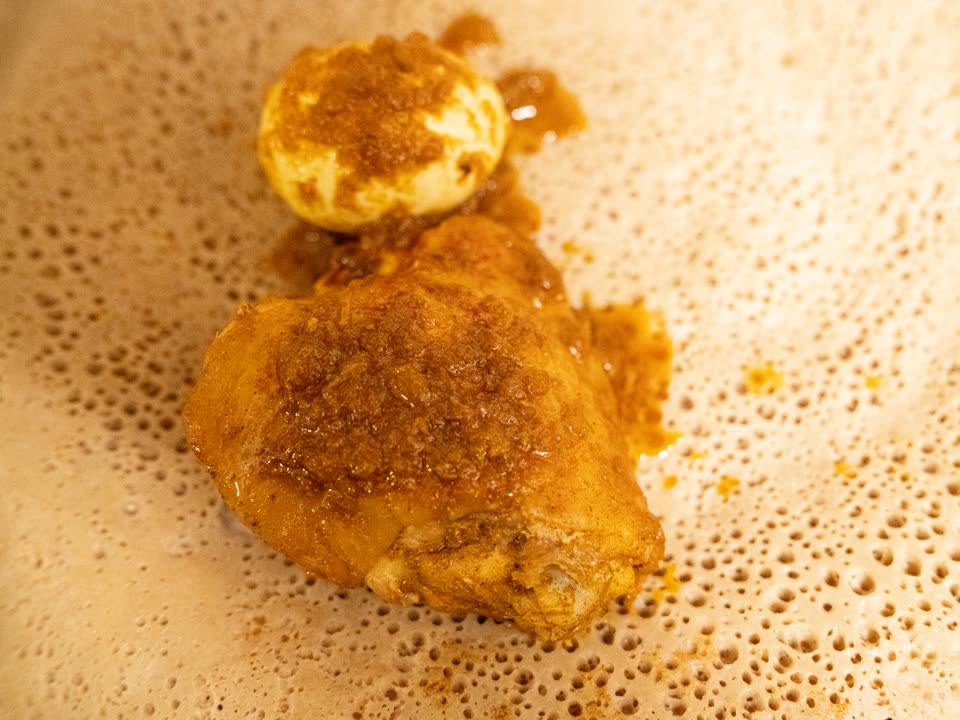
The chicken stew that breaks the fast: onions cooked down slowly without fat before anything else is added, then berbere, then niter kibbeh — spiced clarified butter — and chicken, with hard-boiled eggs. After forty-three days without meat, dairy or eggs, a dish that is all three at once is the point rather than the menu.
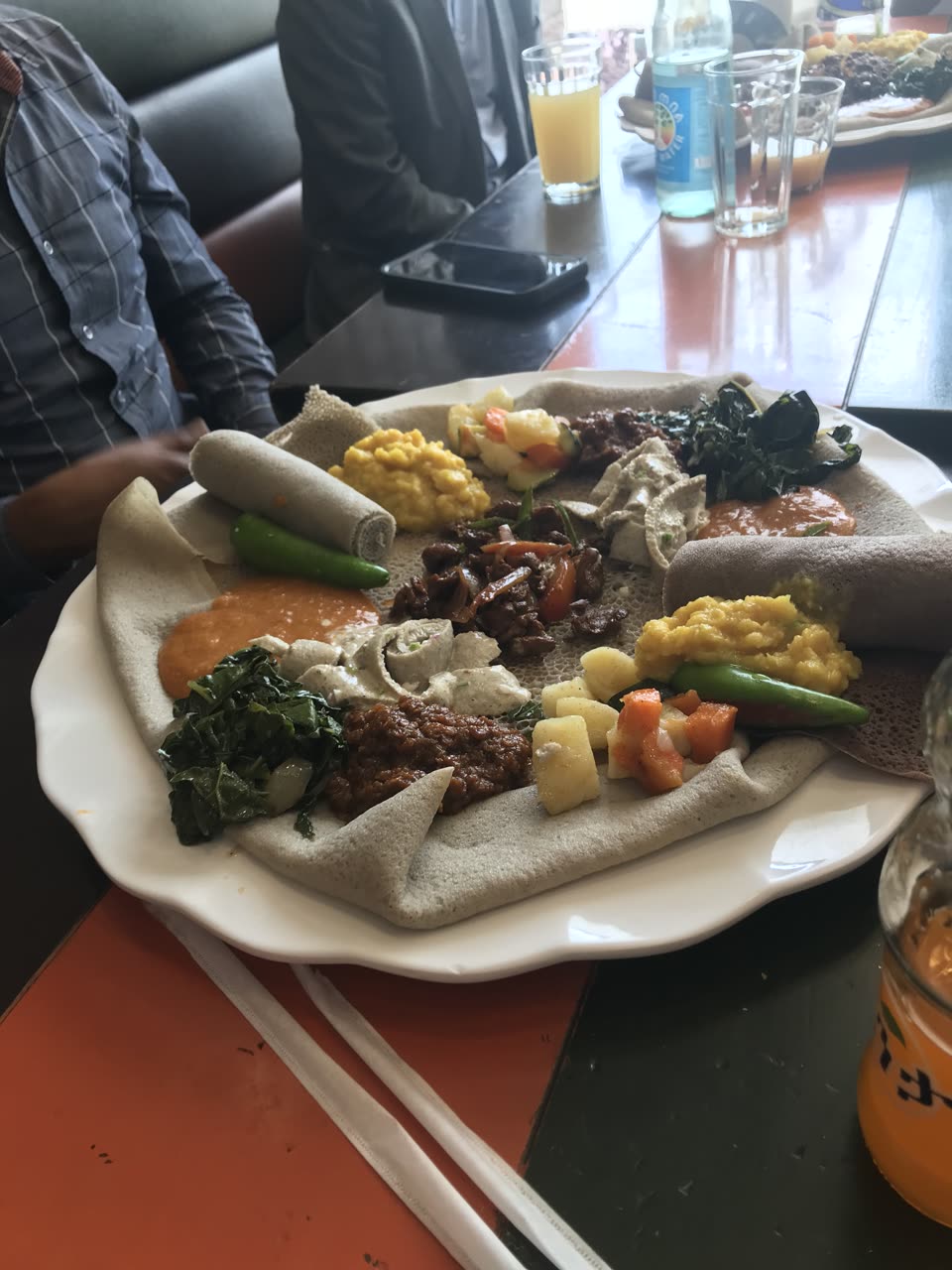
The sour fermented flatbread of teff that the stew is served on and eaten with — torn, and used as the spoon. It is a staple rather than a Christmas food, and it is on this list because the Christmas table is not a different table: the feast is the same food in quantity, with meat in it again.
Widely repeated claims about Christmas in Ethiopia that do not survive
checking. Each one says what is actually the case, because a correction
with nothing in its place leaves you worse off than before.
Contradicted
Ethiopia celebrates Christmas on 7 January because it uses the Julian calendar, like Russia and Serbia.
What is actually the case. Ethiopia uses the ETHIOPIAN calendar, which is not the Julian calendar and is not the Gregorian one either. It has thirteen months — twelve of thirty days and a thirteenth, Pagumen, of five days or six — its months begin on the same days as the Coptic calendar, its month names are in Geʽez, and its year number is seven or eight behind the Gregorian depending on the month. It reckons from the Annunciation as dated by Annianus of Alexandria to AD 9, where Europe followed Dionysius Exiguus and placed it nine years earlier. The feast is Tahsas 29, and it coincides with the 7 January of the Julian-calendar churches without being the same thing: Russia arrives at 7 January by keeping 25 December thirteen days behind the Gregorian, and Ethiopia arrives there by a calendar that never had a 25 December to be late with. The shared date is a coincidence of two different systems, not a shared system.
«Merry Christmas» in Amharic is Melkam Gena, and that is how Ethiopians greet each other at Christmas.
What is actually the case. መልካም ገና is real Amharic and really used, but it is a translation of an English sentiment rather than the formula the occasion calls for. The greeting the Ethiopian state uses is a split construction: እንኳን … አደረሳችሁ, wrapped around the name of the feast — እንኳን ለእየሱስ ክርስቶስ የልደት በዓል አደረሳችሁ — and it congratulates you on having been brought to the day rather than wishing you a merry one. The same shape appears in Tigrinya as እንኳዕ … ኣብጸሐኩም and in Oromo as baga … isin gahe, so it is the Ethiopian formula and not an Amharic peculiarity. In the Ethiopian News Agency's own Genna coverage the Melkam Gena form appears mostly in messages from foreign embassies, while the President, the regional governments and the Government Communication Service use the እንኳን formula.
In the Ethiopian account the Magi are not three men. They are three kings — and behind them, three thousand.
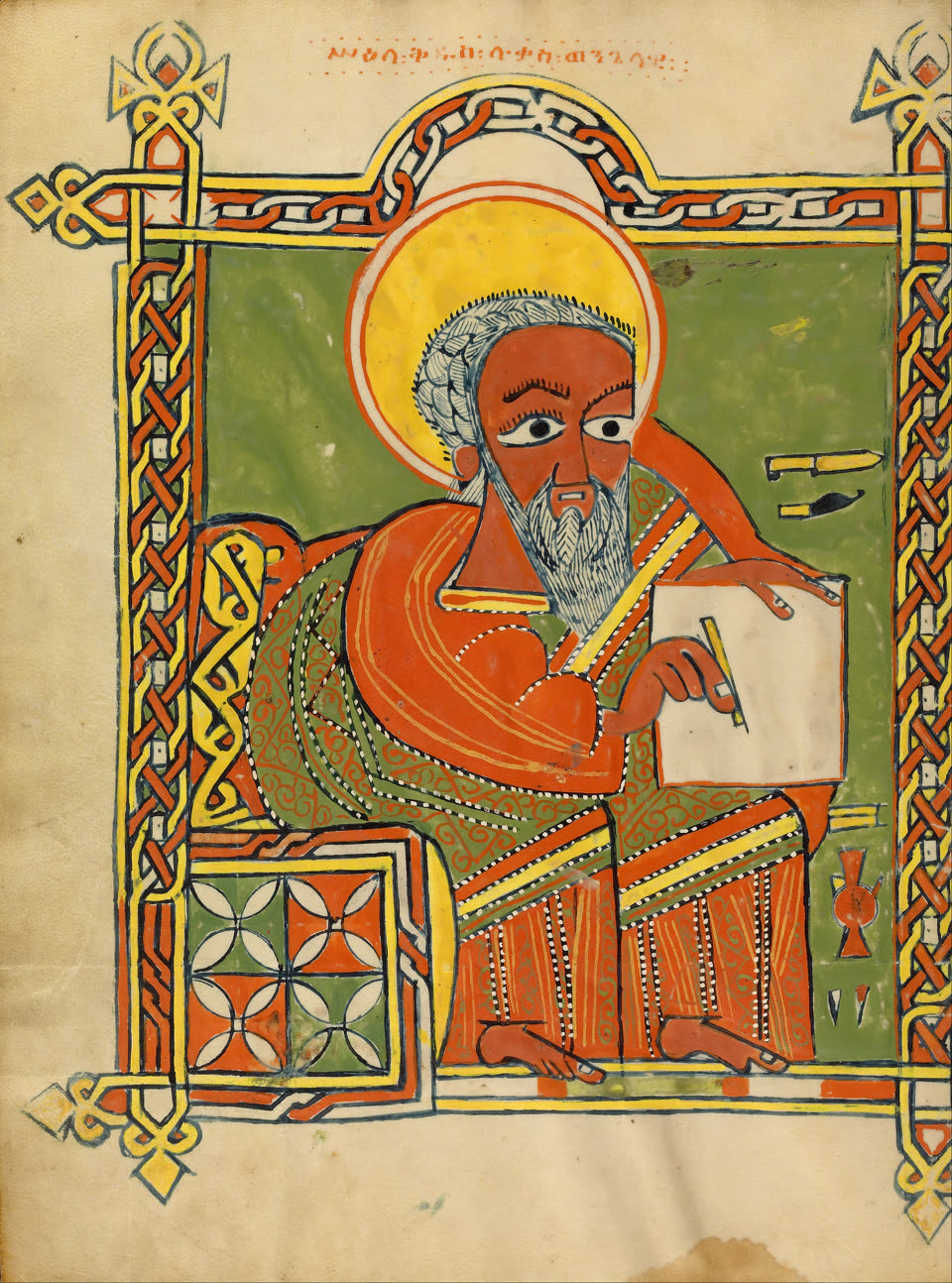
The Synaxarium reading for the feast says it plainly: «the number of those diviners was three thousand, and their kings were three, and each of them had one thousand and seventy horses». They are of the family of Balaam, and they are diviners and astrologers who watch the stars and hold converse with them, which is why they could read one.
The three gifts are still three, and the church reads them the usual way: gold as tribute because he was a king, incense because he was God, and myrrh as a symbol of a life-giving death.
Ethiopia counts its years in a four-year cycle named after the evangelists — Luke takes the leap year, then John, Matthew, Mark — and the year number itself runs seven or eight behind the Gregorian depending on the month. The gap is not a constant: it is eight years from 1 January until 10 or 11 September, and seven for the rest.
The Amharic name of the feast has two competing origins. Amharic Wikipedia derives ገና straight from the Greek Χριστούγεννα, Christoúgenna, the birth of Christ. A widely repeated alternative derives it from «gennana», meaning imminent, for the coming of the Lord. The first is in the native-language encyclopaedia; the second is in diaspora and popular sources, several of which also state that Ethiopia uses the Julian calendar, which it does not.
No figure brings the presents, because there are not really any presents. The Ethiopian Christmas is kept by going to church through the night, eating after forty-three days of fasting, and playing a game in the field between two villages. Children are sometimes given a little clothing by their family, which is a family being kind rather than a figure arriving. Where Santa Claus is known he is recent and Western, and Amharic has made him a name by translation — የገና አባት, Yegena Abat, «Christmas Father». The name exists; the custom behind it does not.
Amharic does not have one word for Christmas. It has ገና, the feast on Tahsas 29, and it has የፈረንጆች ገና — the Franks' Christmas — for the 25 December one. The Ethiopian state keeps the distinction and greets them separately. On 25 December 2023 the Prime Minister sent a message to friends of Ethiopia and members of the diaspora who celebrate the Franks' Genna, or Krismas. Twelve days later, on Tahsas 28, the President sent the feast's greeting to Ethiopians. Two feasts, two names, two audiences, and the difference is carried by one qualifier on the same noun.
Ethiopia's holiday law gives Christmas two dates, and they are both right. Proclamation No. 1334/2024 is printed in the Federal Negarit Gazette in two columns, Amharic and English, and in the sub-article that makes Christmas a national religious holiday the English column says January 07 while the Amharic column says Tahsas 29 — each fixing the feast in its own calendar. The same sub-article also carries a caveat no other holiday in the act gets: the English allows for «a change of date in a leap year», and the Amharic for «the difference that comes every four years». Meskel is Meskerem 17 and 27 September with no such clause, and Epiphany is Tir 11 and 19 January without one either. The law legislates around a four-yearly wobble in one feast and leaves the rest alone.
The feast UNESCO lists is not Christmas. Ethiopian Epiphany — Timkat — was inscribed on the Representative List of the Intangible Cultural Heritage of Humanity in 2019, nominated by Ethiopia itself; Genna was not, and is not. An Ethiopian church source puts the January feast twelve days after Christmas above Genna, and the inscription is the same conclusion reached by a different route: of everything Ethiopia could have put forward about its Christmas season, what it put forward was the baptism.
The nomination file also names the eve, 18 January: Ketera, which it glosses as the blocking of the flow of water so that it can be blessed for the celebrants. The tabot is escorted that evening to a Timkete-Bahir — a pool, a river, or a reservoir built for it — and the night is spent in prayer and hymn before the morning’s sprinkling.
Ethiopian epiphany — UNESCO Intangible Cultural Heritage — Representative List (14.COM, 2019)
Sources
Every claim carries its own citation. They are collected below, so you
can see what the page rests on and how much of it comes from where.
Ethiopian Christmas: Genna — Ethiopian News Agency (ENA), English service. Retrieved 2026-10-13. archived 1 December 2025The state news agency's own account, which also gives the legend: the game began «from the joy of shepherds when they heard the birth of Jesus Christ that made them to jump and throw everything that they found around them by their wooden stick».
The Ethiopian Calendar — Ethiopian Orthodox Tewahedo Church. Retrieved 2026-10-13. archived 11 October 2026The church sets out the cycle: «Each year in this four-year period is dedicated to one of the four Evangelists who come in the following order: Mathew, Mark, Luke and John. The year of Luke is the Ethiopian Leap year and is the year which precedes the western leap year.»
The Feast of Lord Jesus Christ's Birthday — the Synaxarium reading for Tahsas 29 — Ethiopian Orthodox Tewahedo Church, Mahibere Kidusan. Retrieved 2026-10-13. archived 17 March 2026The church's own reading for the feast, which is a better account of the night than any description of it: the doctors hold that the Nativity should be kept over two days «for the Nativity took place in the last part of the night of the twenty-eighth day, and in the first part of the night of the twenty-ninth day».
The Fast of Prophets — Mahibere Kidusan — Ethiopian Orthodox Tewahdo Church Sunday School Department. Retrieved 2026-10-10. archived 31 December 2025«This year's fast begins at November 24, (Hidar 15) 2022 (2015 E.C) and lasts until January 6, (Tahisas 28), 2023. At January 7 (Tahisas 29), on the celebration of the Birth of Lord Jesus Christ, it is festival.» And from the same body: «The Orthodox Church has observed the Feast of the Nativity of Jesus Christ with 43 days fast… it has been recognized officially as the Fast of the Prophets because the prophecy about the coming of Christ was fulfilled.»
The Fast of the Prophets (Tsome Nebiyat) Begins on November 25 — Mahibere Kidusan — Ethiopian Orthodox Tewahdo Church Sunday School Department. Retrieved 2026-10-10. archived 11 June 2026Verbatim, including «while in the evangelical year of John (it rotates in a four-year cycle)». The evangelist naming of the four-year cycle is corroborated independently by it:Calendario etiopico: «gli anni sono distinti dal popolo coi nomi degli evangelisti, Lucàs l'anno bisestile, e successivamente gli altri 3 Iohannès, Mattieuòs, Marcòs».
The Festival of Timket — Mahibere Kidusan — Ethiopian Orthodox Tewahedo Church Sunday School Department. Retrieved 2026-10-11. archived 4 October 2026«'Timket' is a Geʽez word meaning "immersion in water" similar to the Baptism of Jesus Christ. The word also denotes epiphany which is driven from the Greek word epiphaneia meaning "appearance". The annual Timket celebration is held across Ethiopia on Tir 11 E.C (January 19 G.C) with processions of priests carrying replicas of the Ark of Covenant, locally known as 'Tabot', escorted by thousands of believers.» And on the span: «The festive lasts two days, the 18th (the eve of Timket) and the 19th of January, even extending to a third day where there is Tabots dedicated to Archangel Michael whereby celebrated the feast of the miracle of Jesus at the wedding of Cana.»
Ethiopian epiphany — UNESCO Intangible Cultural Heritage — Representative List (14.COM, 2019). Retrieved 2026-10-11. archived 1 October 2026«The commemoration starts on the eve of the main festival on 18 January. The eve is known as Ketera, which means blocking the flow of water for the blessing of the celebrants. On the eve of Ketera, people escort their parish church tabot (replicas of the Ark of the Covenant) to Timkete-Bahir (a pool, river or artificial reservoir)… Hundreds of thousands participate in the actual festival on the following day – 19 January.»