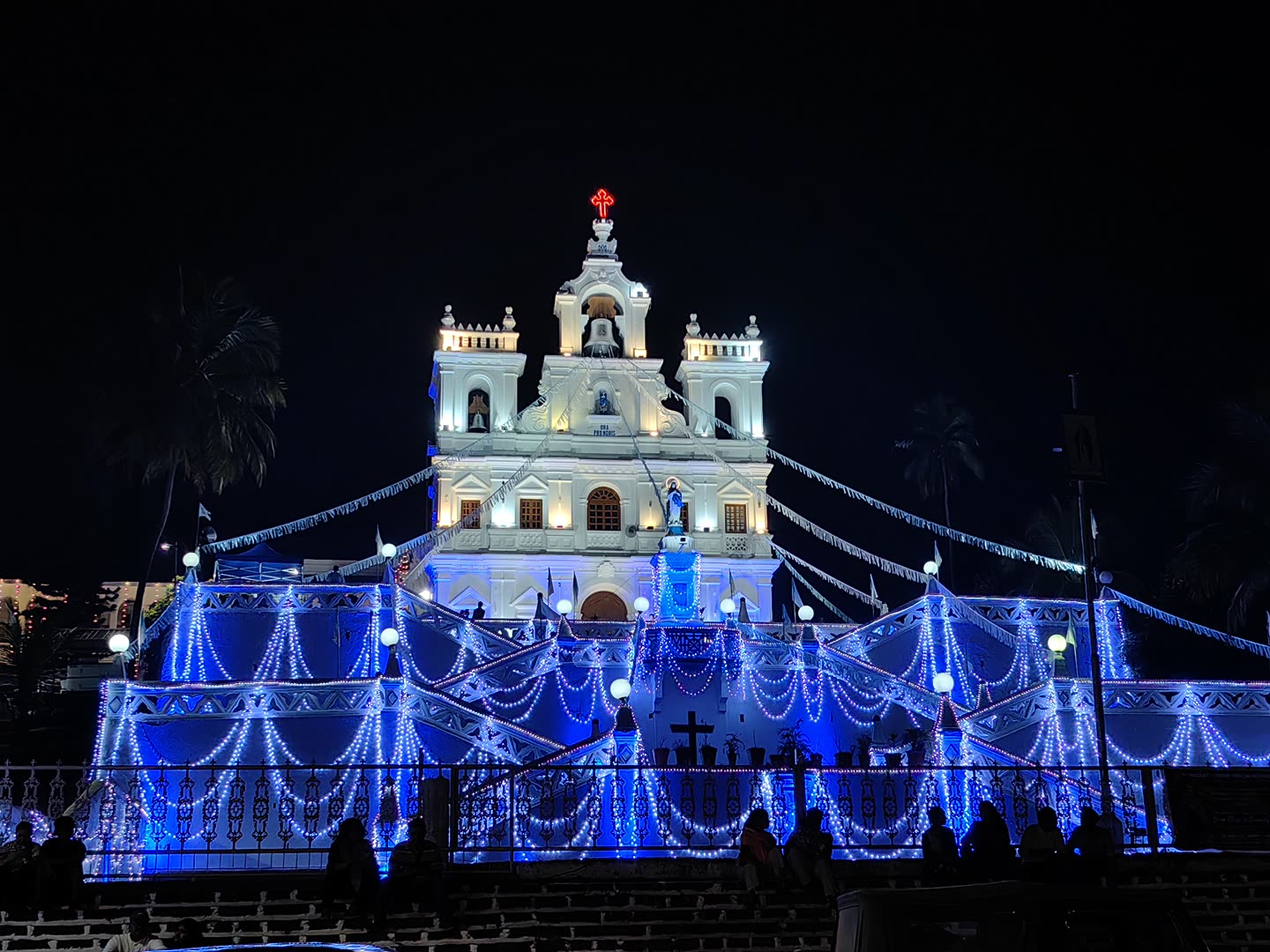
Christmas Day in India is 25 December. It is a public holiday.
How to say it
English
Merry Christmas
say it: MERR-ee KRIS-muss
A synthesised voice — not a recording of a person — saying Merry Christmas
in en-IN.
English is what the greeting is said in across most of India, including by carollers walking through Naga towns on Christmas Eve.
The day itself has its own names in Indian languages, and the Bengali one is the plainest of them: Burra Din or Bodo Din, the Big Day. A Kolkata paper uses it as the ordinary name for the festival — its account of the city's Christmas food stalls is headed «Food stalls for Burra Din» — and the spread it describes is a fair picture of the city: Anglo-Indian panthras beside Bengali pithe and fish fry.
The carol singers come to the house, and the service depends on the denomination
The thing most Indian Christians have in common at Christmas is a group of people arriving at the door to sing.
An overview of the country's Christmases, written to introduce an anthology of them, puts it this way: «Midnight masses and Christmas morning services are common pretty much everywhere, though, and groups of carol singers touring the parish, singing carols at the homes of parishioners, for several days or even weeks before Christmas, is an integral part of festivities. The singers may carry guitars or dholaks, they may sing a cappella; but all of them can be assured that they will be welcomed into homes, heard, applauded, and fed.»
What the carols are sung in is the other half of it. The same piece runs the range from «the stirring ‘Hallelujah Chorus' to vibrant songs of praise sung in every language from Punjabi to Tamil, Hindi to Munda, Khariya, and Mizo tawng».
And almost nothing beyond that generalises. Indian Christians are Catholics, Syrian Christians, Baptists, Anglicans, Methodists and Lutherans among others, and the overview is careful about what follows from that: they «all have their own slightly differing ceremonies». Some communities fast before Christmas — but only some, and the source says so in the same breath.
Goa: the Misa de Galo, and then a fortnight of carrying sweets to the neighbours
In Goa the midnight Mass has a Portuguese name that nobody translates: the Misa de Galo, the Mass of the Cock.
What happens the next morning has a name too. Goan Catholic families make up platters of sweets and savouries and take them round — to neighbours, to friends, to relatives — and the platter is the kuswar, in Konkani the natalancho kunsvar. A Goan paper describes the sweets on it as «dodol, bebinca, perada, jujubes, marzipan, doce, to mandare, gons, letri, kulkuls and neureos», and says what the exchange is for in one line: «Solidifying relationships among people – all this served sweet.»
The custom is traced to the Portuguese consoada, and the same paper takes the word one step further back: «Consoada, which means ‘A Christmas Eve dinner meal' in Portuguese, is derived in turn from the Latin word consolare which means ‘to comfort'.» That is a newspaper's etymology rather than a dictionary's.
Two details in it are worth more than the list of sweets. The platter is not fixed — «the components of the platter vary from home to home», and it changes as you move from north Goa to south. And it is sent early to anybody in mourning: «When it comes to those in mourning, the tasty kuswar is usually sent a day prior to Christmas, and is a practise that continues to this day.»
What has changed is who makes it. A Goan daily recorded the shift a decade ago: «While earlier entire families would get together and prepare the goodies, these days, lack of time due to professional commitments and the easy availability of ready prepared items means that most of these are either ordered or purchased from stores.»
Kerala: a paper star over the veranda, and a cake with no plums in it
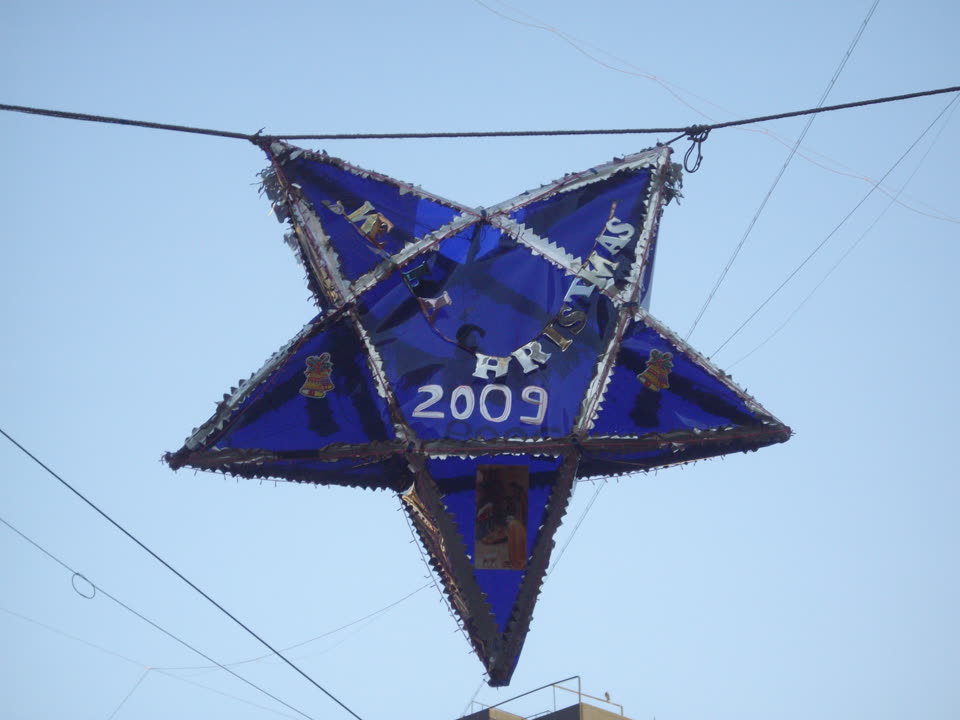
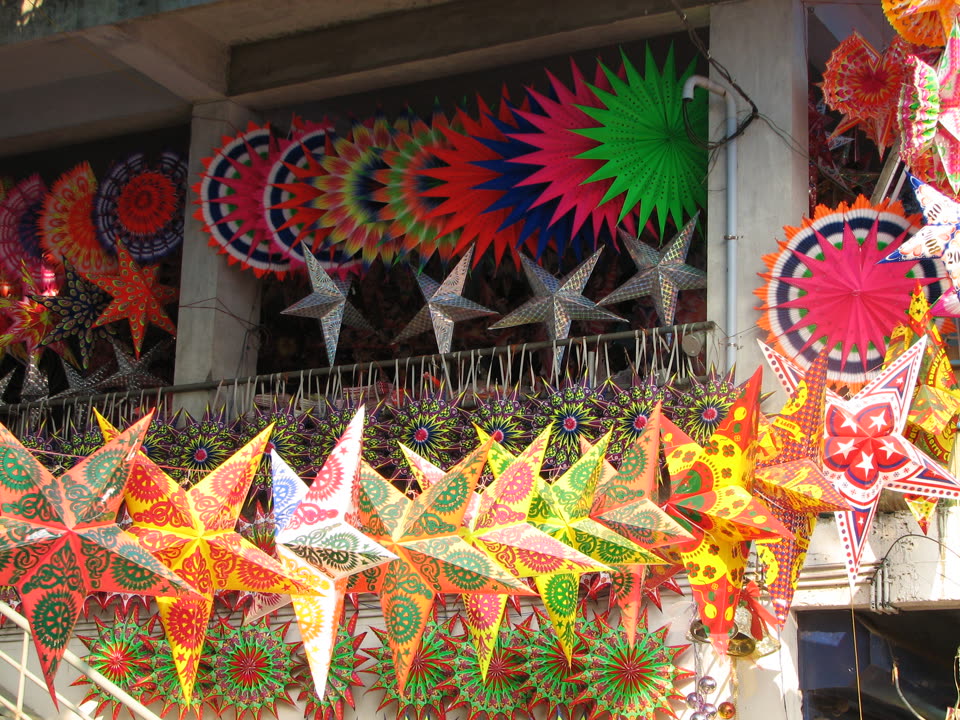
In Kerala the season is announced by a star. Paper lanterns cut into points go up over verandas and shopfronts from the start of December — «Twinkling in myriad colours and shapes, star-shaped paper lanterns herald the season of cakes, wine, feasts and family reunions in Kerala.»
They used to be made rather than bought, and the materials are listed by a Kerala report of the craft coming back: «In the decades before stars could be picked up from shops, they were made at home with reed, cane, bamboo, midrib of coconut leaves, dried sticks and coloured paper.» The job was given to the children.
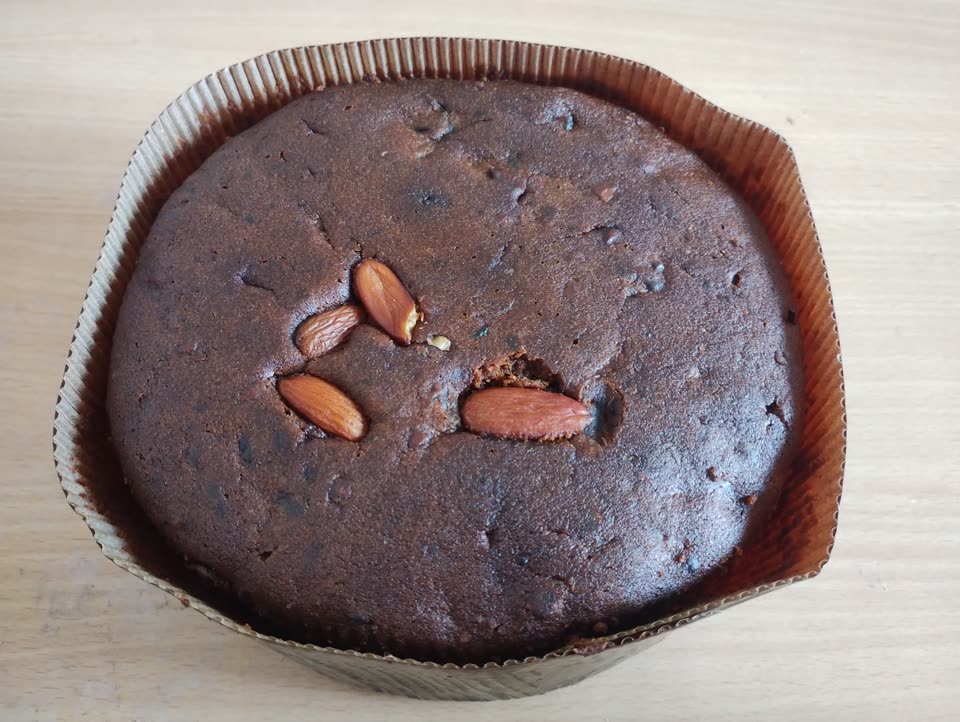
The other fixture is the cake, and its name is wrong. «Rich, dark and toothsome, plum cakes are the flavour of Christmas in most homes in Kerala», writes a Kerala paper, and then: «Strangely, there is no plum in the plum cake.»
The public ceremony of mixing the fruit for it is younger than it looks. A Malayala Manorama feature dates it: «It was only after 1930 that the cake mixing ceremony began in hotels and bakeries in Kerala», and adds that before then the ceremony «was exclusively reserved for the whites and the aristocrats». The hotel version with photographers is more recent still.
The Northeast: a feast the whole village eats, where cake and wine are the newcomers
In the Christian-majority states of the Northeast, Christmas is the public festival of the year and the church cooks for everybody.
In Nagaland the streets and the government offices go up in lights, carollers walk from house to house on Christmas Eve, and after the Christmas Day service there is a feast — one that, a Naga news report notes, «was also extended to non-Christians».
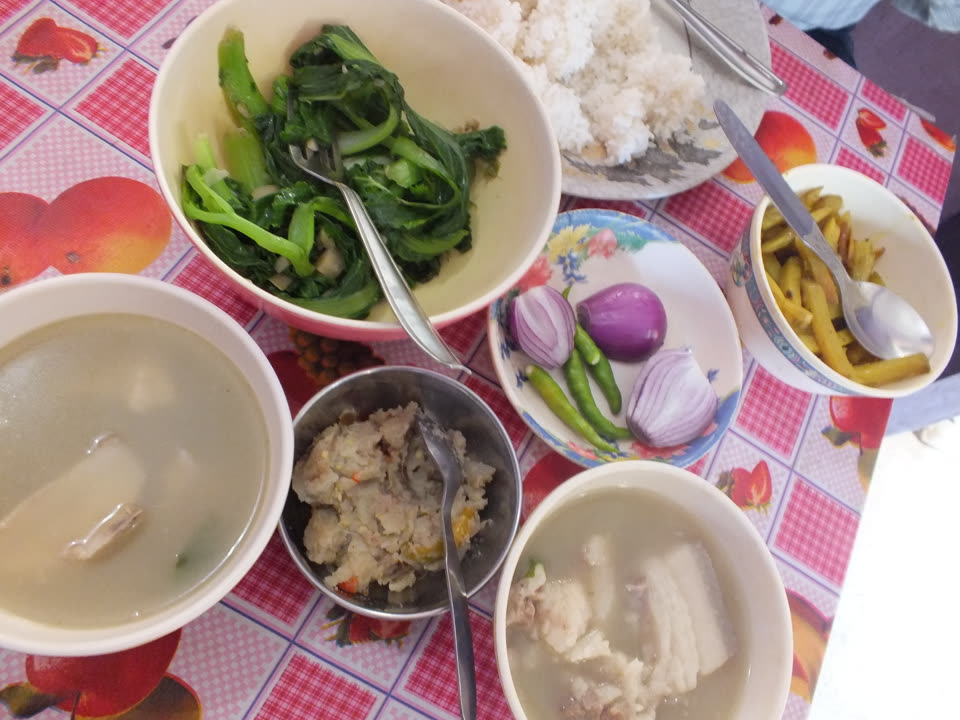
What is on the table is nothing like a European Christmas dinner. A member of the Zeliang community describes a Dimapur feast of pork innards, smoked pork with axone — fermented soya — pork cooked in bamboo, rice, a chutney of fermented mustard leaves and «endless cups of Phika cha», black tea. And she is exact about what is not there: «Dessert is usually fresh fruits; cakes and wine are not part of traditional feasts though many are adapting it now into the Christmas day celebrations.» The feast is after the morning service, and afterwards there are music competitions and stand-up comedy.
In Mizoram the drum is the khuang, and the feast has its own name and its own day: «Apart from church services, Mizos indulge in a lavish ruai, or community feast, a day after Christmas.» The cooking is organised rather than potluck — the church appoints a fatu, a cook, to chop and slice and cook for the whole gathering — and the dishes named are sawhchiar, a congee of rice and meat, and vawksa chhum, pork with mustard leaves.
Kolkata keeps Burra Din, and the city cannot agree when its own festival started
Kolkata calls Christmas the Big Day — Burra Din, Bodo Din — and for a fortnight the city behaves as though it belongs to everybody.
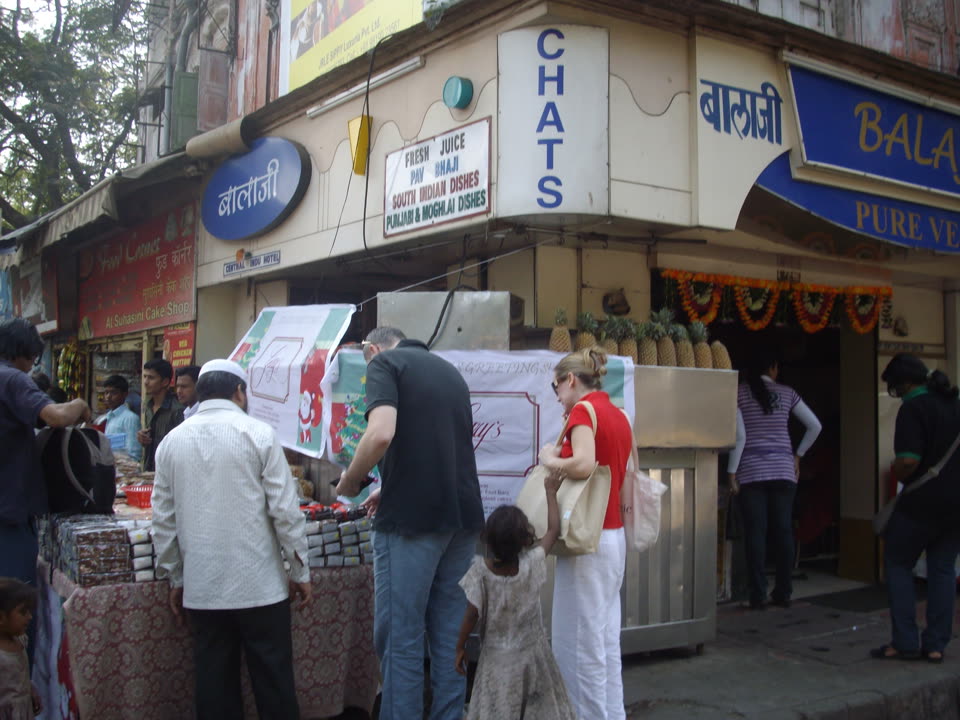
Park Street is closed to traffic, strung with lights made by artisans from Chandernagore, and Allen Park is given over to bands and choirs. The choirs are the measure of the thing: English and Bengali at first, and in 2024 Hindi, Nepali and Santhali as well. The food stalls are headed «Food stalls for Burra Din» and the spread runs «from Anglo-Indian classics like panthras to Bengali pithe and fish fry». From 23 December the festival moves into Bow Barracks, «the historic Anglo-Indian enclave in central Kolkata», whose red-brick buildings are lit and given stages of their own, and out into the districts — Darjeeling, Kalimpong, Asansol, Siliguri, Bandel, Baruipur and a dozen more.
The city's own paper gives two different beginnings, and they are not quite the same event. One account dates it to the change of state government: «Back in 2011, when the new government came into power and Mamata Banerjee became chief minister, Kolkata's Christmas got its own sparkle», with Park Street turned into a Christmas street fair on the model of New York's borough fairs. Another, in the same paper, names something four years older and privately run: «Initiated in 2007 as the Park Street Carnival, the concept was spearheaded by Monica Bhargav Khosla under the Society for Park Street Rejuvenation Kolkata (SPARK), along with Pratap Daryanani (of Oasis), Deepak Puri (of Trincas), among others.»
A carnival organised by a street association in 2007 and a state-backed festival launched in 2011 are two different things with two different organisers, and both are printed above rather than one of them chosen.
Not a dish but a plateful: the assortment of sweets and savouries Goan Catholic families make for Christmas and carry round to each other's houses.
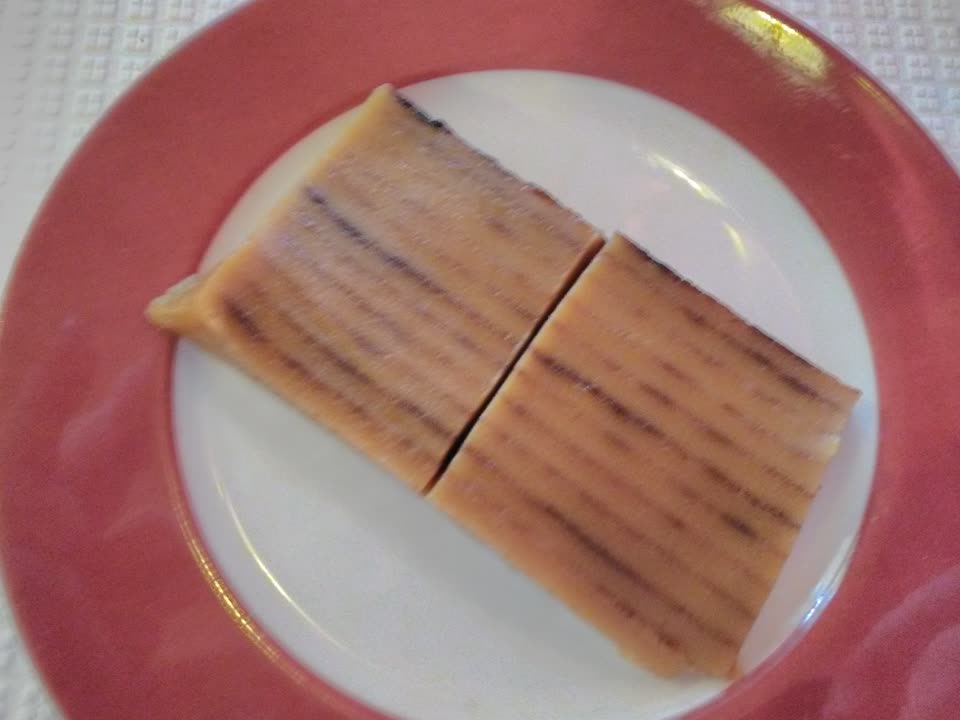
What goes on it is a long and unfixed list — dodol, bebinca, perada, jujubes, marzipan, doce, mandare, gons, letri, kulkuls and neureos among them. Kulkuls are curls of fried dough glazed with sugar; neureos are fried pastries stuffed with coconut, jaggery and dried fruit; mandare is a sweet papad of rice and pumpkin; and bebinca is the layered Indo-Portuguese pudding that is the most famous thing on the plate.
The platter is not standard and nobody pretends it is. It differs from house to house and it differs between north and south Goa, and the spelling differs too — kuswar, kunsvar, koswad.
The same custom is kept beyond Goa by other Konkan Catholic communities, and the East Indian Catholics of Mumbai, Palghar and Thane cook with the same Portuguese inheritance.
A dark, dense, heavily fruited cake, soaked and matured for weeks, and the centre of Christmas in Kerala and far beyond it. «Rich, dark and toothsome, plum cakes are the flavour of Christmas in most homes in Kerala.»
There are no plums in it. The fruit is raisins, sultanas, currants, candied peel and whatever else the house keeps, soaked in rum or brandy for weeks or months before baking.
The Hindu reports that «In 1880s Kerala, a plum cake baked for a homesick British planter is said to have been India's first», and the usual version of the story credits Mambally's bakery at Thalassery. No record from the 1880s has been published to confirm it.
In a plum role — The Hindu (MetroPlus), 24 December 2015
The Naga Christmas feast pork with axone, pork in bamboo
After the Christmas Day service in Nagaland the congregation eats together, and what it eats is a Naga meal rather than a Christmas one.
A feast described in Dimapur runs to pork innards, smoked pork with axone — fermented soya, pungent enough to be the signature of the cuisine — pork cooked inside a length of bamboo, rice, a chutney of fermented mustard leaves, and black tea in quantity.
And the absence is the point. «Dessert is usually fresh fruits; cakes and wine are not part of traditional feasts though many are adapting it now into the Christmas day celebrations.» The plum cake that fills every list of Indian Christmas food is, in this part of India, a recent import to the table.
Widely repeated claims about Christmas in India that do not survive
checking. Each one says what is actually the case, because a correction
with nothing in its place leaves you worse off than before.
Unsupported
Indians decorate banana or mango trees instead of fir trees at Christmas
What is actually the case. The claim circulates widely in English-language Christmas listicles and travel blogs. No Indian newspaper, broadcaster or scholarly source saying it has been found.
What Indian sources do describe, repeatedly and in detail, is a star. Paper lanterns cut into points hang over verandas, shopfronts and streets from the start of December in Kerala, in Goa and across the Northeast, and a Kerala report describes how they were made before they could be bought: «with reed, cane, bamboo, midrib of coconut leaves, dried sticks and coloured paper».
If banana and mango trees are decorated anywhere in India, something published in India should say so, and no Indian publication does.
Christmas is a small affair in India, because Christians are only 2.3% of the population
What is actually the case. The percentage is right and the inference from it is not. The 2011 census put the figures side by side: «Total Population in 2011 is 121.09 crores; Hindu 96.63 crores (79.8%); Muslim 17.22 crores (14.2%); Christian 2.78 crores (2.3%)».
2.78 crores is 27.8 million people — more than the population of Australia, and about the population of Nepal. It is also not spread evenly. In the Christian-majority states of the Northeast, Christmas is the public festival of the year: in Nagaland the lights go on in «homes, streets, government offices and commercial buildings», the governor and chief minister issue greetings, and the feast after the service is «also extended to non-Christians».
And it is a gazetted holiday for the whole country, which is a fact about the Indian calendar rather than about the number of Christians in it.
India's first Christmas cake was baked at Thalassery in 1883
What is actually the case. The story is told constantly and the papers that tell it hedge it. The Hindu's version reads: «In 1880s Kerala, a plum cake baked for a homesick British planter is said to have been India's first», and elsewhere the same paper refers to «India's first Christmas cake from Mambally's Royal Biscuit Factory in Kerala».
So what exists is a widely repeated attribution, told by a bakery about itself and relayed by the press with «is said to have been» attached. No document, 1880s newspaper or archival record has been published for it.
What is not in doubt is that the cake took hold: it is now the defining Christmas bake in most Kerala homes, and in a good many homes with no connection to Kerala at all.
India's Christmas Day is the seventeenth of seventeen gazetted holidays, and the other sixteen are a map of the country. The central government's list for 2026 runs: Republic Day, Holi, Id-ul-Fitr, Ram Navami, Mahavir Jayanti, Good Friday, Buddha Purnima, Id-ul-Zuha, Muharram, Independence Day, Milad-un-Nabi, Janmashtami, Mahatma Gandhi's birthday, Dussehra, Diwali, Guru Nanak's birthday — and then Christmas Day, 25 December. Hindu, Muslim, Christian, Sikh, Jain and Buddhist feasts on a single page, decided centrally for every central government office in the country.
The cake-mixing ceremony is about ninety years old, and it began as something ordinary Indians were not invited to. The ritual of tipping dried fruit, nuts and liquor into a great heap and turning it by hand, now photographed in hotel lobbies across the country every November, arrived in Kerala late: «It was only after 1930 that the cake mixing ceremony began in hotels and bakeries in Kerala.» Before that, the same account says, it «was exclusively reserved for the whites and the aristocrats».
In one fishing village near Thiruvananthapuram, Christmas does not end at the church door. «In Puthenthope, a fishing village in Thiruvananthapuram, families head straight to the beach after midnight mass.» There are games and music on the sand through the small hours, and at daybreak many of them go out to sea with food packed to eat on the boat.
Every claim carries its own citation. They are collected below, so you
can see what the page rests on and how much of it comes from where.
How to celebrate Christmas like a Goan: an insider's guide — Condé Nast Traveller India. Retrieved 2026-10-28. archived 8 August 2022For the name of the midnight Mass — «whether you're headed to the Misa de Galo, as the midnight mass is called here» — and for a second description of the kuswar exchange, including the figure of 22 varieties that is widely repeated and is not a fixed canon.Its line that Christmas in Goa is «strictly a black-tie affair» is that writer's framing and is not used above.
In a plum role — The Hindu (MetroPlus), 24 December 2015. Retrieved 2026-10-28. archived 6 December 2021The article's own explanation of the name is sourced to «a search on the Internet» by its own admission, so it is not used as an etymology and the text above offers none.
Christmas celebrations in Goa: Cuddled in sweet memories — The Times of India (Goa), 2016. Retrieved 2026-10-28. archived 15 June 2017For the Konkani name and for the shift to shop-bought platters: «Natalancho kunsvar as the latter is popularly known, is unarguably a much looked forward to part of the festivities», and «the components of the platter vary from home to home».