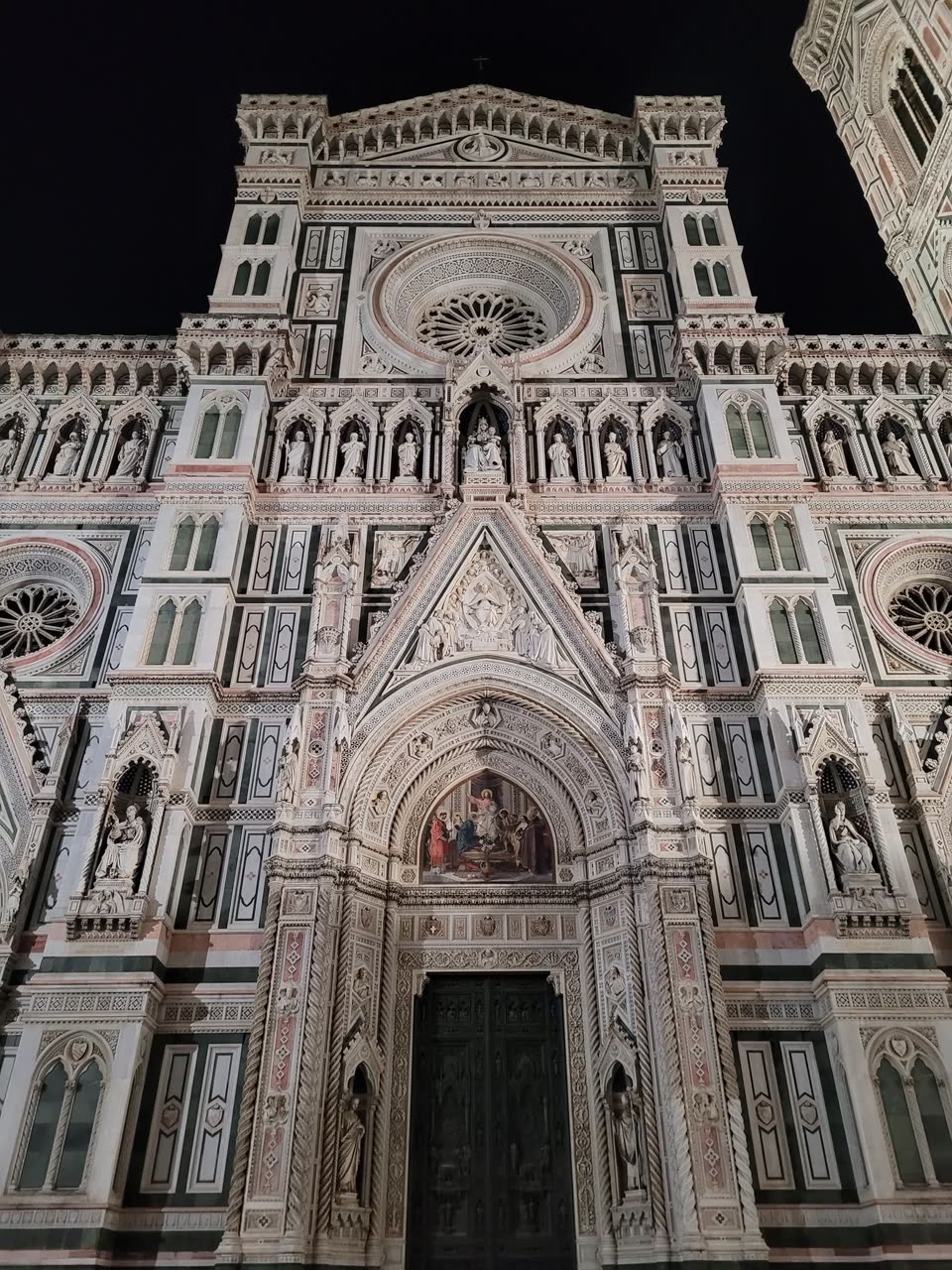
Christmas Day in Italy is 25 December. It is a public holiday.
How to say it
Italian
Buon Natale
Buon Natale
say it: bwon nah-TAH-leh
An Italian speaker recording for Lingua Libre, contributing as «XANA000», saying Buon Natale.
Wikimedia Commons, CC0.
Both words do what they look like: buono shortened before the noun, and Natale from the Latin for of the birth. The final -e is pronounced, so it is three syllables in the second word and not two.
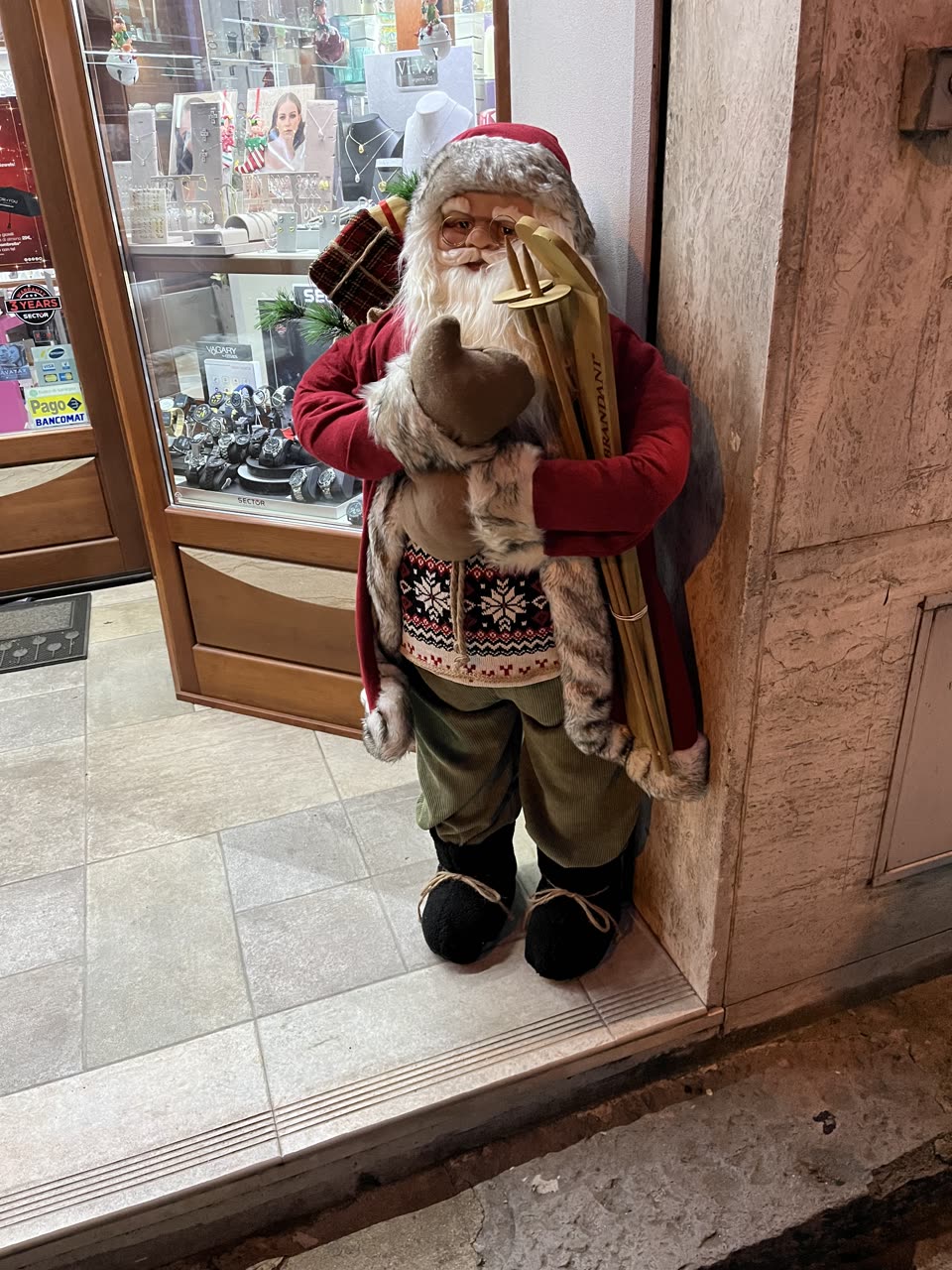
Father Christmas, under a name that means Christmas Daddy, and the dictionary describes him as a costume rather than a person: in aspetto di vecchio barbuto con abiti rossi bordati di bianco, che porta regali ai bambini — in the aspect of a bearded old man in red clothes edged with white, who brings presents to children.
He is the most recent of Italy’s four gift bringers, and the only one who is not a saint, a figure of the Epiphany, or the Child himself.
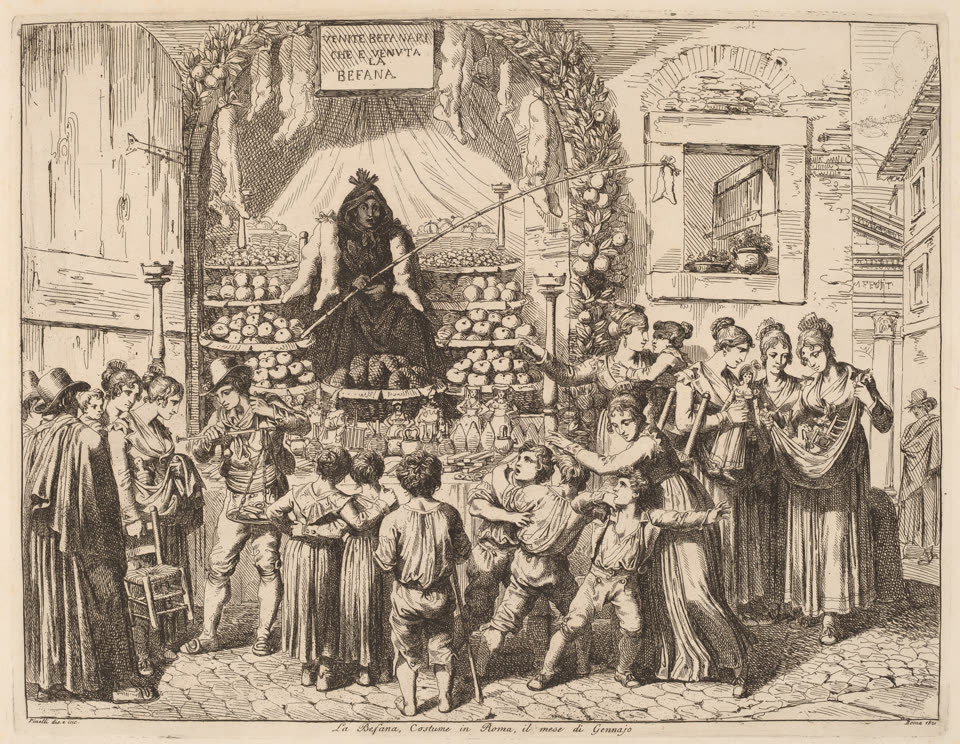
An old woman, ugly and kind, who comes down the chimney on the night of 5 January and leaves sweets and presents in the stockings of good children and lumps of coal for the others.
Her name is the feast's name worn down in the mouth: Befana is the Latin epiphanĭa with the first syllable collapsed, so the figure and Epiphany are the same word. In ordinary Italian la befana still means the holiday as much as the woman — and, unkindly, an ugly woman.
In Bergamo, Verona, Brescia and the towns around them the presents come on the night of 12–13 December, from a saint with a donkey.
Lucia goes secretly from house to house distributing food to the poor, with a crown of light on her head, and the donkey is always beside her — children leave hay out for it the way children elsewhere leave a mince pie. She brings coal to the ones who have not behaved, which is the same sanction the Befana applies three and a half weeks later.
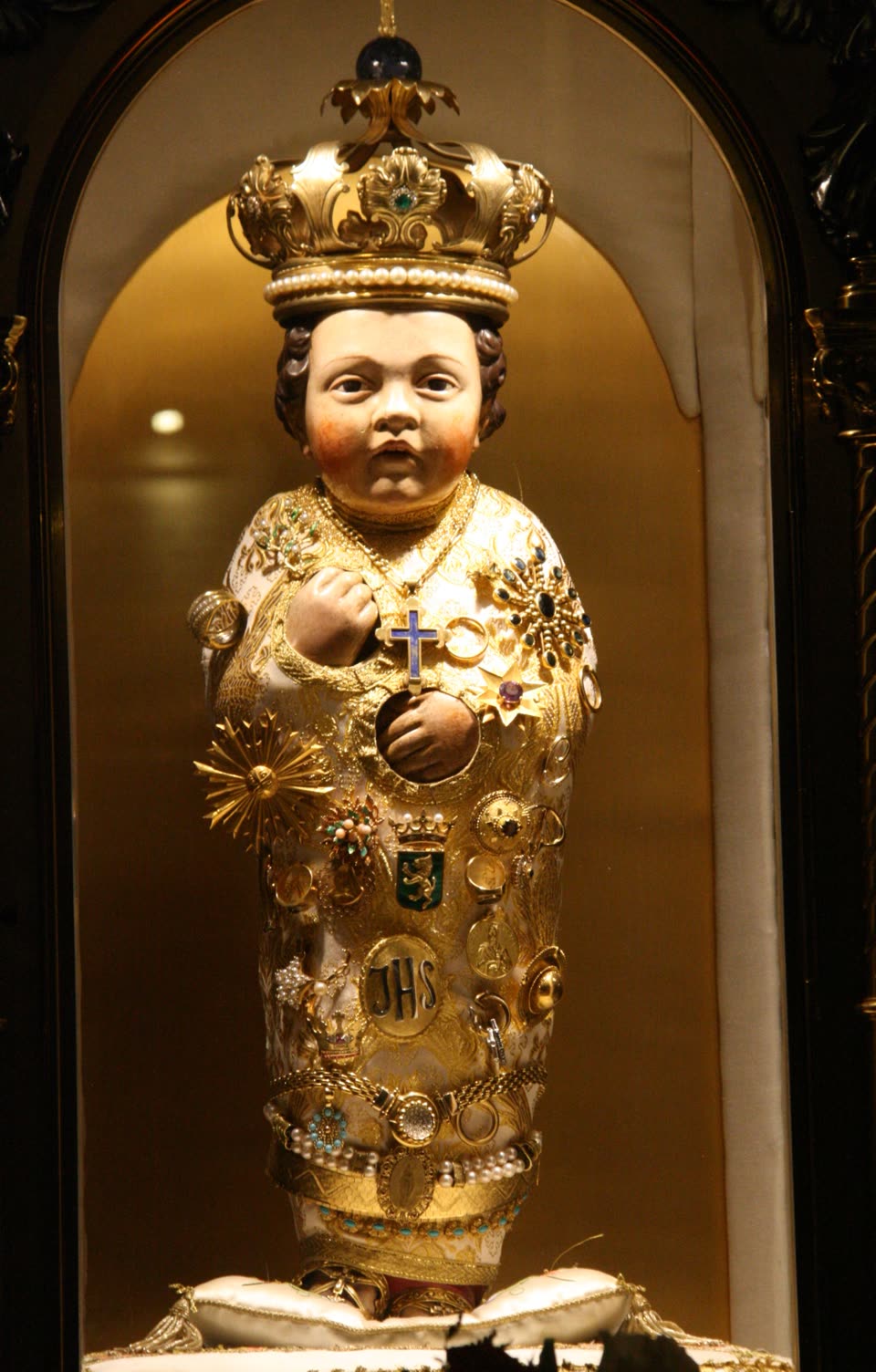
In parts of Italy the presents come from the Christ Child himself, in the same way they come from the Christkind across the Alps. It is one of several answers the country gives to the question of who brings them: the Crusca's own list names Saint Nicholas, Santa Lucia, the Christ Child and the old woman of the Epiphany, and in the Arezzo hills the log itself. The answers are regional rather than national.
The nativity scene was invented here, and the first one had no figures in it
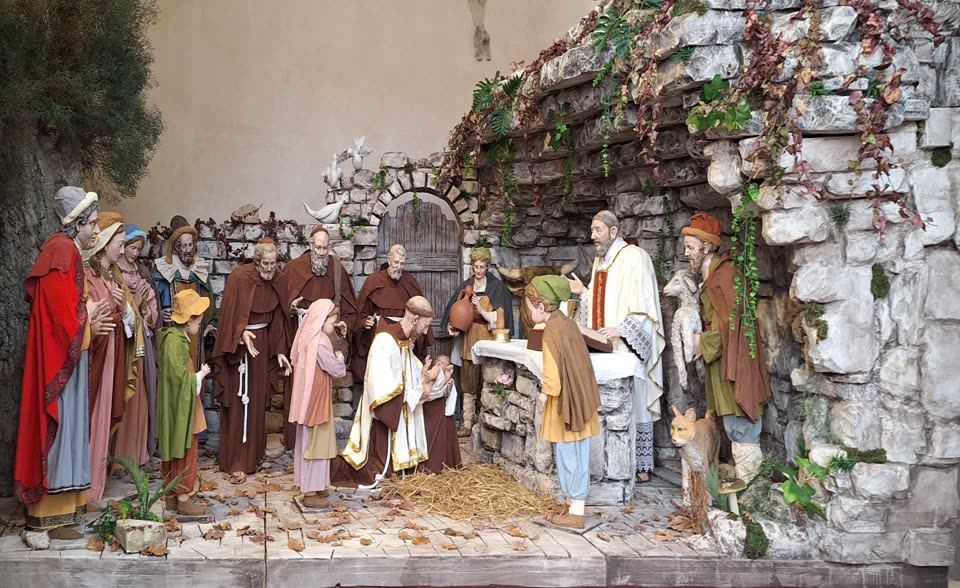
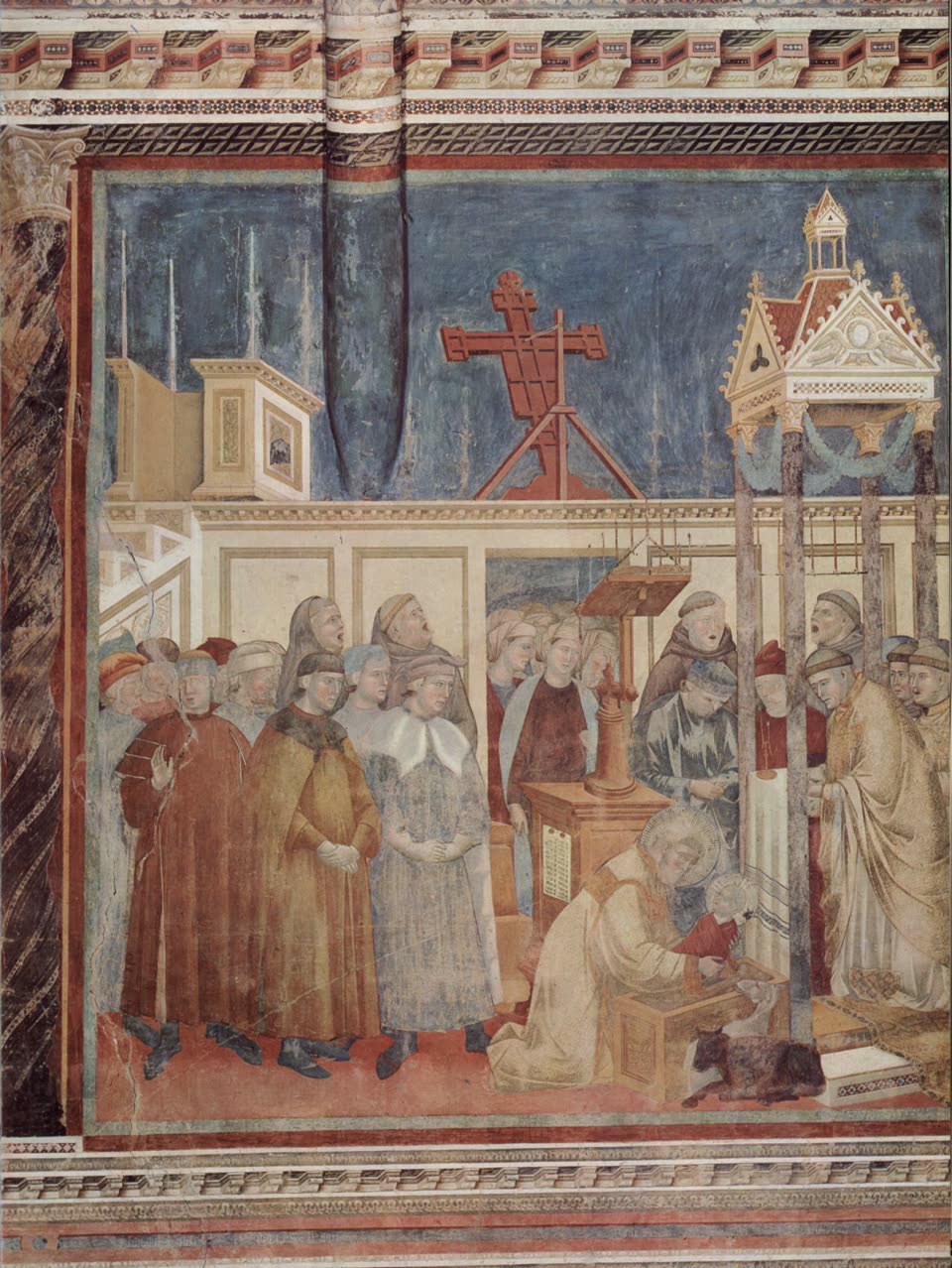
Francis of Assisi stopped at Greccio, in the hills above Rieti, late in 1223 — most likely on his way back from Rome, where on 29 November Honorius III had confirmed his Rule. The caves there reminded him of the country around Bethlehem.
Fifteen days before Christmas he asked a local man called John to help him «bring to life the memory of that babe born in Bethlehem, to see as much as possible with my own bodily eyes the discomfort of his infant needs, how he lay in a manger, and how, with an ox and an ass standing by, he was laid upon a bed of hay». On Christmas Day friars came from the surrounding country with flowers and torches. There was a manger full of hay, an ox and a donkey, and Mass was said over the manger.
And there were no statues. The scene was acted and attended rather than modelled — the figures came later, and the Italian word for the whole thing, presepe, is simply the Latin praesepium, a manger.
Il ceppo — a log that is beaten until it produces presents
Tuscany had the Catalan custom and nobody outside Italy knows it. The ceppo is the Christmas log on the hearth, and in the hills of the Arezzo country it did the job that elsewhere belongs to a saint: children rummaged in its ashes or beat the trunk itself, and found the presents it had — in the local verb, which the Accademia della Crusca prints and declines to endorse — cacato.
Around it is a whole set of reasons for the log to burn all night: to warm the baby Jesus, at Chiusi della Verna; so that the Madonna could dry the nappies, at Fauglia and in the Casentino; for three nights running at San Pellegrino in Alpe. Until a few decades ago the ashes were kept at Caprese Michelangelo and Pieve Santo Stefano to protect the fields from insects and lightning.
And the word did something no other word in Europe did.
In Tuscany the word for the log is the word for Christmas
Elsewhere in Italy the burnt log is a ciocco in the north and a ceppo in the centre and south, and the feast is Natale. In Tuscany alone the log's name became the feast's name: ceppo means 25 December.
It spread from there into everything around it. At Greve it can mean New Year's Eve, at Pomonte on Elba it can mean New Year's Day, at Celle sul Rigo a ceppo di pasqua is Epiphany, and in several places a ceppino is St Stephen's day. It also means the Christmas present — specifically the one a young man gave his fiancée, which she returned at Epiphany, because chi non inceppa, non imbefana.
The explanation the Crusca offers is almost disappointingly simple: ceppo is what is left when you shorten Pasqua del ceppo, the log's Easter — the log being what distinguished it from the year's other pasque.
The stocking is hung for a witch, and she brings coal
Italian children hang a stocking for the night of 5 January, and what comes is settled by behaviour: sweets and presents for the good, and for the others lumps of coal. The coal is now usually sugar, made black, which is a joke the recipient is expected to get.
The Befana comes down the chimney, like Father Christmas, but she is old, poor and ugly rather than jolly, and the dictionary says so without softening it — la vecchia, bruttissima ma benefica. In Italian the adjective for an ugly woman is still her name.
Christmas with your own, Easter with whoever you like
The rule for who you spend it with is a proverb, and everybody can finish it: Natale con i tuoi, Pasqua con chi vuoi. Christmas is the family feast and is not negotiable; Easter is the one you are allowed to spend with friends, or at the sea, or with somebody you are not yet married to.
It is the Italian equivalent of the Catalan Per Nadal, cada ovella al seu corral — every sheep in its own fold — and the two say the same thing about the same day in two languages that share a word for it.
The bagpipers come down from the mountains for the novena
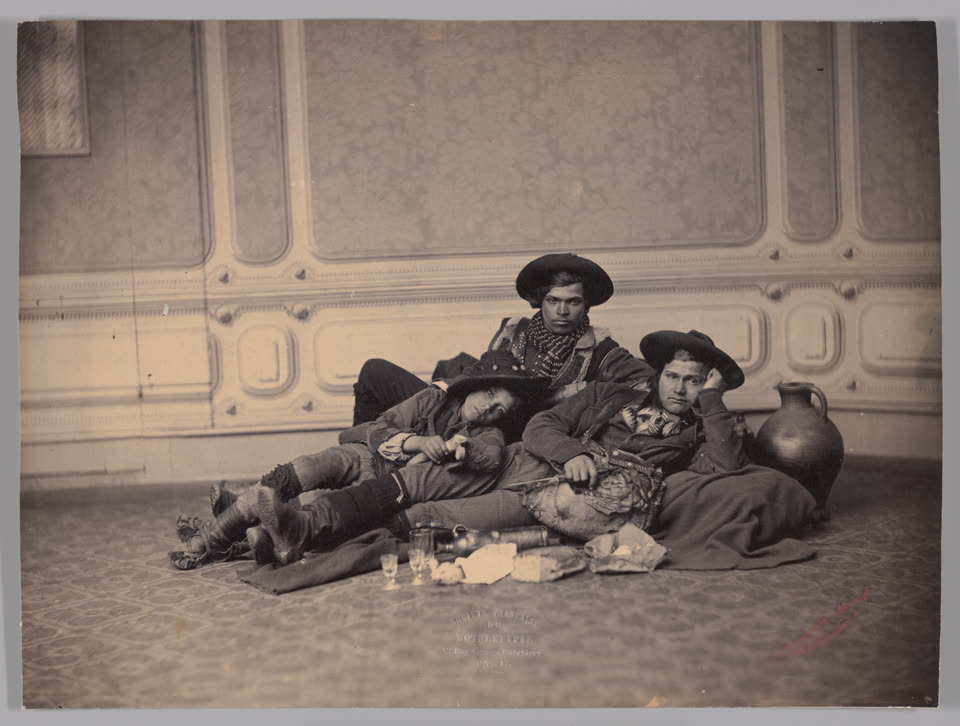
Before and during Christmas, players of the zampogna came down from the Apennine villages into the towns of central and southern Italy and played in the street. They were still a regular sight in many Italian cities as late as the 1960s, and the zampognaro and the pifferaro are a fixture of the Neapolitan crib — a pair of figures everybody expects to find in it.
They were often a trio rather than a pair. Two played, and the second, younger and less burdened musically, would break off to work the street: holding his hat out to passers-by and picking up the coins thrown down from the windows.
The playing followed the novena. Nine consecutive days, sometimes at one house or for one family, sometimes house to house through the village — which is why a Pirandello story of 1910 has a man hearing the zampogne and the women's and children's chorus from the street on Christmas Eve, on the last day of the novena, in front of a little chapel hung with branches.
The night of the twelfth: letters by post, hay for the donkey, and ash for anyone who looks
Around Bergamo, Brescia and Verona the big night is 12 December, not 24. Children write to Santa Lucia and the letter must be sent by the twelfth; in Bergamo they are put into a basket in front of the saint's statue. That evening the children are sent to bed very early, having first laid out a thank-you — coffee, milk and biscuits for Lucia, and water, carrots and hay for her donkey. The one rule is not to look. Anyone who comes into the room while she is there gets no presents at all, or worse: she throws ash in their eyes. In the morning the gifts are there, with sweets, chocolate coins, lollipops and sugar bracelets.
The crib left the church, moved into the house, and became a Neapolitan trade
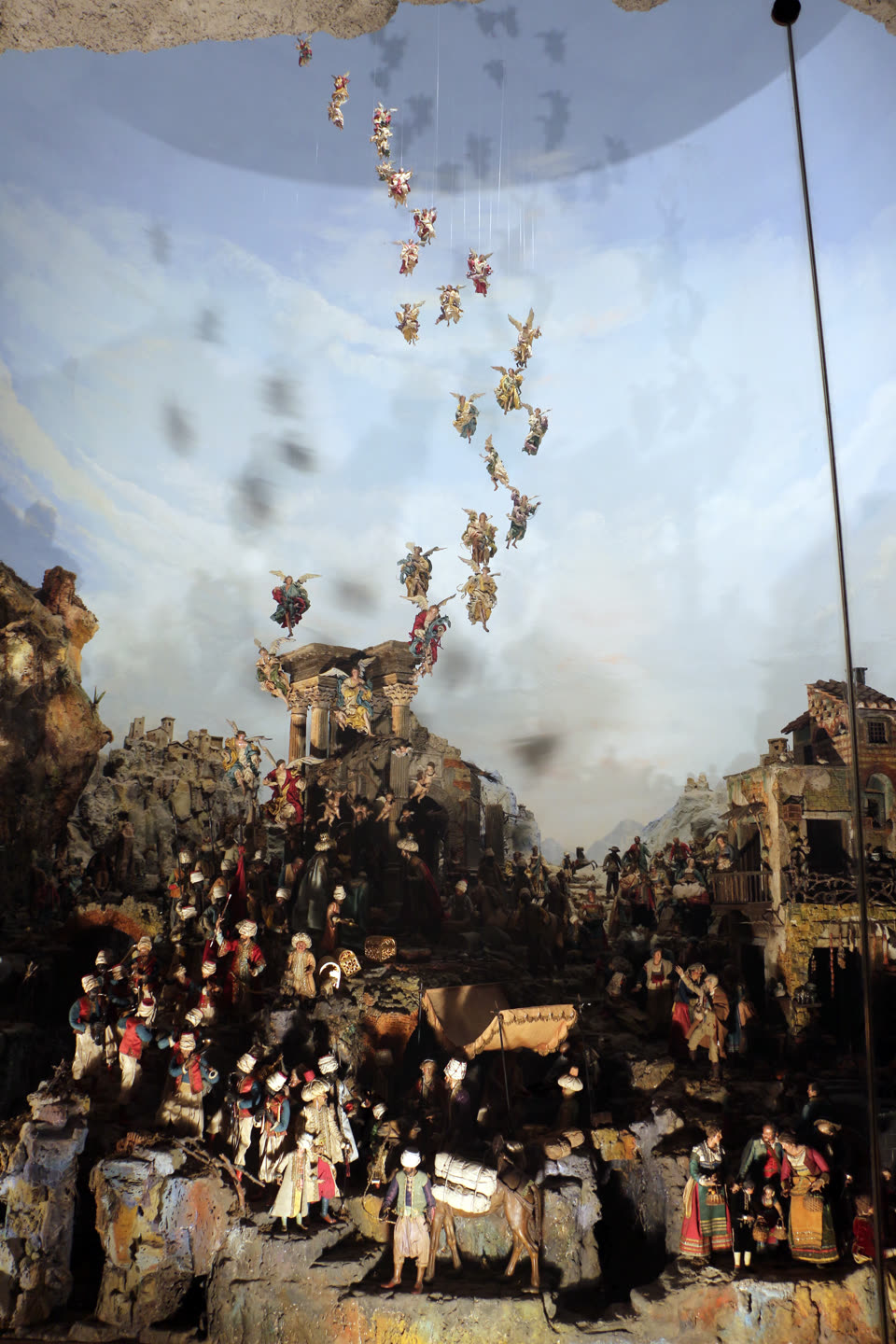
The presepe began as a church object and did not stay one. Italy's oldest surviving example, at least in part, is Arnolfo di Cambio's of about 1280 in Santa Maria Maggiore in Rome, in the basilica where the relic of Christ's crib had been venerated since the seventh century. A second follows at Naples in 1478. Then in the seventeenth century portable cribs spread and were set up in private houses, the compositions growing more elaborate and more realistically staged, and in the eighteenth they reached their height in a few places above all — Naples and Genoa. Figures in Rome and Naples were modelled in terracotta, which became the commonest material of all, and specialist sculptors worked on them: the Sammartino, the Bottiglieri, the Celebrano, the Vaccaro.
Presepe — Enciclopedia Treccani, Istituto della Enciclopedia Italiana
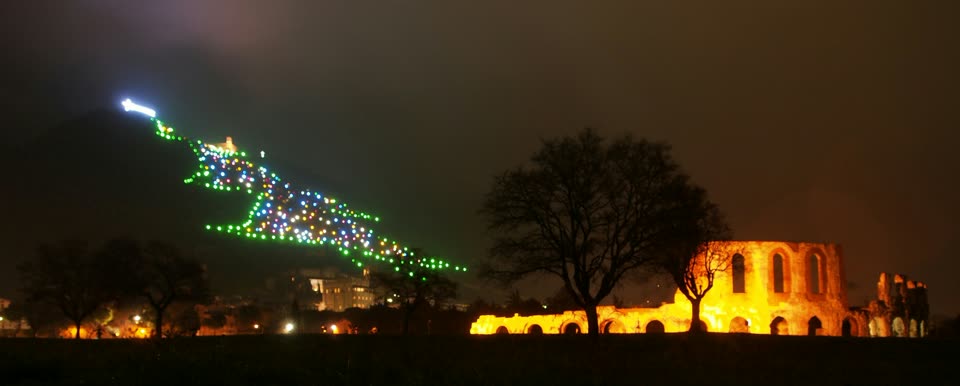
At Gubbio the tree is not a tree. It is a drawing in light down a mountain
Since 1981 a group of volunteers has laid lights down the wild slopes of Monte Ingino, behind the medieval town of Gubbio, in the shape of an immense Christmas tree — big enough to have entered the Guinness Book as the largest in the world. Nothing is planted and nothing is felled; the figure is made by placing lamps of various kinds and colours across a hillside. It is switched on each year on 7 December, in Piazza Quaranta Martiri, at a ceremony attended by the civil, military and religious authorities of the town and the region, with the Gubbio flag-throwers performing first.
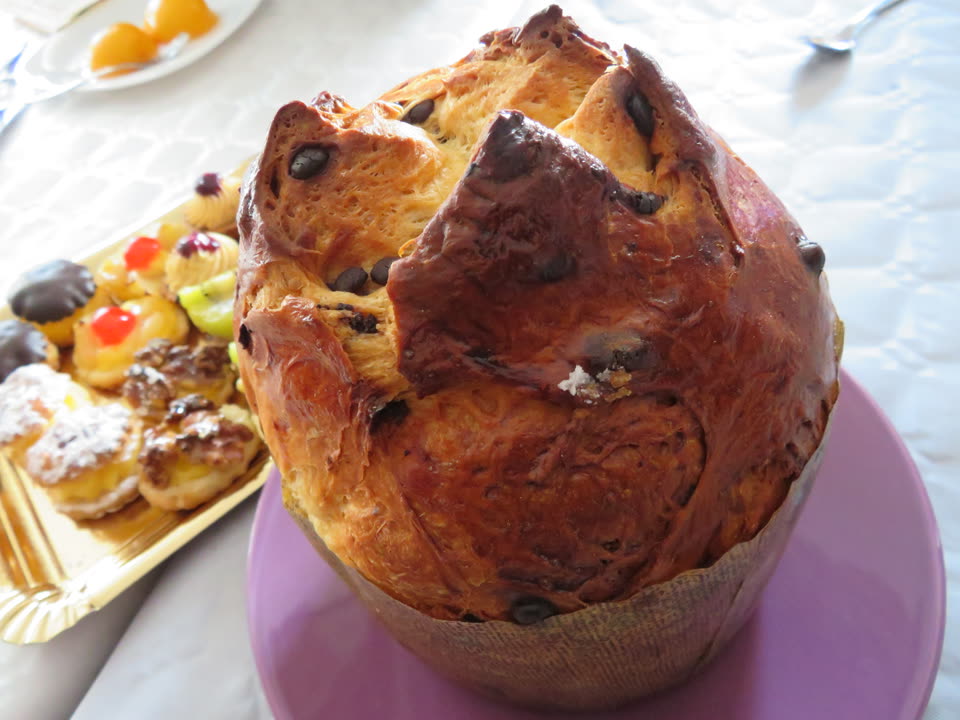
The tall domed Christmas bread, raised with a sourdough starter over two separate doughs — one made in the evening, the second the next morning — and studded with sultanas and candied citrus peel.
It is Milanese, and its name is the Milanese word: panattón, from pane. A legend attaches it to the Visconti court of the fourteenth century and the dictionary is unimpressed, calling it «probabilmente di origine più antica». It is now the Christmas sweet of the whole country.
And it is legally defined. Italian law reserves the name panettone for a soft-dough product naturally fermented from sourdough, round-based, with the cracked top crust cut in the characteristic way — and sets floors on what is in it: at least four per cent egg yolk, butterfat not under sixteen per cent, raisins and candied citrus peel not under twenty.
Panettone's rival and opposite: no fruit, no peel, nothing in it at all. A tall eight-pointed star of soft yellow cake, served under a snowfall of vanilla icing sugar that comes in a sachet in the box.
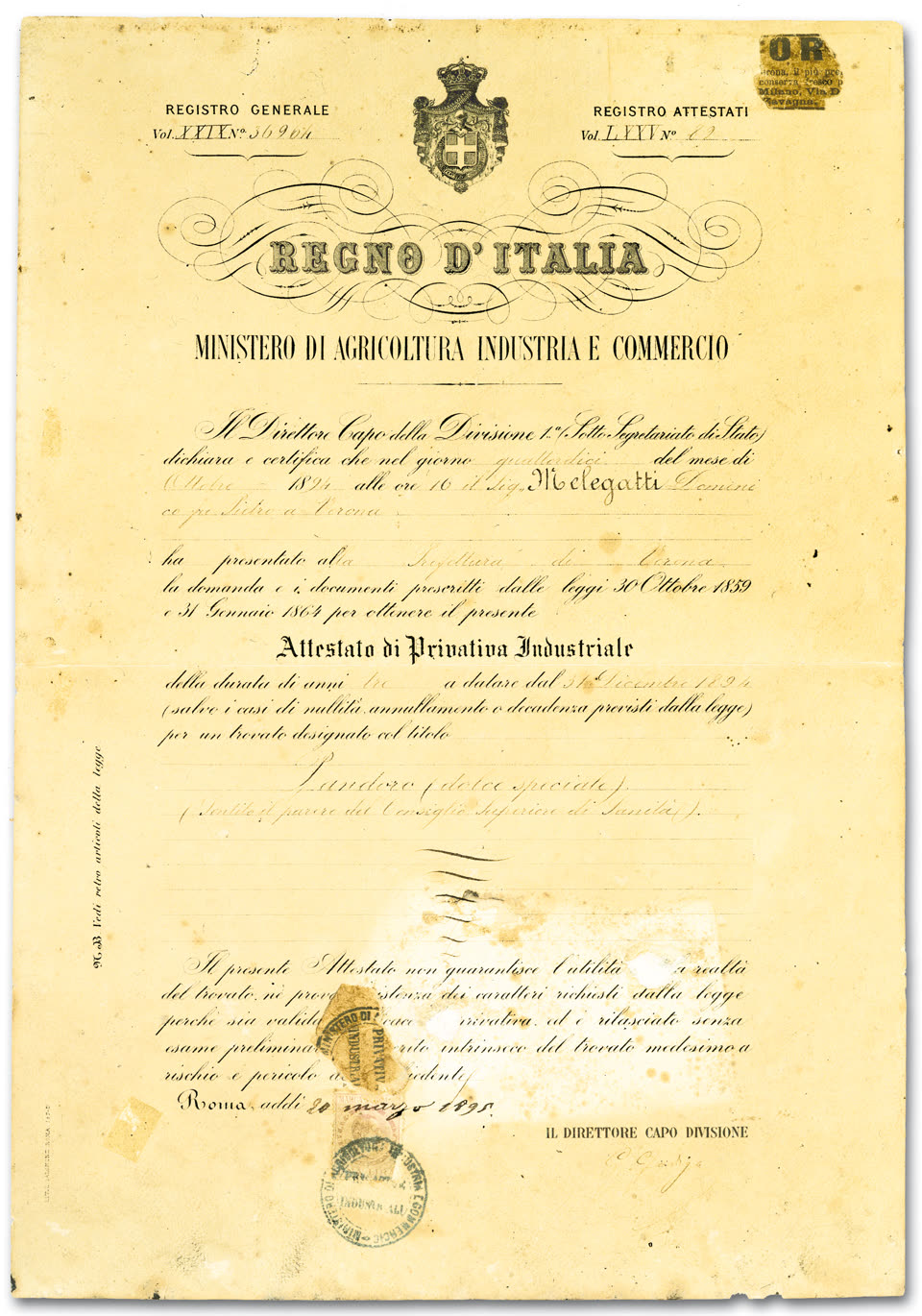
The name is pan d'oro, golden bread, and it is Veronese — and it has a patent. Domenico Melegatti lodged an application with the Kingdom of Italy's Ministry of Agriculture, Industry and Commerce in October 1894 for an invention entered on the certificate as «Pandoro (dolce speciale)». The law treats it as seriously as panettone and asks more butter of it — not under twenty per cent — and no raisins at all.
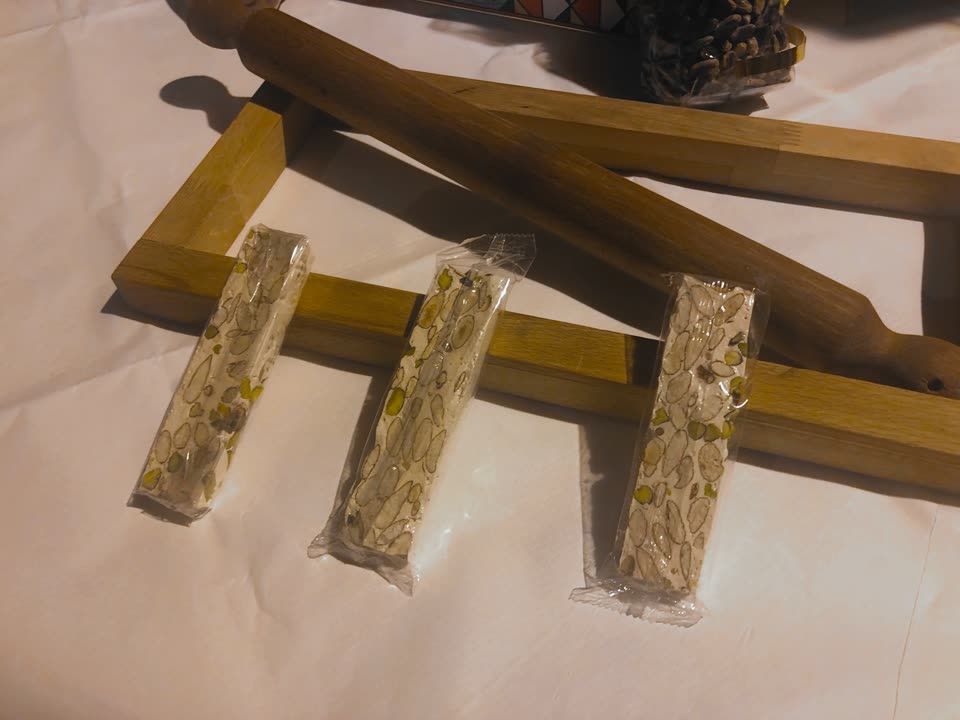
A slab of toasted almonds set in a hard paste of honey, sugar and egg white, sold in bars of every size and eaten through the whole season.
Its name is not Italian. Torrone comes from the Spanish turrón, from turrar, to toast — the same word as the Spanish nougat turrón, which Spain's own legal specification traces to a paste Arabs or Jews brought to the town now called Jijona. Two countries, one sweet, and the Italian name openly borrowed from the Spanish.
Widely repeated claims about Christmas in Italy that do not survive
checking. Each one says what is actually the case, because a correction
with nothing in its place leaves you worse off than before.
Unsupported
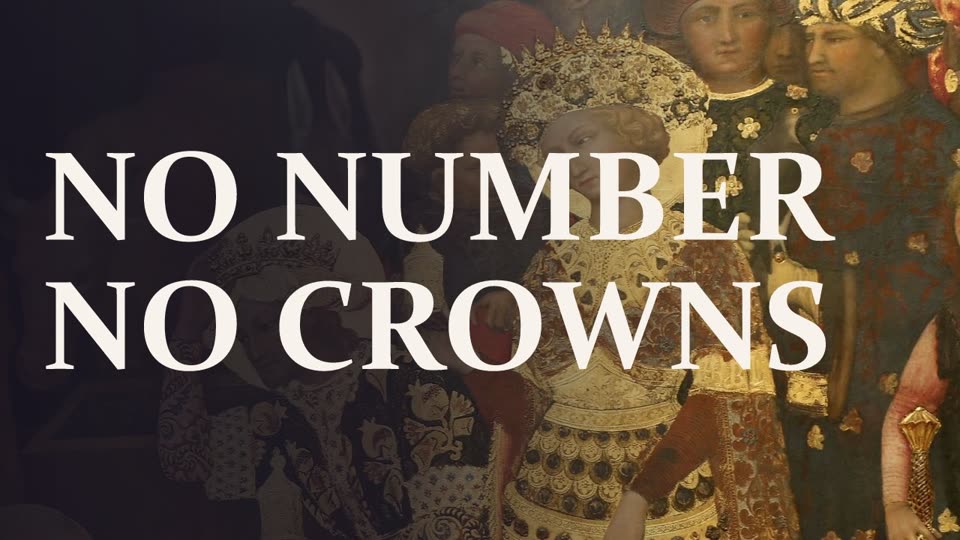
There were three Magi, and they were kings.
What is actually the case. Matthew says neither. The Accademia della Crusca, answering a question about the word, sets out what the text does and does not contain: «non quanti fossero, né come si chiamassero, né se fossero investiti di autorità regale». How many, what they were called, whether they were kings — none of it is there.
Three is an inference from the number of gifts. The crowns are older than they look: Tertullian, writing early in the third century, already has «the East generally regarded the magi as kings», and reads the psalm's gift-bringing kings of Arabia and Saba into the visit. So the royal reading is late antique, not medieval. What the Crusca dates to Giovanni Villani's fourteenth-century Cronica is the Italian telling of it. The names changed over the centuries before they settled.
Italian did something else as well. The ordinary word for a magician was mago, plural magi; in the fourth edition of the Crusca's own dictionary, in the 1730s, a separate singular magio appears for the three visitors alone — splitting the Gospel's astrologers away from the charlatans and witches that mago was coming to mean.
The Befana is a pagan goddess who survived into Christianity.
What is actually the case. What can be shown is linguistic and it runs the other way. Befana is not an old name that attached itself to a Christian feast; it is the Christian feast's own name, worn down — the Latin epiphanĭa reduced in ordinary speech until the first syllable gave way.
So the word is Christian and the figure is old; which came first is a question about folklore, and a dictionary cannot settle it. What the dictionary does settle is that the name is not evidence for the goddess, because the name is just Epiphany.
The Feast of the Seven Fishes is how Italians eat on Christmas Eve.
What is actually the case. The meatless Christmas Eve is real and the fish is real, but both the name and the number are American. In Italy the evening is simply «la vigilia», the eve, and an anthropologist of Italian food says plainly that you will not hear «festa dei sette pesci» there. Fish on that night is also a southern habit rather than a national one. What the Feast of the Seven Fishes describes is something that grew among Italian Americans over the last hundred years — which makes it a real tradition with a real history, just not an Italian one.
What is the Feast of the Seven Fishes? — National Geographic, quoting Michael Di Giovine, professor of anthropology at West Chester University of Pennsylvania and author of «Edible Identities»
Italy abolished Epiphany, and then gave it back. The holiday act of 1949 listed it among the days off; article 1 of law 54 of 5 March 1977 suppressed it; and article 1 of presidential decree 792 of 28 December 1985 restored it. For eight Januaries, the day the Befana comes was a working day.
The same article took four other holy days off the list in the same sentence: Saint Joseph on 19 March, the Ascension, Corpus Domini, and Saints Peter and Paul on 29 June. Only the last came back, and only in Rome, where 29 June is the city's patronal feast rather than a national holiday.
Tuscany is the only region in Italy — and, the Accademia della Crusca says, in Europe — where the word for the Christmas log became the word for Christmas itself. A Tuscan can say a ceppo and mean 25 December, and the same word covers the present you give on it.
The first nativity scene had a real ox, a real donkey and no figures. It was staged at Greccio in 1223 by Francis of Assisi, fifteen days in the planning, and the people present were the scene. The statues that fill every Italian house at Christmas are what the idea turned into afterwards.
Panettone has a legal minimum of candied peel and raisins, and it is twenty per cent. Italian law reserves the name for a sourdough-raised product with at least sixteen per cent butterfat, at least four per cent egg yolk and at least a fifth of its weight in sultanas and candied citrus — which is why the fruitless ones have to be sold as something else.
Decreto 22 luglio 2005, art. 1, comma 2 — Ministero delle Attività Produttive with the Ministero delle Politiche Agricole e Forestali; Gazzetta Ufficiale n. 177 of 1 August 2005, read on the AmbienteDiritto legislative archive
Veneto
Pandoro is patented. In October 1894 Domenico Melegatti of Verona applied to the Kingdom of Italy for an Attestato di Privativa Industriale — an industrial patent — on an invention the certificate names as «Pandoro (dolce speciale)», a special sweet. The term ran three years from the last day of 1894, and the certificate was issued at Rome on 20 March 1895.
The paper is careful to say what it is not. Printed on the form, under the handwritten entries, is the warning that the certificate guarantees neither the usefulness nor the novelty of the invention and is issued without any preliminary examination — at the applicant's risk.
The Italian for bagpipe and the Italian for symphony are the same word. Zampogna is the popular outcome of Latin symphonia, from Greek symphōnía in its sense of a musical instrument; sinfonia is the learned twin of the same root, borrowed back later with the Greek stress.
So the instrument the shepherds carried into the cities at Christmas, and the form Haydn wrote a hundred and four of, are one word that split in two. Older Italian preferred sampogna, which is nearer the etymology and which the Accademia della Crusca chose as the headword in all four editions of its dictionary that record the word at all. The Crusca quotes Dante with zampogna, at Paradiso XX — the contrast is its own.
The man who saw the child at Greccio saw him dead. Thomas of Celano, writing within a few years of the night, says a virtuous man present saw a little child lying lifeless in the manger, and saw Francis approach and wake him as if from a deep sleep. The detail is what makes it a vision rather than a prop: the manger at Greccio had hay, an ox and a donkey in it and no figure at all, so there was nothing there for him to have been looking at. Celano's own reading is that the child Jesus had been given over to oblivion in many hearts and was being woken in them.
Every claim carries its own citation. They are collected below, so you
can see what the page rests on and how much of it comes from where.
Parole e strumenti da antiche tradizioni natalizie — Consulenza Linguistica — Accademia della Crusca. Retrieved 2026-10-13. archived 16 July 2025Its sentence on the trio is the kind of detail that only survives in somebody's memory: the second player «a un certo punto interrompeva di suonare per chiedere i soldi ai passanti, porgendo loro il proprio cappello, e per raccogliere per terra le monete che venivano lanciate dalle finestre».The Pirandello passage is quoted in the same answer, from «L'uccello impagliato» in the Corriere della Sera of 16 January 1910 — where the bagpipes are already being remembered rather than heard.
I magi erano tre, ma uno solo era un…? — Consulenza Linguistica — Accademia della Crusca. Retrieved 2026-10-13. archived 8 March 2018The verdict is «unsupported» rather than «false» because nothing contradicts three — it is simply not in the source the tradition rests on, and the Crusca quotes the Italian Bible Society's own footnote saying so: «dal numero dei doni si è pensato che fossero tre, mentre il testo non determina nulla».The Crusca puts the royal status later, in its own parenthesis: «investiti di autorità regale (secondo la tradizione già a partire dalla Cronica di Giovanni Villani)». Tertullian’s Adversus Marcionem III.13, in the Ante-Nicene Fathers translation, has «for the East generally regarded the magi as kings» and quotes David's «the kings of Arabia and Saba shall offer to Him gifts» in the same chapter, which is Psalm 72:10.
La tradizione del ceppo in Toscana — Consulenza Linguistica — Accademia della Crusca, publishing a summary of Gabriella Giacomelli's unpublished 1999 talk on the Atlante Lessicale Toscano. Retrieved 2026-10-13. archived 6 March 2026Describing what the Tuscan Christmas log does in the Arezzo hills, the piece says the log took on a role «che altrove è di S. Nicola, di Santa Lucia o dello stesso Gesù Bambino, o anche della vecchia dell'Epifania» — elsewhere St Nicholas's, or Santa Lucia's, or the Christ Child's own, or the old woman of Epiphany's.
Descrizione / 7 dicembre — Comitato Albero di Natale di Gubbio, the volunteers who build it. Retrieved 2026-10-18.«Dal 1981 un gruppo di volontari realizza in occasione del Natale quello che è entrato, ben a ragione, nel Guinness dei primati come l'Albero di Natale più Grande del mondo: è una realizzazione che solo nello spirito del più genuino volontariato riesce ad avere continuità nel tempo. La figura di un immenso albero di Natale è realizzata disponendo con sapienza sulle selvagge pendici del Monte Ingino, alle spalle della splendida città medioevale di Gubbio, corpi illuminanti di vario tipo e colore.»The lighting, from the same site's 7 dicembre page: «L'Albero viene acceso il 7 Dicembre, in Piazza 40 Martiri, a Gubbio. Alla cerimonia partecipano le autorità civili, militari e religiose della Città e della nostra Regione; fa da suggestivo prologo alla cerimonia l'esibizione del Gruppo Sbandieratori Città di Gubbio.»
Un dono di luce per Santa Lucia — Comune di Bergamo. Retrieved 2026-10-13.A children's workshop announcement from the city council, which is a small source for a real custom and is cited as the city describing its own: «La tradizione vuole che, durante la notte tra il 12 e il 13 dicembre, Lucia andasse di nascosto a distribuire cibo ai poveri, portando sulla testa una corona di luce.» The hay is in it too — «per l'asinello, sempre al fianco della Santa, prepareremo del buon fieno».
Presepe — Enciclopedia Treccani, Istituto della Enciclopedia Italiana. Retrieved 2026-10-18. archived 16 October 2026«Il più antico presepe italiano conservato, almeno in parte, è quello di Arnolfo di Cambio (1280 circa) in S. Maria Maggiore a Roma, dove dal sec. 7° si venerava la reliquia della culla di Gesù; seguono il presepe di P. e G. Alamanno (1478) in S. Giovanni a Carbonara a Napoli.»«Nel sec. 17° si diffusero i presepi mobili, allestiti anche nelle case, con composizioni sempre più complesse e ambientazioni dal vivo gusto realistico, raggiungendo nel sec. 18° il massimo sviluppo specie in alcuni centri, come Napoli o Genova.»And on the making: «a Roma e Napoli le stesse parti erano plasmate in terracotta, che divenne poi il materiale più diffuso… tra gli scultori si ricordano A. de Vivo, i Sammartino, i Bottiglieri, i Celebrano, i Vaccaro.»The same entry is worth knowing for a melancholy reason it gives in passing: complete cribs almost never survive, «a causa del loro stesso carattere effimero», and what is left sits in private collections and a few museums, with many at San Martino in Naples.
«natale», Vocabolario Treccani — Istituto della Enciclopedia Italiana. Retrieved 2026-10-13. archived 8 October 2026The entry carries the greeting itself — «auguri di N., di buon N.; buon Natale a tutti!» — and two proverbs that say more about the Italian Christmas than most descriptions of it. Natale con i tuoi e Pasqua con chi vuoi: Christmas with your family and Easter with whoever you like.
«befana», Vocabolario Treccani — Istituto della Enciclopedia Italiana. Retrieved 2026-10-13. archived 6 January 2026The popular name of Epiphany; the personification — «la vecchia, bruttissima ma benefica, che di notte, scendendo per la cappa del camino, lascia nelle scarpe, o più spesso nelle calze, dei bambini buoni, doni e dolciumi (ai cattivi, pezzi di carbone)»; and the presents themselves, so that one can ask what befana you gave your son.
«pandoro», Vocabolario Treccani — Istituto della Enciclopedia Italiana. Retrieved 2026-10-13. archived 2 November 2023«Dolce tradizionale veronese, soffice e leggero, fatto con fior di farina, zucchero, burro, uova e lievito di birra; ha forma alta, a grandi costole diritte, disposte secondo il disegno di una stella a otto punte, si serve cosparso di zucchero a velo vanigliato.»
Decreto 22 luglio 2005 — Disciplina della produzione e della vendita di taluni prodotti dolciari da forno, art. 1 — Ministero delle Attività Produttive, with the Ministero delle Politiche Agricole e Forestali; Gazzetta Ufficiale n. 177 of 1 August 2005. Read on the AmbienteDiritto legislative archive, which reproduces the Gazzetta text. Retrieved 2026-10-13. archived 5 June 2026A legal recipe, in the manner of Spain's Jijona nougat: «materia grassa butirrica, in quantita' non inferiore al sedici per cento; uvetta e scorze di agrumi canditi, in quantita' non inferiore al venti per cento; lievito naturale costituito da pasta acida».
What is the Feast of the Seven Fishes? — National Geographic, quoting Michael Di Giovine, professor of anthropology at West Chester University of Pennsylvania and author of «Edible Identities». Retrieved 2026-10-18. archived 15 May 2026«You won't hear about “festa dei sette pesci” in Italy though, says Michael Di Giovine, professor of anthropology at West Chester University of Pennsylvania and author of Edible Identities. In Italy, the holiday is simply “la vigilia,” “the eve” of Christmas. And fish is really only eaten in Southern Italy on the holiday. This is because the feast has evolved to be uniquely Italian American over the past hundred years.»«oversimplified» rather than «false», and the distinction is the whole card.
Quasi nova Bethlehem de Graecio facta est… Part 2 — Noel Muscat OFM, Journal of Franciscan Culture, no. 146. Retrieved 2026-10-18. archived 11 September 2024LATIN, from Analecta Franciscana X, 64: «Videbat enim in praesepio puerulum unum iacentem exanimem, ad quem videbat accedere sanctum Dei et eumdem puerum quasi a somni sopore suscitare.»ENGLISH, from FAED I, 255–256: «the man saw a little child lying lifeless in the manger and he saw the holy man of God approach the child and waken him from a deep sleep.»And Celano's own gloss: «Nec inconveniens visio ista, cum puer Iesus in multorum cordibus oblivioni fuerit datus» — the vision is not unfitting, since the child Jesus had been given over to oblivion in many hearts.The same passage in Celano's rediscovered life, printed in the same article: «He saw in that same crib a child lying lifeless, whom the saint of God approached and quickly awoke as if from the stupor of sleep.»A footnote in it is labelled «1C 85 (FAED I, 255-256). Latin text in THOMAS DE CELANO, Vita Prima Sancti Francisci, 84, in Analecta Franciscana X, 64-65» and then prints section 87.
Legge 27 maggio 1949, n. 260 — Disposizioni in materia di ricorrenze festive, con le note di modifica — Presidenza del Consiglio dei Ministri, Ufficio del Cerimoniale di Stato; published in the Gazzetta Ufficiale of 31 May 1949, n. 124. Retrieved 2026-10-13. archived 4 April 2025Article 2 lists the days treated as public holidays, and the Christmas block is three of them: «il giorno dell'Epifania», «il giorno di Natale», «il giorno 26 dicembre».Note (3) against Epiphany reads «Festività soppressa dall'art. 1, L. 5 marzo 1977, n. 54 e ripristinata ai sensi dell'art. 1, D.P.R. 28 dicembre 1985, n. 792» — abolished, and then given back.The 1977 act suppressed five holy days in one sentence, and article 1 lists them together: «I seguenti giorni cessano di essere considerati festivi agli effetti civili... Epifania; S. Giuseppe; Ascensione; Corpus Domini; SS. Apostoli Pietro e Paolo».
Attestato di Privativa Industriale — «Pandoro (dolce speciale)», Melegatti, Verona — Regno d'Italia, Ministero di Agricoltura, Industria e Commercio; certificate issued at Rome, 1895. Scan of the original on Wikimedia Commons, public domain. Retrieved 2026-10-13. archived 29 June 2015The printed form carries the arms of Savoy and the ministry's name; the blanks are filled in by hand, and the hand is legible where it matters — Melegatti, Verona, an application lodged in October 1894, a term of three years running from 31 December 1894, and the invention's title on its own line: «Pandoro (dolce speciale)».The form also prints its own disclaimer, which is worth knowing before anyone calls this proof of anything: the certificate «non garantisce l'utilità» of the invention and is issued without preliminary examination of its merits.
Rites and traditions of the feast of St. Lucy — VisitBergamo, the Bergamo tourism board. Retrieved 2026-10-18.«To receive gifts, there are two requirements: having behaved well during the year and sending the letter by December 12», and the letters go «in the basket in front of the statue of the Saint».On the night itself: «On the night of December 12-13, the ritual has the children going to bed very early… Before going to bed, in the living room or on the window sills they prepare a small thanksgiving, coffee, milk and cookies for the Saint and water, carrots and hay for her little donkey. It is important to sleep fast, and woe betide anyone who enters the room in her presence, or else St. Lucy will return without leaving gifts or, worse, will throw ashes into the eyes of the impatient child and thus make him blind. The next morning, the children get up at the crack of dawn and find the presents along with a multitude of sweets: candies, chocolate coins, lollipops, sugar bracelets.»