A synthesised voice — not a recording of a person — saying Selamat Hari Krismas
in ms-MY.
Malay, which is Brunei's national language. «Hari Krismas» is the government's own name for the day: Brunei's Ministry of Education prints it that way on its school calendar, against 25 December. «Selamat Hari …» is the ordinary Malay way of wishing someone a feast day, as in Selamat Hari Raya.
Christmas is a paid public holiday, eleventh on a list of eleven
Brunei's Employment Act sets out the country's public holidays in a schedule, and Christmas Day is on it: «11. 25th December (Christmas Day).» The ten above it are New Year's Day, the first day of Hijriah, Chinese New Year, National Day, the Prophet's birthday, the Sultan's birthday, the first day of Ramadhan, the anniversary of the revelation of the Quran, and the two Hari Rayas. The US State Department's religious freedom report for 2023 records the day working as a holiday in practice: «December 25 remained an official holiday on which government offices were closed.»
The shops were asked to take the decorations out of the window
In 2014 the Ministry of Religious Affairs asked businesses to remove Christmas decorations from public view, to discourage Muslims from «imitating the customs and practices of other religions». The Brunei news site The Scoop reported the ministry as saying in the same breath that it was not banning Christians from celebrating in churches and within their community. Nine years later the US State Department recorded that the government still read its criminal code as «prohibiting public celebration of religions other than Islam, including publicly displaying Christmas decorations».
The five years everybody quotes comes from a section about children
Brunei's Syariah Penal Code makes it an offence to persuade, encourage or «let» a Muslim child under 18 «attend any ceremony, act of worship or religious activities of any religion other than the religion of Islam». The penalty is a fine of up to $20,000 and imprisonment for up to five years. That is the five-year figure quoted in the headlines about Brunei and Christmas, and section 212 is where it comes from: it is about taking a Muslim child to somebody else's service, not about a Christian keeping the feast.
The churches are full and the services are not interrupted
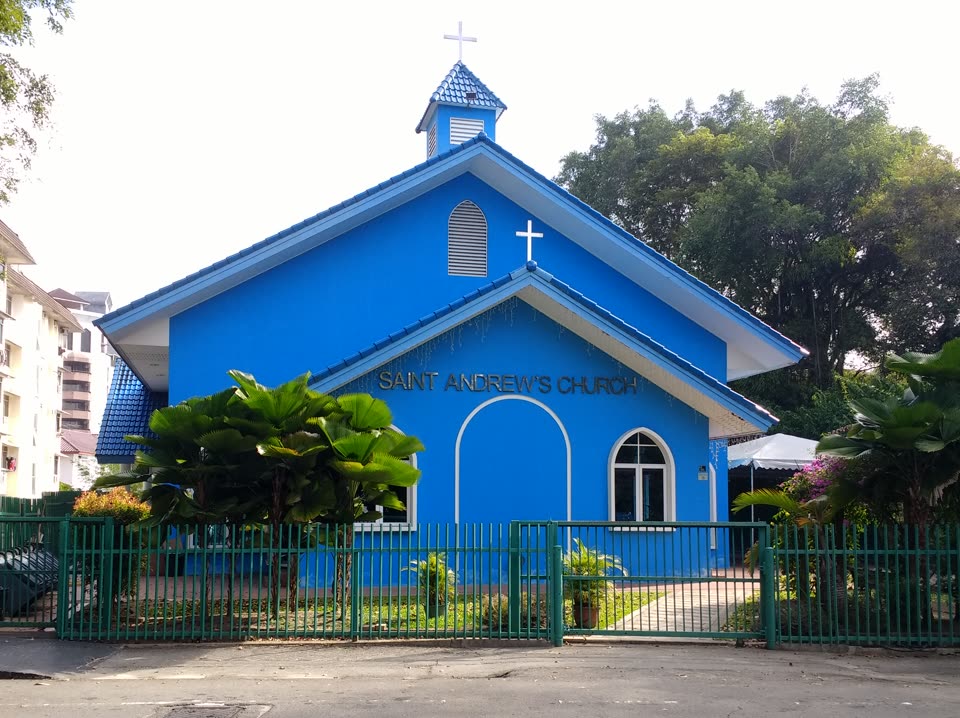
More than 5,000 people attended Christmas prayer services in Bandar Seri Begawan in 2018, in a country of about half a million. There are six registered Christian churches in Brunei, three Roman Catholic and three Anglican. The Anglican priest at St Andrew's, Reverend Johnny Chin, said his church had continued its Christmas Eve and Christmas Day services without any problems.
Inside a private house the decorations are allowed
The line Brunei draws is between public and private rather than between permitted and forbidden. The US State Department's report for 2023 records that «The government continued to allow Christmas decorations in private residences», while the same government read its criminal code as prohibiting the public display of them.
In 2023 the ministry did not send its usual warning, and nothing happened
The Ministry of Religious Affairs had issued a statement most years warning against openly displaying Christmas decorations. In 2023 it issued none. Some businesses sold decorations openly and advertised Christmas events, and the US State Department recorded no enforcement action against any of them. The government's stated reading of the law did not change; what changed was whether anybody acted on it.
Widely repeated claims about Christmas in Brunei that do not survive
checking. Each one says what is actually the case, because a correction
with nothing in its place leaves you worse off than before.
Oversimplified
Brunei banned Christmas
What is actually the case. Christmas Day is a statutory paid public holiday in Brunei, government offices close for it, six registered churches hold services, more than 5,000 people attended them in the capital in 2018, and decorations are allowed in private houses. What the 2014 measure did was ask businesses to take Christmas decorations out of public view, to discourage Muslims from joining in. The Anglican priest of St Andrew's in Bandar Seri Begawan says the reports were overdone: «international media reports of a "Christmas ban" in Brunei have been exaggerated», and «It was never a big issue».
The real restriction is narrower than a ban and sharper than nothing: public celebration of a religion other than Islam is read by the government as an offence, and a separate section of the Syariah Penal Code punishes letting a Muslim child attend another religion's ceremony with up to five years and a $20,000 fine.
Brunei's constitution makes Islam the state religion and protects every other one, in a single sentence. Article 3(1) provides that «The official religion of Brunei Darussalam shall be the Islamic» Religion, and then adds a proviso: «Provided that all other religions may be practised in peace and harmony by the persons professing them.» The Head of that official religion is the Sultan.
The Catholic bishop of Brunei thought the quiet Christmas was good for his congregation. Bishop Cornelius Sim told The Scoop in 2018 that the subdued celebrations helped Christians understand the true meaning of the feast: «What is important is for the Christian community to ask ourselves what we have lost? We have lost nothing…[We have] gained more time to find the deeper purpose of the celebration.» He also said what it cost: both he and the Anglican priest noticed fewer people in the pews, because many of the congregation now go abroad for Christmas.
Every claim carries its own citation. They are collected below, so you
can see what the page rests on and how much of it comes from where.
Employment Act, Chapter 278, Schedule 3 (Public Holidays), Revised Edition 2024 — Attorney General's Chambers, Brunei Darussalam. Retrieved 2026-10-23.Schedule 3 lists eleven paid public holidays and Christmas is the last of them: «11. 25th December (Christmas Day).» The other ten are «1. 1st January (New Year's Day)», the first day of Hijriah, Chinese New Year, National Day, the Prophet's birthday, the Sultan's birthday, «7. First day of Ramadhan», the anniversary of the revelation of the Quran, Hari Raya Aidilfitri and Hari Raya Aidiladha. Section 2 of the same Act says «"public holiday" means the days specified in Schedule 3».
Syariah Penal Code, Chapter 275, section 212, Revised Edition 2024 — Attorney General's Chambers, Brunei Darussalam. Retrieved 2026-10-23.Section 212(1) covers any person who persuades, tells, causes, offers payment to, influences, incites, encourages or lets «a Muslim child, or a child whose» parents have no religion, under 18, «to attend any ceremony, act of worship or religious» «activities of any religion other than the religion of Islam» — and the offender «is guilty of an offence and liable on conviction to a fine not» «exceeding $20,000 and imprisonment for a term not exceeding 5 years».
Events calendar — Hari Krismas, 25 December — Ministry of Education, Brunei Darussalam. Retrieved 2026-10-23.The ministry's own calendar carries «Hari Krismas December 25» against Friday 25 December 2026, which is where the Malay name of the day comes from.
2023 Report on International Religious Freedom: Brunei — Office of International Religious Freedom, United States Department of State. Retrieved 2026-10-23. archived 25 February 2026«The government continued to allow Christmas decorations in private residences», set against «the government did not officially change its interpretation of the SPC as prohibiting public celebration of religions other than Islam, including publicly displaying Christmas decorations».
Christians reflect on true spirit of Christmas, harking back to simpler times — The Scoop, Bandar Seri Begawan. Retrieved 2026-10-23. archived 2 May 2026«In 2014, the Ministry of Religious Affairs asked business premises to remove Christmas decorations from public view in a bid to discourage Muslims from "imitating the customs and practices of other religions", but said it did not ban Christians from celebrating in churches and within their community.»