The Three Kings, who bring presents on 6 January and who travel by camel. Their day is not a public holiday, and for the Cubans who grew up in the 1970s and 1980s they were largely absent — toys came from the ration book in July instead.
Arriving on the night of the 24th and gaining ground since 2013, as travel and contact with Cubans abroad became easier. He is taking space from the Kings rather than sharing it.
Cuban Christmas happens on Nochebuena. Families gather on the evening of 24 December for a long dinner, and that gathering — rather than Christmas Day — is what the season is built around, for Catholics and for people who are not.
The season is counted as one stretch, Nochebuena to Reyes
Cubans treat the whole run as a single season: Nochebuena, New Year's Eve, New Year's Day and Three Kings' Day on 6 January, taken together as las Fiestas Navideñas. Only two of those four are days off.
Remedios fights it out all night and both sides win
In Remedios, in the centre of the island, Christmas Eve is the night of the Parrandas. The town's two neighbourhoods, El Carmen and San Salvador, compete through the night with floats, lanternwork and fireworks, and at first light on the 25th each parades through the streets proclaiming itself the winner and singing its rumbas of victory. There is no jury.
The racket started as a way of getting people to Mass
Tradition says the Parrandas began around 1820, when a Remedios priest — Francisco Vigil de Quiñónez, known as Francisquito — paid a group of boys to make an infernal noise in the cold small hours between 16 and 24 December, so that the townspeople would wake up and come to the dawn Masses. Whether it worked is not recorded.
The Masses themselves were real and are the reason the dates fall where they do. In the early nineteenth century, Remedios held pre-dawn Masses called de Aguinaldo on the cold mornings from 16 to 24 December, and the series ended with the Misa del Gallo at midnight on Christmas Eve.
For Cubans born in the 1970s, the Three Kings were not part of childhood at all. One Havana writer puts it plainly: those born then never heard of the three figures who travelled on camels bringing presents to children who had behaved. Toys came instead from the ration system, sold once a year in July. The tradition did not vanish entirely, and from 1999 the Havana City Historian's Office began giving toys to schoolchildren in Old Havana around Reyes.
Since the migration reform of 2013 made contact with Cubans abroad easier and more frequent, Santa Claus has become a more visible figure on the island, and gifts on the night of the 24th have been taking ground from the Three Kings on the 6th.
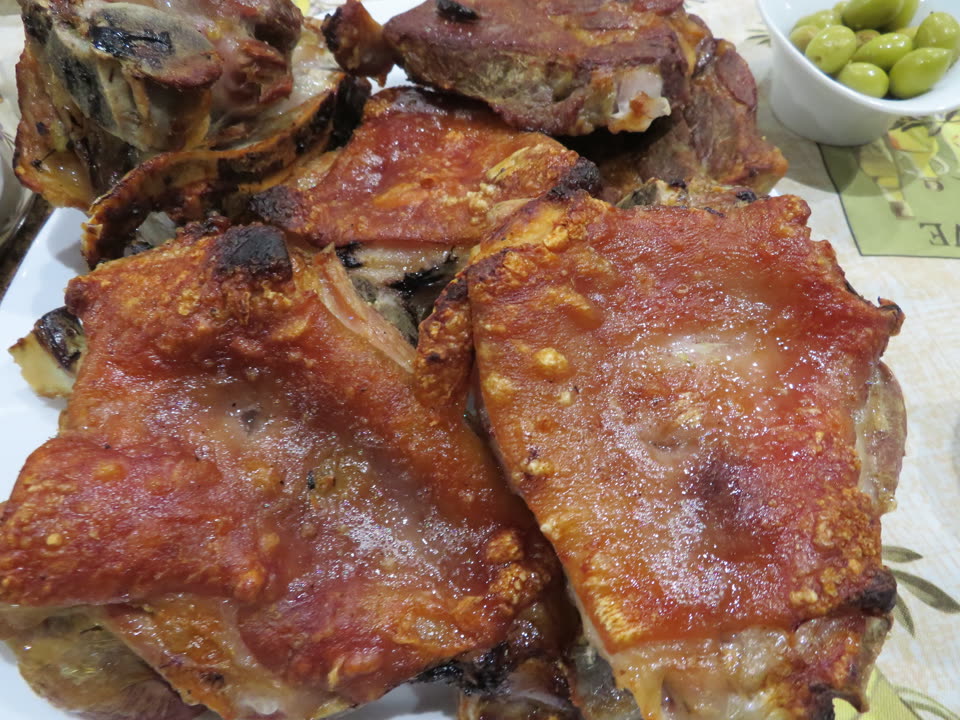
A whole pig, or a leg of one, rubbed with garlic and sour orange and roasted slowly — often outdoors, often in a pit or a wooden box, and often all day. It is the centre of the Nochebuena table and the thing the rest of the meal is arranged around.
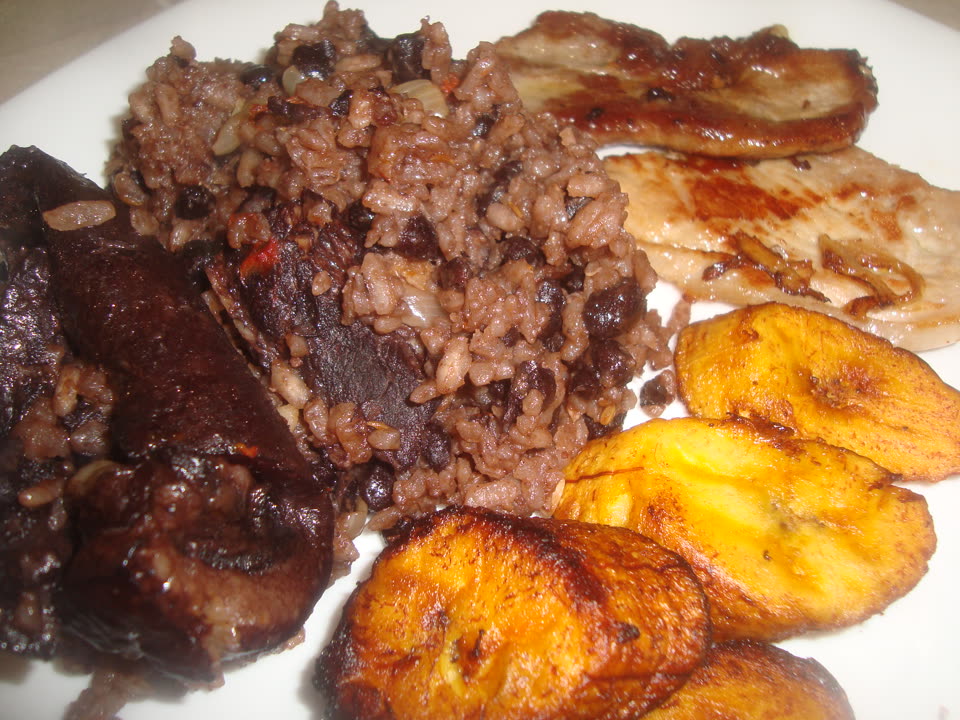
Rice and beans cooked together in one pot, and the name depends where you are: congrí is the word used mostly in the east of the island, arroz moro much more in the west. Either way it goes beside the pork, with fried green plantain and cassava in garlic mojo.
Dough of cassava and sweet potato, worked into a figure of eight, fried and drowned in anise syrup. They are the Christmas sweet made at home, alongside fruit in syrup eaten with white cheese, coconut sweets and jams.
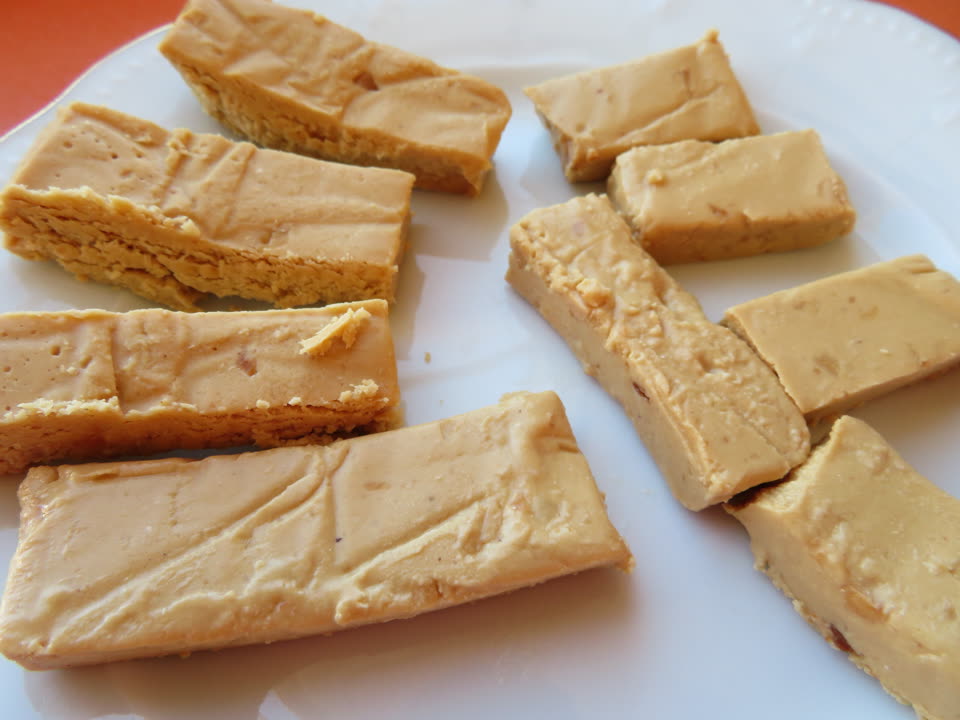
The Spanish almond nougat, still on Cuban tables at Nochebuena — at the far end of a dessert range that starts with homemade fruit in syrup and ends with a bar brought in from somewhere else.
Widely repeated claims about Christmas in Cuba that do not survive
checking. Each one says what is actually the case, because a correction
with nothing in its place leaves you worse off than before.
Oversimplified
The Pope brought Christmas back to Cuba
What is actually the case. The decision was the Cuban state's, taken twice, and the decree that made it permanent says what it was responding to.
A one-off holiday was granted for 1997, ahead of John Paul II's visit in January 1998. In December 1998 the Communist Party's Political Bureau announced a permanent restoration, and the Council of State signed Decreto-Ley No. 189 on 4 December 1998. The decree's own account is that Christian believers in and outside Cuba had expressed their hopes «with great respect, without pressure or campaigns of any kind», and that the holiday should be granted «as is done throughout America and in the rest of the western world, and as was done last year on the occasion of the visit of Pope John Paul II».
The visit is in the text, as the precedent for the one-off. A request from the Pope is not. The United States bishops welcomed the restoration — as a reaction to it.
What is actually the case. One town's are. Remedios holds its Parrandas on the night of 24 December and the neighbourhoods parade at dawn on the 25th. The other seventeen communities on the UNESCO inscription hold theirs on other dates, and UNESCO's own description places them «mostly towards the final months of the year» without calling them a Christmas festivity at all.
The Christmas connection at Remedios is real and historical — the Parrandas grew out of the noise made to wake people for the pre-dawn Aguinaldo Masses between 16 and 24 December. It is a fact about one town, not about the island.
What is actually the case. It is not on the list. The Labour Code names five feriados — 2 January, 25 and 27 July, 25 and 31 December — and 6 January is not among them, even though Cubans count Reyes as the closing day of the Christmas season.
The day itself is kept, and it is coming back after decades in which a generation grew up barely knowing it.
Christmas was not a holiday in Cuba for twenty-eight years. The day lost its status at the start of the 1970 sugar harvest, and it was restored by Decreto-Ley No. 189, signed in the Palace of the Revolution in Havana on 4 December 1998. The text names the previous year's one-off as the precedent: a holiday had been granted in 1997 «as was done last year on the occasion of the visit of Pope John Paul II».
The decree gives a reason, and the reason is sugar. It says the suspension of the holiday at the start of the 1970 harvest «was not inspired by any anti-religious sentiment, but by reasons of an economic nature», the date having fallen across the colossal effort of hundreds of thousands of workers mobilised for the sugar crop. It adds that the commemorations of the Revolution's own triumph, which fall days later, were suspended at the same time.
The American Catholic bishops welcomed the restoration within days. Their statement of 4 December 1998 called the decision, announced on 1 December, to reinstate the commemoration of the birth of Jesus «as a holiday for Christians and non-Christians, believers and non-believers» alike «welcome indeed».
Nobody knows how many Cubans are Catholic. There is no independent, authoritative count of religious affiliation on the island. The Catholic Church's own estimate is that about 60 per cent of Cubans identify as Catholic, and Protestant membership is put at around 5 per cent — and identifying is not the same as practising.
Religions of African origin run alongside Catholicism rather than instead of it. Regla de Ocha or Lucumí — often called Santería — and Palo Monte are widely practised, and the report that describes them notes that these practices are commonly intermingled with Catholicism and that some require Catholic baptism for full initiation, which is part of why nobody can count their members.
The Parrandas are on the UNESCO intangible heritage list, inscribed in 2018. First held in Remedios in 1820, they are now kept by eighteen communities across the centre of the island — and mostly in the last months of the year rather than at Christmas itself.
Parrandas de Remedios — EcuRed. Retrieved 2026-11-06. archived 17 September 2025«Al amanecer del 25 de diciembre, los barrios recorren las calles remedianas proclamándose vencedores mientras entonan las rumbas de victoria al compás de los grupos.»
feliz Navidad · Nochebuena — English Wiktionary. Retrieved 2026-11-06. archived 9 March 2026The dictionary carries «feliz Navidad» as a Spanish phrase, and «Nochebuena» as a feminine proper noun glossed «Christmas Eve».
Ley No. 116, Código de Trabajo, article 94 — Gaceta Oficial de la República de Cuba. Retrieved 2026-11-06. archived 17 October 2026The Labour Code names the feriados in one sentence: «Se declaran como feriados los días dos de enero, veinticinco y veintisiete de julio; veinticinco y treinta y uno de diciembre de cada año.»
Declarado el 25 de diciembre como feriado — Decreto-Ley No. 189 — Granma, 5 December 1998. Retrieved 2026-11-06. archived 18 October 2025The operative article is one line: «ARTICULO 1.- Se declara como feriado el día 25 de diciembre de cada año.»On the precedent: «…sus esperanzas de que en Cuba se conceda carácter feriado al día de Navidad, igual que se hace en toda América y en el resto del mundo occidental, y tal como se hizo el año pasado en ocasión de la visita del Papa Juan Pablo II.»And the signature: «DADO en el Palacio de la Revolución, en la Ciudad de La Habana, a los 4 días del mes de diciembre de 1998. FIDEL CASTRO RUZ».
Three Kings Day in Cuba — Havana Times. Retrieved 2026-11-06. archived 21 January 2026«Those of us born in the 1970s never heard about the three characters that traveled on camels with gifts for children who behaved well.»
¿Qué cenan en Cuba durante la Nochebuena? — Periódico Cubano. Retrieved 2026-11-06. archived 16 January 2025«Más que la Navidad celebrada mundialmente el 25 de diciembre, en Cuba es una tradición reunirse en un ambiente familiar y festejar la Nochebuena del 24 de diciembre y, de manera singular para los seguidores o no de la religión católica, la conmemoración del nacimiento del Niño Jesús en Belén.»
Festivity of Las Parrandas in the centre of Cuba — UNESCO, Representative List of the Intangible Cultural Heritage of Humanity. Retrieved 2026-11-06. archived 2 October 2026«Held for the first time in 1820 in the town of Remedios, the Festivity of Las Parrandas is now celebrated by eighteen communities in the centre of Cuba, mostly taking place towards the final months of the year.»
Statement on the Restoration of the Christmas Holiday in Cuba, December 4, 1998 — United States Conference of Catholic Bishops. Retrieved 2026-11-06. archived 17 April 2026«The decision of Cuba's Communist Party, announced December 1, to reinstate the annual commemoration of the birth of Jesus, in the words of the Political Bureau's declaration, "as a holiday for Christians and non-Christians, believers and non-believers" alike is welcome indeed.»
2023 Report on International Religious Freedom: Cuba — United States Department of State. Retrieved 2026-11-06. archived 11 May 2026«There is no independent, authoritative source on the overall size or composition of religious groups. The Catholic Church estimates 60 percent of the population identifies as Catholic. Membership in Protestant churches is estimated at 5 percent.»