Christmas Day in Mexico is 25 December. It is a public holiday.
How to say it
Spanish
Feliz Navidad
say it: feh-LEESS nah-vee-DAH(D)
A synthesised voice — not a recording of a person — saying Feliz Navidad
in es-MX.
Said by everyone and to everyone, and familiar to a great many people who speak no Spanish at all — which is worth saying on a site about how Christmas is actually kept, because the familiarity comes from a song rather than from Mexico. José Feliciano, who is Puerto Rican, wrote and recorded «Feliz Navidad» in 1970 in a Los Angeles studio while homesick, and it is nineteen words long.
In a Mexican mouth the final -d is barely voiced, which is what the bracket is for — closer to «nah-vee-DAH» in ordinary speech than the full stop an English reader would give it.
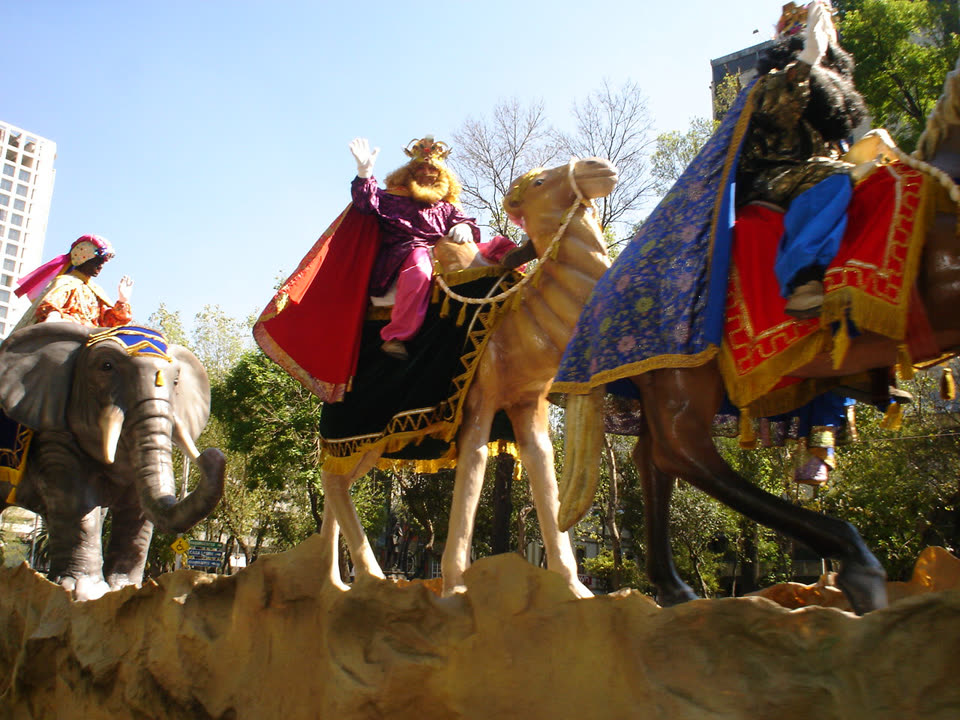
The older of the two, and the figure Santa Claus had to be squared with rather than replace when he arrived in the 1950s. The day is 6 January — the same morning the rosca is cut.
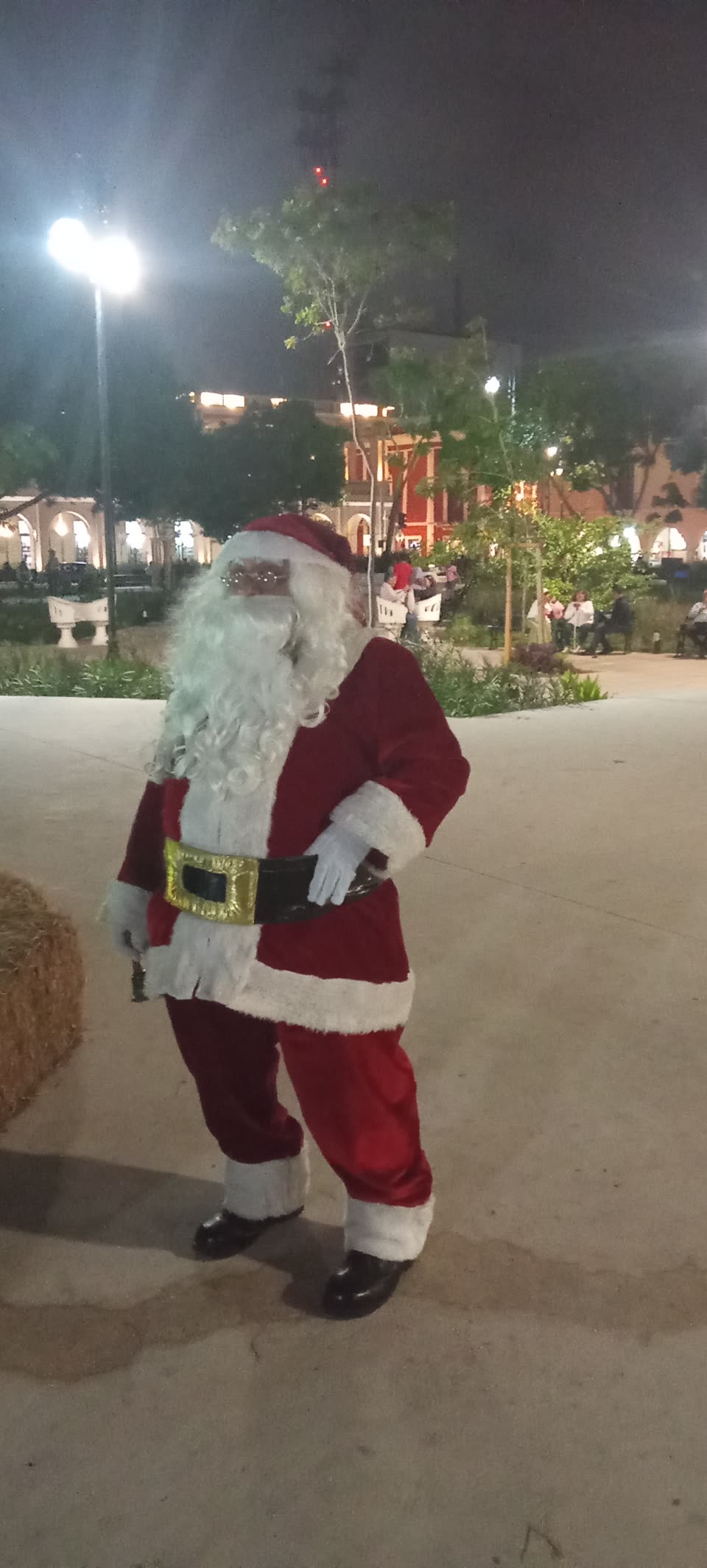
The newer one, arriving on the night of the 24th, and he has not displaced the Kings so much as joined them. A Mexican child may be given presents twice, thirteen days apart, by two entirely different sets of visitors — which is the practical consequence of a season that runs from December into February.
La Navidad en México — Erika Ehnis Duhne, in Flores de Nieve, the magazine of the Centro de Enseñanza para Extranjeros, Universidad Nacional Autónoma de México
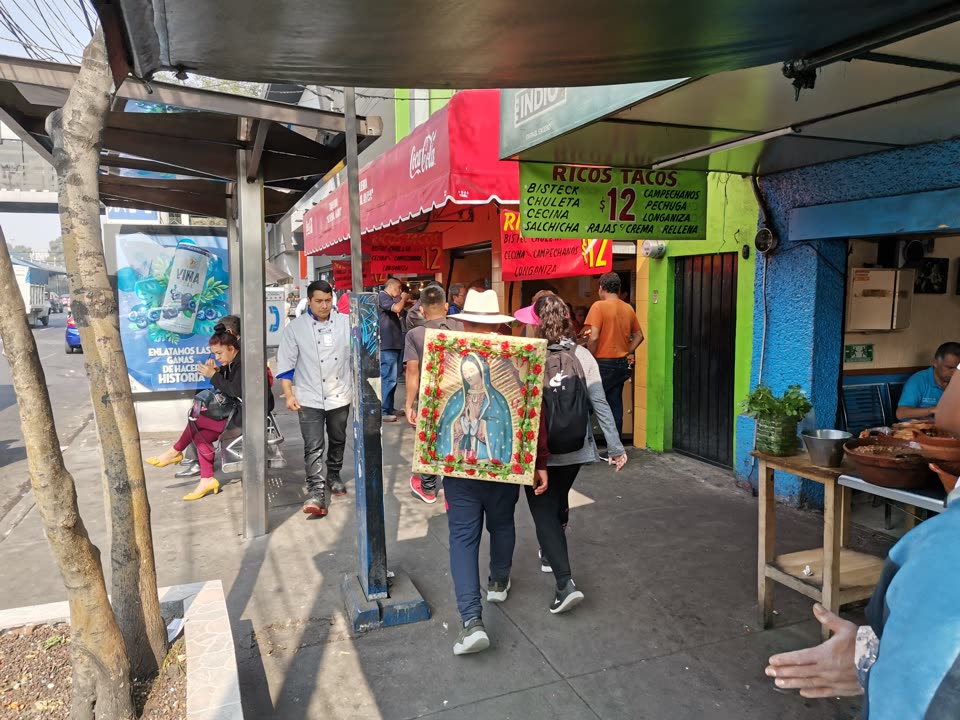
Fifty-three days — it opens with Guadalupe and closes with a debt
The Mexican Christmas is not a day with a run-up. It is a season with a beginning, a middle and an ending that are separately observed, and it lasts from 12 December to 2 February.
It opens on the feast of the Virgen de Guadalupe, the country's patron, when the sanctuary is sung Las Mañanitas through the night of the 11th into the 12th. From the 16th come the nine nights of Las Posadas. The 24th is Nochebuena, with a mass and a party. The 6th of January brings the Reyes Magos and the rosca. And on 2 February, the Candelaria — forty days after Christmas, and the day popular reckoning treats as the end of the season — whoever found the figure in the rosca a month earlier must produce tamales and atole for everyone who was at the table.
So the season does not end on a date. It ends when a debt contracted by eating a slice of cake has been paid.
Las Posadas — nine nights of being turned away at the door
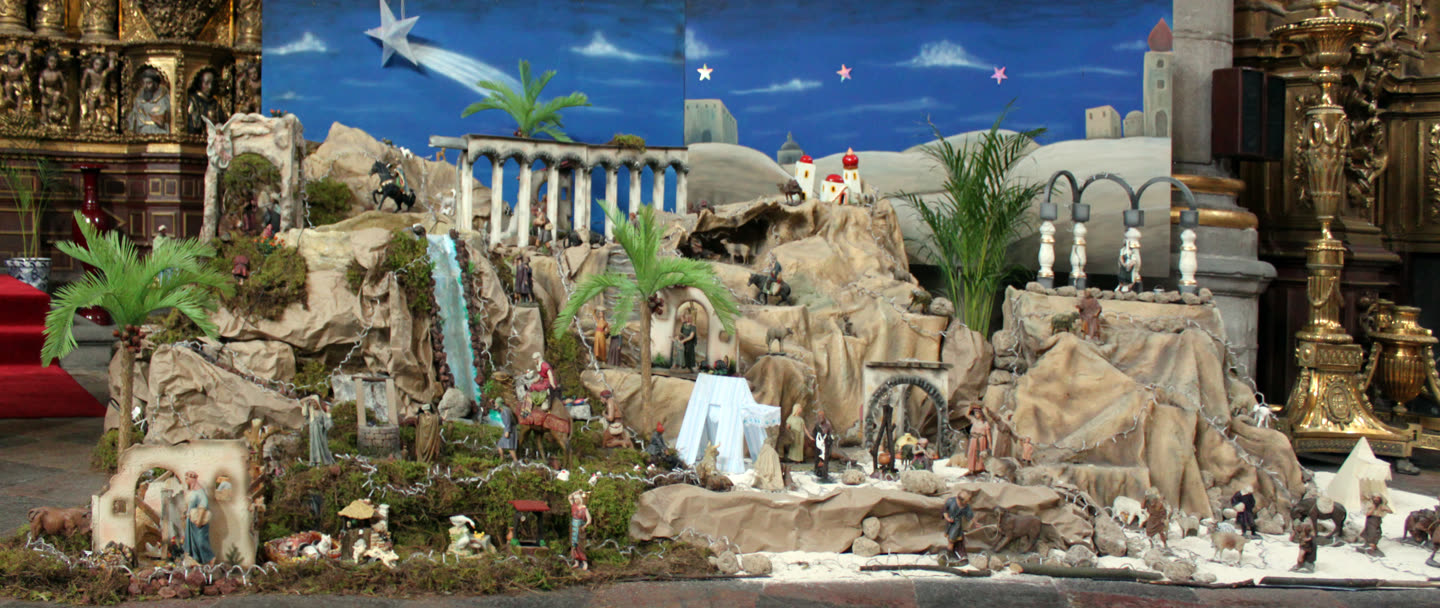
Nine nights, 16 to 24 December, traditionally explained as one for each month of Mary's pregnancy. A procession carries the pilgrims — the images of Mary and Joseph — to a house, and the party sings to be let in while the people inside sing back refusing, until the refusal gives way and the door opens.
The Mexican dictionary describes the whole evening in one sentence: the rosary and a litany, the procession with the peregrinos, the sung request for lodging and the sung answer, and «más tarde se rompen piñatas, se reparte la colación y se merienda y se toma ponche».
They have a documented beginning, and it is Mexican. Augustinian friars reached Acolman, in what is now the State of Mexico, in the second half of the sixteenth century, and instituted misas de aguinaldo there — Bible readings and open-air representations of the birth of Jesus. Those evolved into the posadas.
The piñata was a teaching aid, and every part of it means something
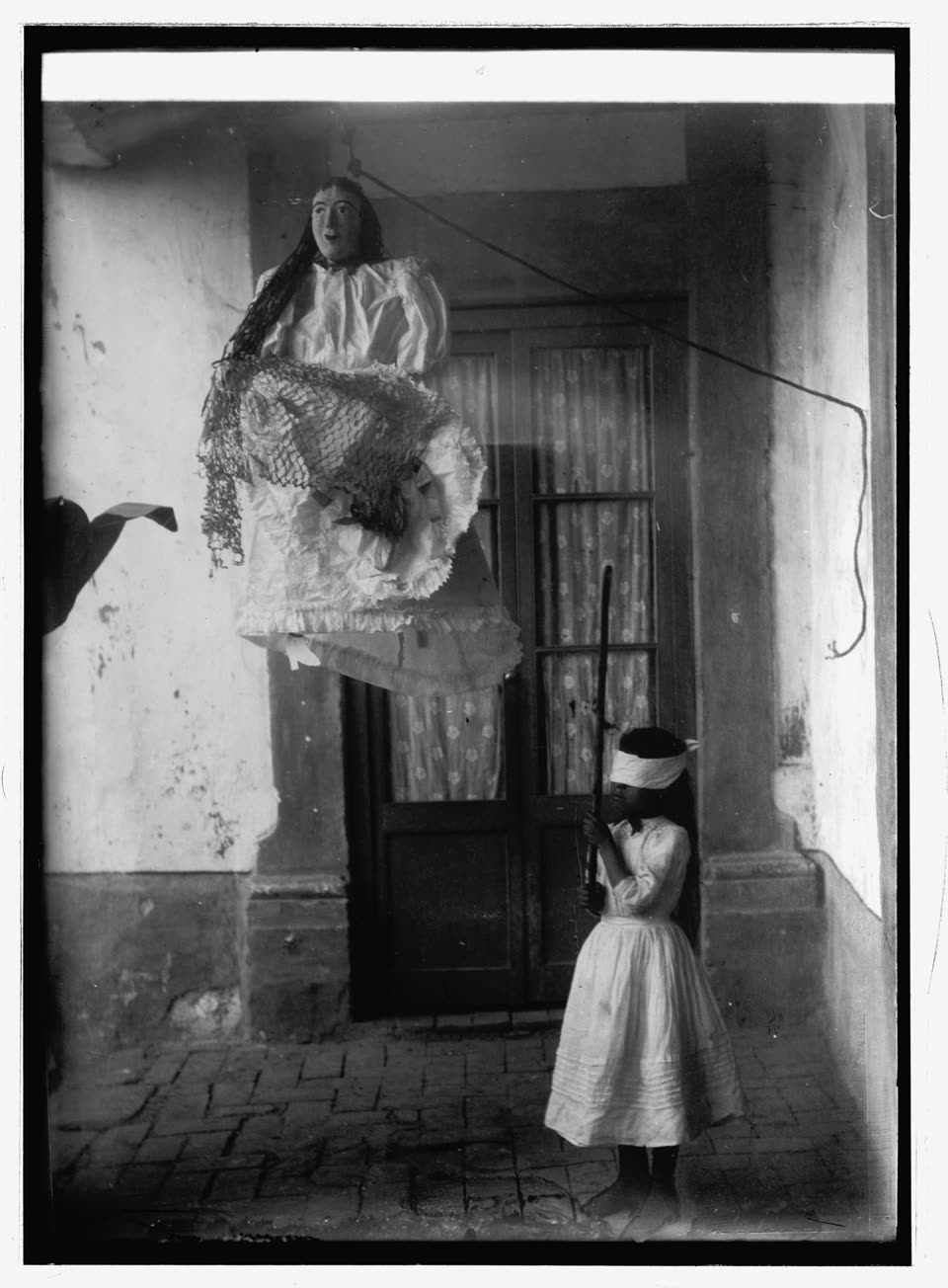
A clay pot, covered in coloured paper and flour-and-water paste, hung up and broken with a stick by a blindfolded child. It came to Mexico with the Spanish and was used as an instrument of evangelisation, and the allegory is still taught piece by piece.
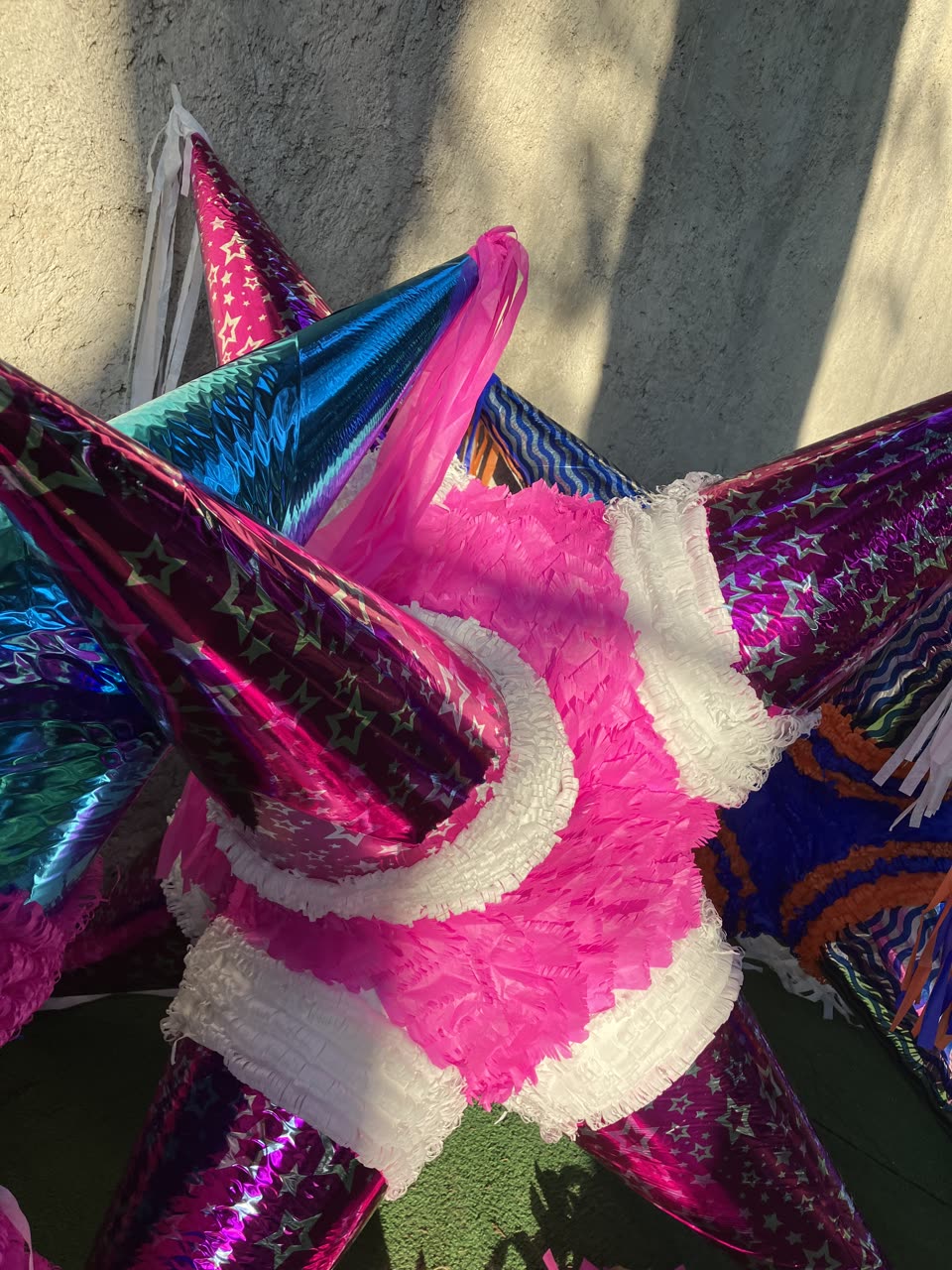
The seven points are the seven deadly sins. The bright colours are temptation. The blindfold is blind faith, which needs virtue and will behind it. Breaking the pot is the destruction of sin, and the fruit and sweets that fall out are the rewards of heaven.
Acolman, where the posadas began, is also where the piñata took hold, and is called its cradle for that reason. The traditional seven-pointed shape is still made there. Everywhere else it has become a cartoon character made of cardboard — sometimes with the opening cut in advance, so that nobody has to break anything at all.
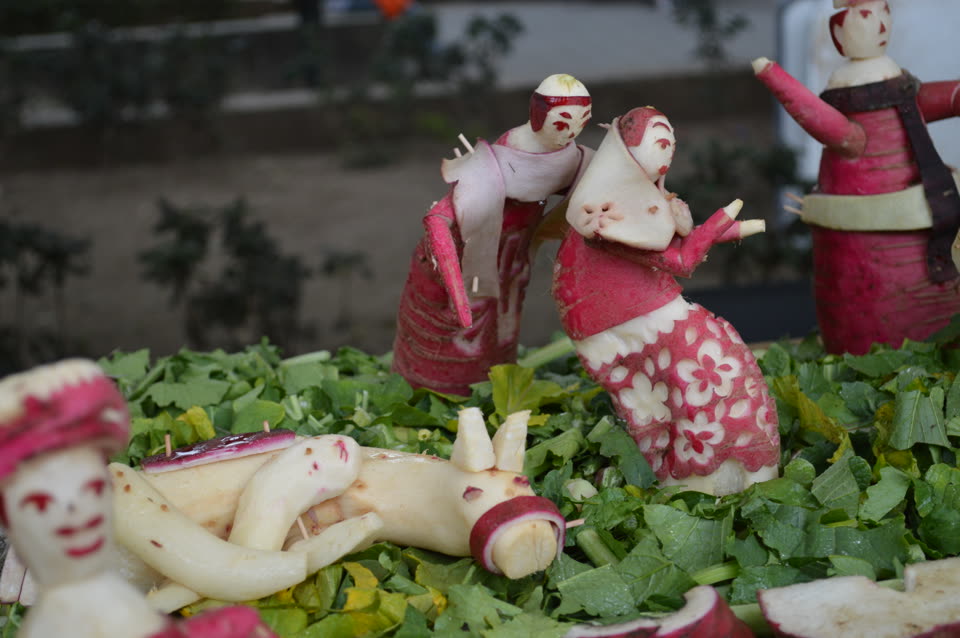
The Night of the Radishes, in Oaxaca, on 23 December
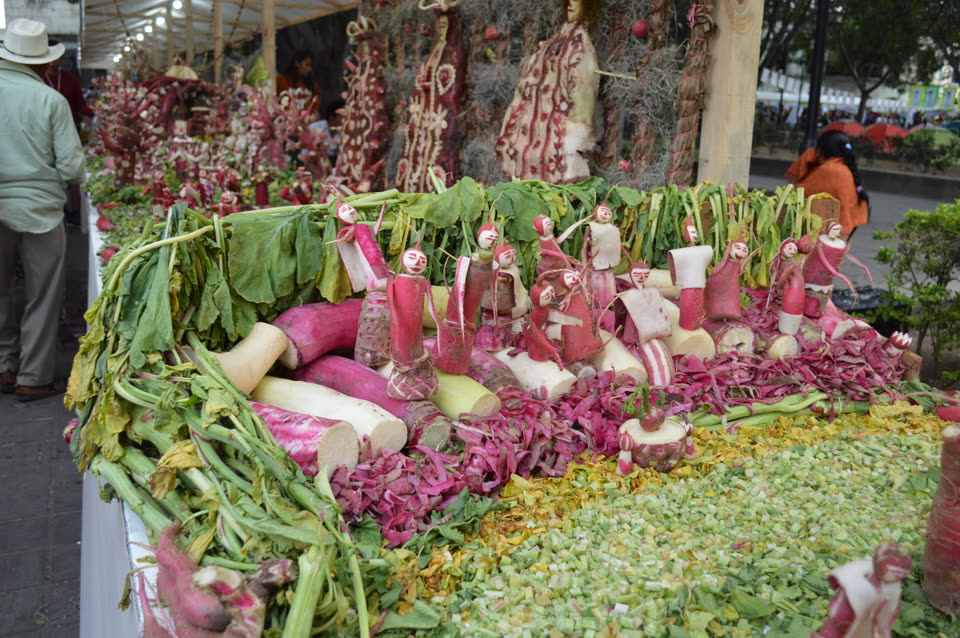
On 23 December the Zócalo in Oaxaca de Juárez fills with figures carved from radishes — nativities, saints, historical scenes, village life — grown oversized and misshapen on purpose and cut the same day, because they wilt by the next.
It began as a competition for the best-decorated market stall at the Christmas Eve vigil market, and the culture ministry's register gives the date exactly: 23 December 1897. From 23 December 1908 the radish stalls had their own plaza in the new Merced market. The growing villages are close by — La Trinidad, La Noria, Consolación — and they are the ones who supply the city.
There are now three categories and three cash prizes in each: radishes, flor inmortal — everlasting flowers — and totomoxtle, dried maize husk.
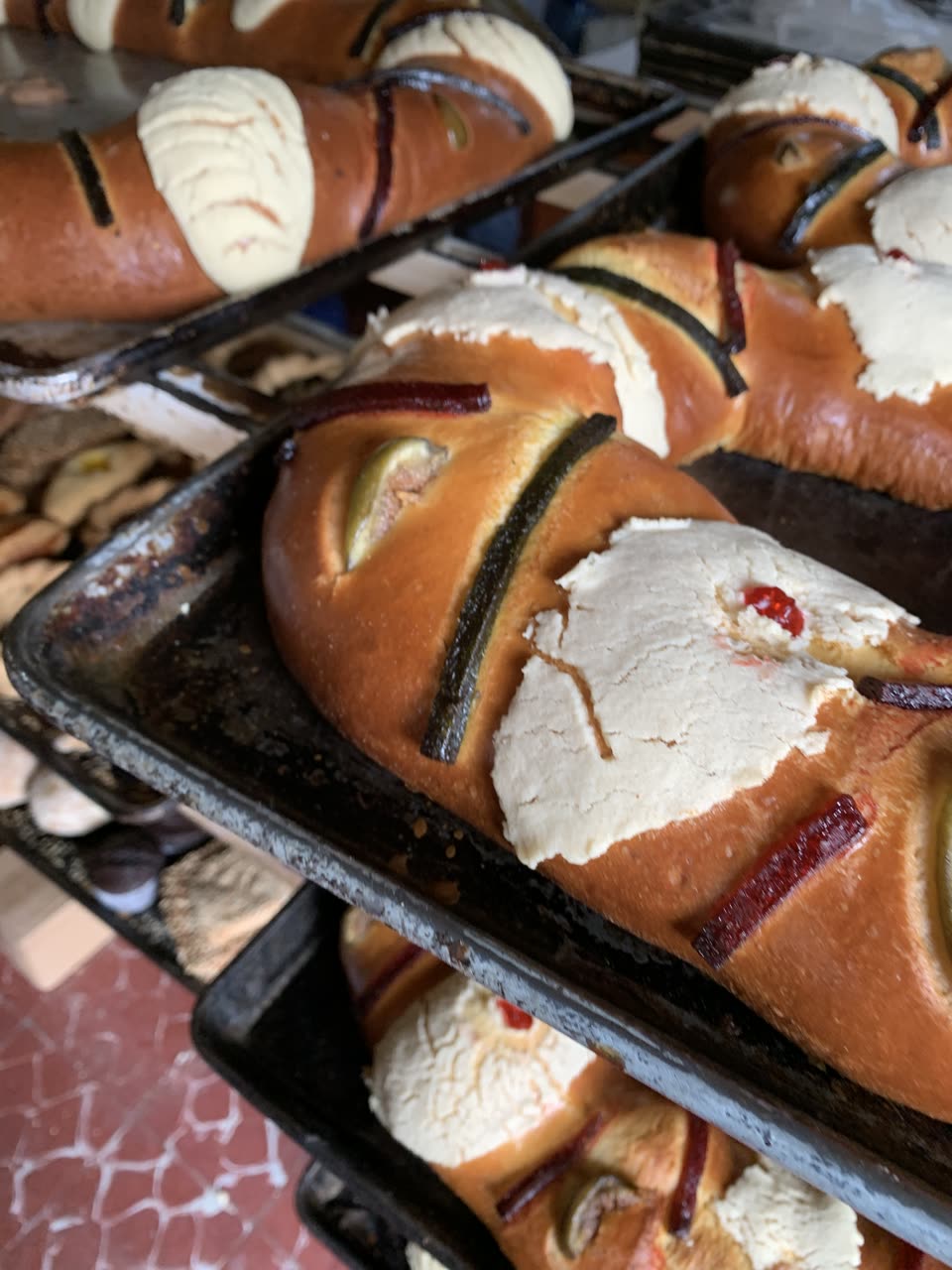
On 6 January a ring-shaped sweet bread studded with candied fruit is cut and shared. Hidden inside it are one or more small figures of the infant Christ, and the cutting is a lottery: the figure is baked in because Mary and Joseph concealed the child to save him from Herod.
Whoever finds one in their slice is not congratulated so much as appointed. They owe the company tamales on 2 February, the Candelaria, which is why the Mexican Christmas runs on past Epiphany to 2 February.
Candelaria — tamales for the Christ child, on a day that was already a new year
On 2 February the debt falls due and the season closes. The person who found the figure in the rosca on 6 January dresses the image of the child in new clothes, takes it to the church to be blessed, and gives the company a party built on tamales and atole.
The older layer is still there underneath, and the culture ministry names it: the day is a mixture of pre-Hispanic and Catholic tradition. On the first day of the Aztec year the ancestors commemorated Tláloc, Chalchiuhtlicue and Quetzalcóatl; on the Catholic side the day recalls the presentation of the child at the Temple in Jerusalem, and the purification of his mother after the birth.
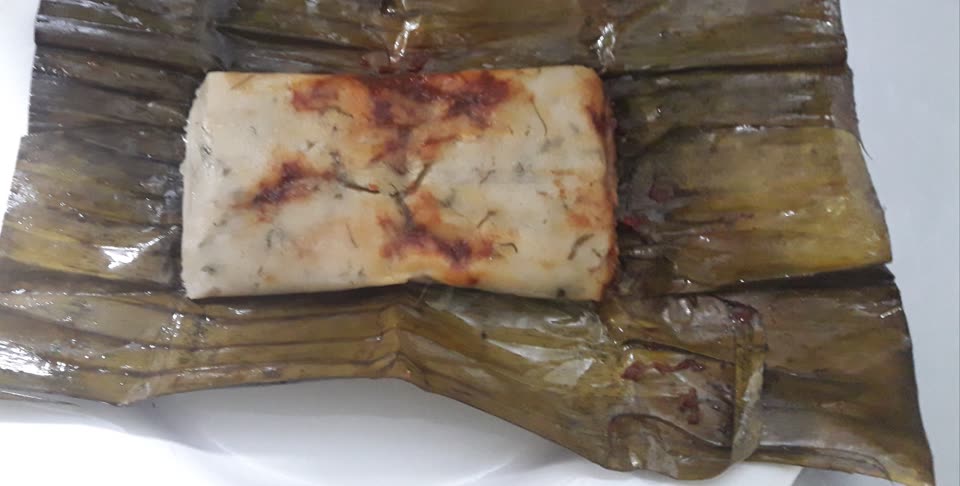
The tamal is the thread between them. It is maize dough cooked with lime — nixtamal — wrapped in corn husk or banana leaf, in hoja santa or maguey. The same grain, on the same day, for a different reason that is also the same reason.
The dressing is older than the record of it. Researchers can show the custom, or part of it, in nineteenth-century documents, while the practice of dressing the images goes back further still; it became genuinely popular only in the middle of the twentieth century, when whole families and workshops turned to making the clothes.
Pastorelas — the nativity as comedy, with the devil given the best lines
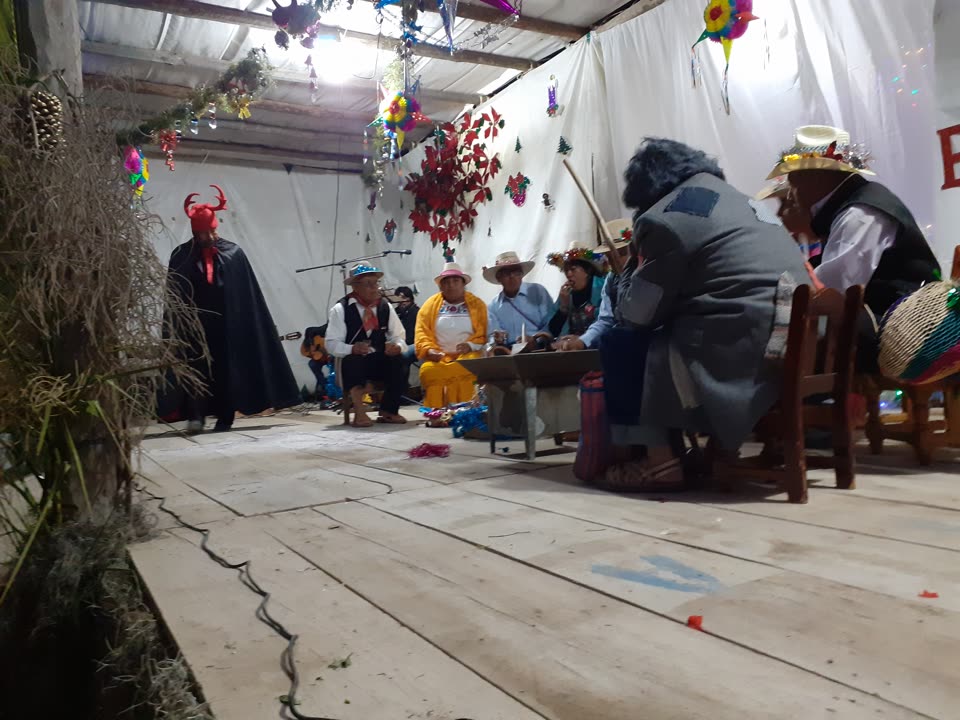
A pastorela is a play about shepherds trying to reach the newborn Christ while devils try to stop them, and in Mexico it is usually funny. Missionaries used religious theatre to teach during the colonial period, and the form survived into something closer to satire: the shepherds are slow, the devils are charming, and the local audience is addressed directly. The scholarship on where it comes from is argued rather than settled — one Jesuit writer makes the case for Jesuit influence after the order reached New Spain in 1572, and notes that historical accounts do not place pastorelas in the earlier Franciscan effort.
28 December is the Day of the Holy Innocents, and the joke is that you will not get it back
The date commemorates the children Herod had killed, and in Mexico it is kept as a day of pranks. The characteristic one is to borrow something and let the lender believe it is gone: «Inocente palomita que te dejaste engañar, sabiendo que en este día nada se debe prestar…» — innocent little dove, you let yourself be fooled, knowing that on this day nothing should be lent — is the line said when handing it over. Newspapers have joined in, running invented stories on the front page beside the real ones. Of all the festivals in the Guadalupe-to-Kings season it is the one with no feast attached to it at all.
Maratón Guadalupe-Reyes — UNAM Global (Universidad Nacional Autónoma de México), L. Huerta Mendoza, 4 December 2023
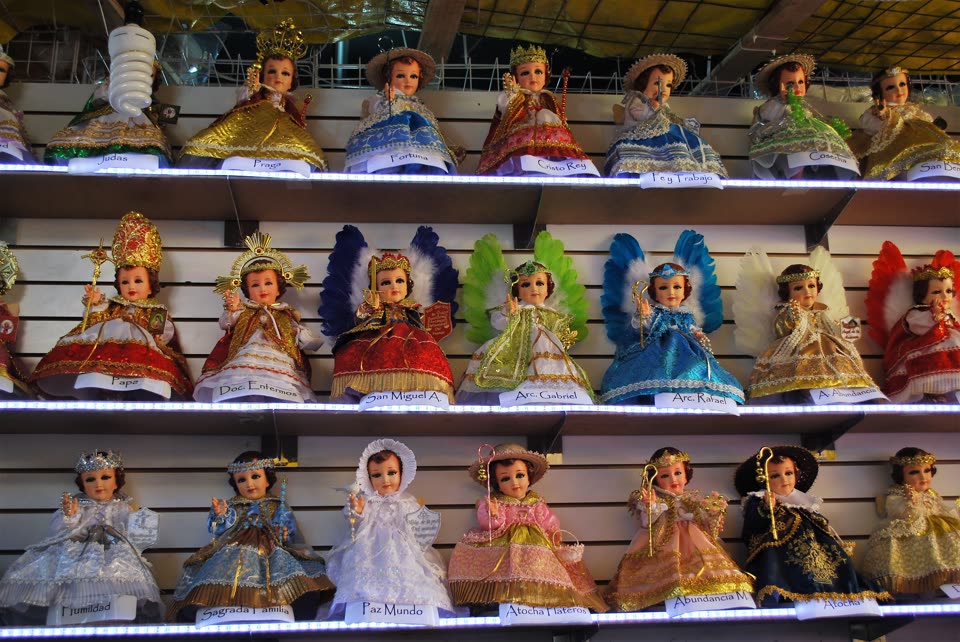
The Christ child is a figure you own, rock to sleep, dress, and give back on 2 February
A household's Niño Dios is a physical doll, often inherited, and it has a calendar of its own. On the night of the 24th it is rocked — arrullado — and laid in the crib. On 6 January the godparents collect it to be dressed in new clothes. It comes back on 2 February, Candelaria, when it is presented at church and the Christmas cycle finally closes. Indigenous sculptors began making these figures soon after the friars arrived, and some surviving images date from the seventeenth and eighteenth centuries.
Maize dough, seasoned, wrapped in a maize husk or a banana leaf, and steamed. They are older than the feast they close by a very long way — Mesoamerican and pre-Columbian, and the word is Nahuatl.
They appear right through the Mexican calendar, at baptisms and weddings and on the Day of the Dead, but their Christmas station is fixed: they are what the finder of the rosca figure owes everybody on 2 February, eaten with atole, and they are what ends the season.
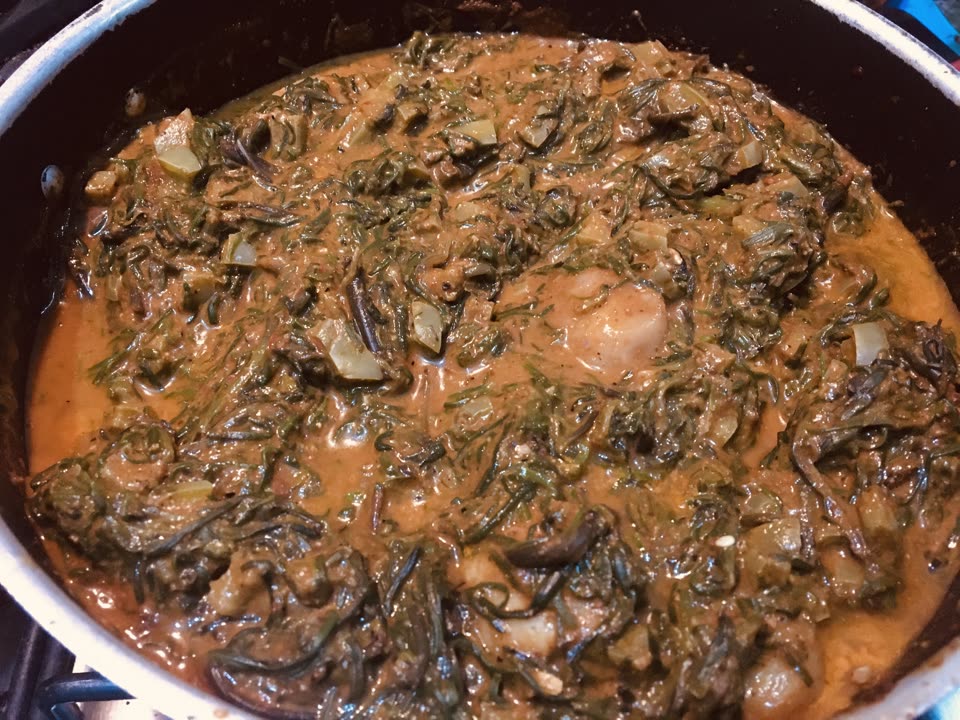
A Christmas dish built on a wild indigenous green. Romerito is a quelite — Suaeda edulis, endemic to Mexico, a salt-tolerant green of the saline flats rather than of the maize field — and it looks like rosemary without being related to it.
The university’s own account names the parts of the dish separately: «romeritos acompañados de mole, papas, nopales y camarones» — romeritos with mole, potatoes, nopales and shrimp, a plateful called revoltijo. The shrimp arrives in fritters of its own, tortitas de camarón; it is not an ingredient of the sauce.
It is eaten at Mexican Christmas and again in Lent, and the Spanish source describes it plainly as having a strong indigenous component — which is true of the green and not of the sauce. The same encyclopaedia’s own list of what goes into a mole poblano runs «chocolate amargo, chile ancho, chile mulato, chile pasilla, chipotle, almendras, plátano, nueces»: the almonds and the plantain crossed the Atlantic, and so did the cinnamon and cloves most recipes add. A pre-Columbian quelite in a thoroughly colonial sauce, which is the more interesting dish anyway.
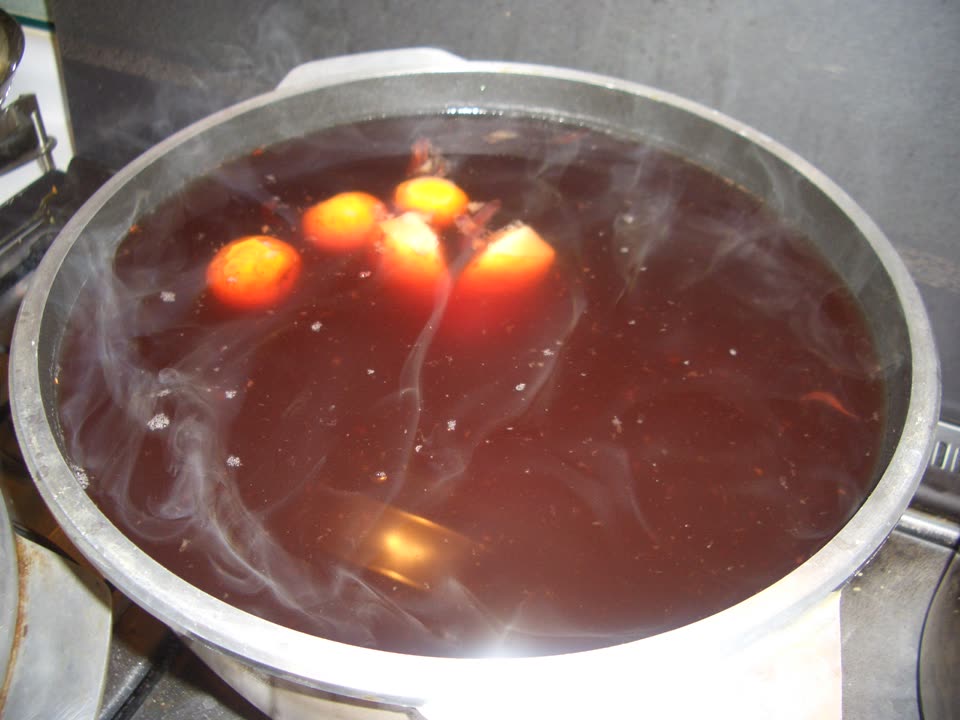
The drink handed out at every posada, hot, from a pot. It is made with tejocote — the Mexican hawthorn, Crataegus mexicana — along with guava, plum, tangerine, orange and prunes, sweetened with piloncillo, which is unrefined cane sugar in a cone, and spiced with cinnamon or vanilla. Sugar cane is cut into lengths and put in the cup, to be chewed when the liquid is gone.
For the adults, rum or tequila goes in. The recipes vary enormously from house to house and from state to state, which is the point of it.
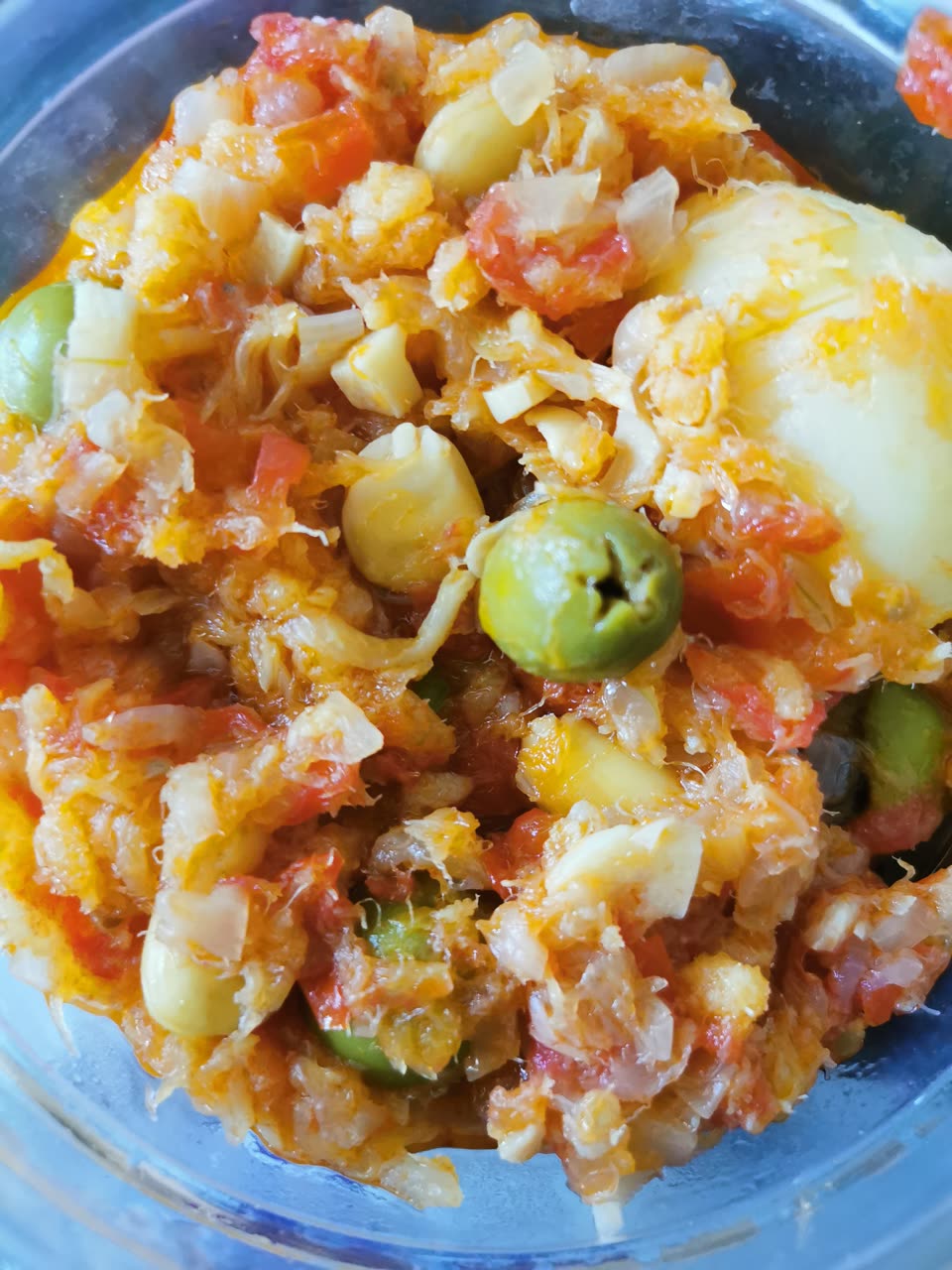
Salt cod, on a Christmas Eve table fifteen hundred miles from the nearest cod. It is a North Atlantic fish, dried and salted so it keeps, and it came with the Spanish — but what is eaten in Mexico is not what was brought. The dried fish is the base and the rest is local: jitomate, chiles güeros, olives and capers, cooked long. A UNAM food historian is candid that the route is not documented: nobody is quite sure how it reached Mexico.
Widely repeated claims about Christmas in Mexico that do not survive
checking. Each one says what is actually the case, because a correction
with nothing in its place leaves you worse off than before.
Oversimplified
Las Posadas are a Spanish custom that the colonists brought over with them.
What is actually the case. They were built in Mexico, on purpose, on top of something that was already there.
Before the conquest, the Mexica kept Panquetzaliztli — the festival of the coming of Huitzilopochtli, god of war — which the Spanish account places from 6 to 26 December. The dates overlapped the European Christmas, and the Spanish evangelisation reshaped the existing celebration rather than replacing it: the image of Huitzilopochtli was substituted with those of Mary and Joseph. The Catholic form was given to it by the evangelising orders, and specifically by the Augustinian friar Diego Soria, who obtained from Pope Sixtus V indulgences for nine misas de aguinaldo in the days before Christmas. Those two halves do not sit easily together — Sixtus V reigned from 1585 to 1590, two generations after the first evangelisers — and the source puts them in one sentence without reconciling them.
Then it left the church. In the eighteenth century the celebration moved out into the neighbourhoods and the houses, and the religious music was replaced by popular song — which is how a liturgical novena became nine parties with a piñata.
A Spanish liturgical instrument, then, deliberately laid over an Aztec winter festival, which the Mexican street took away from the clergy a century and a half later. Calling it an import describes a third of that.
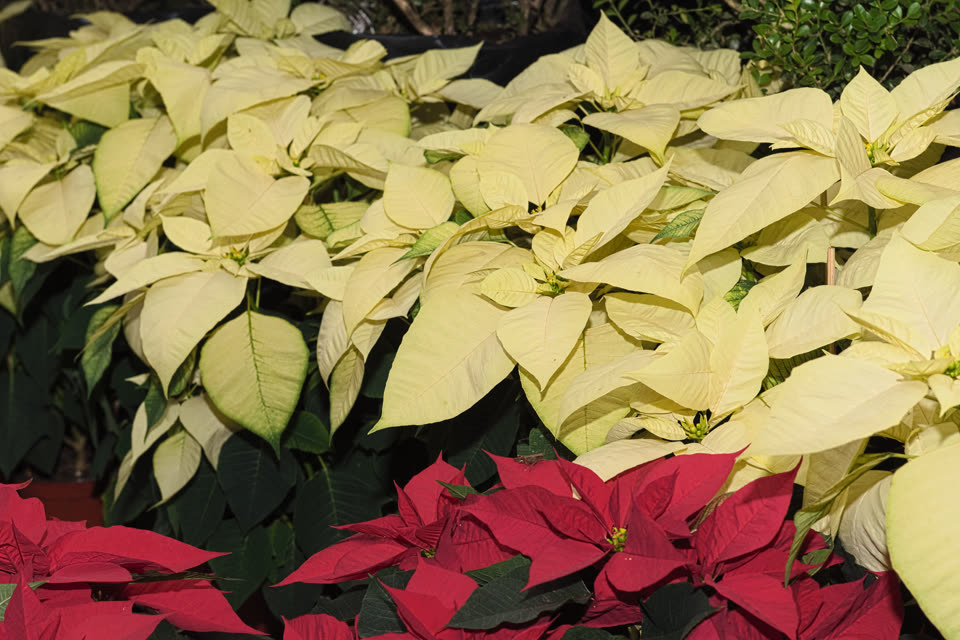
The poinsettia is an American Christmas plant, named after the man who discovered it.
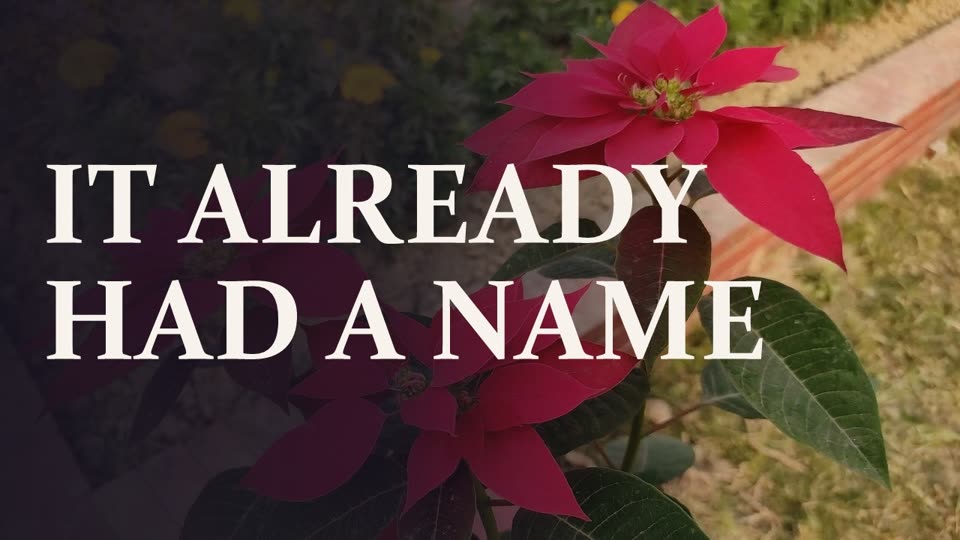
What is actually the case. It is Mexican, it was named in Nahuatl long before it was named in English, and Poinsett did not discover it — he exported it.
Euphorbia pulcherrima is native to Mexico and Central America and grows wild in Guerrero, Oaxaca, Michoacán and Chiapas. The Mexica called it cuetlaxóchitl — usually read as the flower that withers, from cuetlahui, to wither, though the same source offers a second derivation from cuetlaxtli, leather, for the colour of a freshly stripped hide. It was already being used to decorate churches at Christmas under the viceroyalty of New Spain. Joel Roberts Poinsett was the first United States minister to Mexico, not its ambassador, and he began sending plants home to his South Carolina greenhouses in the 1820s — possibly as early as 1826. They were shown at the Pennsylvania Horticultural Society in 1829, catalogued as «a new Euphorbia with bright scarlet bracts… presented to the Bartram Collection by Mr. Poinsett, United States Minister of Mexico». The English name is attested from about 1836, given by others in his honour rather than coined by him.
Mexico does not call it that. It is the flor de Nochebuena.
Nochebuenas: las hojas navideñas — Ciencia UNAM, Dirección General de Divulgación de la Ciencia, Universidad Nacional Autónoma de México
Unsupported
A papal bull of Sixtus V, obtained in 1587 by fray Diego de Soria, created Las Posadas at Acolman.
What is actually the case. Augustinian friars at Acolman did institute Christmas masses — the misas de aguinaldo — and those masses are what the posadas grew out of. What cannot be shown is the rest of it. INAH, whose page the story is usually hung on, gives no year, names no pope and mentions no bull: it says the friars reached Acolman «en la segunda mitad del siglo XVI» and that the misas de aguinaldo «evolucionarían con el tiempo, dando origen a las entrañables posadas». The accounts that do give a date disagree with each other, the document itself is quoted by nobody who reproduces it, and the thing the permission is described as covering is a sequence of church masses rather than the house-to-house posada, which developed later.
The Night of the Radishes began on 23 December 1897.
What is actually the case. The date is printed by the federal culture ministry's own heritage register, which gives «la fecha del 23 de diciembre de 1897» for the first contest of best-decorated market stalls. Oaxaca's municipal archive disagrees with it, and the archive is holding the paperwork: a prize-giving record dated 24 December puts the first horticulture-and-flower contest in 1898, and the archive's director has said so publicly. The safest statement is that the prizes were agreed in 1897 and the first documented contest was held in 1898 — and that the city itself has repeated the earlier date, including on a 1997 poster advertising a centenary.
Marco Polo carried the piñata to Europe from China
What is actually the case. The people who tell this story call it a story, and the institution with most reason to tell it does not tell it at all.
INAH, writing the history of the Acolman piñata, gives the object «raíces en Asia y Europa» and names no one — no Marco Polo, no China, no route. The Augustinian account that does carry the tale hedges it in its own sentence: «There is also the story that Marco Polo brought a similar tradition from China, in which the piñata was in the shape on an animal used in the fields, such as a bull or ox.» It frames its Italian version the same way, «legend says Roman soldiers would hang clay pots…».
What is not in doubt is the word and the Lenten route: pignatta is Italian for a pot, the custom passed to Spain where it became «customary to romper la olla (break the pot) on the first Sunday of Lent», and it reached New Spain with the friars. INAH itself asserts an Asian root; what has no evidence behind it is the courier.
Mexico grows more than a hundred cultivated varieties of the poinsettia. The United States keeps 12 December, the anniversary of Joel Roberts Poinsett's death, as National Poinsettia Day.
Nochebuenas: las hojas navideñas — Ciencia UNAM, Dirección General de Divulgación de la Ciencia, Universidad Nacional Autónoma de México
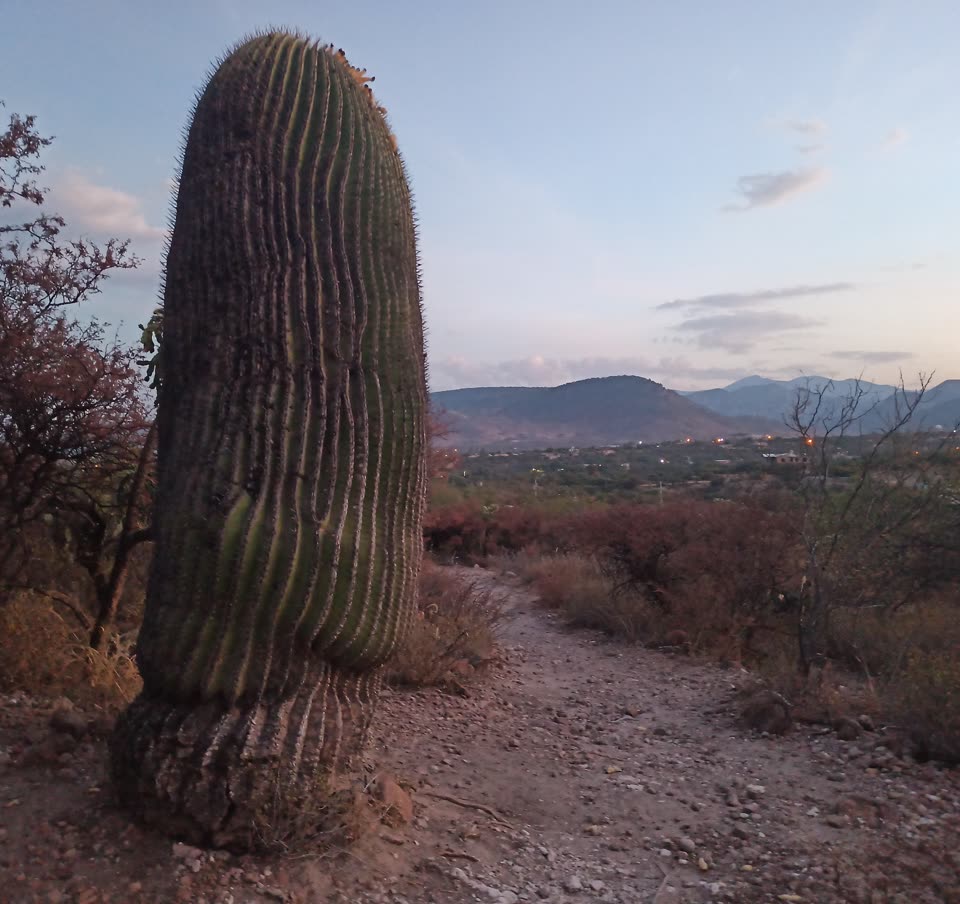
An ingredient was taken out of the Christmas cake to save a cactus. The rosca de reyes was traditionally studded with acitrón, candied biznaga, cut from barrel cacti that take between fourteen and forty years to grow forty centimetres and are listed in Mexico's NOM-059 as species subject to special protection. Bakers have moved to substitutes: nopal, jícama, beetroot, and increasingly ate, a firm fruit paste. A conservation listing has rewritten the recipe.
In 1930 the Mexican state tried to replace Santa Claus with Quetzalcóatl. On 23 December that year the Estadio Nacional in Mexico City — where the big political events were held — staged a gift distribution to thousands of poor children in front of a pre-Hispanic pyramid presided over by the feathered serpent. The First Lady, Josefina Ortiz, handed out toys and sweets; between ten and fifteen thousand children were brought to it, with the Red Cross, the cabinet and the diplomatic corps among the adults there. The Three Kings paraded that day and escorted her to the toy distribution: the state threw Santa Claus out and left Melchor, Gaspar and Baltazar in. A UNAM historian calls it «una propuesta nacionalista» of the Education Secretary, Carlos Trejo, «para sustituir a Santa Claus y poner una cosa más mexicana». It was never repeated.
Oaxaca's Night of the Radishes held its «125th» edition in 2022, and it was really the 123rd. The contest was cancelled in 2020 and again in 2021, and when it came back the city carried on counting as though it had not been. The municipal archive holds the documents that would have settled it, including a prize-giving record and a set of contest rules — and the same archive shows the city has had the founding year wrong since at least a 1997 poster celebrating a centenary that was a year early.
Noche de Rábanos: tradición que data de 1898 — El Imparcial de Oaxaca, Lisbeth Mejía Reyes, 16 December 2023, reporting the Archivo Histórico Municipal and its director Nora Cedeño
The Christmas flower was a Mexica flower first, and it was about warriors. The cuetlaxóchitl grew in the gardens of Nezahualcóyotl and Moctezuma, and INAH gives it a meaning that has nothing to do with a nativity: it «se relacionaba con la pureza y la nueva de la vida de los guerreros que morían en batalla, quienes se creía regresaban durante el Tlaxochimaco y libaban de esta flor» — men killed in battle were believed to come back during the flower festival and drink from it. The plant belonged to Huitzilopochtli, «cuyo nacimiento ocurría en el solsticio de invierno». The Franciscans of Taxco took it for the birth of Christ because it flowers in the cold months, and the nacimientos have been decorated with it ever since.
Mexican law requires a Christmas bonus, and sets the deadline four days before Christmas Eve. Article 87 of the Ley Federal del Trabajo, which dates from 23 December 1969, gives every worker «the right to an annual aguinaldo (bonus) that shall be paid prior to the 20th day of December, equivalent to fifteen salary days, at least», pro rata for anyone who has not completed a year. Several Latin American countries mandate a thirteenth salary; what is particular to Mexico is that it is paid once, and in December.
The plan to retire Santa Claus was announced in a newspaper a month before, and it came out of a lunch. El Universal ran it on 27 November 1930 under the headline «Quetzalcóatl será el símbolo de la Navidad en nuestro país», quoting the Education Secretary Carlos Trejo y Lerdo de Tejada on where the idea came from: «Ayer tuve el gusto de comer con él —el presidente de la República Pascual Ortiz Rubio— y durante la comida estuvimos acordando y me dio la idea de sustituir en las tradiciones extranjeras de Navidad —que no es nuestra— cambiándola por algo esencialmente mexicano. Quetzalcóatl sustituirá a los Santos Reyes a Santa Clós y a Noel.» The readers wrote in. One woman asked: «¿Vamos a acostar a Quetzalcóatl en el pesebre de Belén y rezarle en idioma náhuatl?»
Nobody knows who picked the first poinsettias to leave Mexico. The plant is named after Joel Roberts Poinsett, the first United States minister to Mexico, and even the story of his finding it is hedged by the botanists who tell it: «Se dice que Poinsett encontró la nochebuena en barrancas cercanas a Taxco, Guerrero, en 1828.» He and his companions sent at least four consignments of plants from Mexico to the Bartram botanical garden in Philadelphia in 1828 and 1829 — and «Debido a que dichos ejemplares no estaban bien etiquetados, se desconoce quiénes los recolectaron». James Ronaldson wrote to Poinsett that he did not know who had sent the boxes, only that he supposed they were from Poinsett and William H. Keating. Where the plants came from and who gathered them «siguen sin conocerse».
When Santa Claus arrived in Mexico in the 1950s he was received as an undesirable foreigner. A study of the period by Susana Sosenski, published in INAH’s journal Cuicuilco, puts it in those words: he «fue visto como un “extranjero indeseable”, portador de una cultura ajena y una modernidad vinculada estrechamente a la sociedad de consumo». The argument against him was about immorality, about Americanisation, and about what he was doing to the Reyes Magos, whom he had to be squared with rather than replace.
The prizes at the first Night of the Radishes were ten, seven and five pesos, and the judges were five women. The minute drawn up for the Oaxaca city council records the awards — «los premios para el primero, segundo y tercer lugar fueron de 10, 7 y 5 pesos» — and names the panel: «la señora María C. de Bolaños y señoritas Josefa Olivera, Ignacia Canseco, Isabel Aguirre y Josefina Vasiur». It is dated 24 December, the day after the competition.
The Mexica month that Candlemas landed in was a month about the lack of rain. UNAM quotes the historian Johanna Broda: Atlcahualo «correspondía a febrero» and «pertenecía a la época seca del año»; its name «significa “dejan las aguas” o “faltan las aguas”»; it belonged to Tláloc, god of rain and of the hills; and offerings of maize cobs from the last harvest opened the year’s petitions for rain, which ran on until late April.
Dressing the Christ child is an old custom that became a general one only in living memory. INAH puts the documents in the nineteenth century and the practice earlier still — «hay documentos que registran esta costumbre o parte de ella en el siglo XIX, si bien la práctica de vestir a los Niños es anterior» — but dates its spread very late: «fue hasta mediados del siglo XX que la tradición se volvió verdaderamente popular», with families and whole workshops given over to making the clothes.
The Christmas dinner everyone pictures is the dinner of central Mexico. UNAM says so directly: «para la cena de Navidad sólo son unos cuantos platillos los que se preparan en los hogares del centro del país», and names them — romeritos, roast pork leg, turkey, bacalao, tamales and pozole. Even inside that list the country divides: «cada región del país tiene su receta para los tamales», maize-leaf in the centre, banana-leaf in Veracruz, Oaxaca and Chiapas.
Nobody is sure where the word ponche comes from, and UNAM says so before offering the usual answer. «El origen de la palabra “ponche” no está muy claro», writes its science magazine, and then: «Algunos historiadores suponen que proviene de los antiguos pueblos persas, quienes habitaban en Oriente Medio y consumían una bebida llamada “panch”, que preparaban con agua, limón, hierbas, azúcar y ron», which reached Spanish as ponche by way of English punch. The hedge is the interesting part: it is a supposition, reported as one.
¡A beber ponche! — Ciencia UNAM, Dirección General de Divulgación de la Ciencia, 20 December 2024
Mexico’s national institute of anthropology calls the tamal «la comida prehispánica por excelencia», and it says so while pointing at France. Writing about 2 February, INAH sets the Mexican day beside La Chandeleur, the French crêpe day, and calls the pairing a «curiosa coincidencia»: two countries eating a griddled grain dish on the same date, one of them because of a cake, the other because of a custom the Church absorbed. It also ranks the day — Candelaria is the second most important Marian feast in Mexico, after 12 December.
Every claim carries its own citation. They are collected below, so you
can see what the page rests on and how much of it comes from where.
Ley Federal del Trabajo, artículo 74, fracción VIII — Cámara de Diputados del H. Congreso de la Unión — copy hosted by gob.mx. Retrieved 2026-10-11. archived 14 August 2026«Artículo 74. Son días de descanso obligatorio: I. El 1o. de enero; … VIII. El 25 de diciembre, y IX. El que determinen las leyes federales y locales electorales…»
¡A beber ponche! — Ciencia UNAM, Dirección General de Divulgación de la Ciencia, 20 December 2024. Retrieved 2026-10-25. archived 20 October 2025The same piece is equally careful about the drink itself: «Tampoco es fácil ubicar el surgimiento de la preparación al estilo mexicano», recording only that fruit-and-spirit infusions are attested from the Spanish conquest onward.
Nochebuenas: las hojas navideñas — Ciencia UNAM, Dirección General de Divulgación de la Ciencia, Universidad Nacional Autónoma de México. Retrieved 2026-10-13. archived 8 December 2024The university notes what the plant was for before it was decorative: the ancient Mexicans used the latex «para tratar enfermedades de la piel, malestares femeninos y aumentar la leche de las mujeres que estuvieran amamantando».
¿Vas a cenar Romeritos? Una planta de larga tradición en México — Ciencia UNAM, Dirección General de Divulgación de la Ciencia, Universidad Nacional Autónoma de México; quoting Dra. Hilda Flores Olvera, Instituto de Biología. Retrieved 2026-10-13. archived 8 October 2025Manuel Urbina described it as «quelite salado» in 1903. The text said the mole was «made with powdered dried shrimp» and that the plant «grows in the milpa among the maize». On the dish it says «los romeritos acompañados de mole, papas, nopales y camarones», four things side by side; on the habitat it quotes Manuel Urbina, 1903, that the wild plant «caracteriza los terrenos salinos» and has been much altered «por el constante cultivo».
2 de febrero, más que un día para comer tamales — Dirección General de Comunicación Social, UNAM, Boletín 2023_071. Retrieved 2026-10-25. archived 10 November 2025Quoting Johanna Broda of UNAM’s Instituto de Investigaciones Históricas, and citing her «La fiesta de Atlcahualo y el paisaje ritual de la cuenca de México», TRACE, Centro de Estudios Mexicanos y Centroamericanos, no. 75, January 2019. The offerings went to Tláloc and to «su esposa, Chalchiuhtlicue, “la de la falda de jade”».
«posada», Diccionario del español de México — El Colegio de México, Centro de Estudios Lingüísticos y Literarios. Retrieved 2026-10-13.The dictionary gives the nine nights as «entre el 16 y el 24 de diciembre», which is the spine of the fifty-three days: Guadalupe on the 12th, the posadas from the 16th, Nochebuena, Christmas, the Kings on 6 January and Candelaria on 2 February.
Noche de Rábanos: tradición que data de 1898 — El Imparcial de Oaxaca, Lisbeth Mejía Reyes, 16 December 2023, reporting the Archivo Histórico Municipal and its director Nora Cedeño. Retrieved 2026-10-17.«Las ediciones 123 y 124 se cancelaron, aun así, al retomarse en 2022 se siguió con la edición 125.» And on the founding year: «Por varios años se ha creído que el primer concurso de horticultores y floricultores, como se denominó inicialmente, fue en 1897, pero un acta de premiación del 24 de diciembre señala que en realidad fue en 1898.» And: «En uno de los carteles, a propósito del certamen de 1997 y en el que ya se habla del centenario de la Noche de Rábanos, la misma autoridad de Oaxaca de Juárez dice que el origen fue en 1897, algo que en realidad ocurrió en 1898 según documentos del Archivo Municipal.»The same piece gives the name: «Noche de Rábanos, nombre que empezó a usarse al menos desde 1927», and that the radishes are now grown by the state government in the El Tequio woods rather than by the market gardeners who started it.
Cuando México quiso que Quetzalcóatl entregara regalos navideños y no Santa Claus — El Universal (EFE), 25 December 2019, quoting the historian Alfredo Ávila (UNAM). Retrieved 2026-10-27. archived 10 March 2026«El 23 de diciembre de ese año, el Estadio Nacional de la capital mexicana, donde se realizaban los grandes eventos políticos de la época, fue escenario de un suceso muy peculiar. El presidente del país, Pascual Ortiz, organizó una entrega de regalos a miles de niños ante una pirámide prehispánica presidida por Quetzalcóatl.» And: «“Fue una propuesta nacionalista del secretario de Educación, Carlos Trejo, para sustituir a Santa Claus y poner una cosa más mexicana”, cuenta a Efe el historiador Alfredo Ávila.» And: «La primera dama, Josefina Ortiz, fue una de las encargadas de repartir juguetes y dulces a los niños pobres que acudieron al espectáculo, que contó con la asistencia de cerca de 15 mil personas, incluidos diplomáticos extranjeros.»The paper’s 2010 archive column captions the photograph ESCENOGRAFÍA and describes «una pirámide de utilería»; its Mochilazo en el tiempo column calls it a «réplica de pirámide».The archive column says «un hombre vestido como Quetzalcóatl»; the Mochilazo column says an «imagen de Quetzalcóatl … rodeado por sacerdotes y séquito».The source prints the president’s name as «Pascual Ortiz».El Universal's own archive column, quoting what the paper printed in 1930, counts «entre 10 y 15 mil niños» and lists the Red Cross, the child protection association, the diplomatic corps and the cabinet as present in addition to them, while this 2019 retrospective compresses that into «cerca de 15 mil personas».
¿Por qué se arrulla al niño Dios? — El Universal (Notimex), quoting an INAH specialist, 23 December 2017. Retrieved 2026-10-17. archived 6 March 2026«los escultores indígenas empiezan a reproducir imágenes del Niño de manera extraordinaria, muestra de ello es que hay algunas que datan del siglo XVII y XVIII… y la arrullada el 24 (diciembre) en la noche, los padrinos recogen a los Niños Dios el Día de los Reyes Magos para llevarlo a vestir y devolverlo el 2 de febrero, con lo que concluye el ciclo navideño.»
El año que Quetzalcóatl le robó la Navidad a Santaclós — El Universal, Hemeroteca (newspaper archive). Retrieved 2026-10-27. archived 29 February 2024The paper's own archive desk, on what it printed at the time: the announcement ran on 27 November 1930, with the Education Secretary Trejo y Lerdo de Tejada saying Quetzalcóatl would «sustituir» the Reyes, Santa Clós and Noel, and readers writing in to mock it.On the crowd: «A su alrededor había entre 10 y 15 mil niños que habían llevado al acto», and the adults are listed separately — «Ahí también estaban la Cruz Roja, la Asociación de Protección a la Infancia, el cuerpo diplomático, el gabinete gubernamental y el presidente acompañado de su esposa». On the Kings: «Melchor, Gaspar y Baltazar desfilaron ese día y acompañaron a Josefina Ortiz de Ayala Ortiz, esposa del presidente, a la entrega de juguetes», and the column's own summary of the policy is that the state «fueron permisivos con los Reyes Magos» while throwing Santa Claus out.
La Navidad en México — Erika Ehnis Duhne, in Flores de Nieve, the magazine of the Centro de Enseñanza para Extranjeros, Universidad Nacional Autónoma de México. Retrieved 2026-10-15. archived 16 December 2025It sorts the season into three traditions and puts him in the first: «La primera es la europea y estadounidense, con las decoraciones, el árbol de Navidad, villancicos y reuniones; finaliza con Santa Clos trayendo juguetes a los niños el 24 de diciembre en la noche» — ending with Santa Clos bringing toys to the children on the night of 24 December.The dictionary has no entry for Santa Clós at all, while «posada» returns its definition.
Consumo de acitrón pone en peligro de extinción a cactus mexicano — Excélsior, Mexico City. Retrieved 2026-10-25. archived 22 July 2025Both figures in one sentence: the sweet is made from «echinocactus platyacantus y otras biznagas nativas de México que tardan de 14 a 40 años en crecer 40 centímetros por las condiciones de estrés de su hábitat: sequía, aridez y pobreza de suelos». And the legal status, with the instrument named: «el acitrón es un cacto globoso sujeto a protección especial, de acuerdo con la NOM-059-SEMARNAT-2010», reporting SEMARNAT.The same piece gives the scale the figures are really about — the giant biznagas of Tehuacán, Chihuahua, Hidalgo and San Luis Potosí reach «un metro de altura, lograda a lo largo de 200 años» — and records that PROFEPA has seized consignments trafficked out of eight states.
La piñata, otro recurso de la evangelización — Fernando Guzmán Aguilar, UNAM Global Revista, Universidad Nacional Autónoma de México, 22 December 2021. Retrieved 2026-11-10. archived 9 November 2026The allegory is set out piece by piece, which is where every part of it above comes from: «Tenían siete picos que simbolizan los siete pecados capitales: soberbia, avaricia, lujuria, ira, gula, envidia y pereza», and then «Otros símbolos son: la tentación, por sus brillantes colores; los engaños del mundo, por las láminas de oropel; la fe ciega, por los ojos vendados; la fuerza y la virtud que destruyen los engaños y los pecados, por el palo que rompe la piñata. Los dulces, frutas, cacahuates y juguetes son las riquezas del reino de los cielos otorgados como premio a la fe y a la perseverancia». It dates the Acolman beginning too: in 1586 the Augustinian friars there, authorised by Pope Sixtus V, held the misas de aguinaldo «que luego se convertirían en las posadas y la Navidad con todo y piñatas», and it is Acolman that still makes the piñatas «más apreciadas por su belleza y colorido».
Menú de Nochebuena, de origen mestizo — Gaceta UNAM (Universidad Nacional Autónoma de México). Retrieved 2026-10-17. archived 9 September 2019«el bacalao, un pez de gran tamaño de las aguas frías del norte del Atlántico que se consume en el Viejo Mundo desde hace milenios… salado y secado se conserva mucho tiempo… No sabemos bien cómo llega a México; seguramente con los españoles, originarios del País Vasco o de Galicia. Llega la tradición, se arraiga y gusta mucho; pero lo que hacemos es cambiar la preparación: sobre la base del pescado seco se le agregan ingredientes muy mexicanos: por ejemplo jitomate (xic-tómatl) chiles güeros (chile carricillo) que no faltan en el bacalao.»
A State Mandated Christmas Bonus — In Custodia Legis, Law Library of Congress, December 2011. Retrieved 2026-10-25. archived 8 February 2026The Law Library quotes the statute in translation: «Workers shall have the right to an annual aguinaldo (bonus) that shall be paid prior to the 20th day of December, equivalent to fifteen salary days, at least. Those who have not fulfilled a year of services … shall have the right to be paid the prorated amount» It adds that Mexico is not alone — Argentina, Bolivia, Chile, Panama and Venezuela all mandate one — but that «in Mexico this bonus is only paid in December».
Acolman: cuatro siglos de posadas y tradicionales piñatas — Instituto Nacional de Antropología e Historia. Retrieved 2026-10-13. archived 17 May 2026It also supplies the sentence that makes the custom legible as a thing somebody built: the aguinaldo masses were established «durante la época navideña» to persuade the whole town to take part, and the posadas are what they turned into.
A propósito del Día de la Candelaria — Instituto Nacional de Antropología e Historia (INAH), Especiales INAH. Retrieved 2026-10-25. archived 11 June 2026The phrase in its sentence, which is where it means something: «curiosa coincidencia con México, en donde este mismo día se celebra con la abundancia de tamales, la comida prehispánica por excelencia que se consume para festejar haber tenido el infortunio (antes era de buena suerte) de sacarse la estatuilla del Niño Dios en la rosca de reyes.» Note INAH’s own aside: finding the figure «antes era de buena suerte» and is now a misfortune, because of what it costs. And: «En México es la segunda fiesta más importante dedicada a María después del 12 de diciembre».
Flor de nochebuena: del Tlaxochimaco mexica a la Navidad cristiana — Instituto Nacional de Antropología e Historia (INAH), Foto del día, 22 December 2023. Retrieved 2026-10-25. archived 17 May 2026The whole chain, in INAH’s words: «la cuetlaxóchitl, como se le llama en náhuatl, era una de las plantas de ornato más preciadas por los mexicas, la cual adornaba los jardines de Nezahualcóyotl y Moctezuma»; «se relacionaba con la pureza y la nueva de la vida de los guerreros que morían en batalla, quienes se creía regresaban durante el Tlaxochimaco y libaban de esta flor»; «la planta estaba asociada a Huitzilopochtli, la deidad más importante para los mexicas, cuyo nacimiento ocurría en el solsticio de invierno»; and «los frailes franciscanos … utilizaron la flor durante la época navideña, aprovechando también que su florecimiento de un intenso color rojo ocurría en los meses fríos. Así, se comenzó a adornar los nacimientos con esta bella flor, la cual cambió su nombre por el de nochebuena».
Vestir al Niño Dios: la Candelaria — Instituto Nacional de Antropología e Historia, 2 February 2024. Retrieved 2026-11-10. archived 17 May 2026For the obligation, and for the season ending here: «Esta fecha marca el fin de la temporada navideña», and the honour falls to «la persona que había encontrado la figura del Niño Jesús en la Rosca de Reyes el 6 de enero», who is then «encargada de vestir al Niño Dios con ropas nuevas y llevarlo a la iglesia para ser bendecido durante la ceremonia religiosa». INAH dates the documentation rather than the custom: «hay documentos que registran esta costumbre o parte de ella en el siglo XIX, si bien la práctica de vestir a los Niños es anterior», and «fue hasta mediados del siglo XX que la tradición se volvió verdaderamente popular».
Datos históricos y diversidad genética de las nochebuenas (Euphorbia pulcherrima) del Distrito Federal, México — L. Trejo-Hernández, M. E. Olson-Zúnica and R. A. Bye-Boettler, Revista Mexicana de Biodiversidad 86(2), 2015, 478–485 (UNAM, Instituto de Biología). Retrieved 2026-10-25. archived 16 April 2026On Taxco it hedges where the popular accounts do not: «Se dice que Poinsett encontró la nochebuena en barrancas cercanas a Taxco, Guerrero, en 1828.» On the shipments: «Poinsett y sus acompañantes enviaron desde México al Jardín Botánico de Bartram en Filadelfia al menos 4 cargamentos de plantas en el curso de esos años»; «Debido a que dichos ejemplares no estaban bien etiquetados, se desconoce quiénes los recolectaron … Por consiguiente, los sitios de los cuales procedían las nochebuenas que posiblemente llegaron a Bartram y quién o quiénes las recolectaron siguen sin conocerse.»
Noche de Rábanos — Festividades México, Sistema de Información Cultural — Secretaría de Cultura de México. Retrieved 2026-10-13. archived 9 September 2025The state's own register of festivals, which is where the two dates come from: «de manera concreta se tiene la fecha del 23 de diciembre de 1897, posteriormente a partir del 23 de diciembre de 1908 se realizó la plaza de los Rábanos en el nuevo mercado de la Merced».
Festeja el Día de la Candelaria en la XXV Feria del Tamal — Secretaría de Cultura de México, 27 January 2017. Retrieved 2026-11-10. archived 9 July 2018The ministry puts both layers in two sentences: «Es tradición que, a quienes le toca la figura de niño al momento de partir la rosca el 6 de enero, compartan el día 2 de febrero, Día de la Candelaria, tamales y atole», and «Se trata de una mezcla de tradiciones prehispánicas y católicas. Mientras nuestros antepasados conmemoraban en honor a Tláloc, Chalchiuhtlicue y Quetzalcóatl, el primer día del año azteca; en el ámbito religioso se recuerda el pasaje bíblico de la presentación del Niño Jesús, en el Templo de Jerusalén». The tamal itself it describes as «elaborado con masa de maíz cocido con cal (nixtamal) principalmente y envueltos en hoja de mazorca o de plátano, hoja santa o maguey».
Noche de Rábanos — Sistema de Información Cultural (SIC) — Secretaría de Cultura, Gobierno de México. Retrieved 2026-10-17.«Su origen se remonta a finales del siglo XIX, cuando se llevó a cabo un concurso de los puestos mejor adornados de manera concreta se tiene la fecha del 23 de diciembre de 1897, posteriormente a partir del 23 de diciembre de 1908 se realizó la plaza de los Rábanos en el nuevo mercado de la Merced.»The page's own footer reads «Fecha de última modificación: 30 de marzo del 2017», which matters: the archive reporting that corrects it is from 2023, so this is not a register that has considered the evidence and rejected it.
Santa Claus contra los Reyes Magos. La construcción de una figura navideña en México (1950-1960) — Susana Sosenski, Cuicuilco — Revista de Ciencias Antropológicas, Instituto Nacional de Antropología e Historia, 2014. Retrieved 2026-11-10. archived 26 May 2025Cited for the Kings as the figure already in place: the abstract has Santa Claus arriving as «el otro», who «tuvo que lidiar con las tradiciones católicas mexicanas y se halló confrontado con las figuras de los Reyes Magos».
Maratón Guadalupe-Reyes — UNAM Global (Universidad Nacional Autónoma de México), L. Huerta Mendoza, 4 December 2023. Retrieved 2026-10-17. archived 17 February 2026«El 28 de diciembre se celebra el Día de los Santos Inocentes, que en la tradición cristiana conmemora a los niños que Herodes mandó asesinar… En México, es habitual realizar bromas para engañar a las personas. Lo más común es pedir prestado algo, haciendo creer que no se devolverá. “Inocente palomita que te dejaste engañar, sabiendo que en este día nada se debe prestar…” es la frase que se dice tras recibir lo pedido. En ocasiones, algunos diarios publican noticias falsas en su portada, seguidas de las verdaderas. A diferencia de las otras festividades del Maratón Guadalupe Reyes, en el Día de los Santos Inocentes no se realiza ningún festín.»
Rosca de Reyes: origen y símbolos — UNAM Global Revista, Universidad Nacional Autónoma de México. Retrieved 2026-11-10. archived 9 November 2026For how the cake reached Mexico and what is baked into it: «Esta costumbre pasó a España y posteriormente fue traída a México durante el Virreinato», and «Otra característica de la Rosca de Reyes es que en su interior lleva figuras que representan al Niño Jesús, ocultado por María y José para salvarlo de Herodes». The day is the 6th — «la costumbre de partir la Rosca de Reyes el 6 de enero» — and the obligation is put as a privilege rather than a forfeit: «Entre los privilegios de haber encontrado al Niño está el de invitar tamales, acompañados de una taza de chocolate o atole».