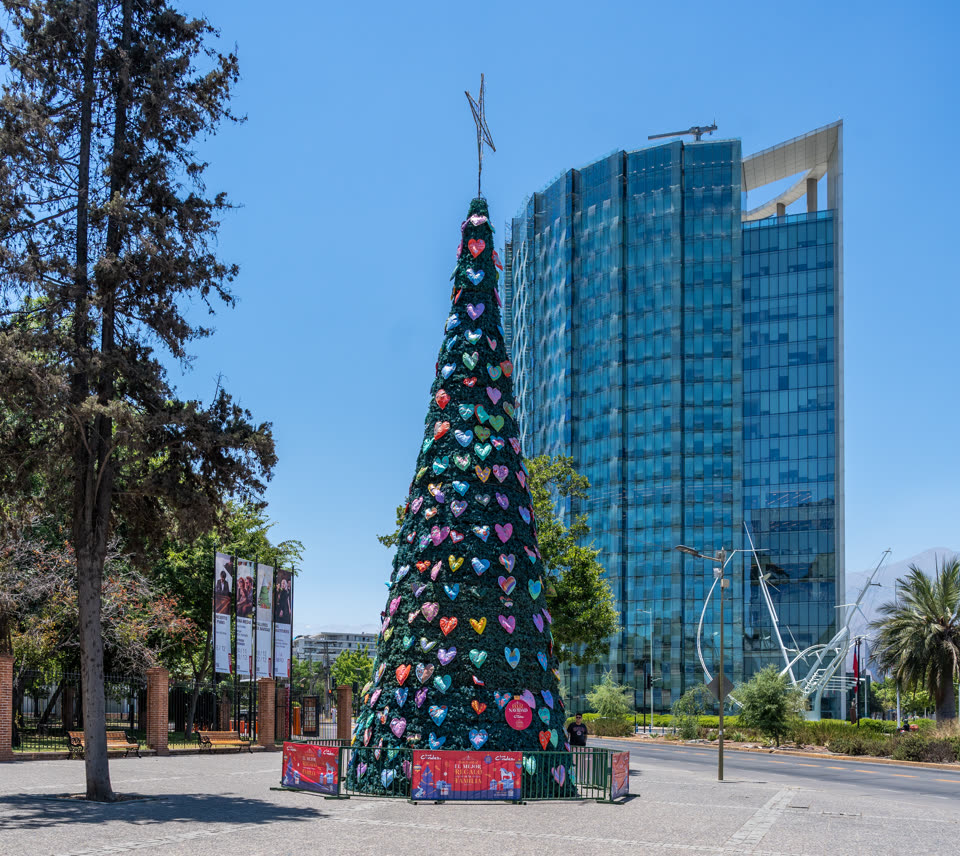
Christmas Day in Chile is 25 December. It is a public holiday.
How to say it
Spanish
¡Feliz Navidad!
Feliz Navidad
A synthesised voice — not a recording of a person — saying ¡Feliz Navidad!
in es-CL.
Ordinary Spanish. The Chilean word to know is the other one: Chileans say Pascua for Christmas — not for Easter — and it is where the gift-bringer gets his name. El País's Chilean edition calls it «la Pascua de Navidad —denominación que hasta hoy ocupan los chilenos para referirse a la festividad—».
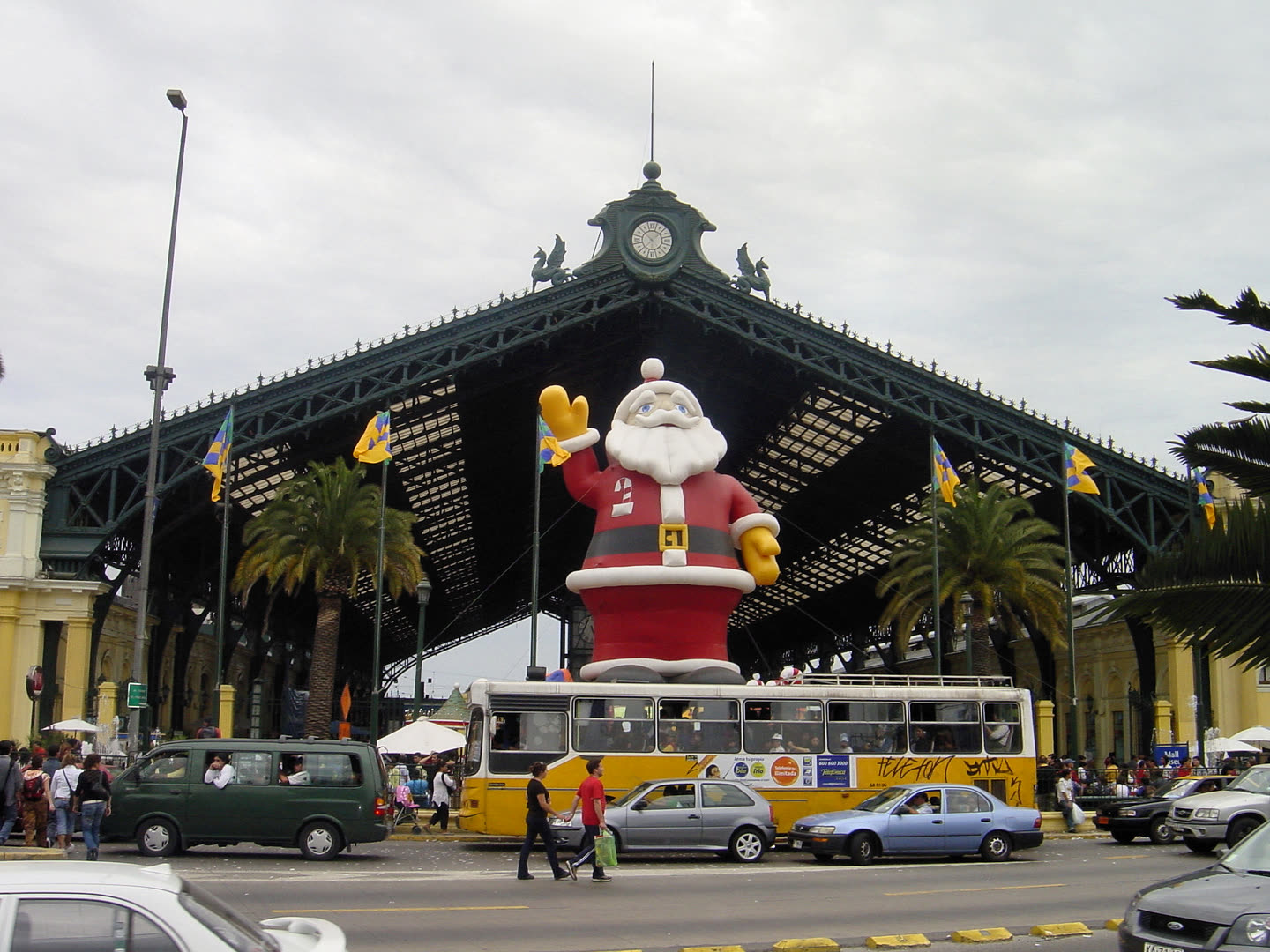
Chile's name for the man in the red suit. Not Papá Noel and not Santa Claus: Viejito — little old man — and Pascuero, from Pascua, which is what Chileans call Christmas.
The presents are opened at midnight as the 24th turns into the 25th, which the national tourism site describes as the symbol of his arrival.
Where the nickname came from is told the same way by three outlets, and they all tell it about one shop. At Christmas 1905 the Krauss brothers' toy shop, the Bazar Alemán on Santiago's Plaza de Armas, put a Santa Claus figure in its window, and — in the account the historian Cristián Salazar is cited for — the public gave it the name.
Nochebuena is the night, and midnight is the moment
The centre of Chilean Christmas is the dinner on the evening of 24 December. Before or after eating, many families go to the Misa del Gallo, the vigil Mass said near midnight in churches across the country. Once midnight has passed and it is the 25th, the children open the presents the Viejito Pascuero left in the night.
It is the middle of summer, and the 25th goes outdoors
Chile's Christmas falls in high summer, which is why a great deal of 25 December happens in the open air — barbecues in a yard, a day at the beach, a park with the family. The northern hemisphere's indoor, firelit Christmas is the exception here rather than the default.
The tree is usually artificial. The Spanish daily's Chilean edition puts it down to money and to climate together — December is the start of summer in the southern hemisphere — so what stands in the corner is a plastic pine with electric lights on it.
Through the nineteenth and twentieth centuries it was usual for whole families to leave the house on the night of the 24th and keep the vigil for the birth of Jesus. Press accounts say that habit has been fading in recent years, kept up in part by watching the Pope's Mass broadcast from the Vatican on free-to-air television instead.
A century ago the city went to the fondas afterwards
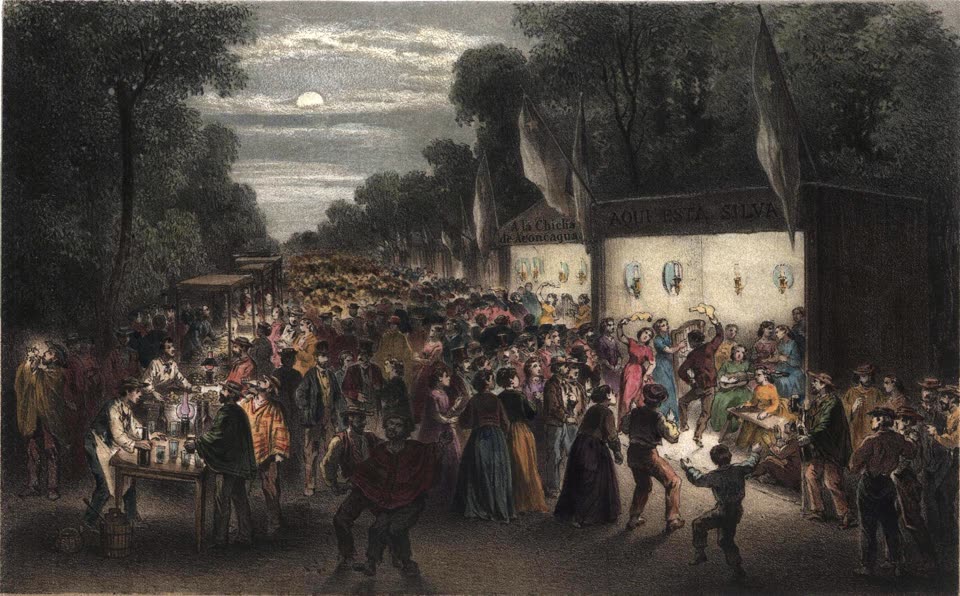
Chile's national library describes a Christmas that ended in the street. A hundred years ago, fondas and ramadas were put up along Santiago's main avenue and stayed there past New Year, and much of the city went to them after the Misa del Gallo — zamacueca, chicha and food until late. The habit spread from the capital to other towns.
The national library, following the historian Olaya Sanfuentes, puts the change early in the twentieth century: celebration became private, European manners were copied, and with them came the pine, the decorations and what the magazines of the day called a fever for Santa Claus and toys. The street party did not survive it.
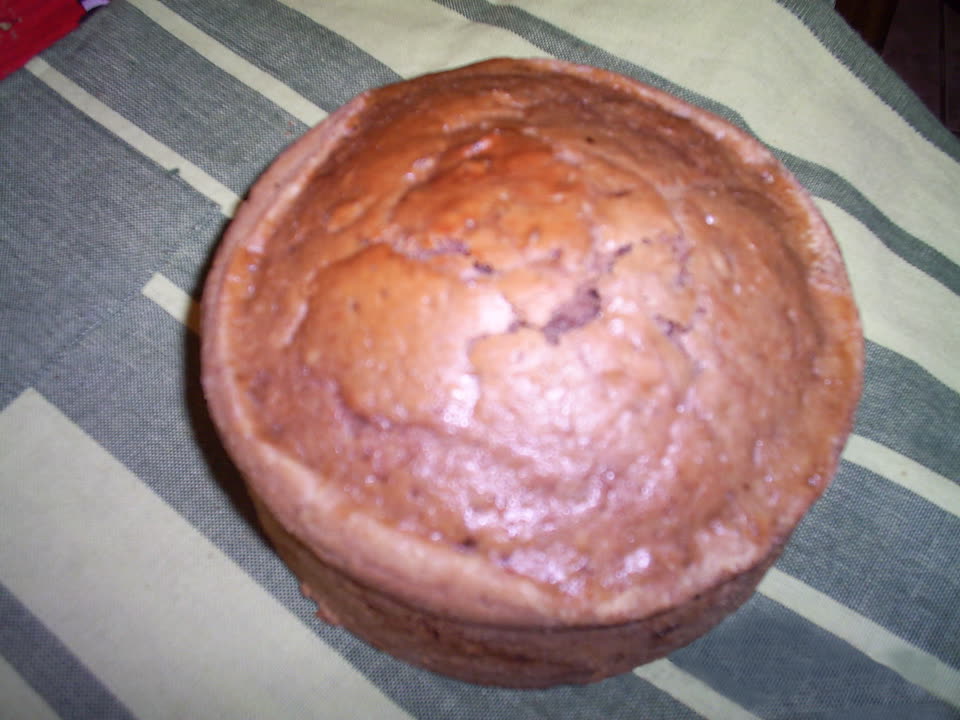
The Christmas loaf, and the name is the Chilean one for Christmas rather than for Easter. A sweet spiced sponge of flour, sugar, honey and spices — ginger among them — of European origin, which turned into a fixture of the Chilean Christmas table. It is sold in two forms: with dried fruit, or with candied fruit.
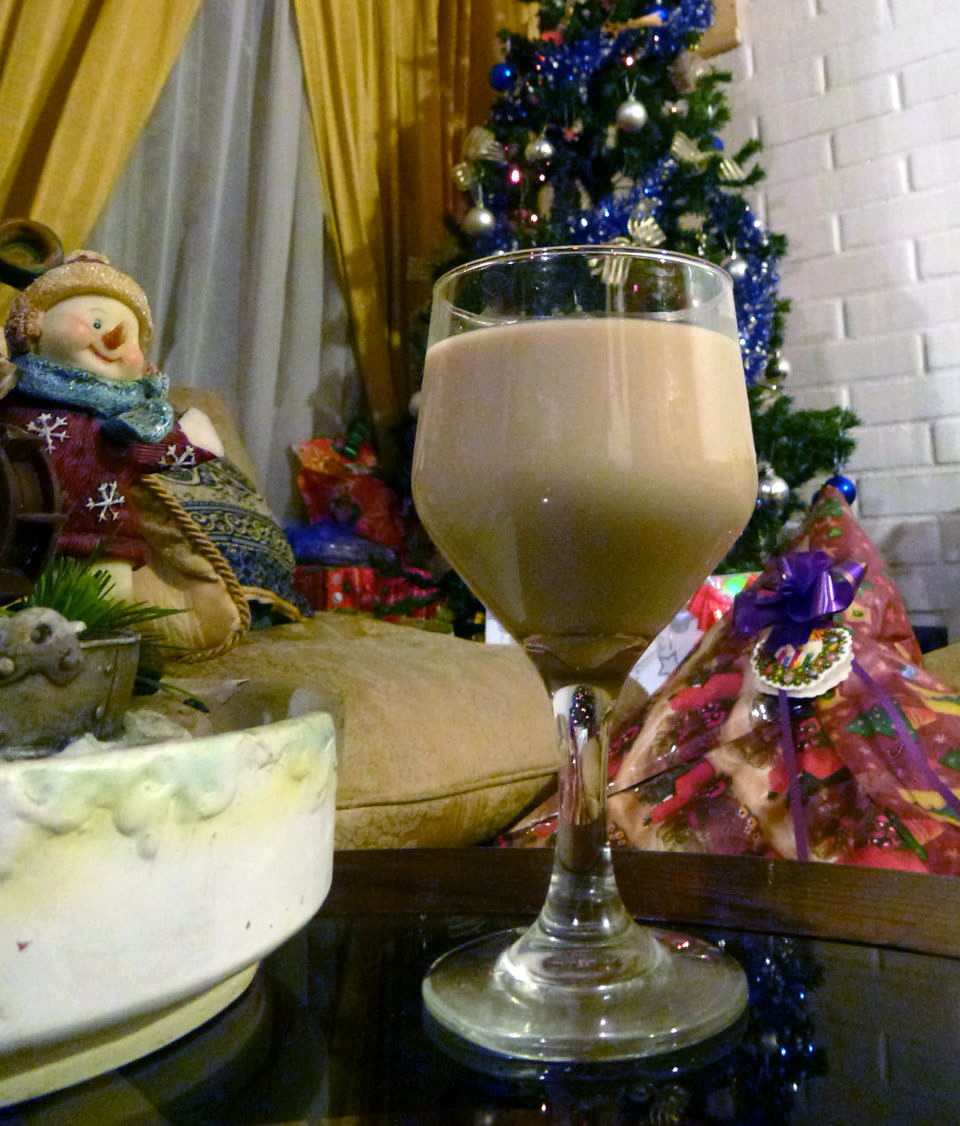
The drink of the Chilean end of the year: aguardiente, milk, coffee, sugar and spices, served cold. It is treated as the one thing that cannot be missing from the table between Christmas and New Year.
The Nochebuena main course is usually turkey — roasted or barbecued — or chicken, with salads beside it and papas duquesas, the piped and baked potato of French cookery that Chile serves at Christmas. The pan de Pascua and the cola de mono finish it.
Widely repeated claims about Christmas in Chile that do not survive
checking. Each one says what is actually the case, because a correction
with nothing in its place leaves you worse off than before.
Contested
Cola de mono is named after President Pedro Montt.
What is actually the case. It is one of at least two stories and neither has been shown to be the right one. The first attaches the drink to Pedro Montt, president from 1906 to 1910, who is said to have been called «el mono Montt» in his own circle. The second attaches it to bottles of Anís del Mono, the anise liqueur from Badalona in Catalonia.
El País's Chilean edition sets the two side by side and picks neither. The drink is certain; the name is not.
What is actually the case. The holiday is unusually strong and it is not universal. For commerce workers 25 December is «obligatorio e irrenunciable» — a day they cannot be asked to sign away — but the labour directorate's own sentence ends in a list of exempted workplaces: restaurants, entertainment venues, fuel stations, on-duty pharmacies and others. People in those places may be working, and the rule covers commerce rather than every occupation in the country.
Chilean law says what time the shops shut on Christmas Eve. Commerce may extend its hours by up to two hours a day on nine days before Christmas, but on 24 December nobody covered by the rule works past eight in the evening — and the same applies on 31 December.
In Chile, Pascua means Christmas. The gift-bringer is the Viejito Pascuero, the Christmas loaf is the pan de Pascua, and the word a Spanish speaker from elsewhere would read as Easter is doing a different job here.
A hundred years ago a common Chilean Christmas present was something to eat, a clay figurine, or — for women — a sprig of basil. The national library records all three.
25 December is not merely a holiday for Chilean shop workers; it is irrenunciable — a day they cannot be asked to waive. Only five days in the Chilean year carry that status: 1 May, 18 and 19 September, 25 December and 1 January.
Every claim carries its own citation. They are collected below, so you
can see what the page rests on and how much of it comes from where.
Cuánto falta para Navidad 2026 en Chile: fecha, cena y tradiciones — CNN Chile. Retrieved 2026-11-06. archived 14 September 2026«La celebración central ocurre la noche del 24 de diciembre, cuando las familias se reúnen para la cena de Nochebuena. Es común que antes o después de comer se asista a la Misa del Gallo, la eucaristía que conmemora el nacimiento de Jesús y que se celebra en iglesias de todo el país cerca de la medianoche. Pasadas las 00:00 horas ya del 25, los niños abren los regalos que dejó el Viejito Pascuero durante la noche.»
¿Cuáles son los días que de acuerdo a la ley son feriados obligatorios e irrenunciables para los trabajadores del comercio? — Dirección del Trabajo (Chile). Retrieved 2026-11-06. archived 21 May 2026The labour directorate names the days in one sentence, and 25 December is one of five: «De acuerdo a lo previsto en el artículo 2 de la ley 19.973, modificada por las leyes 20.215, 20.629 y 20.918, son días de feriado obligatorio e irrenunciable los días 1 de mayo, 18 y 19 de septiembre, 25 de diciembre y 1 de enero de cada año, para todos los trabajadores del comercio, salvo aquellos que presten servicios en los siguientes lugares: …»«Irrenunciable» is the strong word: not merely a holiday, but one a shop worker cannot be asked to give up.
Las siete tradiciones chilenas para celebrar la Navidad — El País (edición Chile). Retrieved 2026-11-06. archived 18 September 2026On the name: «En algunos lugares del mundo se le conoce como Papá Noel y en otros es Santa Claus o San Nicolás. En Chile el hombre gordo, canoso, con barbas y traje rojo se llama Viejito Pascuero.»On 1905: «En 1905 el Bazar Alemán, una juguetería ubicada en el centro de la capital Santiago, mostró en sus vitrinas la figura de un anciano parecido al Santa Claus estadounidense o europeo. El nombre definitivo surgió del apodo de Viejito —por ser una persona mayor— y por la Pascua de Navidad —denominación que hasta hoy ocupan los chilenos para referirse a la festividad—.»CNN Chile and the national tourism site carry the same story, the latter attributing it: «Según el historiador Cristián Salazar, el nombre "Viejito Pascuero" nació como un apodo que le pusieron las personas a esta figura.»
feliz Navidad — English Wiktionary. Retrieved 2026-11-06. archived 9 March 2026Given as the ordinary Spanish for «Merry Christmas»: «feliz Navidad — Merry Christmas».
De regalo, un ramito de albahaca: cómo se vivía la Navidad hace un siglo — Memoria Chilena · Biblioteca Nacional de Chile. Retrieved 2026-11-06. archived 13 May 2025«En la capital también destacaba la instalación de fondas y ramadas en plena avenida principal -las que permanecían hasta pasado Año Nuevo-; costumbre que también se extendió hacia otras localidades del país. A ellas acudía a celebrar gran parte de la población luego de la tradicional Misa del Gallo; festejo que incluía zamacueca, chicha y comidas.»
Código del Trabajo, artículo 24 — Superintendencia de Seguridad Social (Chile), normativa. Retrieved 2026-11-06.«Con todo, los trabajadores a que se refiere el inciso primero, en ningún caso, trabajarán más allá de las 23 horas, durante los nueve días en los que se extienda la jornada ordinaria. Asimismo, bajo ninguna circunstancia, lo harán más allá de las 20 horas del día inmediatamente anterior a dicha festividad, como además el día inmediatamente anterior al 1 de enero de cada año.»