Christmas Day in Serbia is 7 January. That is 25 December by the Julian calendar the church keeps. It is a public holiday.
How to say it
Serbian
Христос се роди
Hristos se rodi
say it: HREE-stos se ROH-dee
A synthesised voice — not a recording of a person — saying Христос се роди
in sr-RS.
Christ is born — and it is a greeting that expects an answer. The reply is «Ваистину се роди», Vaistinu se rodi, truly he is born. RTS reports that on Christmas Day people greet each other with it instead of the usual hello, and that the položajnik says it as he comes through the door.
Serbian is written in two alphabets and the two are the same language letter for letter: Христос се роди and Hristos se rodi are one phrase written twice. Serbian spelling is also phonemic, so for anyone who knows either alphabet the letters are already the pronunciation; the respelling is only for an English eye.
A synthesised voice — not a recording of a person — saying Добро вече, Бадњаче
in sr-RS.
Good evening, Badnjak — said to the log, in the vocative case, as it comes through the door on Christmas Eve. RTS lists it among the greetings that belong to Badnji dan, beside «Dobro veče i srećno vam Badnje veče».
The date is 25 December. It is the calendar that moves
Serbia's Christmas is not a different date from everybody else's; it is the same date on a different calendar. The Serbian Orthodox Church keeps the Julian calendar, and RTS explains the arithmetic plainly: 25 December was fixed as the day in the fourth century, under the emperor Arcadius, «s tim što se on u julijanskom kalendaru poklapa sa gregorijanskim 7. januarom» — except that in the Julian calendar it coincides with the Gregorian 7 January. Serbia's civil calendar is the ordinary one; the church's is thirteen days behind it.
Christmas runs three days in church and one in the labour code
The Serbian Orthodox Church keeps Christmas for three days, marked in red in its service calendar: the Nativity, then the Synaxis of the Mother of God, then Saint Stephen the Archdeacon. The state gives one. Article 2 of the holiday law names only «prvi dan Božića (7. januar)» — the first day — as the religious holiday on which nobody works.
The badnjak is cut before sunrise and does not come indoors until dark
On Badnji dan, the last day of the forty-day fast, the household goes out at first light for an oak sapling — «Ujutru, pre izlaska sunca, domaćin odlazi u šumu po badnjak, koji se tek sa prvim mrakom, sa slamom, unosi u kuću» — and it waits outside all day, coming in only at first dark, with the straw. The Patriarchal Administrative Office puts the cutting in the hands of the youngest and the oldest man in the house, and adds a sprig of cornel, which the old Slavs took for a plant that brought health.
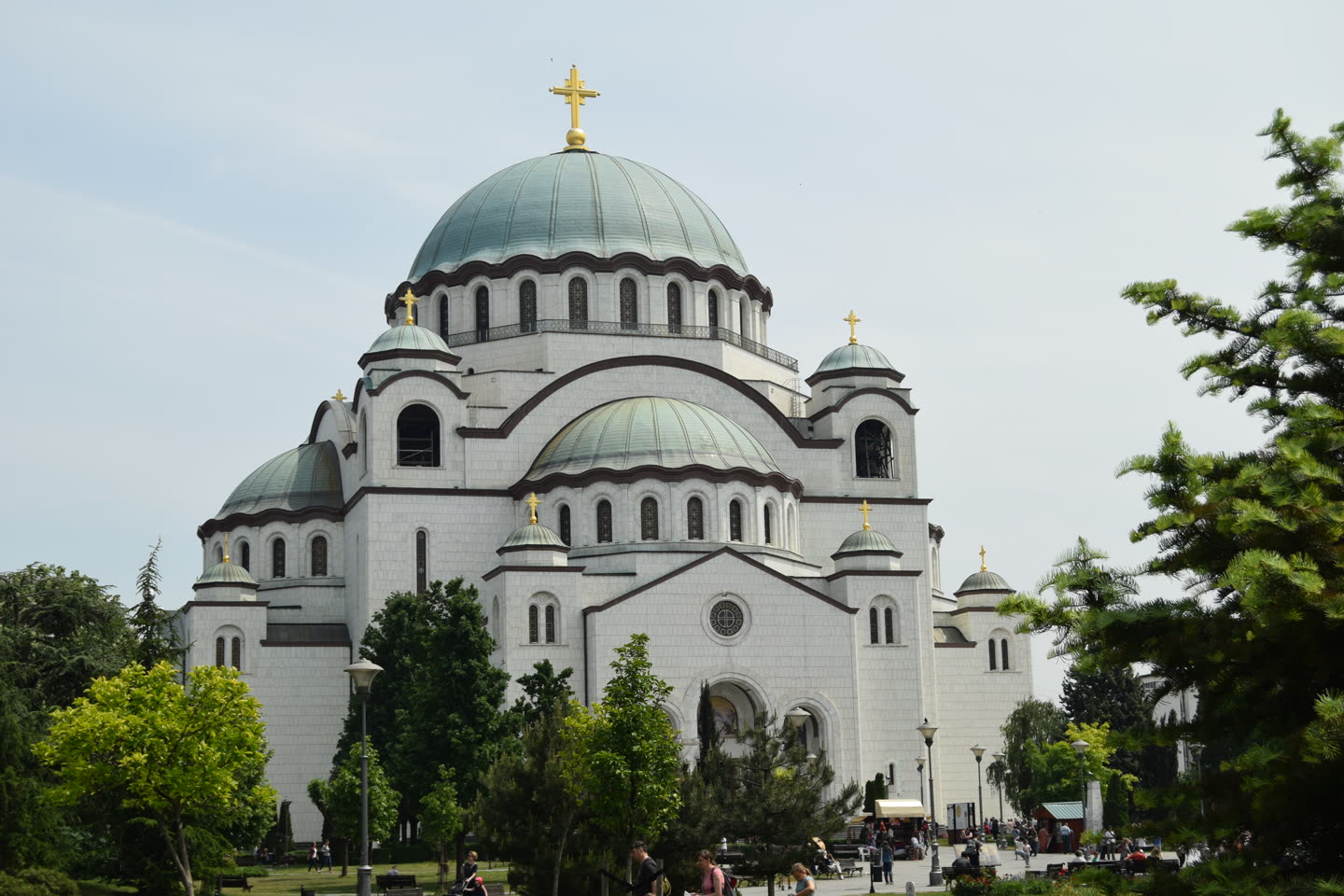
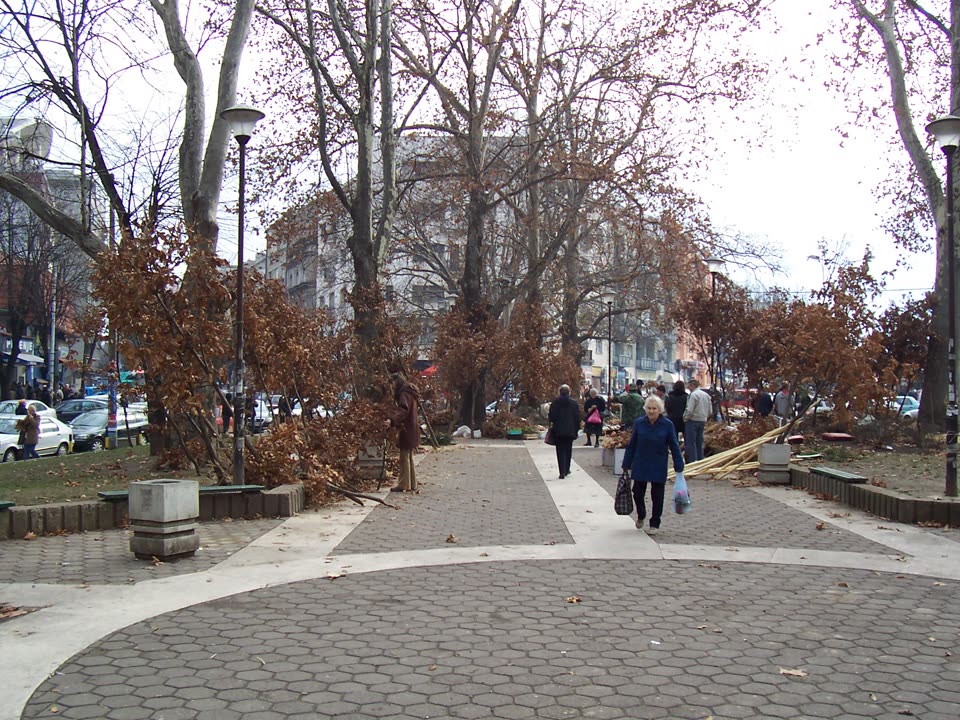
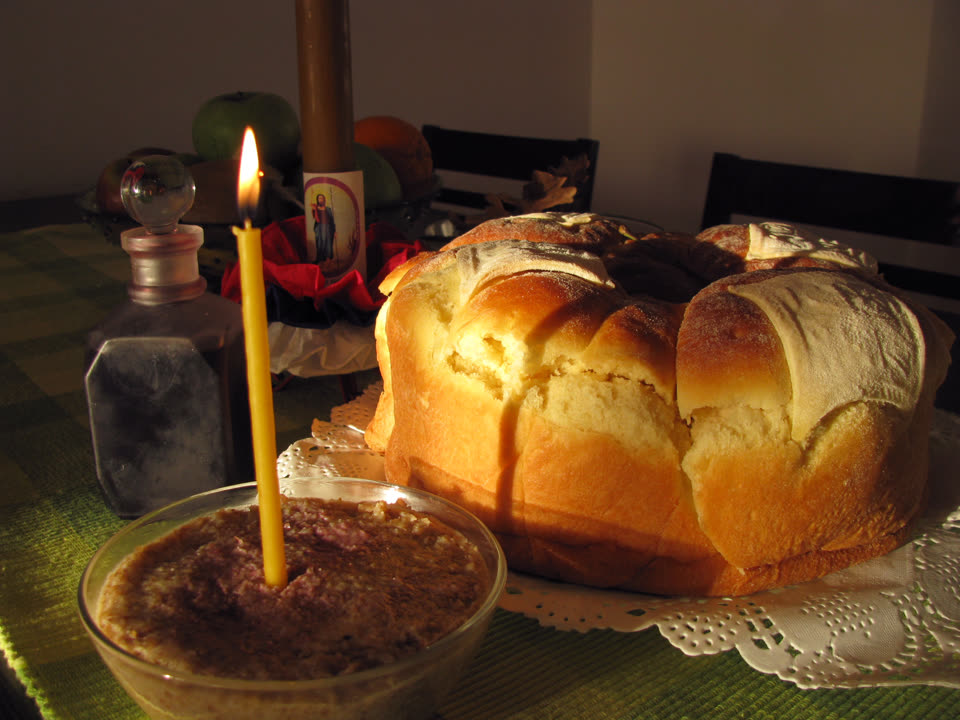
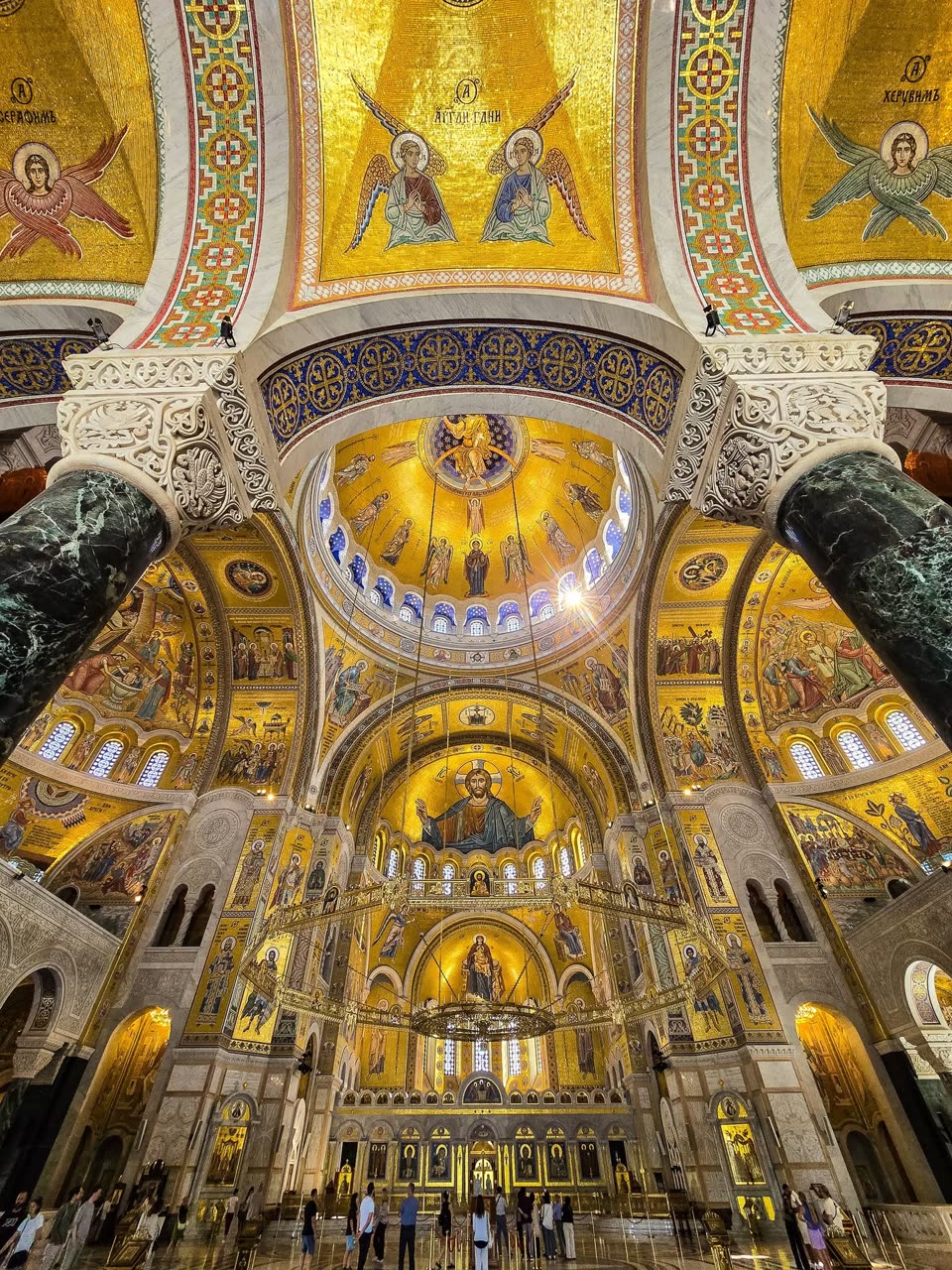
The badnjak is laid on an open hearth and sprinkled with grain, honey and wine, which is a difficulty if you live on the fourth floor. RTS says what actually happens without apology: «U gradskim uslovima, zapali se tek poneki listić» — in city conditions only the odd leaf gets lit. The full fire has moved to the churchyards, where the bundles are burned in public and the Patriarch lights the one outside the Temple of Saint Sava in Belgrade.
Children cheep like chicks to find the presents in the straw
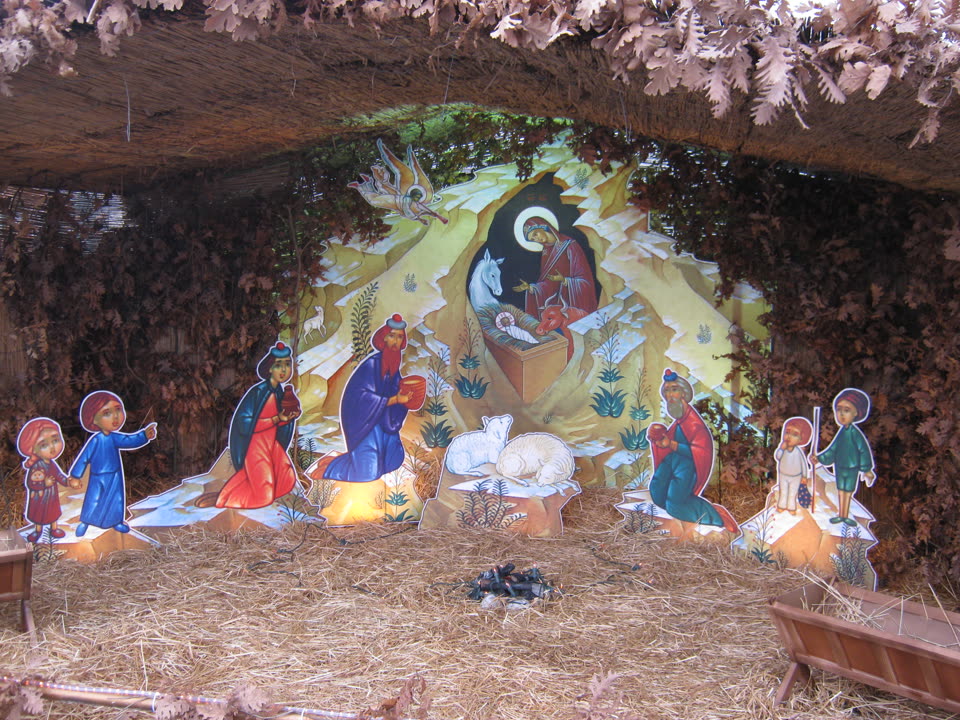
Straw goes down on the floor with the badnjak, for the manger, and small presents are hidden in it. The children hunt for them in the evening making a chirping noise, and the custom is named after the noise: pijukanje, from pijukati, to cheep. «deca ih uveče traže po kući pijučući, taj običaj se tradicionalno zove pijukanje u našem narodu», says the director of the Patriarchal Administrative Office.
One visitor is allowed, and his job is to poke the fire
The položajnik is the first person over the threshold on Christmas morning, either turning up or arranged in advance. He says «Hristos se rodi», goes to the fire, takes a twig of the badnjak and stirs it, counting out the sparks: «Koliko varnica, toliko zdravlja, koliko varnica, toliko sreće i veselja, koliko varnica, toliko parica» — as many sparks, so much health; as many sparks, so much happiness; as many sparks, so much money. He may go on and name anything else the house would like multiplied. The household gives him a present. The Patriarchal Administrative Office says what he is: «Položajnik predstavlja mudrace sa Istoka», he stands for the wise men from the East.
Christmas in Serbia is not a visiting day. «Praznik se provodi u krugu porodice, ne ide se u tuđe kuće» — it is spent inside the family and you do not go into other people's houses. The Patriarchal Administrative Office says the same from the other end: «Božić je porodični praznik i ne ide se u posete. U kuću treba da uđe samo položajnik.» Only the one guest crosses the threshold, which is what makes him worth a present.
In Vojvodina the česnica is a sweet, and it is cut rather than broken
South of the Danube the česnica is a plain wheat loaf that the family pulls apart by hand. In Vojvodina it is a different object: thin hand-stretched pastry, the kind used for gibanica, layered with honey, sugar and walnuts, sometimes poppy seed, raisins and dried fruit — «U Vojvodini se česnica pravi u obliku slatkog kolača» — put together like baklava but dry, with the ducat pushed into one of the middle layers. And it is treated differently at the table: «Ovakva česnica se obično ne lomi, već se seče i razdeljuje ukućanima», this one is not broken but cut and handed round.
Serbian law gives you a day off for your own family's saint
The holiday law does something most do not: it hands the choice of one religious day to the employee. Article 4 gives the Orthodox the right not to work «na prvi dan krsne slave» — on the first day of their family's patron saint — which is a different date for every household, inherited down the male line. The slava is on the UNESCO intangible heritage list, inscribed in 2014, and the cake at its centre is cut crosswise, turned and broken into four, which is the same gesture the česnica gets at Christmas.
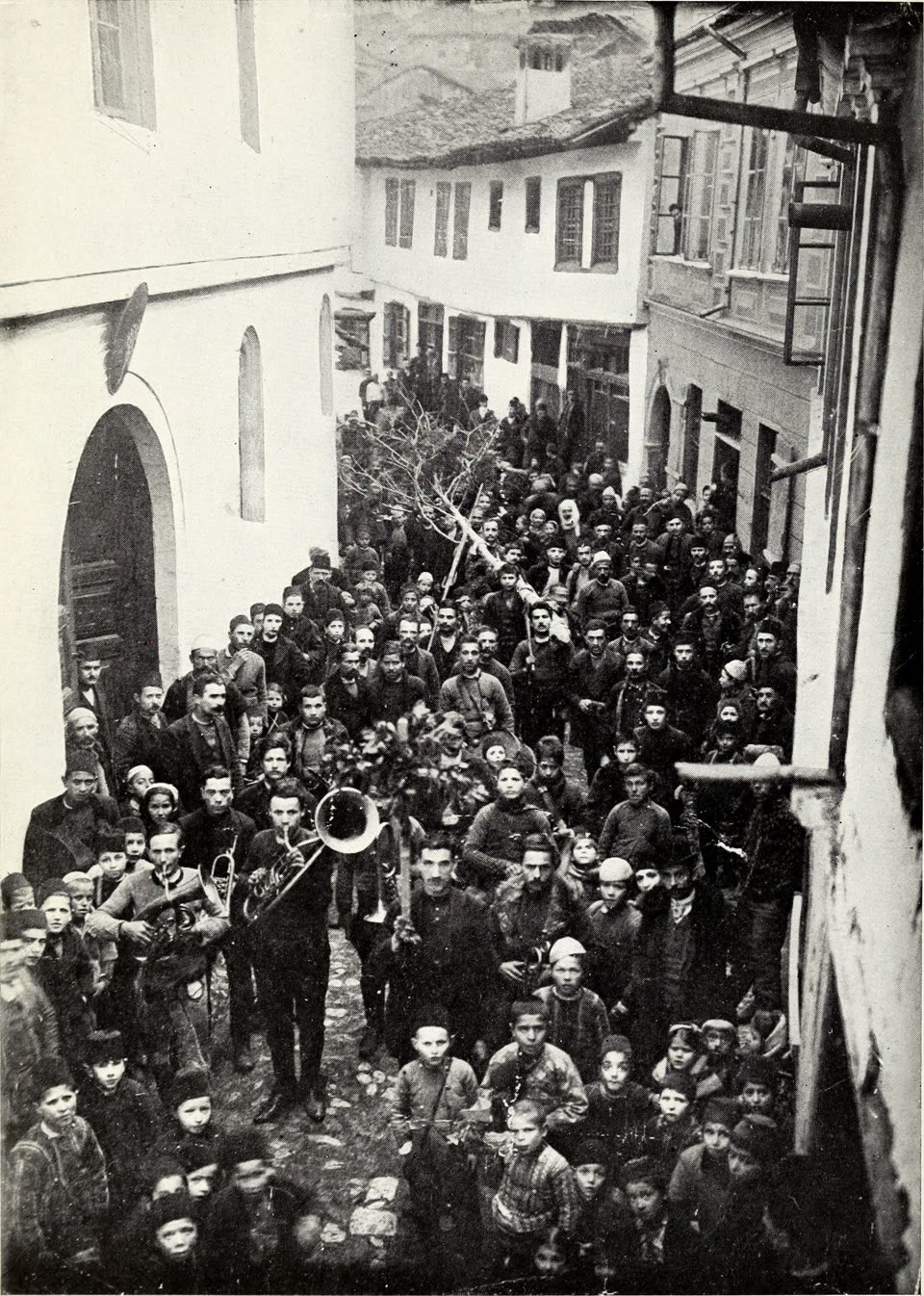
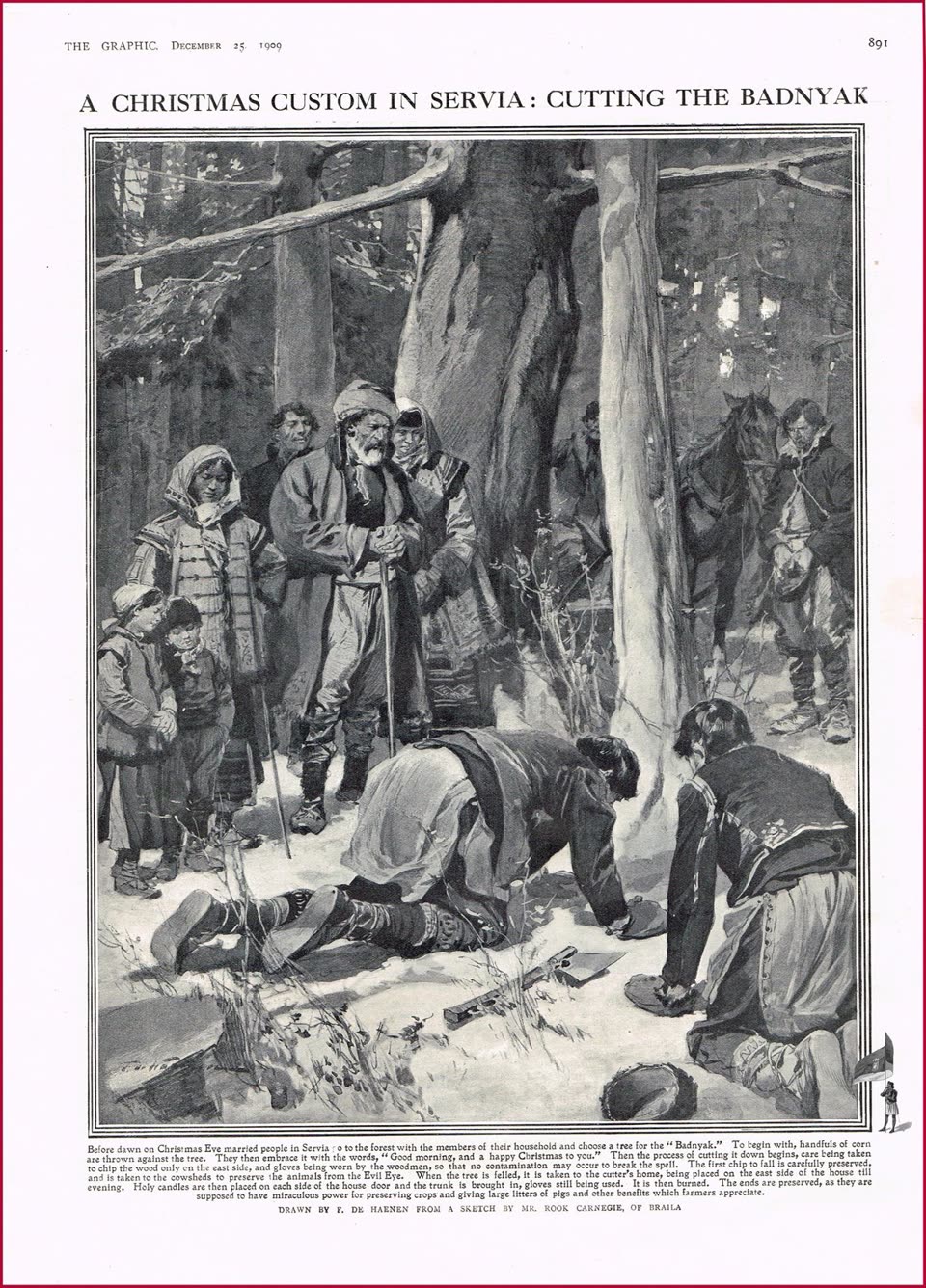
In 1909 the tree was greeted, thrown corn at, and cut only on its east side
A London illustrated weekly sent an artist's impression of the badnjak cutting home for Christmas 1909, and printed what its correspondent had been told. The household went out before dawn, threw handfuls of corn at the chosen tree, and embraced it — «They then embrace it with the words, "Good morning, and a happy Christmas to you."» The cutting was done in gloves and only on the east side «so that no contamination may occur to break the spell». The first chip to fall was kept and taken to the cowshed against the evil eye, and the ends of the burnt log were kept too, for the crops and for «large litters of pigs».
Of all that, the hour, the oak and the greeting to the log are what the modern accounts still describe. Serbs say it to the tree as they cut it: «Dobro veče, Badnjače».
Three Sundays of tying people up, and each one unties itself with a present
The three Sundays before Christmas are Детињци, Материце and Оци (children, mothers, fathers), and on each of them somebody is tied up. On the first, adults tie the children, their own or the neighbours', with a belt or a cord or a length of thick thread, feet or hands, and make one end fast to a table or a chair; a child who has saved up buys a treat and unties itself with it. On the second, the children get in first and ambush their mother, tying her feet exactly as she tied theirs, and she pretends not to know why, then hands out presents and is loosed. All the married women are tied the same way and untie themselves with cakes and sweets for the children. On the third the fathers get it, and pay the same ransom. The stated meaning is family ties, concord and mutual help — and thrift, because whoever has honestly earned something can ransom themselves in any court, including the last one.
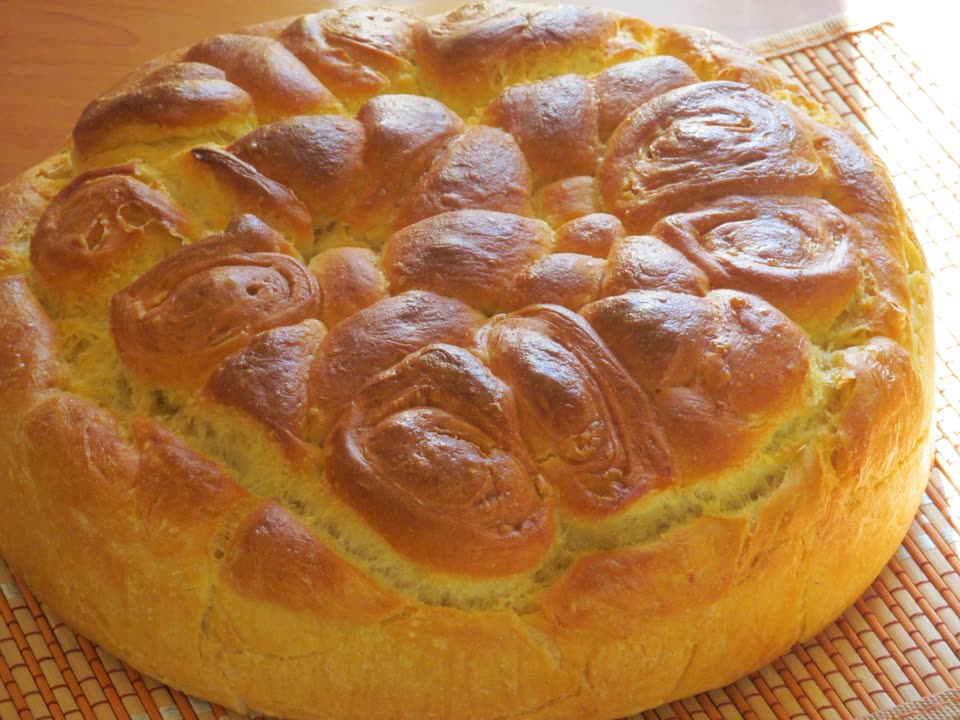
The Christmas bread, with a coin in it — RTS describes the classic one as a pogča of wheat flour without yeast, «pogača umešena od pšeničnog brašna bez kvasca», though a Serbian household’s will often rise and carry ornaments of the same dough — gold or silver, kept and used again year after year. Other things go in besides: wheat grain, a cornel twig, maize, beans, oats, walnuts, and a splinter off the badnjak itself; older households put in a piece of the yoke and a piece of the threshold. The host and one other turn it three times from left to right, and then the household pulls it apart between them, «pazeći da ne otpadne nijedna mrva» — taking care that not one crumb falls. It is never cut with a knife. Whoever gets the coin has the year. In some places three pieces are set aside: one for anybody absent, one for a passing traveller, and one for the položajnik.
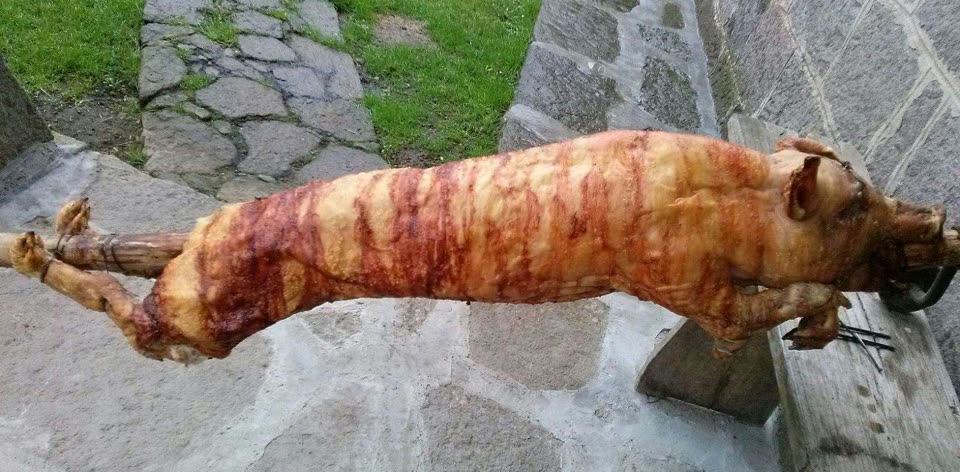
The roast — pork most often, or lamb — and the first meat after forty days of fasting. RTS says simply «Običaj je da se na trpezi nađe i božićna pečenica», it is the custom that the Christmas roast is on the table. The lunch is the most formal meal of the Serbian year, it is supposed to be lavish because the year is expected to follow it, and the food is not cleared away for three days.
Posna večera — the lenten supper that ends the fast посна вечера
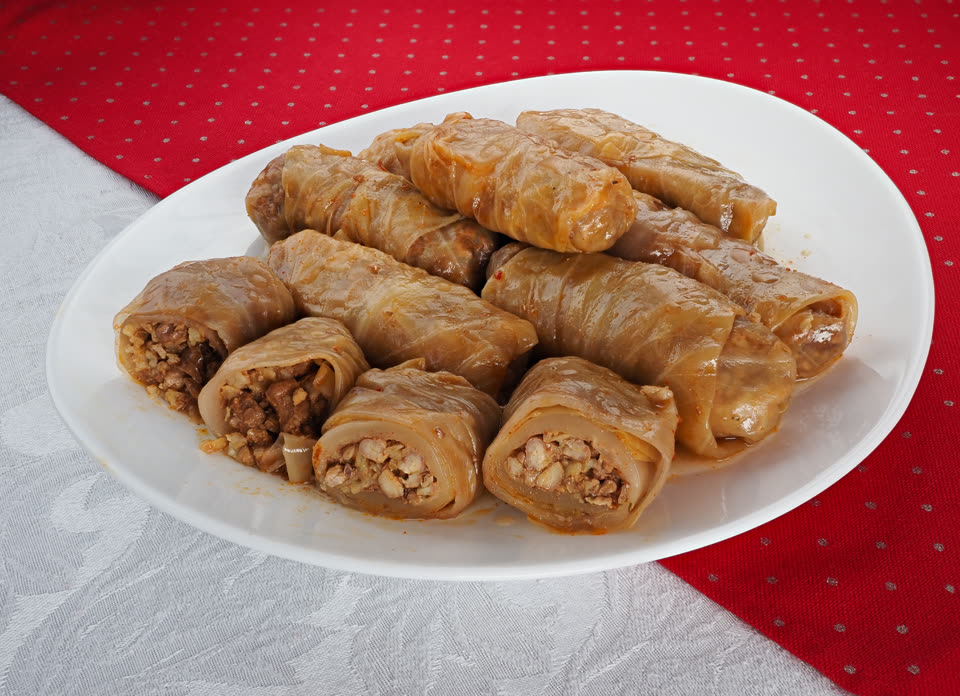
Everything eaten on Badnje veče is lenten, because the forty-day fast has one evening left to run, and the meal is the one the whole fast has been pointing at. What goes on the table is пребранац (baked beans) and fish, fresh or dried, and around them посна сарма (sarma with no meat in it), honey, walnuts, dried plums and figs. The number of dishes is held to be odd. The roast and the česnica belong to the next day; this is the evening before, and nothing on it has come from an animal that was killed for it.
Widely repeated claims about Christmas in Serbia that do not survive
checking. Each one says what is actually the case, because a correction
with nothing in its place leaves you worse off than before.
Oversimplified
Serbs celebrate Christmas on 7 January instead of 25 December
What is actually the case. They celebrate it on 25 December. The Serbian Orthodox Church keeps the Julian calendar, on which 25 December currently falls on the civil 7 January — RTS states it in one sentence, that the date fixed in the fourth century is still kept «s tim što se on u julijanskom kalendaru poklapa sa gregorijanskim 7. januarom». Nothing has been moved; two calendars have drifted apart.
The gap is not fixed either. It has been thirteen days since 1900 and becomes fourteen in 2100, after which Serbian Christmas falls on the civil 8 January.
What is actually the case. Serbia has one Christmas holiday and a second right. The law names one religious Christmas, «prvi dan Božića (7. januar)», on which nobody works. Separately, Article 4 gives «katolici i pripadnici drugih hrišćanskih verskih zajednica» the right not to work on their own Christmas and Easter «prema njihovom kalendaru» — according to their calendar — and gives the same kind of right to Muslims for the two Bajrams and to Jews for Yom Kippur. That is one national holiday and a personal entitlement by confession, which is a different thing from a country keeping the feast twice.
The Serbian bishops' Christmas letter is read out on every broadcaster in the country. The Božićna poslanica of the Holy Assembly of Bishops goes out on all electronic media on Christmas Eve, read in the Patriarchate before the feast begins — «Na svim elektronskim medijima, na Badnje veče, emitovana je tradicionalna Božićna poslanica arhijerja SPC». It is a pastoral letter with a national broadcast slot.
Badnje veče — RTS — Radio-televizija Srbije, the Serbian public broadcaster
Christmas morning in Serbia is announced with gunfire. Before daybreak every bell on every Orthodox church rings, and rifles and prangije — small celebratory mortars — are fired: «Na Božić ujutro, pre svitanja, zvone sva zvona na pravoslavnim hramovima, puca se iz pušaka i prangija i objavljuje se dolazak Božića».
Across the Drina the same Christmas is a different kind of holiday. In Republika Srpska, the Serb entity of Bosnia and Herzegovina, Orthodox Christmas is not a Republic holiday at all — the Republic holidays, on which everything closes, are New Year, 9 January, Labour Day, 9 May and the anniversary of the Dayton agreement. Christmas is a religious holiday instead, listed in Article 7 beside Catholic Christmas, Kurban Bajram, both Easters, both Good Fridays and Ramazan Bajram. Article 8 keeps it for two days, «on Badnji dan and the day of Christmas», and what it grants is not a day off for everyone but «право на плаћени изостанак с радног мјеста» (the right to paid absence from work) for believers of the Orthodox, Catholic and Islamic confessions — with up to two further days a year, by a citizen's own choice, for the holidays of any other faith.
Every claim carries its own citation. They are collected below, so you
can see what the page rests on and how much of it comes from where.
Закон о празницима Републике Српске — PDF as circulated by a municipal administration — Reproduction of the law text, retrieved as a PDF and read with pdftotext. Retrieved 2026-11-10.Article 8 agrees word for word: «Вјерски празници из члана 7. овог закона празнују се по два дана, први и други дан празника, с тим да се православни Божић и католички Божић празнују на Бадњи дан и дан Божића.»
Badnji dan i veče mira – loženje badnjaka simbol iščekujuće radosti — RTS — Radio-televizija Srbije, the Serbian public broadcaster. Retrieved 2026-10-23.«Ujutru, pre izlaska sunca, domaćin odlazi u šumu po badnjak, koji se tek sa prvim mrakom, sa slamom, unosi u kuću.» and «Badnji dan je i poslednji dan božićnog posta».The two men are Prota Stojadin Pavlović, of the Patriarchal Administrative Office, on RTS in January 2021: «U ranu zoru najmlađi i najstariji muškarac iz kuće odlaze u šumu i seku badnjak».
Badnje veče — RTS — Radio-televizija Srbije, the Serbian public broadcaster. Retrieved 2026-10-23.«Na svim elektronskim medijima, na Badnje veče, emitovana je tradicionalna Božićna poslanica arhijerja SPC».
A Christmas Custom in Servia: Cutting the Badnyak — The Graphic, London, 25 December 1909, page 891; drawn by Frédéric de Haenen from a sketch by Rook Carnegie. Retrieved 2026-10-23.The engraving's printed caption, page 891: «Before dawn on Christmas Eve married people in Servia go to the forest with the members of their household and choose a tree for the "Badnyak." To begin with, handfuls of corn are thrown against the tree. They then embrace it with the words, "Good morning, and a happy Christmas to you." Then the process of cutting it down begins, care being taken to chip the wood only on the east side, and gloves being worn by the woodmen, so that no contamination may occur to break the spell. The first chip to fall is carefully preserved, and is taken to the cowsheds to preserve the animals from the Evil Eye.»
Zakon o državnim i drugim praznicima u Republici Srbiji, članovi 2, 3 i 4 — Zakon o državnim i drugim praznicima u Republici Srbiji, Službeni glasnik RS; consolidated text published by Paragraf Lex, Belgrade. Retrieved 2026-10-23. archived 4 August 2025Article 2 lists the religious holidays kept in Serbia and Christmas is the first of the two: «U Republici Srbiji praznuju se verski praznici:» «1) prvi dan Božića (7. januar);» — the first day of Christmas, 7 January.It gives employees the right not to work on their own confession's day: «1) pravoslavci - na prvi dan krsne slave;» for the Orthodox, and for «katolici i pripadnici drugih hrišćanskih verskih zajednica» the first day of Christmas and Easter «prema njihovom kalendaru» — according to their calendar. «3) pripadnici islamske zajednice - na prvi dan Ramazanskog» Bajrama and Kurban Bajram, and «4) pripadnici jevrejske zajednice - na prvi dan Jom Kipura.»
Положајник – гласник среће — Глас Српске, Бањалука (the Republika Srpska daily), 05.01.2026. Retrieved 2026-11-10. archived 6 January 2026On the lenten supper: «Вечера на Бадње вече је посна. Традиционално се служе пребранац, посна сарма, риба, мед, ораси, суве шљиве и смокве. Сматра се да број јела на столу треба да буде непаран.» The same piece records what a town does with a badnjak it cannot burn at home: «Увече се породица окупља испред цркве на заједничко паљење бадњака, што је у градовима постао централни друштвени и вјерски догађај.»
Закон о празницима Републике Српске, чл. 2, 7 и 8 — Народна скупштина Републике Српске; текст репродукован на sr.wikisource.org. Retrieved 2026-11-10. archived 12 March 2026Article 7 lists the religious holidays — «а) Православни Божић б) Католички Божић в) Курбан Бајрам г) Православни Велики Петак д) Православни Васкрс ђ) Католички Велики петак ж) Католички Ускрс з) Рамазански Бајрам» — and Article 8 sets their terms: «Вјерски празници из члана 7. овог закона празнују се по два дана, први и други дан празника, с тим да се православни Божић и католички Божић празнују на Бадњи дан и дан Божића», and «Вјерници православне, католичке и исламске вјероисповијести, имају право на плаћени изостанак с радног мјеста у те дане.»
Божићни празници и обичаји — Српска Православна Црква (serbianchurch.org), PDF, read with pdftotext. Retrieved 2026-11-10. archived 2 January 2022On the supper: «Вечера је посна, обично се припрема пребранац, свежа или сушена риба и друга посна јела.» On the three Sundays: «У трећу недељу пред Божић» adults tie children with «каиш, гајтан или обичан канап», feet or hands, one end made fast to a table or chair; on Материце the children «на препад завежу своју мајку», the mother «прави се да не зна зашто је везана», and she unties herself by giving out presents; on Оци «деца везују своје очеве, а ови им се „дреше“ поклонима, исто као и мајке». The stated meaning is «чврсте породичне везе, слогу, мир, поштовање и међусобно помагање», and thrift: a child who has saved buys the treat that unties it.