Christmas Day in Hungary is 25 December. It is a public holiday.
How to say it
Hungarian
Boldog karácsonyt!
Boldog karácsonyt
A synthesised voice — not a recording of a person — saying Boldog karácsonyt!
in hu-HU.
Literally a happy Christmas, in the accusative — Hungarian wishes things in that case and leaves the verb out, the way English leaves out «I wish you».
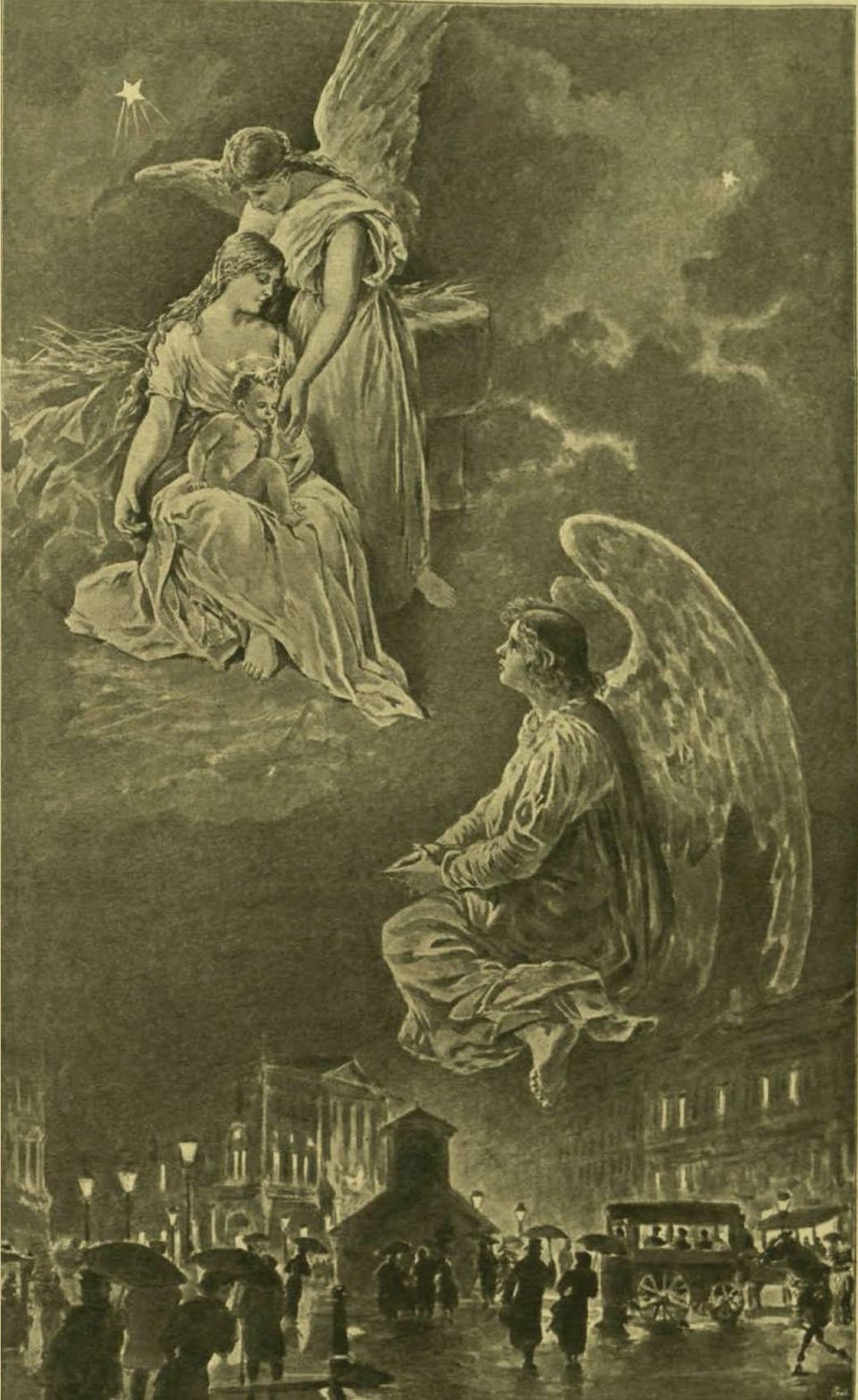
The Christ Child, who brings the tree and the presents on the evening of the 24th. The figure reached Hungary from German Protestant territory, where Jesus displaced Saint Nicholas as the giver; among Hungarians in Transylvania the bringer is the angel instead, and in places a golden foal.
Saint Nicholas, who fills a polished boot on the windowsill overnight on 5 December and has nothing to do with the Christmas presents. He is also called Télapó, Old Man Winter.
Christmas is the evening of the 24th, and the tree arrives with it
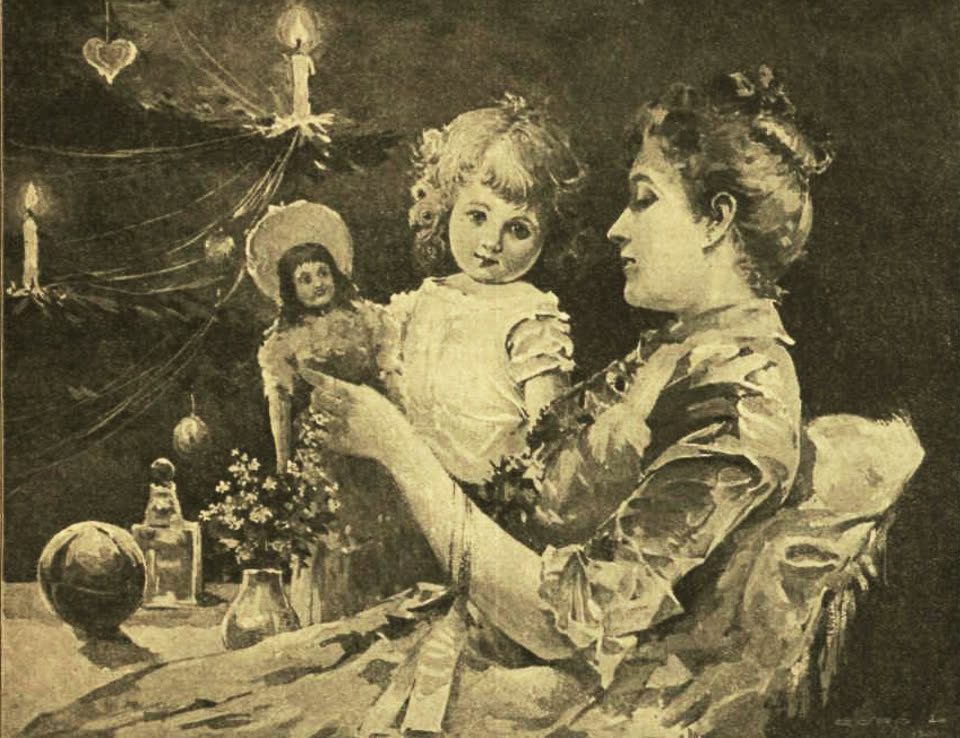
The Hungarian Christmas happens on Szenteste, the evening of 24 December. The tree goes up that day — traditionally not before — and the presents are placed on it or underneath. Smaller children are told that Jézuska, the Christ Child, brings the tree, which is why it is decorated behind a closed door while they are kept out of the room.
karácsonyfa — Magyar Néprajzi Lexikon (Akadémiai Kiadó), via MEK/OSZK
Mikulás comes on the 6th, and he is not the one with the presents
Saint Nicholas has his own day, 6 December, and his own delivery: children put a boot on the windowsill the night before and find it filled in the morning. The two figures stay separate — Mikulás on the 6th, Jézuska on the 24th. The boot-and-window form of it is not ancient. Ethnographers describe it as a partly new, town-bred custom pointing at Austrian connections, spread by schools, nurseries and the sweet industry.
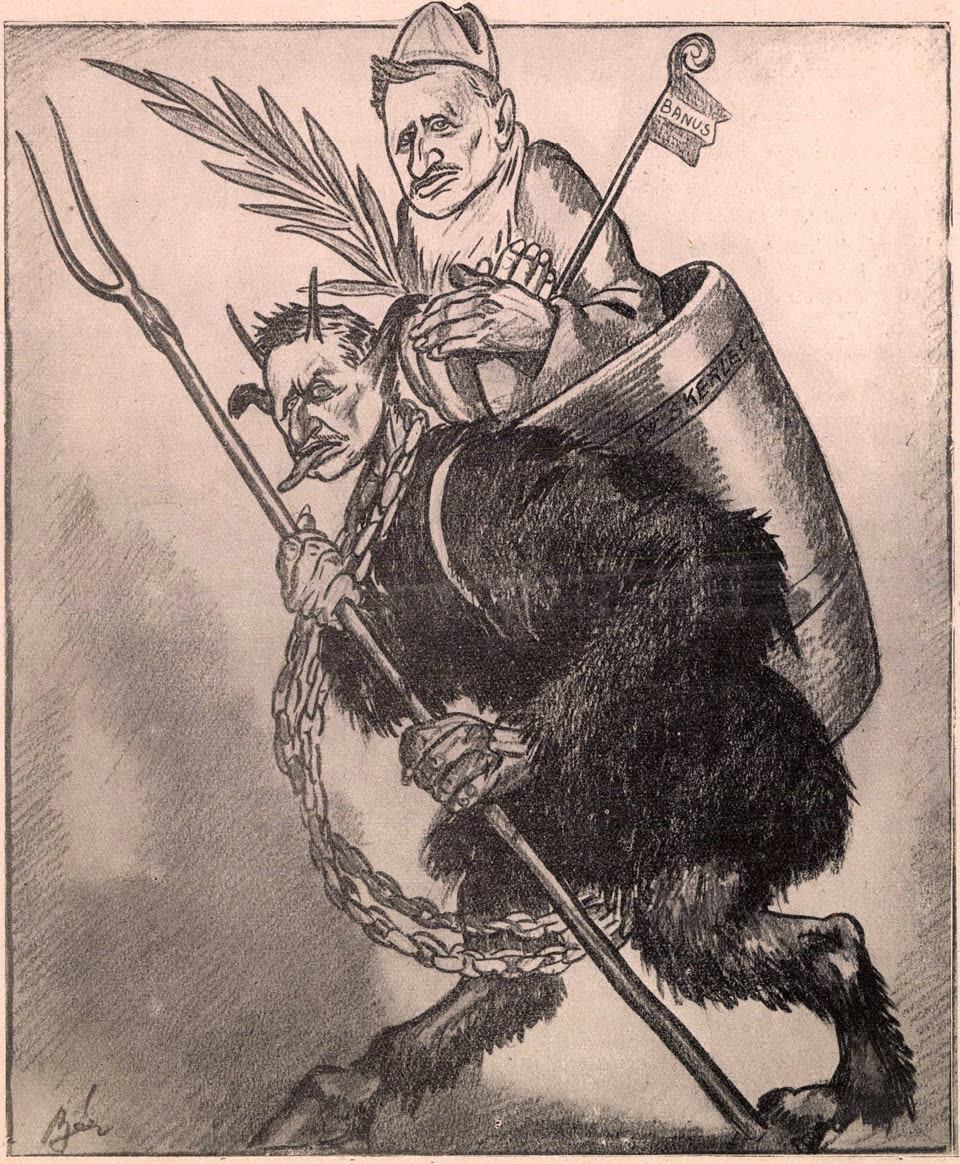
Mikulás is accompanied by the krampusz, a devil-ish figure with a chain and a switch who deals with the children the saint does not reward. Linguists take the word to be Bavarian-Austrian, and Hungarian scholarship treats the visiting custom as Austrian in origin too.
Soot, sheepskin and a chain, on Saint Nicholas's eve
In Transdanubia, until the recent past, young men and married men blackened their faces with soot, turned their sheepskin coats inside out and went about rattling chains on Saint Nicholas's day, frightening the children and the older girls. The disguise is old enough to have been banned: the town of Csepreg prohibited it in 1785, complaining of people going about «in various costumes and masks» on the evening and night before the feast.
Saint Lucy's day, 13 December, opens the run-up to Christmas and carries the densest folk material in the Hungarian calendar. Work was forbidden on it — spinning, weaving, lye-washing, bread-baking, whitewashing — and Luca was held to punish anyone who broke the rule. The best-known custom is the Luca chair: a stool begun on the 13th and worked at a little each day so as to be finished by Christmas Eve, made of thirteen kinds of wood, its material and shape laid down by prescription. Catholics carried it to Midnight Mass and Reformed families to the crossroads, where standing on it was supposed to let you see which of the women around you were witches.
Luca napja — Magyar Néprajzi Lexikon (Akadémiai Kiadó), via MEK/OSZK
Wheat sown on Luca's day, read at Christmas
Wheat sown in a dish on 13 December was watched for the rest of Advent. If it came up green by Christmas it promised a good harvest in the coming year. The dish still appears in Hungarian homes at Christmas, now as decoration more than as a forecast.
Betlehemezés is the most popular of the Hungarian Christmas folk plays: a group with speaking parts carries a home-made Bethlehem — a model crib, often a little church of paper and wood — from house to house. No medieval Hungarian text survives; the earliest Hungarian scripts are seventeenth-century and were written for schools to perform. The comic lead is the deaf old shepherd, whose mishearings carry the humour, and the play ends with a request for gifts.
Regölés is a midwinter house-visiting custom: young men go from house to house, mainly to houses with daughters, with noise-makers and a chanted wish for fertility and plenty. Its main date is 26 December, the feast of Stephen the Protomartyr. Around 1900 it was known across southern and western Transdanubia; today it survives in a few villages there. It is attested early — Gáspár Heltai mentions the regölés and the regölő week in a dialogue of 1552.
regölés — Magyar Néprajzi Lexikon (Akadémiai Kiadó), via MEK/OSZK
The old Christmas Eve table was a fast, and then a supper of signs
In Roman Catholic households the whole of Christmas Eve was once a fast day, and the supper began only after the evening bell. What went on the table was chosen for what it meant rather than for how much of it there was: communion-style wafers first, then garlic, apples, walnuts and poppy-seed noodles. A belief attached to the night as well — that during Midnight Mass the animals in the stable speak, and say what they think of the people who keep them.
karácsony — Magyar Néprajzi Lexikon (Akadémiai Kiadó), via MEK/OSZK
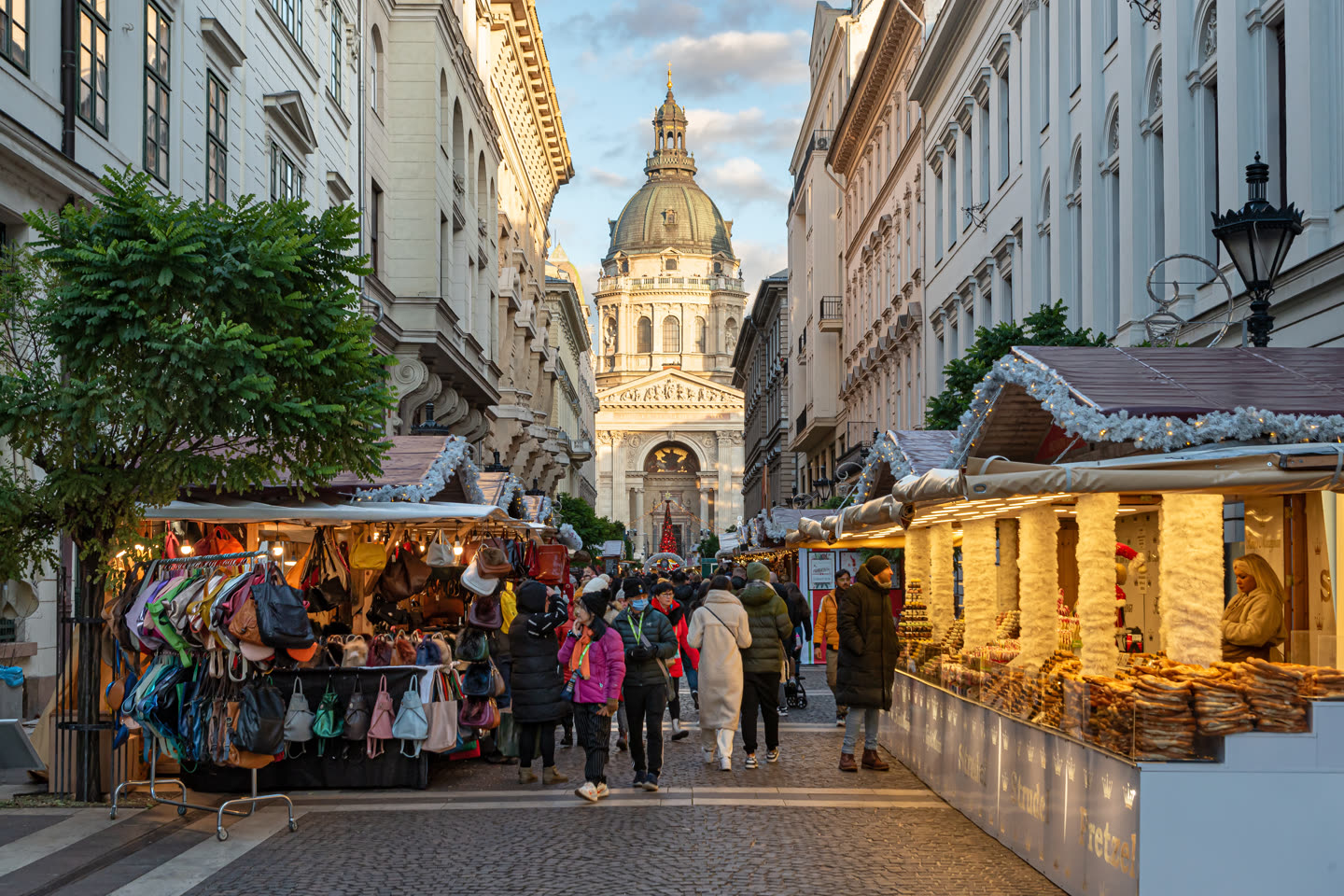
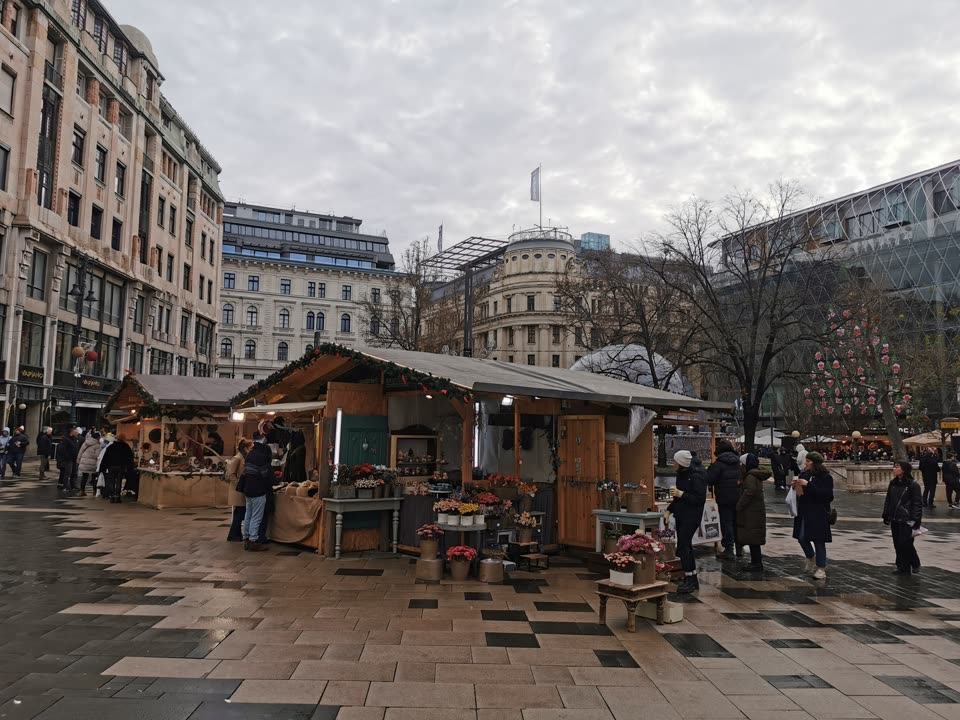
Budapest's best-known Christmas market stands on Vörösmarty tér in the centre of Pest. In 2026 it runs from 13 November to the turn of the year, with short hours on Christmas Eve — ten in the morning until two in the afternoon — and the craft stalls closing on 28 December.
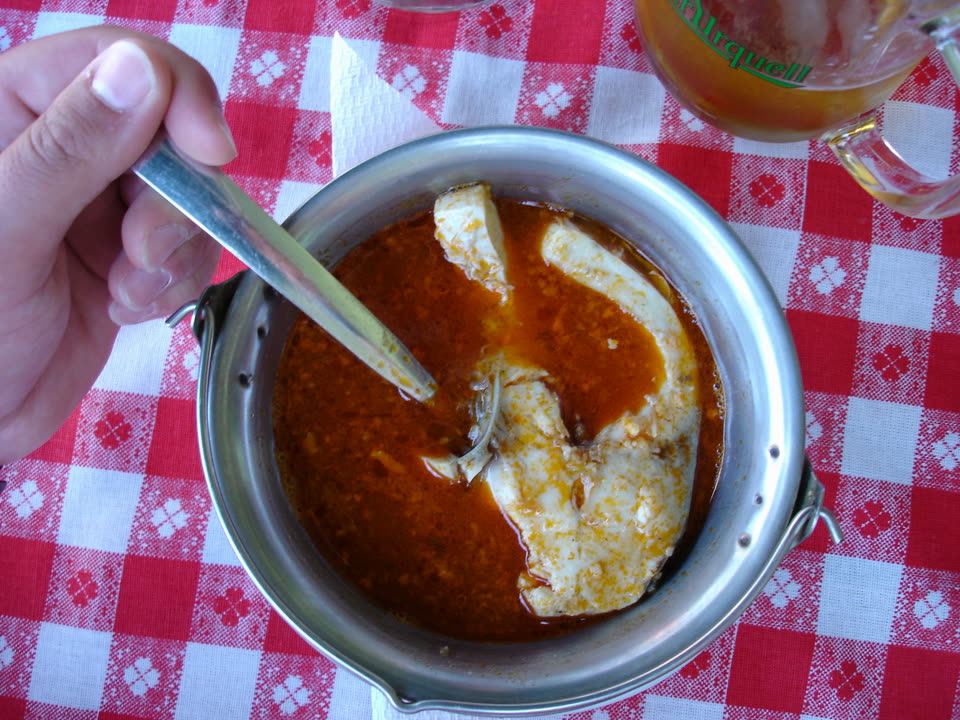
Fish soup, red with paprika, and on a great many Hungarian tables on the 24th. Fish is there because of the fast: Advent, and the evening of the 24th with it, was traditionally a fasting season, and fish is fasting food. The soup in its present form is younger than that — it spread with Hungarian paprika cookery — and breaded fried carp appeared on festive tables in the late nineteenth century.
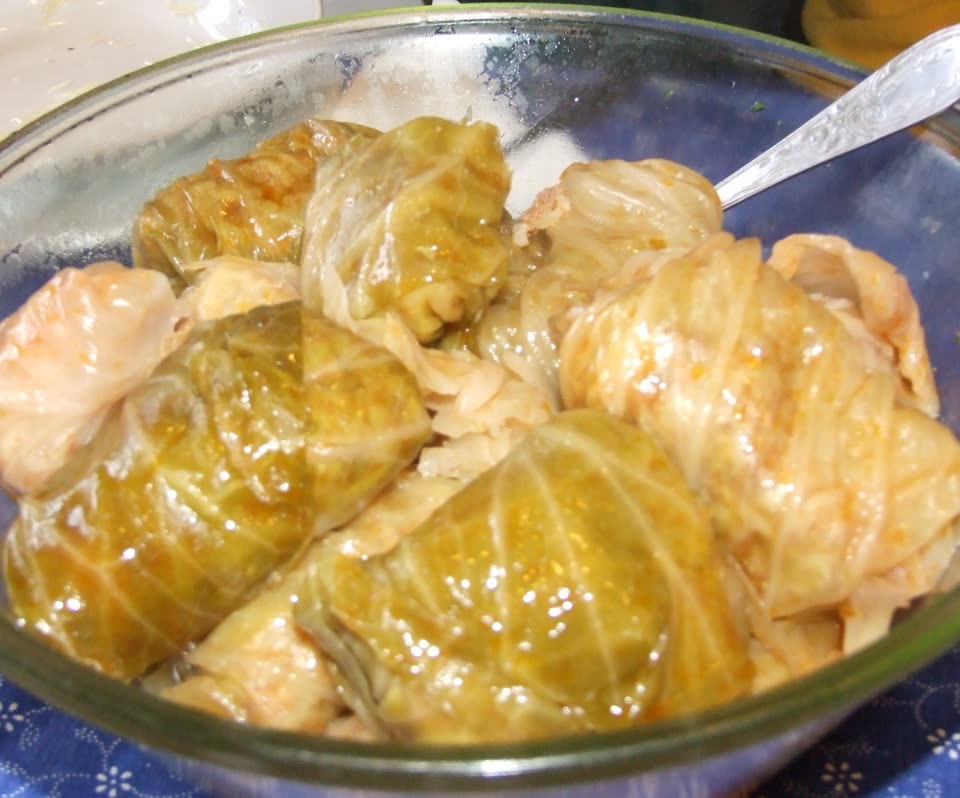
Cabbage leaves rolled around pork and rice and cooked long with sauerkraut. It belongs to the 25th and 26th rather than to Christmas Eve, and the reason is the calendar rather than the recipe: pig-killing season opened around Saint Andrew's day at the end of November, and the fast ended on the 25th, so the meat dish went on the table the day the fasting stopped.
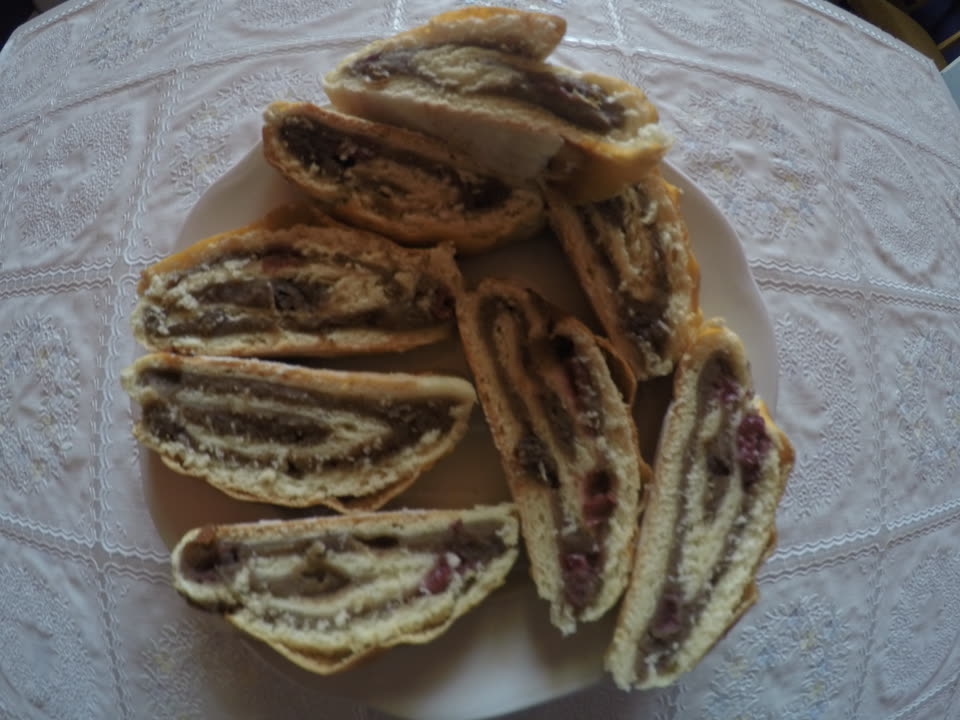
A rolled pastry filled solid with ground poppy seed or ground walnut, sliced into dark spirals. It is a nineteenth-century arrival rather than an ancient one: the earliest Hungarian record of it in its present form is a recipe in Czifray's cookbook of 1830, under the name pozsonyi finom mákos kalács — fine Pressburg poppy-seed loaf. The walnut version is the one with the stronger claim to being Hungarian.
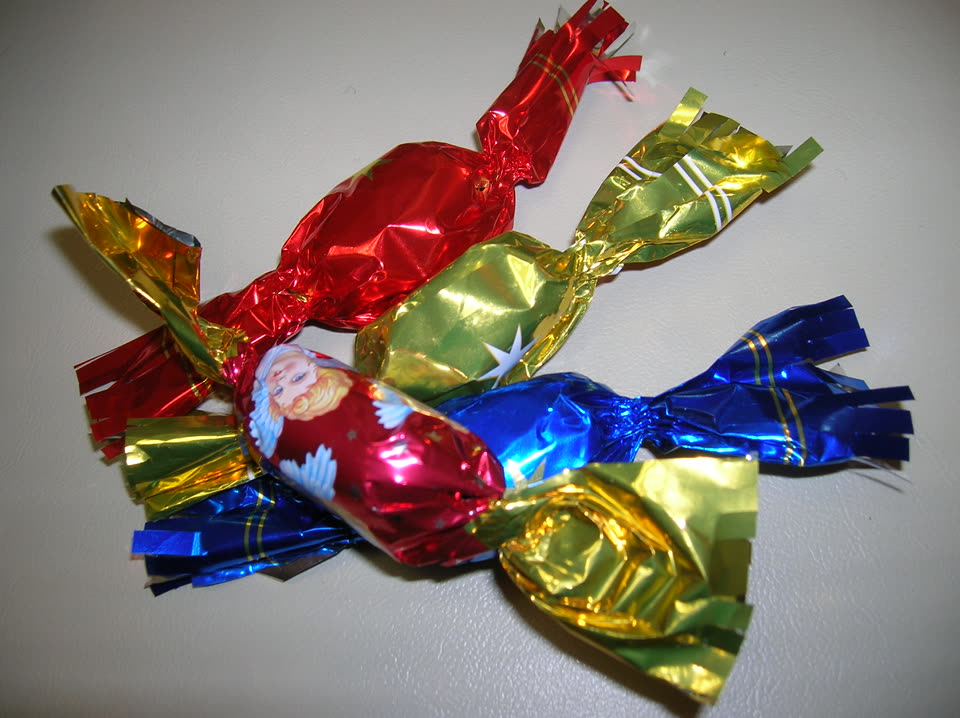
Fondant sweets in twisted foil wrappers, hung on the branches of the tree and eaten off it through the season, so that the tree empties as Christmas goes on. It is a Hungarian habit above all: outside Hungary it is found mostly in Slovakia and Romania, where Hungarian-speaking communities live.
Szaloncukor — Hungarian Wikipedia (reviewed version), citing Vasárnap, 2003
What people get wrong
Widely repeated claims about Christmas in Hungary that do not survive
checking. Each one says what is actually the case, because a correction
with nothing in its place leaves you worse off than before.
Contradicted
Mikulás brings the Christmas presents in Hungary
What is actually the case. He brings the 6 December presents, into a boot on the windowsill, and that is a separate event nearly three weeks earlier. The Christmas Eve presents come from Jézuska, the Christ Child — a figure the Hungarian ethnographic literature traces to German Protestant usage, where Jesus displaced Saint Nicholas as the giver — or, among Hungarians in Transylvania, from the angel.
The two are not a translation of one another and Hungarian keeps them apart: Mikulás on the sixth, Jézuska on the twenty-fourth.
Télapó was a communist invention that banned Mikulás
What is actually the case. The name was promoted in the 1950s, and it is indeed a calque of the Russian Ded Moroz. What did not happen is the abolition: the ethnographic literature records the attempt to introduce Télapó in place of Mikulás and then says plainly that both names are equally known and used. The saint's day never moved and the boot never went away.
What is actually the case. No Hungarian Bethlehem play survives from the Middle Ages. The earliest Hungarian texts are seventeenth-century and were written for schools to stage; the familiar peasant version with the inside-out sheepskins and the deaf old shepherd is a nineteenth and twentieth-century form. The play is old, and it is not medieval in any sense that can be shown from a text.
Regölés is a surviving shamanic rite of the pagan Magyars
What is actually the case. What can be shown is a house-visiting custom of southern and western Transdanubia, kept mainly on 26 December, first mentioned by Gáspár Heltai in 1552 and surviving today in a few Transdanubian villages. The ethnographic entry records its area, its date, its participants and its first attestation, and claims no pre-Christian descent for it. The shamanic reading is a modern interpretation laid over an attested custom.
regölés — Magyar Néprajzi Lexikon (Akadémiai Kiadó), via MEK/OSZK
Hungary voted Christmas Eve into law in November 2026, and it is not law yet. On 3 November the Parliament passed a government bill making 24 December a munkaszüneti nap alongside the two Christmas days, with shops to close that day; the vote was unanimous. Until it is promulgated in the official gazette the statute still lists only 25 and 26 December.
Before that vote, Christmas Eve was a working day on which the shops shut early. The trade act let most shops stay open only until two in the afternoon on 24 December, with hospitality, hotels, flower shops, sweet shops, filling stations and shops inside stations and airports exempted. It was a rule about opening hours, never a day off.
At the 2022 census 42.5 per cent of Hungarians gave a Christian answer — 29.2 per cent Catholic, of whom 1.7 per cent follow the Greek rite, 9.8 per cent Calvinist and 1.8 per cent Lutheran. The largest single group on the form was none of those: 40.1 per cent did not answer the question at all.
The Christmas tree is a newcomer in Hungary. It appears in aristocratic and then middle-class houses in the first half of the nineteenth century, and only reaches village craftsmen and better-off peasants in the second half — which makes it younger in Hungarian homes than the Luca chair, the Bethlehem play and the regölés it now shares a season with.
karácsonyfa — Magyar Néprajzi Lexikon (Akadémiai Kiadó), via MEK/OSZK
Télapó, the other name for Mikulás, was introduced on purpose in the 1950s as a word-for-word translation of the Russian Ded Moroz. It did not replace the old name and was never abolished: both are in ordinary use today, and plenty of Hungarians use them interchangeably for the same man on 6 December.
Every claim carries its own citation. They are collected below, so you
can see what the page rests on and how much of it comes from where.
Magyar Néprajz VII. Folklór 3 — December — Akadémiai Kiadó, via MEK/OSZK. Retrieved 2026-11-05. archived 12 February 2026«A Mikulás szó a Miklós név szlovák megfelelője, csak a múlt század végén került a köznyelvbe, akárcsak a Mikulást kísérő krampusz, ördögszerű figura neve, mely a nyelvészek szerint bajor–osztrák eredetű. A szokást osztrák eredetűnek tartja a kutatás (Kiss L. 1962).»
Religion in Hungary, reporting the 2022 census of the Hungarian Central Statistical Office — English Wikipedia. Retrieved 2026-11-05. archived 14 October 2026«In the national census of 2022, 42.5% of the population identified themselves as Christians, of whom 29.2% were adherents of Catholicism (27.5% following the Roman Rite, and 1.7% the Greek Rite), 9.8% of Calvinism, 1.8% of Lutheranism». The non-response share is given in the same summary as «Not answered (40.1%)».
boldog karácsonyt — English Wiktionary. Retrieved 2026-11-05. archived 25 December 2025The entry glosses the phrase «Merry Christmas!» and gives the pronunciation as «[ˈboldoɡ ˌkɒraːt͡ʃoɲt]».
Szaloncukor — Hungarian Wikipedia (reviewed version), citing Vasárnap, 2003. Retrieved 2026-11-05. archived 23 October 2026«A szaloncukor (szlovákul: salónka) hagyományosan magyar édesipari termék – szemenként selyem- és sztaniolpapírba csomagolt cukorka –, amelyet a magyar családok a karácsonyfa díszítésére használnak. Magyarországon kívül csak Szlovákiában és Romániában terjedt el.»
karácsonyi ajándék, angyalfia — Magyar Néprajzi Lexikon (Akadémiai Kiadó), via MEK/OSZK. Retrieved 2026-11-05. archived 2 August 2021«A német protestantizmus szorította ki alakját saját területéről, és náluk jelent meg először Jézus (Jézuska) e szerepben.» On the variation: «Az ajándékot hozó személye nem egységes, az erdélyi magyarok körében az → angyal, sőt az aranyos csitkó ismert.»
Mikulás, Miklós napja — Magyar Néprajzi Lexikon (Akadémiai Kiadó), via MEK/OSZK. Retrieved 2026-11-05. archived 19 November 2025The lexicon describes the gift as «ablakba, cipőbe tett ajándék» — put in the window, in the shoe — and records the newer name: «legújabban – szovjet hatásra – Télapó ként emlegetik az ajándékozó Mikulást».
karácsonyfa — Magyar Néprajzi Lexikon (Akadémiai Kiadó), via MEK/OSZK. Retrieved 2026-11-05. archived 21 December 2025The lexicon defines the Christmas tree by its date: «karácsonyestére (dec. 24.) felállított vagy függesztett örökzöld (főleg fenyő) fa vagy ág, amelyet gyümölcsök, sütemények, gyertyák, szentképek stb. díszítenek. Rá vagy alá szokás elhelyezni a → karácsonyi ajándék okat.»On the secrecy and what hangs on the tree now, Magyar Néprajz VII: «A kisebb gyerekeknek ma is azt mondják, hogy a Jézuska hozza a fát, ezért titokban díszítik. Ma már nagy fákat állítanak, üvegdíszekkel, szaloncukorral.»
Luca napja — Magyar Néprajzi Lexikon (Akadémiai Kiadó), via MEK/OSZK. Retrieved 2026-11-05. archived 11 February 2026On the forbidden work: «A néphit szerint a nevenapján végzett munkák (fonás, szövés, lúgzás, kenyérsütés, meszelés) tilalmainak megszegőit megbüntette.»On the chair: «Legáltalánosabb a karácsony előestéjéig készülő lucaszéke, amelynek anyagát, formáját előírás szabályozta.» And on where it was taken: «A tizenháromféle fából készült széket a kat.-ok éjféli misére a templomba, a ref.-ok pedig a keresztútra vitték.»
betlehemezés, betlehemes játék — Magyar Néprajzi Lexikon (Akadémiai Kiadó), via MEK/OSZK. Retrieved 2026-11-05. archived 16 January 2026«a legnépszerűbb karácsonyi paraszti → misztériumjáték, pásztorjáték. Hazánkban a középkorból magyar betlehemezés nem maradt fenn; az első magyar szövegek a 17. sz.-ból származnak, s iskolai előadás céljára készültek.»On the comic lead: «A betlehemezés főszereplője a süket öreg pásztor, akinek tréfás félreértései a humor bő forrását képezik.»
regölés — Magyar Néprajzi Lexikon (Akadémiai Kiadó), via MEK/OSZK. Retrieved 2026-11-05. archived 6 December 2025«A századforduló körül D- és Ny-Dunántúlon ismerték, ma néhány dunántúli községben él. Fő időpontja dec. 26., István protomártír ünnepe, néhol újévig jártak regölni a legények, elsősorban lányos házakhoz.»On the first mention: «1552-ben Heltai Gáspár „A reszegsegnec es tobzodásnak veszedelmes vóltáról valo Dialogus” c. művében említi a regelést és a regelő hetet.»
karácsony — Magyar Néprajzi Lexikon (Akadémiai Kiadó), via MEK/OSZK. Retrieved 2026-11-05. archived 14 December 2025«A r. k. családok régebben egész nap böjtöltek, s csak az esti harangszó után kezdődött a → karácsonyi vacsora kialakult szokásrendjével és ételeivel», and of what was on it: «amelyek között első helyet kapott az ostya (→ ostyahordás), a fokhagyma, az alma, a dió és a mákos tészta».On the belief: «Azt is tartották, hogy az éjféli mise alatt megszólalnak az állatok, s elmondják véleményüket gazdáikról, gondozóikról.»
Munkaszüneti nappá nyilvánította az Országgyűlés december 24-ét — Magyarország Kormánya (kormany.hu), 3 November 2026. Retrieved 2026-11-05. archived 5 November 2026«Elfogadta az Országgyűlés a kormánypárt törvényjavaslatát arról, hogy munkaszüneti nap legyen karácsony két napja mellett a szenteste napja, december 24. is. A döntés alapján már idén is zárva lesznek aznap az üzletek.»
2005. évi CLXIV. törvény a kereskedelemről, § 6(3) — Nemzeti Jogszabálytár. Retrieved 2026-11-05. archived 23 October 2026«December 24-én – a vendéglátó üzletek, szálláshelyek, a virág-, az édességüzletek és az üzemanyagtöltő állomások, továbbá a közforgalmú vasúti és buszpályaudvaron, repülőtéren, illetve az üzemanyagtöltő állomáson belül működő üzletek kivételével – az üzletek 14 óráig tarthatnak nyitva.»
2012. évi I. törvény a munka törvénykönyvéről (Labour Code), § 102 — Nemzeti Jogszabálytár / Wolters Kluwer Jogtár. Retrieved 2026-11-05. archived 30 October 2026Hungary keeps its public holidays in its Labour Code rather than in a separate holidays act. § 102 lists them in one sentence: «Munkaszüneti nap: január 1., március 15., nagypéntek, húsvéthétfő, május 1., pünkösdhétfő, augusztus 20., október 23., november 1. és december 25–26.»
Nyitvatartás (opening hours) — Vörösmarty Classic Xmas, the fair's own site. Retrieved 2026-11-05. archived 12 July 2026«2026. november 13-től egészen az új év hajnaláig ismét vár mindenkit a karácsonyi vásár Budapest egyik legszebb terén, a Vörösmarty téren.» The Christmas Eve line reads «2026. december 24. 10.00 – 14.00».
Karácsonyi ételeink története — We Love Budapest, Nóra Nemes, 22 December 2023. Retrieved 2026-11-05. archived 10 October 2024«a hal ugyanis böjtös étel, advent pedig – 24-e estét is beleértve – hagyományosan böjtös időszaknak számít.» And on the age of the dish: «A halászlé a mai formájában egyértelműen a paprikaboom óta népszerű, a XIX. század végén azonban megjelent a rántott hal – elsősorban ponty – az ünnepi asztalokon.»