Christmas is kept in the Old City, around Bab Touma
In Damascus the season belongs to the Christian quarter in the east of the Old City, around the gates of Bab Touma and Bab Sharqi. Churches there hold the services — among them the Mariamite Cathedral, seat of the Greek Orthodox Patriarchate of Antioch — and families go visiting one another afterwards.
Red baubles in the trees and chestnuts on the street
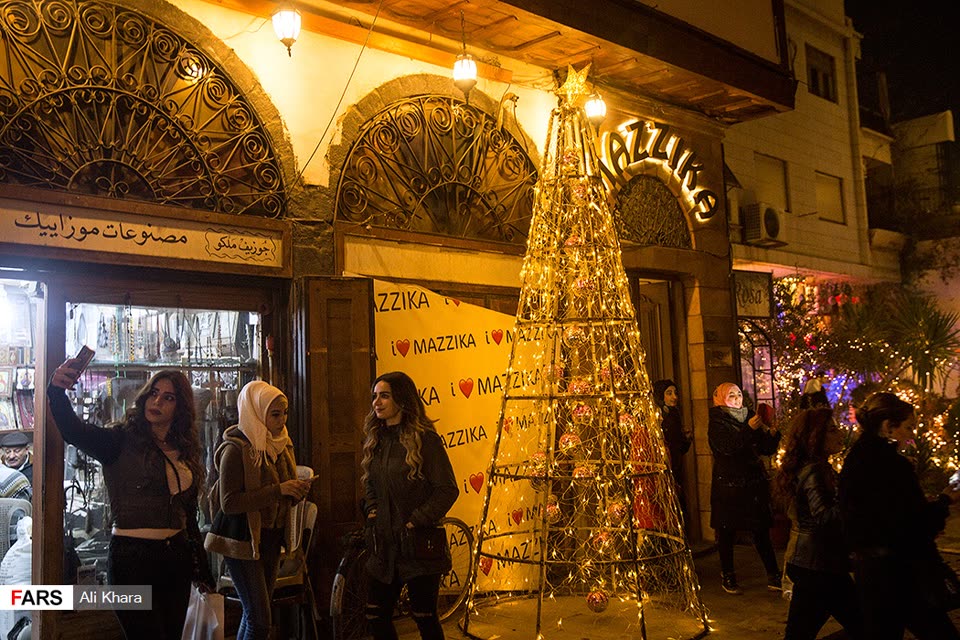
What the Old City looks like in the days before Christmas: red baubles hanging in the street trees, decorations in the shopfronts, and vendors selling warm chestnuts to the people walking through.
Father Christmas works the street, not the chimney
In Damascus in 2025, men dressed as Santa Claus greeted families in Bab Touma, Qassaa and Bab Sharqi, where the decorations ran to wreaths and red and white ornaments; across the city in Mezzeh there was a Christmas Village with fireworks. He is a figure in the street rather than a figure in the house — what is reported is the greeting, not the giving.
The decorated nativity grotto is the centre of a Syrian Christmas front room, with the tree beside it under a star. One decorator in Maaloula, asked what the elements are, named the grotto first and the star-topped tree second — and said that year's tree was dressed with butterflies instead of the usual ornaments.
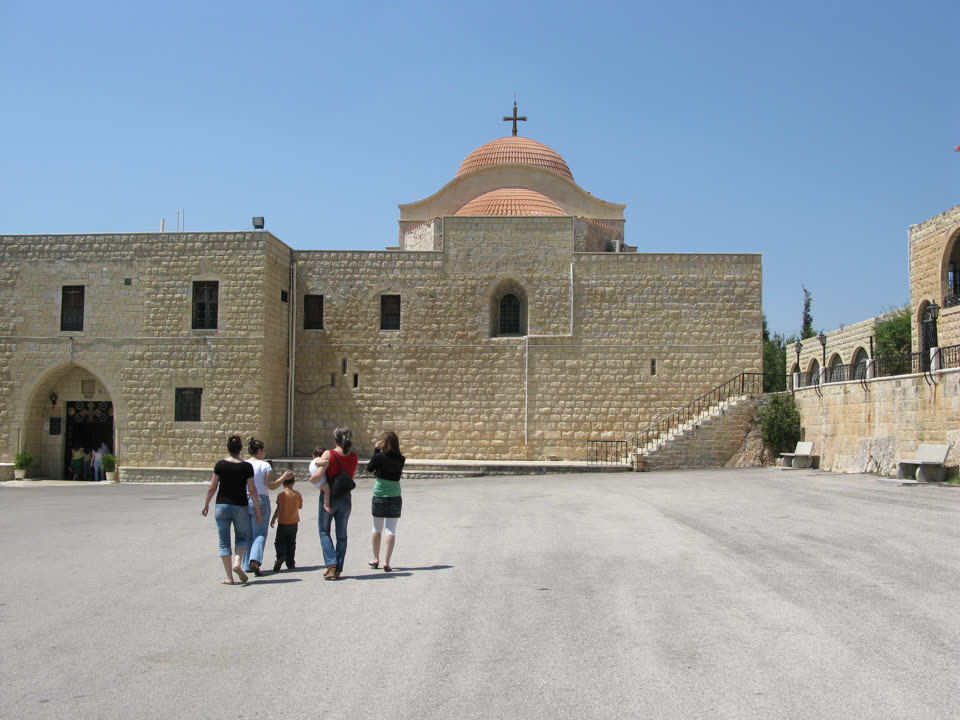
At the convent of Our Lady of Saidnaya in the hills north of Damascus, the Christmas tree lighting in 2025 drew Christians and Muslims together: a play on the birth of Christ, dancing, fireworks, and the lights going on.
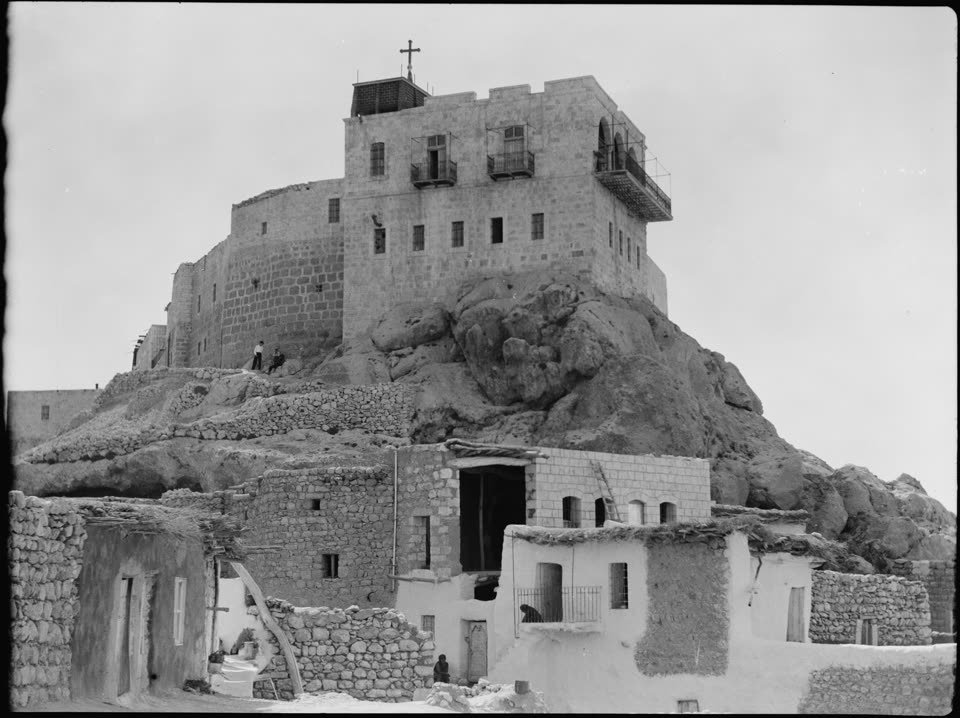
In Wadi al-Nasara, the Valley of the Christians in Homs governorate, Christmas Eve is marked by gatherings led by the churches, and in some villages by the lighting of small bonfires. Most people in the valley are Greek Orthodox, and St George's Monastery stands among its villages at al-Mishtaya.
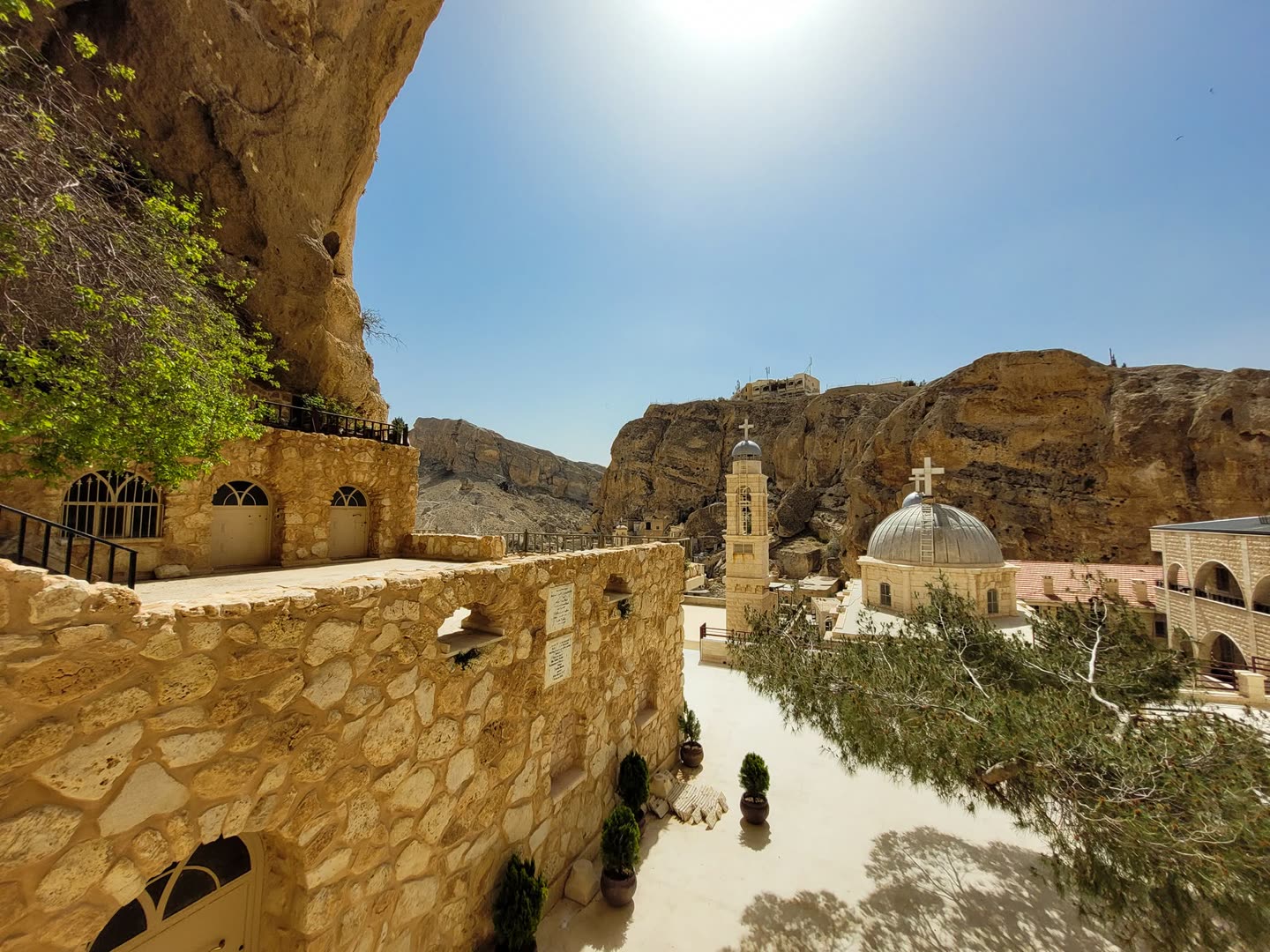
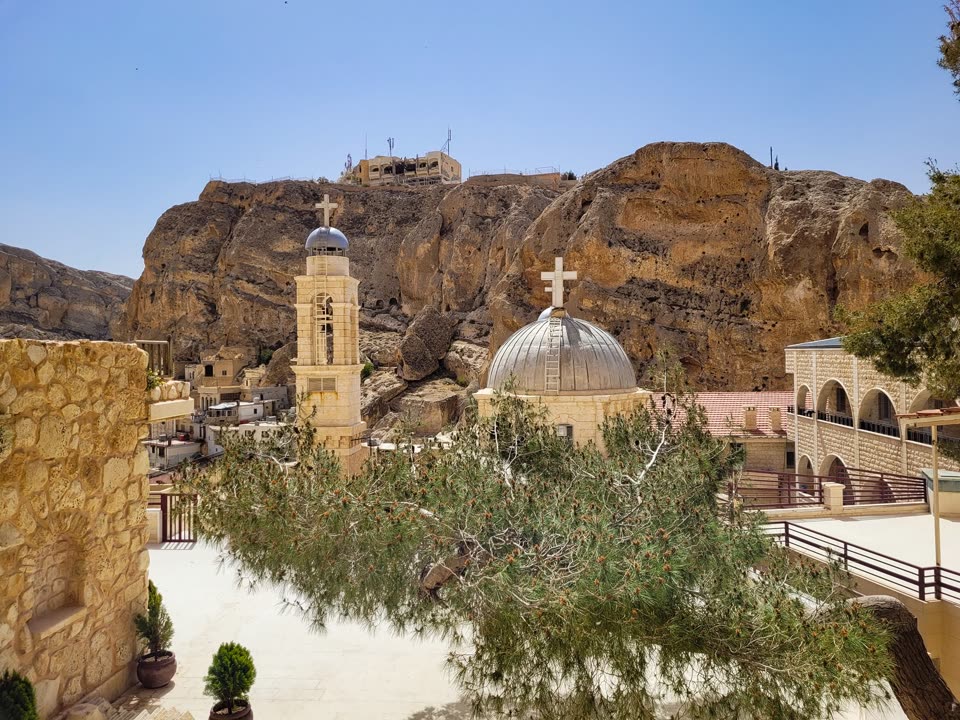
Maaloula sits in a cleft in the mountains north-east of Damascus, and prayers have been said in the small stone church on the edge of the monastery of Saints Sergius and Bacchus since the fourth century. They were said in Aramaic once. They are said in Arabic now.
In Aleppo the Christian quarters begin before Christmas does. Festivities for Saint Barbara's day, in the first half of December, are held in neighbourhoods such as Suleimaniyah, Aziziyeh and the Villas, and in Aziziyeh the Christmas trees go up along the streets, in the cafés and on the balconies.
Syria's Armenians of the Apostolic Church keep Christmas on 6 January, with the Nativity and the Baptism on one feast. In Aleppo the evening before is called Khtoum: the last day of the fast is the fifth, and the fast is broken at a family dinner that night.
Visualized Reflections — Angelique Sanossian, a personal memoir of an Aleppo Armenian Christmas
Christmas 2025 was kept under guard
At Christmas 2025, churches in Damascus were watched. Alongside government forces, neighbourhood committees of local Christians took turns protecting the churches of the Old City.
The French yule log, on Syrian tables since the Mandate and still the dessert many families make. It is the clearest surviving mark of the French period on a Syrian Christmas, and it sits on the table beside things far older than itself.
A dark spiced pudding of rice flour with anise and caraway, strewn with nuts and shredded coconut. Its ordinary use is to celebrate a birth — it is made when a baby arrives and shared with everyone who comes to see the child — which is why it belongs on a table keeping the birth of Christ.
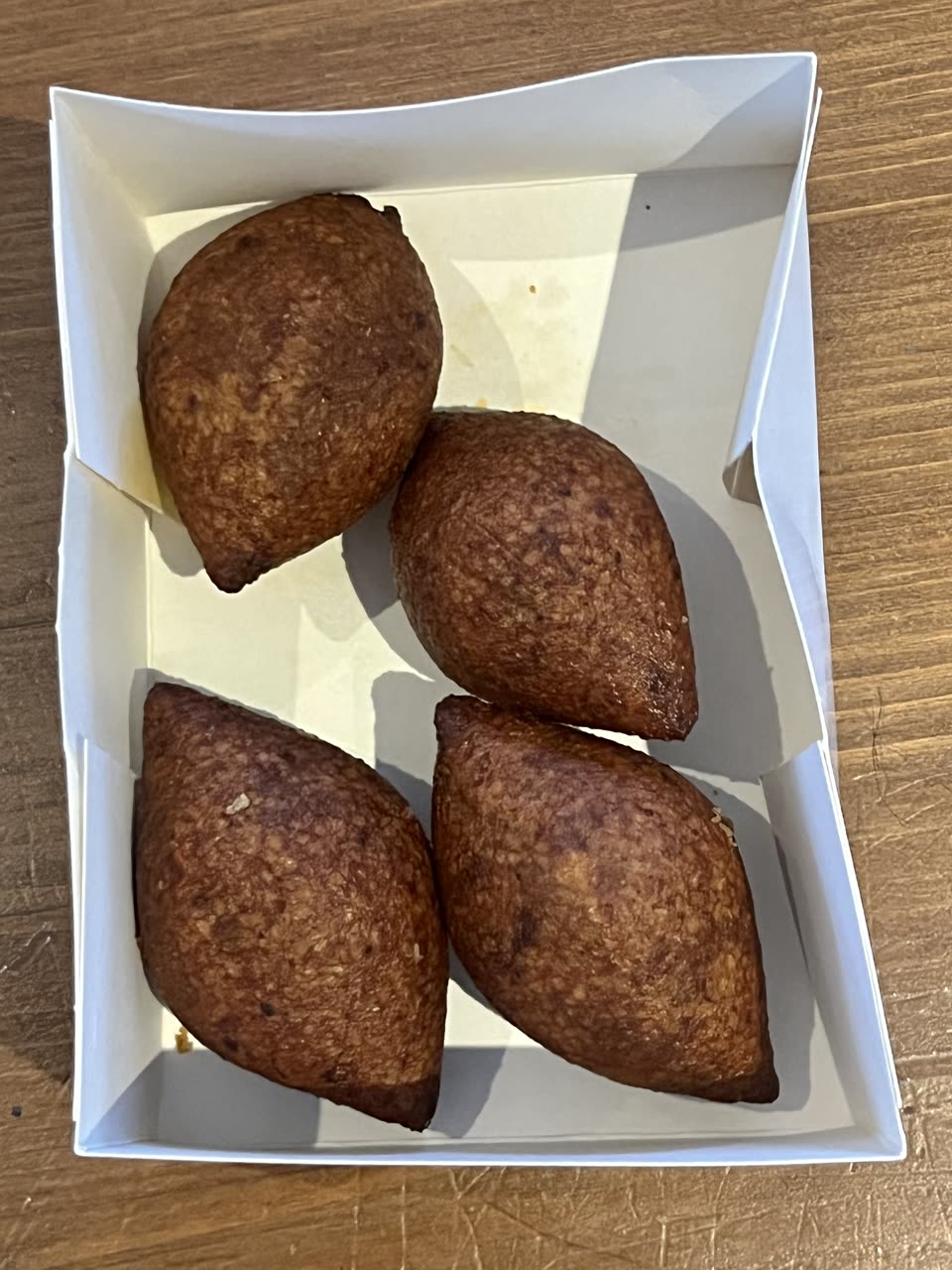
Minced meat and burghul, worked together and often served in a warm yoghurt sauce — the dish the source calls Syria's national one, and part of the mix of dishes that goes on the Christmas table rather than a dish particular to the day.
Widely repeated claims about Christmas in Syria that do not survive
checking. Each one says what is actually the case, because a correction
with nothing in its place leaves you worse off than before.
Oversimplified
Christmas Mass at Maaloula is said in the language Jesus spoke
What is actually the case. Two things are wrong with it and the village is remarkable anyway.
The language is not the same language. Maaloula speaks Western Neo-Aramaic, a modern descendant; Jesus spoke Galilean Aramaic, a Middle Aramaic variety. They are relatives, not the same tongue, and sixteen centuries lie between them.
And the prayers are not in it. In the church at the monastery of Saints Sergius and Bacchus, where prayers have been said since the fourth century, they were originally in Aramaic — and they are now in Arabic.
What is true is rarer than the myth: Maaloula is one of only three places on earth where a Western Aramaic language is still spoken at all, and one of those three is empty.
Syria celebrates Christmas twice, by law, on 25 December and in January
What is actually the case. The holiday decree carries one Nativity date and it is 25 December. It does carry two Easters, one for each computation, which is probably where the idea comes from — but no January Christmas appears on it.
Syrians do keep Christmas on two dates: the Armenian Apostolic community keeps it on 6 January. That is a church calendar, not a statute, and the difference is the whole of the correction.
A bûche de Noël is on the table of every Syrian home at Christmas
What is actually the case. The log is genuinely there, and it genuinely came with the French Mandate. The source that supplies the fact also says it «graces the table of every home in Syria», which is a claim about roughly twenty-three million people made by a publication that wrote in that register as a matter of policy.
Christians are a small minority of Syrians, and no survey of what any of them eat at Christmas exists. The dessert is well attested; the universality is not.
Syria's holiday list carries two Easters and no January Christmas. Decree No. 188 of 2025 names Easter twice over, once for the eastern computation and once for the western, so that both Christian calendars are covered — but the only Nativity date on it is 25 December, and 6 January, which Syria's Armenians keep, is not there.
Christianity in Syria is older than almost anywhere, and the community is now very small. Estimates put it at about 300,000 today. What it fell from is genuinely disputed: a Catholic charity's figure for 2011 is 2.1 million, around a tenth of the country, while a news agency reporting the same decline gives one million. Nobody has counted — there is no census of religion.
There is no single Syrian church. The largest is the Greek Orthodox Church of Antioch; most Syrian Catholics belong to the Melkite Greek Catholic Church, which like its Orthodox sister uses Greek and Arabic in the liturgy. Beyond those are Syriac Orthodox and Syriac Catholic, Armenian Apostolic and Armenian Catholic, Maronite, Chaldean, Assyrian, Latin and Protestant congregations — which is why Christmas in Syria is kept on two dates and in several languages.
Maaloula is one of three places left where a Western Aramaic language is spoken at all. The other two are the nearby village of Jubb'adin and Bakha, which is now empty.
At Christmas 2025 a tree in Damascus carried the faces of the dead. In June that year an attack on the church of Mar Elias in the Dweila'a district killed twenty-five people; at Christmas, churchgoers lit a tree hung with stars bearing their pictures.
Every claim carries its own citation. They are collected below, so you
can see what the page rests on and how much of it comes from where.
Festive lights, security tight for Christmas in Damascus — AFP, via France 24, 24 December 2025. Retrieved 2026-11-06. archived 24 December 2025«In the Old City, home to a small but vibrant Christian community and several important churches, red baubles hang from some trees, shopkeepers have put up Christmas decorations and street vendors peddle warm chestnuts.»
Visualized Reflections — Angelique Sanossian, a personal memoir of an Aleppo Armenian Christmas. Retrieved 2026-11-06. archived 28 January 2023«The night before Christmas day is called “KHTOUM” Խթում», and of the fast: «the last day of fasting is the 5th and you open your fasting by sharing dinner with the family on Khtoum Eve».
How shared relief and unity are defining the Christmas season in Syria — Arab News, Ali Haj Suleiman and Hebaa Shehade, 24 December 2025. Retrieved 2026-11-06.«In Bab Touma, Qassaa, and Bab Sharqi, decorations were more traditional, with wreaths, red and white ornaments, and men dressed as Santa greeting families.»
Maaloula — English Wikipedia. Retrieved 2026-11-06. archived 21 September 2026«It is known as one of three remaining villages where Western Neo-Aramaic is spoken, the other two being the nearby smaller villages of Jubb'adin and the now depopulated Bakha.»
Christianity in Syria — English Wikipedia, reporting Aid to the Church in Need. Retrieved 2026-11-06. archived 14 October 2026«According to the Catholic charity group Aid to the Church (ACN), the number of Christians residing in Syria is estimated to have fallen from 2.1 million (10% of population) in 2011 to around 300,000 (less than 2%) in 2022.»The lower baseline is AFP's: «Syria's Christian community is believed to have shrunk from one million in 2011, when the war began, to around 300,000 today, with many seeking refuge abroad.»
عيد ميلاد مجيد — English Wiktionary. Retrieved 2026-11-06. archived 25 December 2025The entry gives «عِيد مِيلَاد مَجِيد • (ʕīd mīlād majīd)» and glosses it «Merry Christmas», with the pronunciation «/ʕiːd miː.laːd ma.d͡ʒiːd/».
Christians in Syria: fear lingers in an ancient community — Qantara.de, Florian Neuhof. Retrieved 2026-11-06. archived 9 March 2026«Prayers have been said in the small stone church on the edge of the Monastery of Saints Sergius and Bacchus since the 4th century—originally in Aramaic, the language of Christ, and now in Arabic.»
Presidential Decree No. 188 of 2025, on official holidays — SANA, the Syrian Arab News Agency (English service). Retrieved 2026-11-06. archived 29 October 2026The decree sets «the official holidays and the days on which workers subject to the provisions of the Basic Law for State Workers are entitled to a holiday with full pay», and 25 December is on the list.The list in full, as published: «Eid al-Fitr, Eid al-Adha, Hijri New Year, Prophet Muhammad's Birthday, New Year's Day (January 1), Christmas (for all Christians, December 25), Mother's Day (March 21), Independence Day (April 17), Easter (for Eastern Christian denominations), Easter (for Western Christian denominations), Labor Day (May 1), Liberation Day (December 8), Syrian Revolution Day (March 18).»
Aleppo's Christians celebrate Christmas amid changing leadership — The Media Line, December 2024. Retrieved 2026-11-06. archived 5 September 2025«Festivities for Saint Barbara's Day were held in neighborhoods such as Suleimaniyah, Aziziyeh, and Villa areas, as well as parts of Jaberiyah.» And: «In the Aziziyeh district, Christmas trees now adorn streets, cafes, and balconies, according to activist Abu Sham.»
How Christmas is celebrated across the Middle East — The National, 23 December 2025. Retrieved 2026-11-06. archived 28 December 2025«In Damascus, Christmas celebrations are centred in the Bab Touma and Bab Sharqi districts, where churches such as Mariamite Cathedral (seat of the Greek Orthodox Patriarchate of Antioch) host Christmas services and nativity prayers.»