The presents are opened at midnight, in the fireworks, as the 24th becomes the 25th — the state news agency describes the embraces, the good wishes and the gifts all happening in that one moment, and does not say who they come from.
Who brings them is told rather than measured. A December 2025 cultural essay in the Guatemalan press presents the Niño Dios as the gift-bringer Guatemala has kept, and notes Santa Claus in the commercial imagery of the season alongside him.
The season opens with a fire. At six in the evening on 7 December, the eve of the Immaculate Conception, Guatemalans burn an effigy of the devil — in Catholic framing the Virgin of the Conception's triumph over Satan, and in household terms a clearing-out of what should not be carried into Christmas.
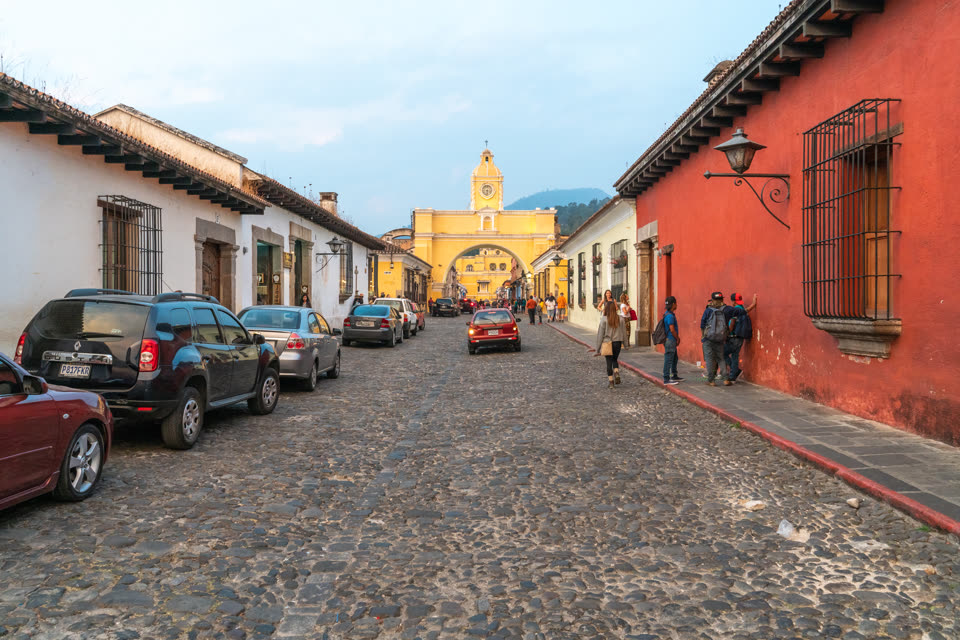
The press account reaches back to colonial Antigua, where bonfires were lit on the eve of the Purísima. Today the rite runs from a paper piñata in a city street to an organised burn in front of a church.
In Antigua Guatemala a giant devil has been burned in front of the Concepción complex for more than three decades, organised by the committee of the Barrio de la Concepción. In recent programmes the devil's «testamento» is read out first and the fire is lit at six.
Over decades the burning widened from a devil to the household's rubbish, and then to tyres and plastics, on the idea that the home was being purified. That produced serious air pollution and fire risk, and the paper devil piñata rose through the 1990s as the cleaner answer.
Ahead of 7 December the Environment Ministry has publicly asked people not to burn their rubbish but to sort it, warning that tyres, plastics and clothing have been going into the fires.
From 16 to 24 December a procession walks the nine nights of the posadas, carrying Mary and Joseph from door to door in the re-enactment of the search for lodging. The priest's explanation given in the Guatemalan press is that the nine days stand for the nine months of Mary's pregnancy.
On the way there is a reading, a prayer, a mystery of the Rosary and the litanies — sung for as long as the walk lasts rather than sung through — and at the door of the house that will take the pilgrims in, the antiphon of the Rosary is recited.
Hermano Pedro, and nativity scenes that were not allowed at home
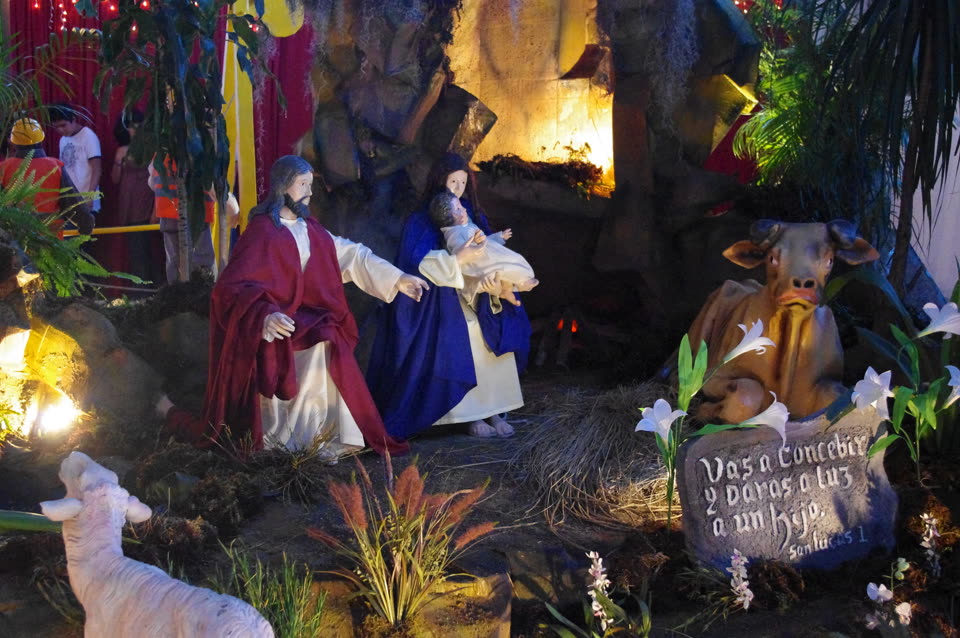
In Antigua the posadas are told as part of what arrived with Hermano Pedro, whose coming the church there dates to 18 February 1651: devotion to the nativity scene, which the telling traces to Saint Francis of Assisi, and the posada with it. The first posadas were held in front of church façades — at that time only the churches were authorised to set up a nacimiento, and houses were not.
The nativity scene is a made object as much as an inherited one. In December 2025 the culture ministry ran a course in Chinautla for thirty neighbours, young people and teachers among them, making nacimientos by hand in clay — the town's own craft, run as a way of keeping Poqomam identity in use.
Nochebuena: a day of cooking, and fireworks at midnight
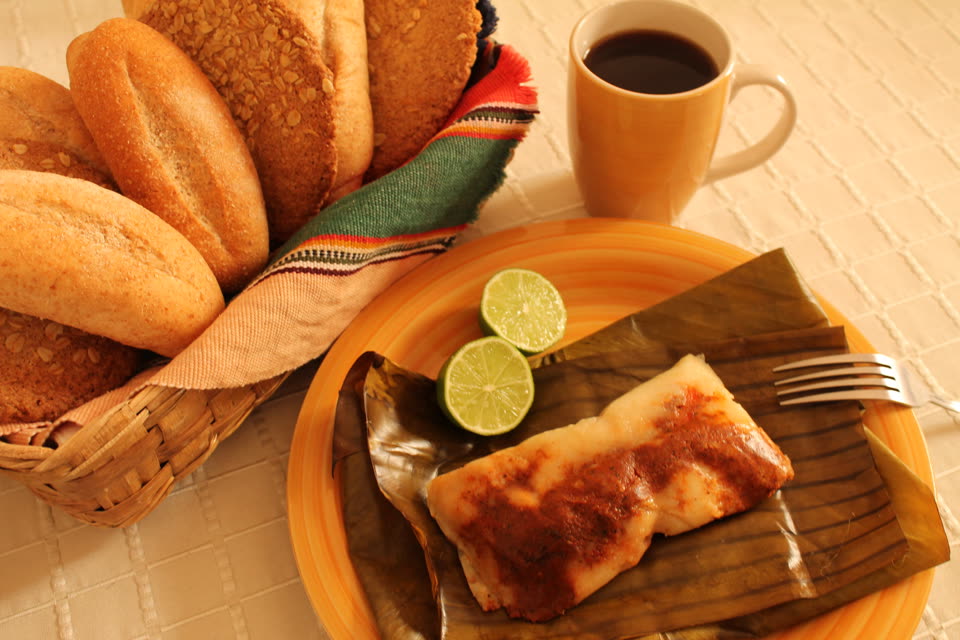
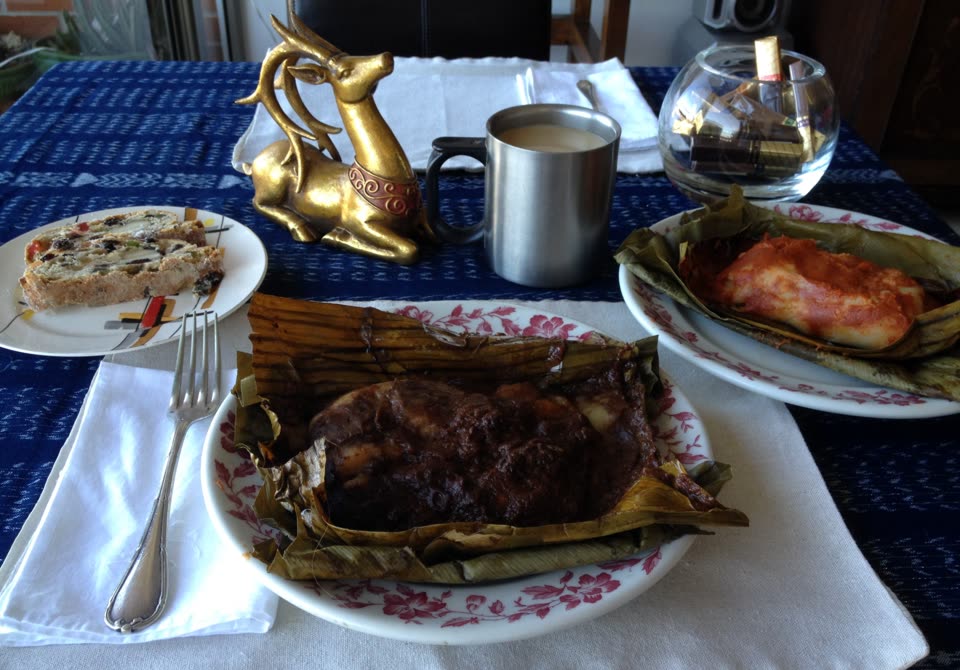
The 24th is spent making the dinner — tamales above all, with turkey, chuchitos and Russian salad, and fruit ponche to go with them. At midnight the sky goes up: fireworks across the country for the birth of Jesus, and in the noise families exchange embraces, good wishes and presents.
The 25th is the quiet one. Leftovers, rest, visits, and for some a Mass.
The Misa de Gallo still marks the middle of the night
Between the cooking and the fireworks sits the Mass. Guatemalan press writing says the Misa de Gallo, celebrated in the country since colonial times, still marks the central moment of Christmas Eve night for practising Catholics, with the table around the tamales as the other half of the evening.
Maize dough with a tomato recado and meat — pork or chicken — wrapped in maxán leaves and steamed. The culture ministry's own gastronomy page puts them at the centre of the Nochebuena dinner, and the national cultural register calls them the most eaten tamal in the country.
They are not only a Christmas dish. The register also records the Saturday habit: a red light outside a house, meaning there are tamales for sale.
Tamales colorados — Sistema de Información Cultural de Guatemala (SIC) · Ministerio de Cultura y Deportes
The December table is not one tamal. A state newspaper feature, quoting the cook Yolanda Hernández, names tamales, chocolate and ponche as the pillars of the Guatemalan December, with regional variants including black tamales and paches.
A hot fruit punch, served in big cups on Nochebuena and shared at the posadas. The culture ministry's recipe, recorded from older people in Palín, Escuintla, takes pineapple, apple, jocote, mamey, raisins and plums, with cinnamon stick, allspice and hibiscus — the hibiscus is what makes it red — sweetened with sugar.
The ministry makes a point of what it costs: the produce is cheap on purpose, so that every family can make it.
In the cold towns of the western highlands the punch changes. The caliente de piña drops the other fruit and keeps the pineapple, with camomile and sometimes mamey; and a milk ponche is made at home — a shake of milk, eggs and cinnamon, close to the rompope drunk in the capital without being the same thing. Both are drunk after the night prayers and the posadas.
Widely repeated claims about Christmas in Guatemala that do not survive
checking. Each one says what is actually the case, because a correction
with nothing in its place leaves you worse off than before.
Contested
The posadas were invented in Guatemala.
What is actually the case. Two countries tell this story about themselves, and both tell it through a religious order. The Guatemalan telling, given by the rector of San Francisco El Grande in Antigua and printed in Prensa Libre, opens «Las posadas son una tradición que nació en Guatemala» and attaches the custom to the arrival of Hermano Pedro in 1651. The Mexican telling, which Mexico's own national institute of anthropology and history publishes, puts the beginning at the Augustinian convent of Acolman in the second half of the sixteenth century, where misas de aguinaldo were instituted and turned into the posadas.
The Mexican account is a century older and has the stronger institution behind it. Neither is settled. What is certain is that Guatemala keeps the posada devotedly; that it invented it is not.
What is actually the case. Half of it is. Article 127 of the Labour Code gives private-sector workers 24 December as paid leave «a partir de las doce horas» — from noon — and gives them the whole of 25 December. The same half-day rule applies to 31 December. So the morning of Christmas Eve is a working morning in law, which is one reason the cooking starts when it does.
Christmas Eve is a half day in Guatemalan labour law. The Labour Code gives private-sector workers the afternoon of 24 December — paid leave «a partir de las doce horas» — and does the same for 31 December. Only the 25th is a whole day.
A red light outside a Guatemalan house on a Saturday means there are tamales for sale. The national cultural register records the custom, and the popular explanation for the day: so that nobody has to cook on Sunday morning, when whole families are at Mass.
Tamales colorados — Sistema de Información Cultural de Guatemala (SIC) · Ministerio de Cultura y Deportes
The paper devil is an environmental invention. Mass burning of rubbish, tyres and plastics on 7 December became serious enough as pollution and fire risk that the paper piñata rose through the 1990s as the cleaner alternative — the tidy effigy people photograph now is the reform, not the original.
Guatemala's Christmas punch has an official recipe, and it was learned from old people. In December 2025 the culture ministry recorded the ponche of Palín, in Escuintla, from the town's elders — pineapple, apple, jocote, mamey, raisins and plums, with hibiscus for the colour.
The nacimiento is taught as a craft with a named community behind it. A 2025 ministry course in Chinautla trained thirty people to make nativity figures in clay, framed as keeping Poqomam heritage in use rather than as a Christmas activity.
Every claim carries its own citation. They are collected below, so you
can see what the page rests on and how much of it comes from where.
Tradiciones de Nochebuena y Navidad en Guatemala — Agencia Guatemalteca de Noticias. Retrieved 2026-11-06. archived 3 August 2025«Miles de familias se dedican a preparar desde temprano las complejas cenas navideñas, que suelen incluir platillos tradicionales como tamales, pavo, chuchitos y ensalada rusa. Estas delicias culinarias son acompañadas por el infaltable ponche de frutas… El momento más esperado llega a la medianoche, cuando los cielos de Guatemala se iluminan con pirotecnia… las cuales aprovechan para intercambiar abrazos, buenos deseos y regalos. … En Guatemala, el 25 de diciembre es un día más tranquilo, dedicado a descansar y disfrutar de la compañía de seres queridos.»
Artículo 127, Código de Trabajo — Código de Trabajo de Guatemala (texto consolidado, CENADOJ vía Códice). Retrieved 2026-11-06.The article lists the paid days off for private-sector workers in one sentence, and Christmas appears in it twice — as a half day and as a whole one: «…el 24 de diciembre medio día, a partir de las doce horas; el 25 de diciembre; el 31 de diciembre, medio día, a partir de las doce horas, y el día de la festividad de la localidad.»
NAVIDAD EN GUATEMALA: Entre quema del diablo y la luz de Jesús — Crónica. Retrieved 2026-11-06.«Mientras otras naciones cedieron ante el influjo comercial de Santa Claus, Guatemala ha mantenido en buena medida al Niño Dios como portador de los regalos.»The midnight moment itself is the Agencia Guatemalteca de Noticias: «las cuales aprovechan para intercambiar abrazos, buenos deseos y regalos.»
Los sabores de diciembre — Diario de Centro América. Retrieved 2026-11-06. archived 19 May 2026«Hernández indicó que los tamales, el chocolate y el ponche son los pilares de las celebraciones de diciembre en Guatemala, acompañados de variaciones regionales como tamales negros y los paches.»
La quema del diablo en Guatemala: cultura, sátira y conciencia ambiental — EFE. Retrieved 2026-11-06. archived 7 January 2026«La «quema del diablo», celebrada a las 18:00 horas, conmemora en la religión católica el triunfo de la Virgen de Concepción sobre Satanás.»Crónica puts the same hour on it and reaches further back: «Cada 7 de diciembre, a las seis en punto de la tarde, el país enciende el fuego… En la Antigua Guatemala del siglo XVII se documentan «hogueras de limpieza» realizadas en vísperas de la Purísima.»
feliz Navidad — English Wiktionary. Retrieved 2026-11-06. archived 9 March 2026Given as the ordinary Spanish for «Merry Christmas»: «feliz Navidad — Merry Christmas».
Saberes que abrazan: Adultos mayores de Palín comparten el secreto del ponche guatemalteco — Gobierno de Guatemala · Ministerio de Cultura y Deportes. Retrieved 2026-11-06. archived 7 January 2026«Servido en grandes tazas durante la Nochebuena, este caldo de frutas representa la calidez del encuentro… Frutas esenciales: Piña, manzana, jocote, mamey, pasas de uva y ciruelas. Aroma y cuerpo: Canela en raja, pimienta gorda y rosa de Jamaica, que otorga el tono rojizo característico, endulzado con azúcar.»And: «El ponche guatemalteco se comparte tradicionalmente en las posadas y forma parte de una costumbre marcada por la adquisición de productos económicos, lo que lo hace accesible para todas las familias.»
Posadas navideñas 2025: Qué son, cuál es su significado y cuándo inician en Guatemala — Prensa Libre. Retrieved 2026-11-06. archived 19 October 2026«En 2025, esta tradición comenzará el martes 16 y finalizará el domingo 24 de diciembre, ya que se celebra durante nueve días. Representa los nueve meses del embarazo de la Virgen María, según explica Alvarado.»And on what happens along the way: «Durante la procesión se realiza una lectura, se hace una oración, se reza un misterio del Santo Rosario y luego se entonan letanías. No es necesario cantarlas en su totalidad; se canta lo que dura la procesión. Al llegar a la puerta del lugar que dará posada a los peregrinos, se recita la antífona del Rosario.»
Tamales colorados — Sistema de Información Cultural de Guatemala (SIC) · Ministerio de Cultura y Deportes. Retrieved 2026-11-06. archived 13 January 2026«Los tamales colorados con carne de cerdo o pollo son los más consumidos en todo el país. Cada sábado, una luz roja fuera de las casas anuncia que «hay tamales» para la venta, la tradición de venderlos ese día, según la leyenda popular, es que las amas de casa no tengan que cocinar el domingo en la mañana, cuando las familias completas asisten a misa.»And the ministry's Christmas page: «En Guatemala los tamales rojos son considerados el platillo nacional de Guatemala por excelencia que se disfruta en la cena de NocheBuena.»