Dyado Koleda — Grandfather ChristmasДядо Коледа · arrives 25 December
—days
—hrs
—min
—sec
Next: Friday 25 December 2026
When is Christmas in Bulgaria?
Christmas Day in Bulgaria is 25 December. It moved from 7 January in 1968. It is a public holiday.
How to say it
Bulgarian
Весела Коледа
Vesela Koleda
A synthesised voice — not a recording of a person — saying Весела Коледа
in bg-BG.
Merry Christmas, word for word — весел is merry and Коледа is Christmas. It is the everyday greeting, on cards, shopfronts and broadcasts, and the Academy dictionary marks the stress on the first syllable of both words: ВЀСЕЛ and КО̀ЛЕДА.
A synthesised voice — not a recording of a person — saying Честито Рождество Христово
in bg-BG.
Happy Nativity of Christ. It names the feast liturgically rather than by its folk name — Рождество Христово is the Nativity — and честит is the word Bulgarian uses for congratulation rather than for merriment, so the sense is closer to blessings on the feast than to merry. Clergy, broadcasters and politicians use it where Весела Коледа would be too casual. The stress falls on the last syllable of честѝт.
Grandfather Christmas. He is in Bulgarian print by 1934, in Калина Малина's «Дядо Коледа дойде», and what he carries there is not a sack: «носи цял кош армагани», a whole basket of gifts. He knocks with a stick, he is as white as snow, and he has come earlier than last year.
Christmas Eve is a holiday in its own right, by statute
The Labour Code lists three Christmas days and the first of them is the evening before: 24 December as Бъдни вечер, then 25 and 26 December as Рождество Христово. Most of Europe works on Christmas Eve. Since 2017 the three days always yield three days off — where they fall on a Saturday or a Sunday, the following working days are non-working instead.
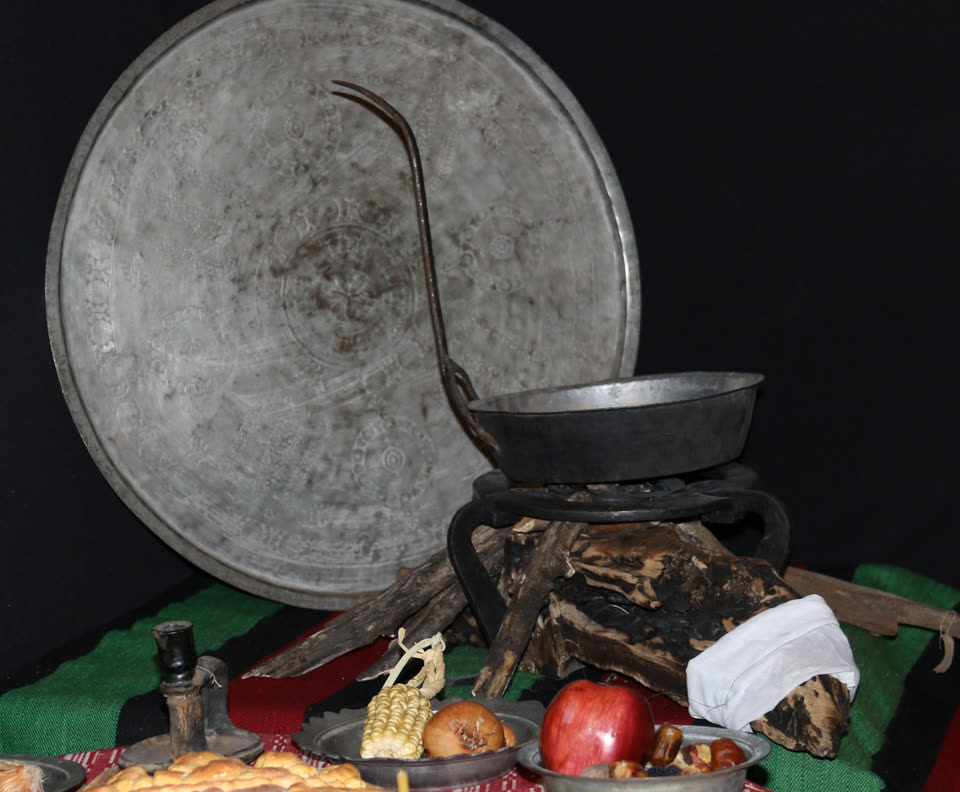
Бъдникът (the Christmas Eve log) — cut that same morning, from a tree that bears fruit
A large log keeps the hearth alight through Christmas Eve night. Two things are specified about it: it must have been cut that same day, and it must come from a fruit-bearing tree, so that the year ahead is fruitful too. The word бъдник carried the log into Bulgarian poetry — «На Бъдни вечер бъдникът гореше» — and it carries the loaf as well, which is the same word's third sense in the dictionary.
A lean table nobody gets up from, and it is not cleared until morning
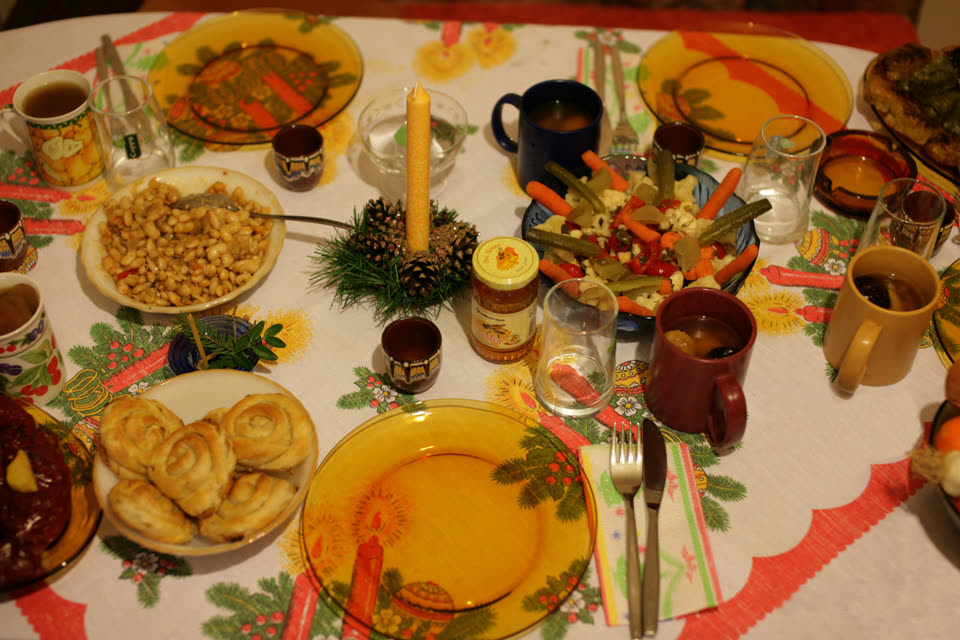
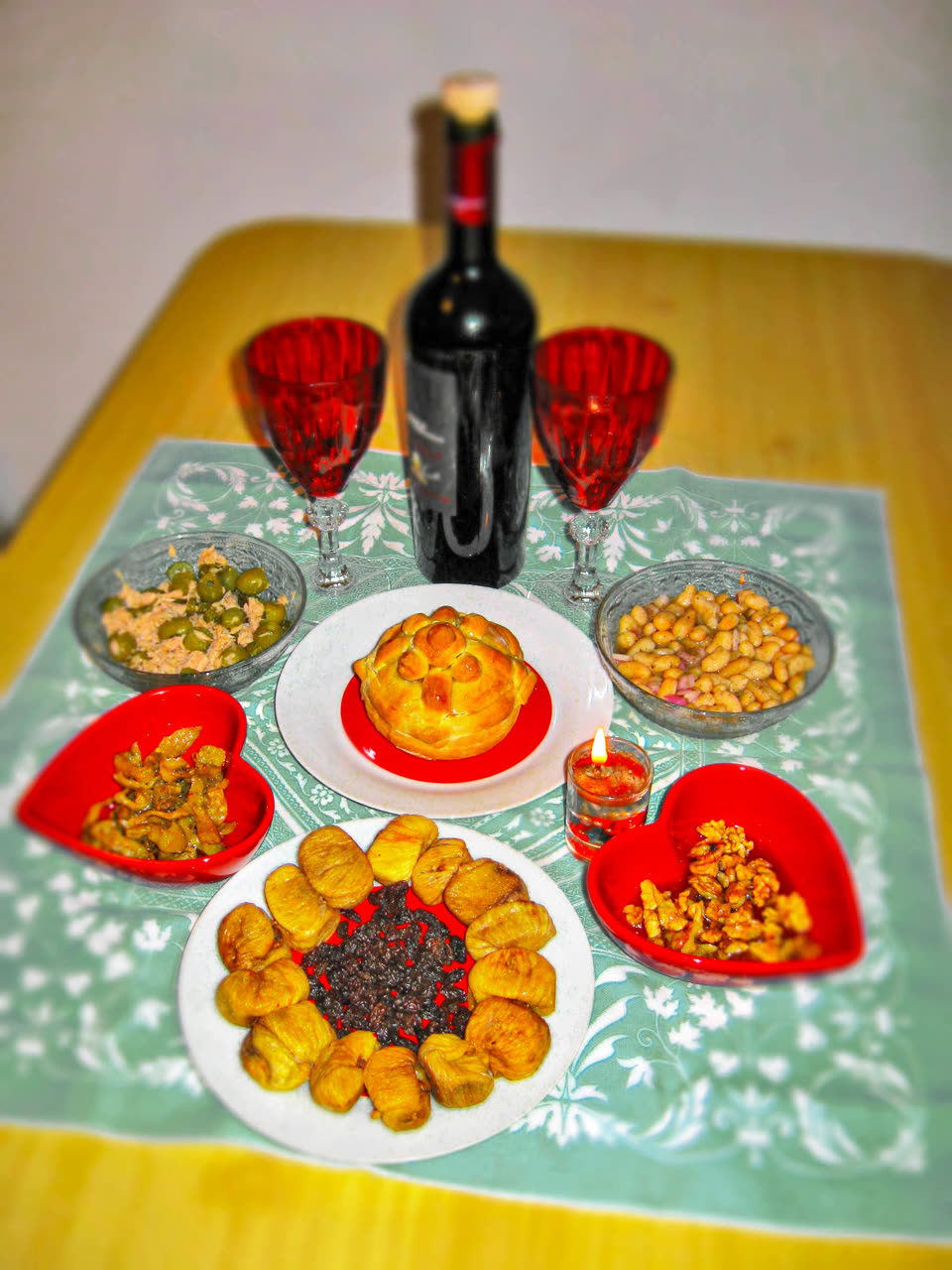
Everything on the Christmas Eve table is meatless, because it is the last day of the Nativity fast, and the number of dishes should be odd. Two rules govern the meal rather than the menu: nobody should rise from the table while it lasts, and the table is not cleared all night. In some households the food is set on straw, or straw is scattered underneath it.
Three ritual breads, and the water for them is carried in silence
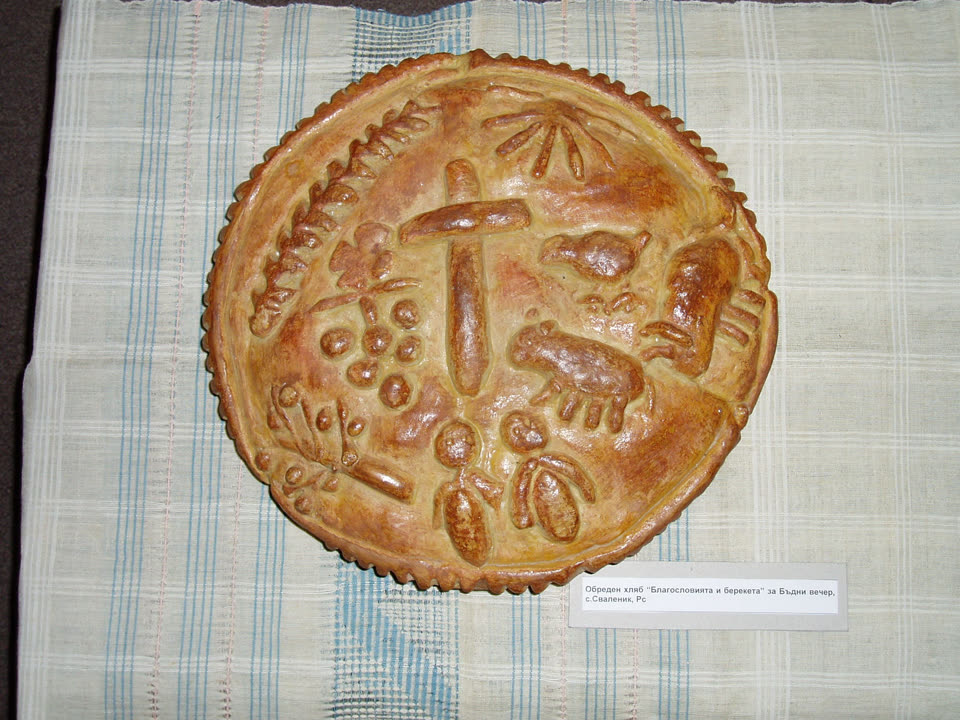
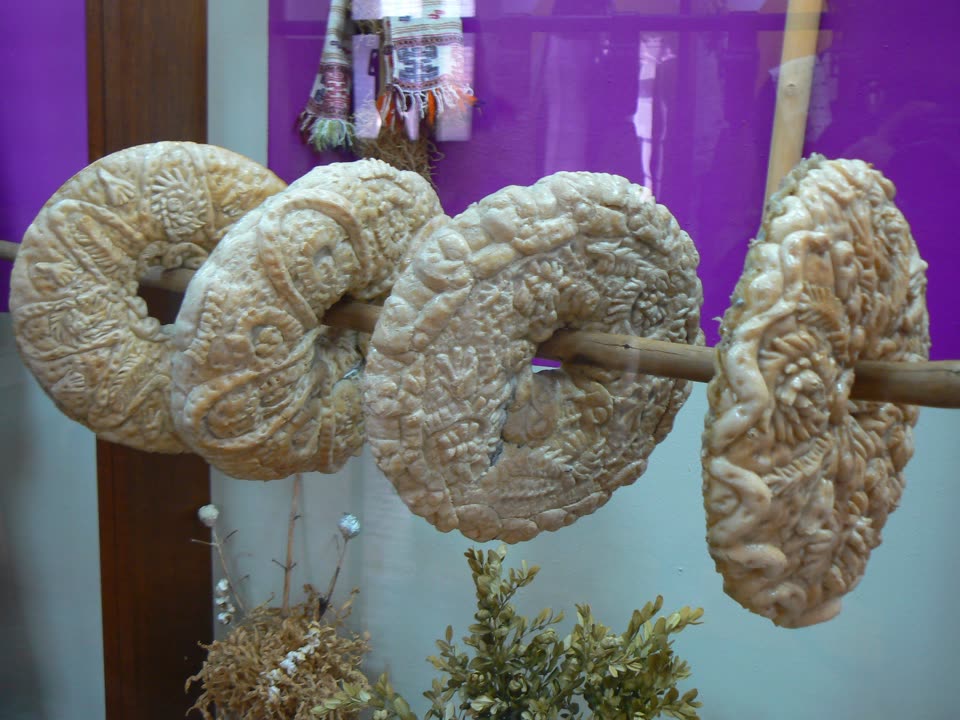
The first bread holds the coin, sometimes plain and sometimes marked with solar symbols; it is broken into pieces and a piece is set before the icon and high up in the house. The second is a пита modelled in relief with a plough, ears of wheat, a sheep and a sheepfold — the farm, in bread. The third are колаци, folded by the unmarried girls of the house and given to the carollers. The dough is made with мълчана вода (silent water), drawn from the well without a word spoken, and the flour is sifted at least three times through silk sieves. If an outsider got the piece with the coin, the householder had to buy it back so the luck stayed in the house.
Коледуване (the carol round) — and who goes out is where the sources part
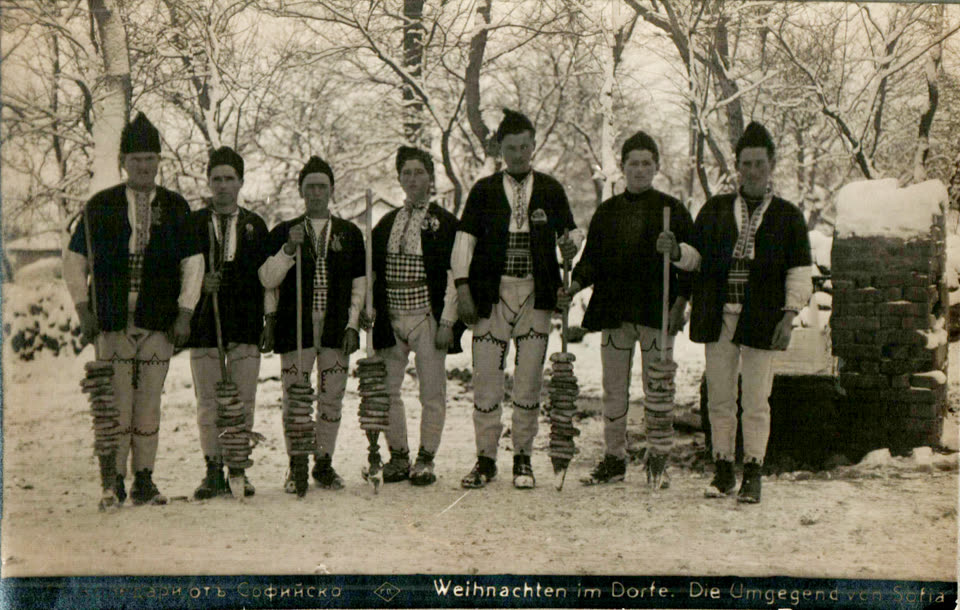
Carollers go from house to house through the night, singing for the health and prosperity of each household and paid in bread and coins. Who they are depends on whom you ask. The Academy dictionary defines a коледар as «момък или дете» — a lad or a child. Bulgarian National Radio's Turkish service describes groups made up of young men, and Dr Anelia Ovnarska calls them male carol singers. Иван Хаджийски, writing in the 1930s, recorded that the blessing rounds had once been walked by grown men, married men among them. The likeliest reading is that the custom changed hands over a century rather than that one of them is wrong.
The season opens on 20 December, not on Christmas Eve
Игнажден (St Ignatius's day) falls on 20 December and starts the Christmas season: the first visitor of that morning sets the luck of the house, and the ritual bread-making runs from Ignazhden to Christmas. The folk songs put the Virgin's labour in exactly that gap — «Замъчи се божа майка / от Игнажден до Коледа / да си роди млада бога» — so the five days before Christmas are counted as the days she laboured.
Сурвакане (the New Year tapping) — a cornel rod, and children where there were once married men
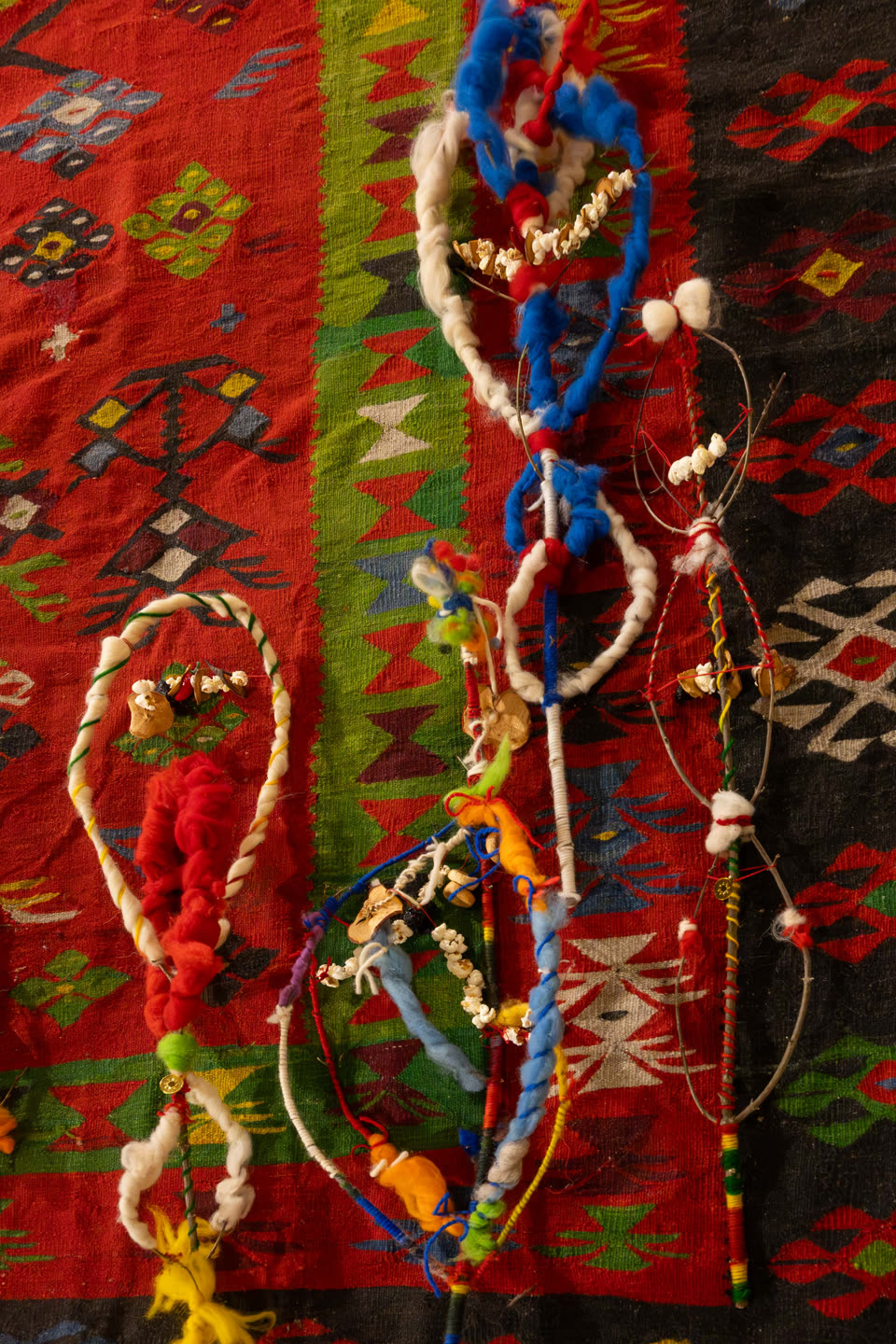
A сурвакница is «дрянова пръчка, обикн. украсена» — a cornel branch, usually decorated — and it is used to tap the backs of the household for health and good fortune. The literature has children arriving with them: «няколко деца със сурвакници нахълтаха в стаята ми». That is not how it always was. Иван Хаджийски recorded in the 1930s that the blessing rounds of Ignazhden and Survaki had once been walked by grown men, «дори женени», married men among them, which makes the child with a decorated stick the modern form of an adult's job.
Surova in Pernik keeps the old New Year, three weeks after Christmas
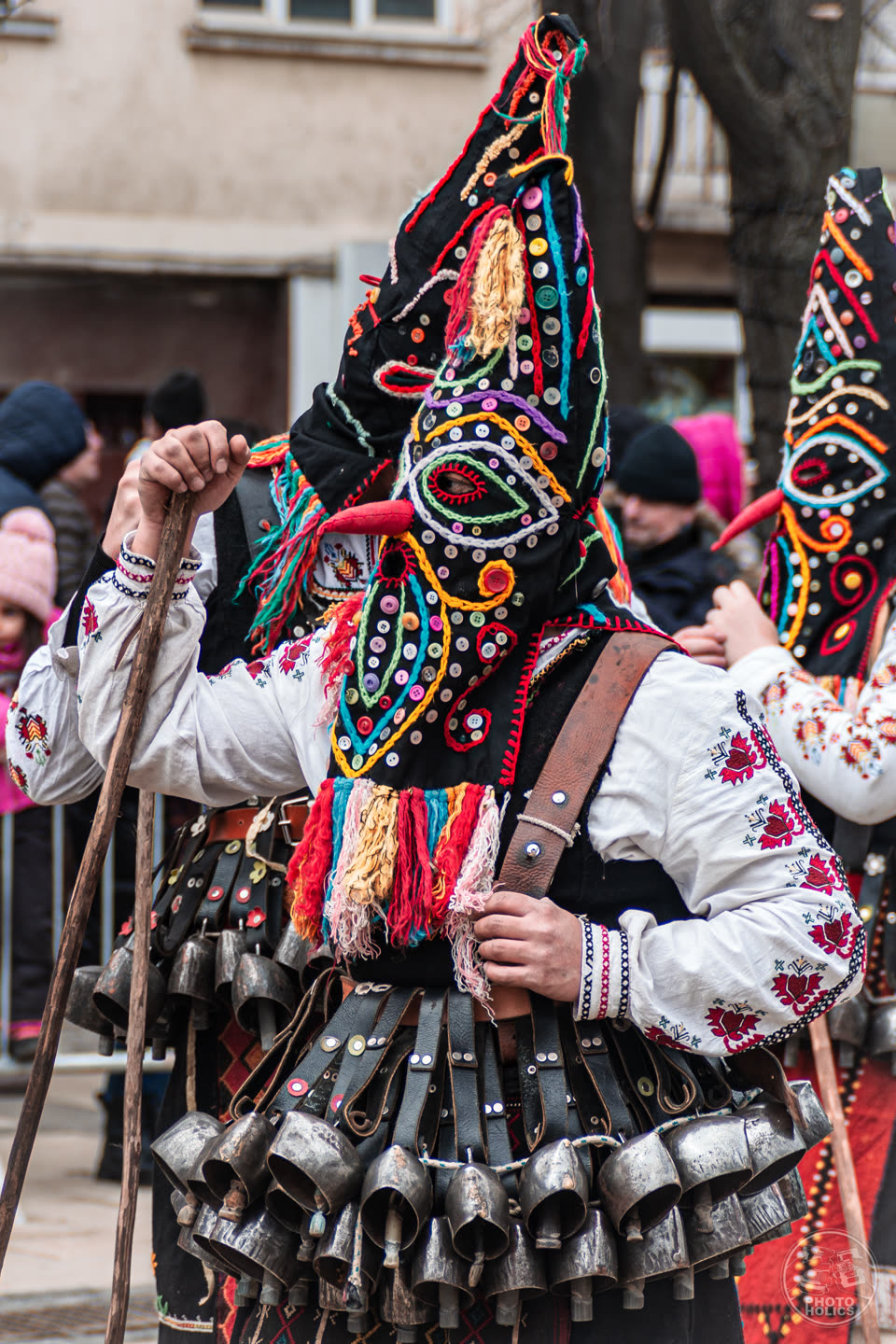
On 13 and 14 January the villages of the Pernik region hold a masquerade feast for the New Year by the old calendar, with masked survakari groups of men, women and children going from house to house. It was inscribed on UNESCO's Representative List in 2015. The church moved Christmas onto the new reckoning in 1968 and the village masquerade stayed on the old one, so the country keeps its Christmas with Europe and its midwinter masquerade thirteen days behind it.
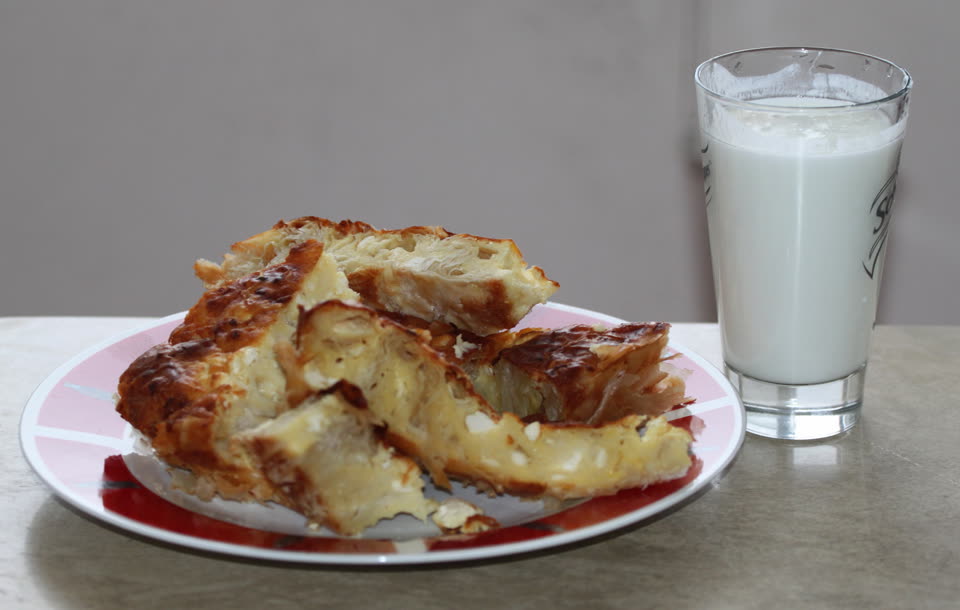
Badnik — the pita or banitsa with the coin in it Бъдник
The Christmas Eve loaf with a coin baked inside it, which the Academy dictionary gives as the third sense of бъдник itself: «Пита или баница с пара, която се прави за Бъдни вечер.» The same word names the log on the fire and the bread on the table. A folklore collection describes the meal beginning with it — the white погача broken open with the coin hidden inside — and whoever finds the coin has the luck of the year.
God's round bread, the most important of the three, dedicated to the house and to God. The women who kneaded it dressed in a new long shirt and recited blessings for the health and prosperity of the household while they worked. The Turkish service gives the decorated loaf another name again: коледен кравай (a Christmas ring-loaf).
Oshav — dried fruit, and the compote made from it Ошав
Plums, pears, apples and apricots cut and dried in the autumn, and the compote made from them in winter — one word for both the fruit and the drink. It is on the Christmas Eve table in the earliest descriptions of it, beside the beans, the walnuts and the honey.
Sarmi — stuffed leaves, and meatless on the night Сарми
Leaves rolled around rice or bulgur, and on Christmas Eve with no meat in them. In December they are often rolled from pickled cabbage rather than vine leaves.
Vareno zhito and varen bob — boiled wheat and boiled beans Варено жито и варен боб
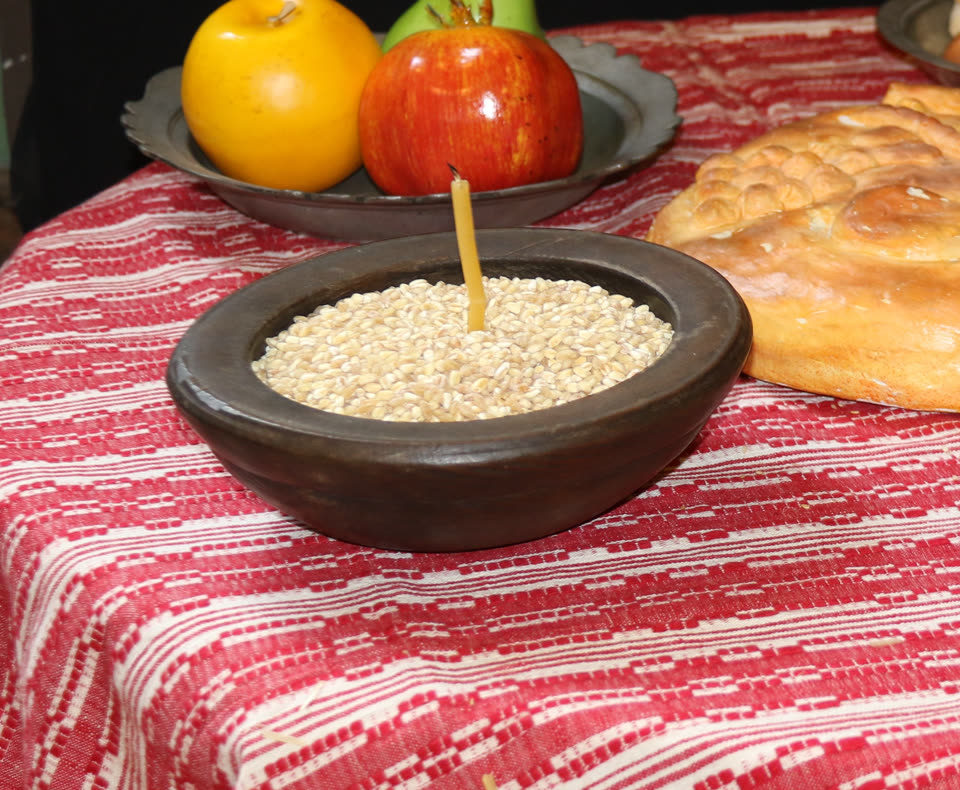
Boiled wheat and boiled beans, which the ethnologist describes as the obligatory pair: wheat, beans, sarmi and oshav, with garlic, onions, fresh fruit, walnuts and wine set around them. The wheat is old enough in the custom to stand in a poem about the burning бъдник — «и вкъщи пред погача, жито, сливи».
Widely repeated claims about Christmas in Bulgaria that do not survive
checking. Each one says what is actually the case, because a correction
with nothing in its place leaves you worse off than before.
Contradicted
Bulgaria is Orthodox, so Christmas there is on 7 January
What is actually the case. Bulgarian Christmas is 25 December and has been since 1968. The Holy Synod adopted the revised Julian calendar with effect from 20 December 1968, and the epistle announcing it says in as many words that Christmas would be kept on 25 December 1968. The 7 January Christmas belongs to the churches that did not make that change — the Russian, the Serbian, the Georgian, the Jerusalem patriarchate — and Bulgaria is not among them. The state settles it from the other direction: 24, 25 and 26 December are the statutory holidays, and 7 January is a working day.
Bulgaria switched to the Gregorian calendar in 1968
What is actually the case. What the church adopted was the revised Julian calendar, which is not the same instrument even though it agrees with the Gregorian on 25 December. The difference is the whole of Bulgarian Easter: the revised Julian calendar adds thirteen days to the fixed feasts «без да се променят датите на неподвижните празници», and leaves Pascha and the movable cycle to be reckoned as before. One church, two reckonings, on purpose. The civil Gregorian calendar is a separate and much earlier event — a law of 14 March 1916, fifty-two years before the church followed.
The Christmas Eve dishes have to be an odd number, seven, nine or eleven
What is actually the case. The odd number is real and widely kept, but it is not a count anybody polices. Dr Anelia Ovnarska, interviewed by the state broadcaster in 2024: «It is widely believed that the dishes should be an odd number of 7 or 9. But the number 12 is often mentioned.» She reads the convention as abundance rather than arithmetic — «this oddness should be viewed as something countless, i.e. the more, the more» — and twelve, which is even, is explained by the twelve months of the year. The same broadcaster's Turkish service had printed the rule as «7,9 veya 11 yemek türü» twelve years earlier, so the claim and its correction are both Bulgarian National Radio.
Дядо Мраз was invented by the communists and imposed on Bulgaria in place of Дядо Коледа (Grandfather Christmas)
What is actually the case. A Bulgarian Дядо Мраз (Grandfather Frost) is in print from 1910, in Elin Pelin's story «Дядо Мраз и внуците му», with a wife called Виелица (Blizzard) and three grandchildren named for the seasons — Пролет, Лято и Есен (Spring, Summer and Autumn) — with winter missing because he is winter; by August 1932 the name is a trademark for winter clothing. What arrived after 1944 was not the figure but his job. Bulgarian National Television's fact-checkers rate the mirror-image claim — that he was always Bulgarian, so the Soviet story is a myth — as manipulative: he did exist before 1944, «но образът му е различен от този на съветския му съименник, който раздава подаръци на Нова година». The present-giving at New Year is the imported part, and that role was there to be given because Christmas had been pushed out of public life.
«На попова Коледа» means never — and the date it is built on is real. The dictionary gives Попова Коледа as a dialect name for the day before Epiphany, 5 January, so the priest's Christmas is a day that exists and simply is not Christmas. The same entry records «от Бъдни вечер до Коледа» for a very short time indeed, short enough to be used as a curse: «Да живееш от Бъдни вечер до Коледа.»
The reason the Holy Synod gave for moving Christmas is not the one anybody guesses. Under the old reckoning the civil New Year fell before church Christmas, so the biggest feast night of the year landed inside the Nativity fast. The second of the four stated grounds is to remove «тая несъобразност Нова година да се чествува преди Рождество Христово, при което се нарушава Коледния пост» — "that incongruity whereby New Year is celebrated before the Nativity of Christ, and the Nativity Fast is thereby broken". The calendar was changed to stop people breaking the fast.
The epistle announcing the new calendar was read aloud from the pulpits on 28 August 1968, the feast of the Dormition — four months before the calendar it announced came into force. It also names the four churches that had objected when the revised Julian calendar was drawn up in 1923: Jerusalem, Antioch, Alexandria and Cyprus.
Christmas Eve has two older names that survive in dialect: Малка Коледа (little Christmas) and суха Коледа (dry Christmas). The second is a fair description of a day with no fat, no meat and no milk on the table.
The folk song that puts the Virgin's labour between Ignat's day and Christmas is printed twice in the Academy dictionary, under two different headwords, from two different volumes of the national folklore collection — СбНУ XLVI, 43 and СбНУ XI, 7. English pages carry the idea as a charming legend with nothing attached to it; it was collected, published and indexed.
Every claim carries its own citation. They are collected below, so you
can see what the page rests on and how much of it comes from where.
Bıdni veçer - Bulgar ailesinin kutsal bayramı — Bulgaristan Radyosu, Türkçe yayın — Българско национално радио, турска редакция; eklenme 21.12.2012, 11:47. Retrieved 2026-11-10.The log is specified twice over: «Bıdnik adı verilen ve tüm gece ocakta ateşi tutacak olan büyük odun hazırlanır. Bu odun parçası aynı gün kesilmiş olmalı. Aynı zamanda meyve veren ağaçtan olması gerek ki, yeni gelecek sene verimli ve bereketli olsun.» The table: «Geleneklere göre, bu akşam sofradaki etsiz yemeklerin sayısı tek rakamlı olmalı. Yemek boyunca sofradan kimse kalkmamalı ve sofra gece boyunca kaldırılmamalıdır.» The dishes named are «lahana turşusundan pilavlı sarmalar, haşlanmış kuru fasulye, ekin bulgur, kabak tatlısı, oşaf ve içinde kısmet parası olan bir ekmek», the decorated loaf is «Koleda kravayı», the carollers are «genç erkeklerden oluşan Koledari grupları», the two dialect names are «Suha»(kuru) and «Malka Koleda», and the divination is «Bıdni veçer'de kar varsa, yazın arılar bol olacak. Hava sisli ise, bütün sene öyle olacak.»
A gift for a gift – ritual breads and an odd number of dishes on Christmas Eve — Radio Bulgaria in English, Българско национално радио, Tuesday 24 December 2024, 02:05 — interview with ethnologist Dr Anelia Ovnarska (д-р Анелия Овнарска). Retrieved 2026-11-10. archived 9 February 2025Ovnarska names three breads: «The first type is a bread which can sometimes be without decoration, quite ordinary, sometimes it can be made with solar symbolism, but this is the bread in which the lucky charm, the coin, is placed»; a пита «that has a rich plastic decoration [...] There we have images of a plow, ears of wheat, a sheep, a sheepfold and other animals»; and «the special so-called kolatsi, or a type of folded bread that was given to the koledari». The dough is made «with silent water, brought in complete silence from the well, water that no one drank from and no one touched», the flour «carefully sifted at least three times through silk sieves», and «if a person from outside the family got the piece with the coin, the owner had to buy it back so that the good luck would remain in the house».
Честито Рождество Христово! — БНР Радио България, Българско национално радио, 25 декември 2023, 05:25. Retrieved 2026-11-10.The formal greeting as a broadcaster's own Christmas address: «Честито Рождество Христово, скъпи приятели!»
Весела Коледа и щастлива Нова година от Радио Пловдив — БНР Радио Пловдив, Българско национално радио, 23.12.21, 11:10. Retrieved 2026-11-10. archived 2 April 2022One page carrying both forms, the popular one in the headline and the churchly one in the text: «Радио Пловдив желае на всичките си слушатели, читатели и приятели Честито Рождество Христово и щастлива Нова 2022-а година!»
Проверка на факти: Дядо Мраз или Дядо Коледа носи подаръците преди 9 септември 1944? — БНТ Новини, проверка на факти, Българска национална телевизия. Retrieved 2026-11-10. archived 23 December 2024The verdict on the viral claim that Дядо Мраз is the authentic Bulgarian figure: «Нашата проверка на факти показа, че твърдението е манипулативно. Дядо Мраз действително съществува в България и преди 1944, но образът му е различен от този на съветския му съименник, който раздава подаръци на Нова година.»
Послание № 5953 на Св. Синод на Българската православна църква, 18 юли 1968 г., София — Българска Патриаршия, Св. Синод — подписано от Кирил, патриарх български, и членовете на Св. Синод; пълен текст, препечатан в budiveren.com. Retrieved 2026-11-10. archived 13 June 2026The epistle states the decision in one sentence: «на 22 декември реши: Въвежда от 20 декември 1968 година поправения юлиански календар, тъй че Коледа ще се празнува на 25 декември 1968 година, Нова година ще се празнува и църковно на 1 януари и т. г.» The calendar it adopts is defined earlier in the same document, and the definition is what exempts Easter: the 1923 commission at Constantinople «прибавила 13 дни, без да се променят датите на неподвижните празници», while «А Пасхата и свързаните с нея подвижни празници решила да се празнуват на дати, определяни както дотогава, съобразно църковните установления.»
Речник на българския език (онлайн), статия „КО̀ЛЕДА“ — Институт за български език „Проф. Любомир Андрейчин“, Българска академия на науките. Retrieved 2026-11-10. archived 7 September 2026The headword prints with its stress on the first syllable, КО̀ЛЕДА, and the definition puts the church and the folk layer in one sentence: «Християнски и народен празник на 25 декември, посветен на рождението на Исус Христос, по време на който се изпълняват определени църковни обреди и народни ритуали за здраве, плодородие, мир, благоденствие и др.; Рождество Христово.» The entry also carries the dialect forms «Малка (суха) Коледа. Диал. Денят преди Коледа.» and «Попова Коледа. Диал. Денят преди празника Богоявление, 5 януари.», the ironic «На попова Коледа. Диал. Ирон. Никога.», and a curse: «Да живееш от Бъдни вечер до Коледа.»
Речник на българския език (онлайн), статия „БЪ̀ДНИК“ — Институт за български език „Проф. Любомир Андрейчин“, Българска академия на науките. Retrieved 2026-11-10. archived 23 November 2023«Пън, който гори в огнището през нощта срещу Коледа.» 2. «Като собств. Бъдни вечер.» 3. «Пита или баница с пара, която се прави за Бъдни вечер.» Петканова: «На Бъдни вечер бъдникът гореше / и вкъщи пред погача, жито, сливи / отправяхме молитвите горещи.»
Речник на българския език (онлайн), статия „ОША̀В“ — Институт за български език „Проф. Любомир Андрейчин“, Българска академия на науките. Retrieved 2026-11-10.Two senses: «Нарязани и изсушени сливи, круши, ябълки, кайсии и др.» and «Компот от тези сушени плодове.» The second sense is illustrated with a Christmas Eve table from a folklore collection: «Вечерята започваше с разчупване на бялата погача, със скрита в нея пара.. После следваха обичайните постни гозби: фасул,.., ошав, орехи, мед.» — СбЦГМГ, 153-154.
Речник на българския език (онлайн), статия „КОЛЕДА̀Р“ — Институт за български език „Проф. Любомир Андрейчин“, Българска академия на науките. Retrieved 2026-11-10. archived 7 September 2026The definition is broader than the festival accounts: «Момък или дете, което ходи да коледува.» The entry's citations include a newspaper of 1927: «Сутринта рано камбаните бият, старите отиват на черква, рано отговяваме, идват коледари, пеят, припяват.» — Р, 1927, бр. 237, 1.
Речник на българския език (онлайн), статия „ИГНА̀ЖДЕН“ — Институт за български език „Проф. Любомир Андрейчин“, Българска академия на науките. Retrieved 2026-11-10.«Християнски празник – денят на св. Игнатий, 20 декември.» The entry carries the folk song of the Virgin's labour, «Замъчи се божа майка / от Игнажден до Коледа / да си роди млада бога» — Нар. пес., СбНУ XI, 7 — and Иван Хаджийски on who used to walk the blessing rounds: «Игнажден (Полязване) и Суроваки бяха двата празника на благословиите. Някога полязниците и сурвакарите били възрастни мъже, дори женени.» — Бит и душевност на нашия народ I, 51–52.
Речник на българския език (онлайн), статия „сурвàкница“ — Институт за български език „Проф. Любомир Андрейчин“, Българска академия на науките. Retrieved 2026-11-10.«Дрянова пръчка, обикн. украсена, с която се сурвака; сурвачка.» Cornel wood specifically, and the entry's citation is Алеко Константинов: «Чук, чук, чук! — и с чукането заедно скръцна вратата и няколко деца със сурвакници нахълтаха в стаята ми.»
Кодекс на труда, чл. 154 — Официални празници — Народно събрание на Република България; консолидиран текст в lex.bg. Retrieved 2026-11-10. archived 5 August 2025The article lists «24 декември - Бъдни вечер, 25 и 26 декември - Рождество Христово» among the official holidays, so Christmas Eve is a statutory day in its own right. Since 2017 ал. 2 adds: «Когато официалните празници по ал. 1, с изключение на Великденските празници, съвпадат със събота и/или неделя, първият или първите два работни дни след тях са неприсъствени.»
България си има Дядо Мраз още преди съветския белобрад старец — Регионален исторически музей — Хасково, блог, 30.12.2019 (обновено 14.04.2020), Милен Вълчев. Retrieved 2026-11-10. archived 16 June 2025The museum dates the figure and names his household: «Българският Дядо Мраз броди по заснежените пътища на страната още от 1910 г. Тогава за първи път се появява в българската литература в разказа на Елин Пелин – „Дядо Мраз и внуците му“.» — «Има си даже съпруга – Виелица, и внуци – Пролет, Лято и Есен.» Дядо Коледа is in print by 1934 and carries a basket rather than a sack: «Дядо Коледа също го има и носи подаръци, но пък не са в чувал в „Дядо Коледа дойде“ на Калина Малина (1934)» — «носи цял кош армагани». On how little either figure mattered to children then: «Двамата приказни герои обаче не са били много популярни сред децата до 1944 г. Във вестниците и списанията има много снимки на коледни елхи, в това число и от детски градини, но подаръците се раздават от жени.» A winter-clothing trademark appears «в рекламно каре публикувано в сп. „Индустрия и търговия“ от август, 1932 г.»
By permission
Not every picture here is under a public licence. These were given, by the
people who hold them, for this page.