A synthesised voice — not a recording of a person — saying Mutlu Noeller
in tr-TR.
The ordinary Turkish phrase, and it is worth knowing that the word it is built on is narrower in Turkish than in English. The state dictionary defines Noel as «Hristiyanların her yıl 25 Aralık'ta Hz. İsa'nın doğum gününü kutladıkları yortu» — the feast Christians keep on 25 December — and gives yılbaşı a separate entry of four words: «Ocak ayının birinci günü», the first day of January.
So wishing somebody mutlu yıllar at the end of December and wishing them mutlu Noeller are not the same wish, and most of the country means the first.
The greeting of the largest Christian community in Turkey, said on 6 January rather than on 25 December. The Istanbul Armenian press prints it in Turkish spelling and gives the sense beside it: «Kristos Dzınav Yev Haydnetsav (Mesih doğdu ve belirdi)» — Christ is born and is revealed.
The two halves of it are the two halves of the feast. Armenians keep the Nativity and the Theophany as one day, so the greeting names both the birth and the showing.
Turkey has a gift bringer and he does not come at Christmas. Noel Baba carries his name from the Christian feast and his working night from the civil calendar: presents are given at Yılbaşı, on 31 December and 1 January, which is the day the law makes a holiday.
He is also, by every Turkish account, the same man as the bishop of Myra and not the same figure at all. The saint's own feast is 6 December and is kept at Demre by Orthodox visitors; the red-suited figure who brings presents in Ankara on New Year's Eve arrived from Western Europe in the twentieth century.
Noel Baba is from here, and the town has twice argued about which of him to put in the square
The bishop behind Santa Claus was born and worked in what is now southern Turkey. The Ministry of Culture's own museum page puts it plainly: «Patara'da doğup Psikoposluk yaptığı Myra'da hayata gözlerini yuman Aziz Nikolaos, nam-ı diğer “Noel Baba”» — born at Patara, bishop at Myra, and it is at Myra, today's Demre in Antalya province, that he is believed to have died.
Two official Turkish pages give his dates and they do not agree. The ministry has him born in 300 and dead in 365; the Demre district governorship has him born in 243, settling at Myra in 285, elected bishop the same year, and buried in 326. Neither cites the evidence behind its numbers. His feast day is 6 December and that is not in dispute.
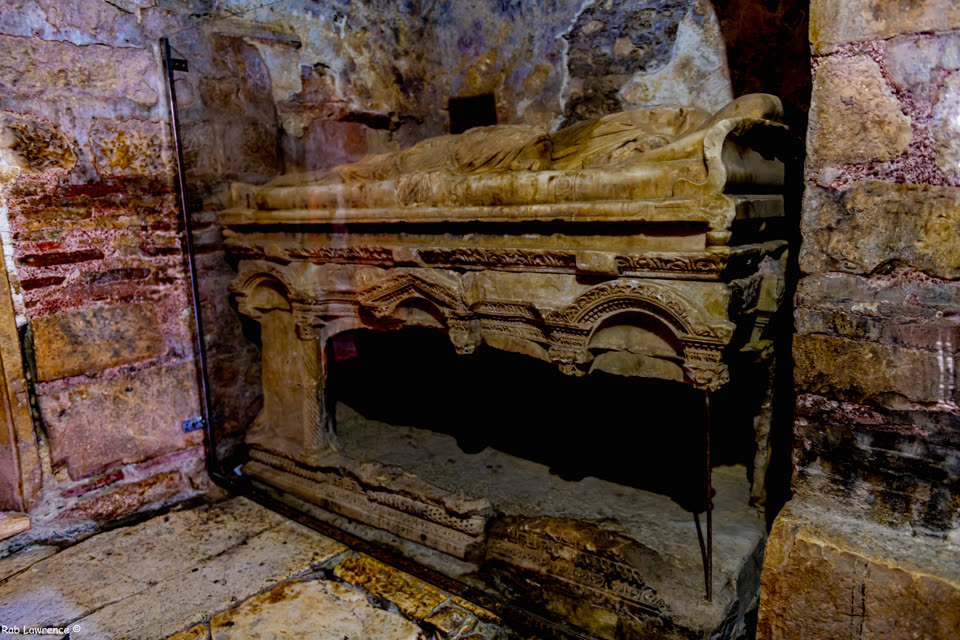
What happened to the body is told from the Turkish end in a single word. The governorship's account: «Aziz Nikolas'un mezarı, kilise içerisinden 1087'de Bari'den gelen tüccarlar tarafından soyulmuş ve kemikleri çalınmıştır» — the tomb was robbed by merchants who came from Bari in 1087 and the bones were stolen. The ministry's page carries the same framing as a heading, «ÇALINAN KEMİKLERİ BARİ'YE GÖTÜRÜLDÜ», his stolen bones were taken to Bari. What remains of them is shown at the Archaeological Museum in Antalya.
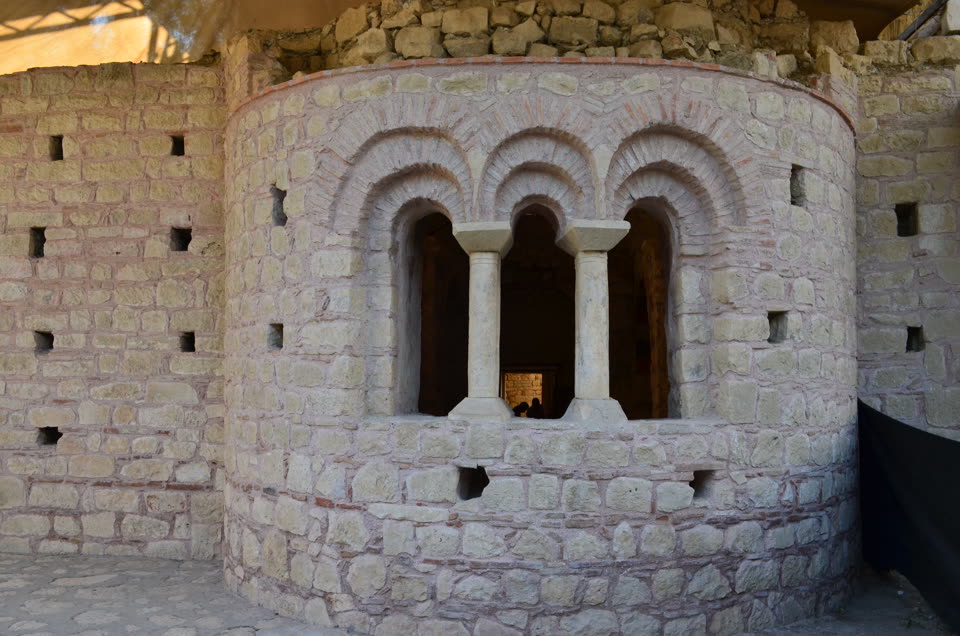
The church was lost for centuries under the floods of the Demre river and dug out again in 1956. Every 6 December, says the governorship, a large liturgy is held there for visitors of the Orthodox confession who come for the anniversary of his death. The museum has been open since 1994.
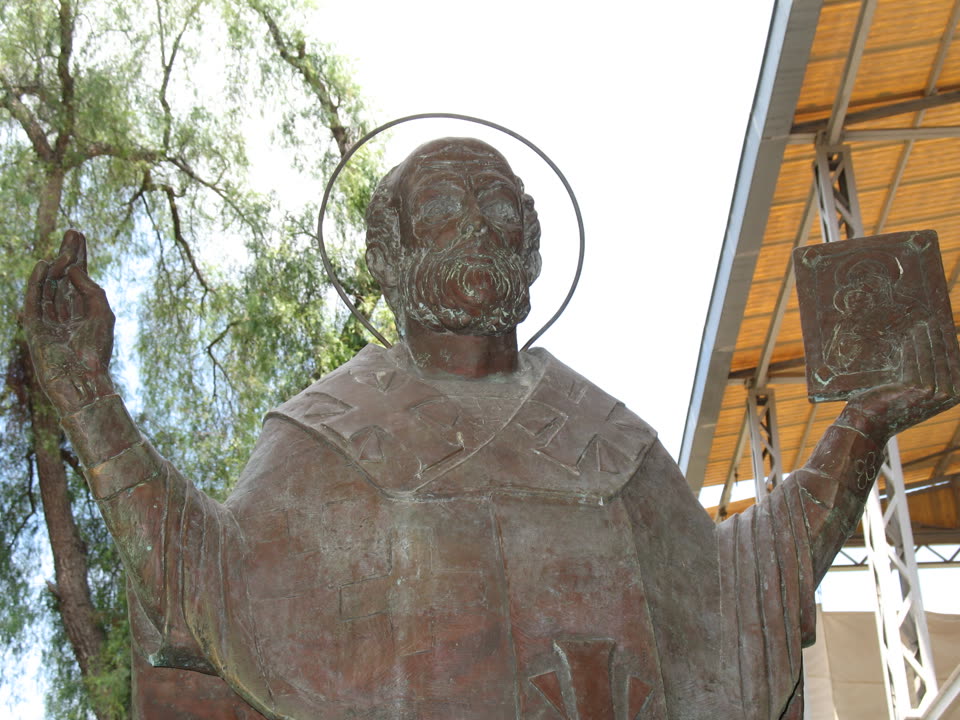
And the square outside has had an argument in it. In 2005 the mayor replaced a bronze statue of the saint with what the BBC calls «a Disney-like plastic cast of Santa»; a year later an American reporter found the new figure still standing and noted that Russian diplomats had criticised the officials who swapped out «a bronze statue of a haloed Saint Nicholas, holding a Bible». The bronze was later put back, and Santa moved across the road.
Three calendars, four languages, and a service in a cave
Christmas in Turkey is kept by Christian citizens and by foreigners living there, in churches that do not agree on the date and do not share a language.
In Istanbul the Greek Orthodox keep it «bazı kiliselerde 24 Aralık akşamı, bazı kiliselerde de 25 Aralık sabahı» — in some churches on the evening of the 24th, in others on the morning of the 25th. The day before, the pupils and staff of the Zoğrafyon Greek high school walk through Beyoğlu singing the Kalanda, with the headmaster playing the accordion. At Saint Antoine on İstiklal the Mass is said in three languages, Latin, English and Turkish, and the congregation is Kurdish, Turkish, Arab and Armenian together; one of them told the Armenian weekly he does not speak Armenian, his mother tongue, and prays in Turkish and Kurdish instead.
In Mardin the Christmas service was held in the Protestant church, with hymns in Kurdish and Turkish, led by a pastor from Diyarbakır. In Mersin, in İskenderun, in Antakya there were Orthodox liturgies. At Catholic churches in Istanbul the congregation is not only Christian: a Turkish daily reporting the 2024 Christmas Eve masses noted that foreigners living in the city came, Russians especially, and that «Müslümanlar da büyük ilgi gösterdi, mum dikip yeni yıl için dilek tuttu» — Muslims took a strong interest too, lighting candles and making wishes for the new year.
And in Antakya the church itself is gone. The Orthodox church there was destroyed in the earthquakes of 6 February 2023, so the 2025 liturgy was held instead in the cave church of St Peter above the city, led by two of the Antakya clergy, and afterwards a cake was cut. The congregation gathers at the cave on 24 December. Their priest told a news agency that since the earthquakes the city has emptied and the Christian community has fallen «from 350 families to fewer than 90».
Surp Dzınunt: the Armenian 6 January, and why it is not the Julian Christmas
The Armenian Apostolic Church keeps Christmas on 6 January, and the reason has nothing to do with the Julian calendar. It is one feast for two events — the Nativity and the Theophany, the birth and the showing — which is what the greeting of the day says: Kristos Dzınav Yev Haydnetsav, Christ is born and is revealed.
Because the baptism is half of the feast, water is blessed at the liturgy. The Istanbul Armenian weekly describes it on the morning itself: «İsa Mesih'in Ürdün Nehri'nde vaftiz edilmesini temsilen, kiliselerdeki ayinde su kutsanıyor ve ‘Çırorhnek' töreni yapılıyor» — representing the baptism in the Jordan, the water is blessed and the Çırorhnek ceremony is performed.
The Greek Orthodox churches of Istanbul keep 6 January too, and keep it as something else: Fota, the Epiphany, marked in the churches of the seaside districts, with Christmas itself already done on 24 December.
Why the dates parted is told two ways by two church-side accounts and they do not contradict each other. An Armenian bishop interviewed by a Turkish news site puts the joint feast first, resting it on Luke's statement that Christ was about thirty when he was baptised. A columnist in the Armenian weekly tells it from the other end: in the fourth century the Western Roman Church moved the symbolic birthday to 25 December to weaken a pagan feast kept on that day, and the Armenian Church, holding to the older rite that kept birth and baptism together, did not follow. The second account is a column by Dença Değirmenci, published in Agos on 31 December 2024.
Yılbaşı: the tree, the gifts and Noel Baba belong to New Year, and the confusion is old enough to be studied
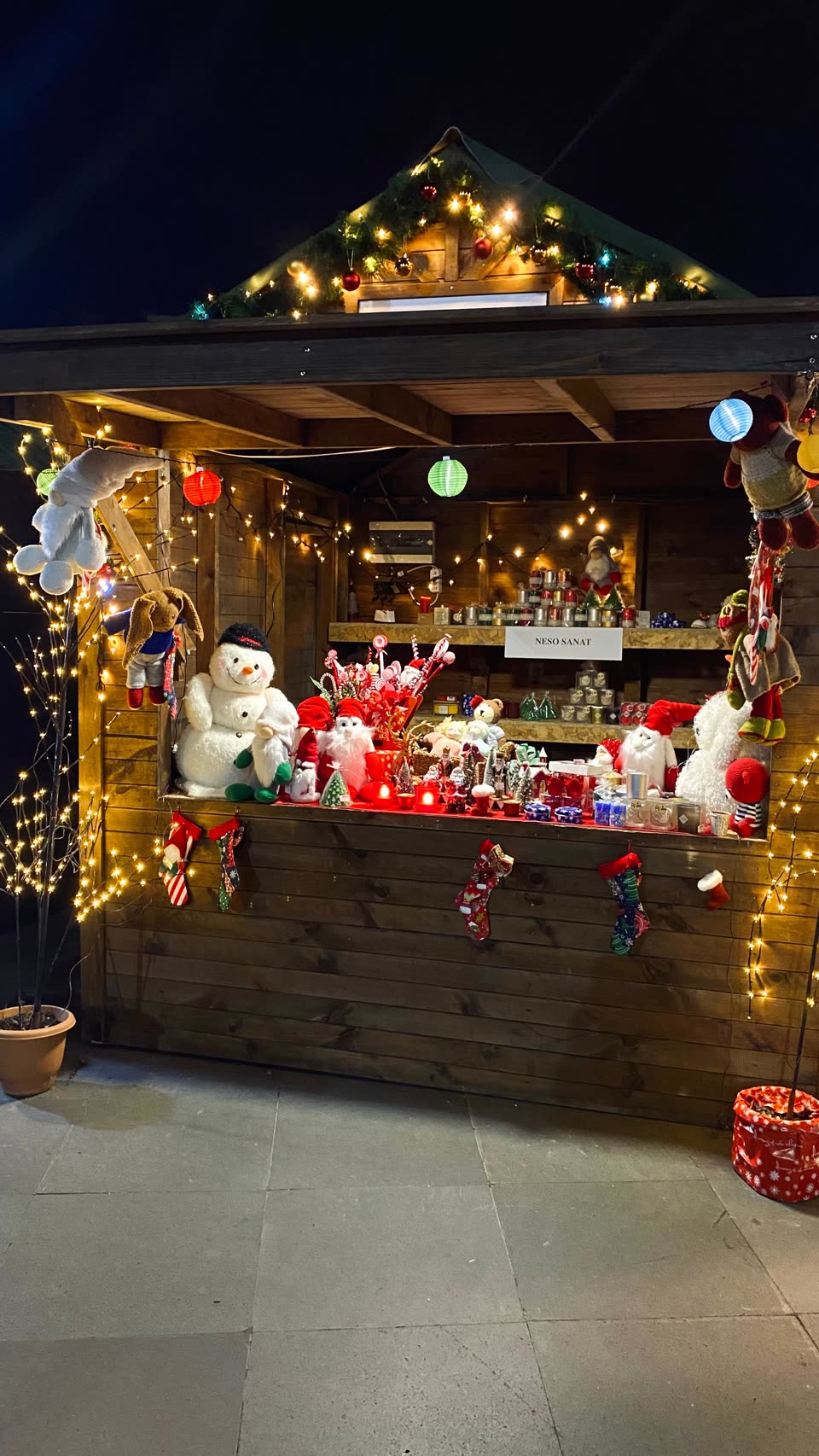
The festival most of Turkey keeps in the winter is Yılbaşı, on the night of 31 December, and it carries almost everything an outsider would call Christmas: a decorated fir, Noel Baba, presents, a turkey, a family table.
A Turkish theology journal treats that overlap as a mistake worth correcting, and it names it as common: «Türkiye'de bazı kesimler tarafından Noel ve yılbaşı kavramlarını aynı olarak kabul edilmektedir. Ancak bu görüş yanlıştır.» Its reason is that Noel is a religious act — Christians going to church on 25 December and on 6 January — while New Year is the whole world marking a new year independently of that. The same abstract then concedes the other half: New Year in Turkey is «tamamen seküler bir olgu da» değil, not an entirely secular thing either, precisely because Noel Baba, the fir tree, the turkey, the gathering and the giving of presents all happen at it, and that is where the confusion comes from.
The civil calendar arrived with the Republic. The Gregorian calendar took effect on 1 January 1926 as part of the reforms of the Atatürk period, and a 1987 study in the journal of the Turkish Historical Society describes the New Year tree and Noel Baba spreading afterwards among Muslim Turks in the big cities — Ankara especially — as a cultural borrowing from Western Europe rather than as a survival of anything.
That study is also where the best-known Turkish version of the story is refused. Tracing the New Year Noel Baba back to the saint of Myra, or the tree back to a Hittite goddess or to the tree cults of the Turkic peoples of Central Asia, does not, it says, explain the custom that actually exists.
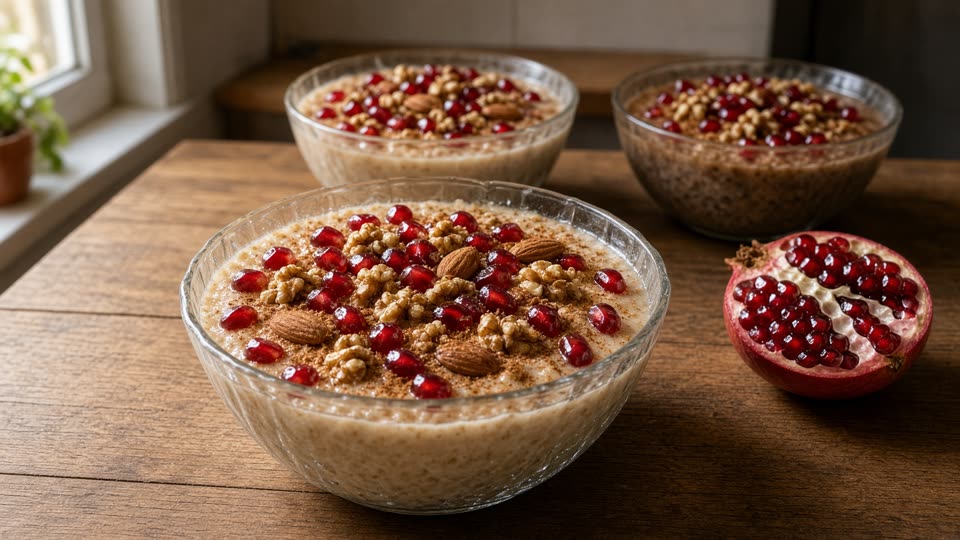
A sweet wheat pudding, eaten by Armenian families for Christmas on 6 January and carried round to neighbours in cups. The name is Armenian for «sweet soup».
It belongs to the same family as the Muslim aşure that Turkish kitchens make in Muharrem: boiled whole wheat, sweetened, and strewn on top with pomegranate seeds and nuts. The timing is what makes it Christmas rather than anything else — the columnist who describes it puts the season exactly: for practically all the Armenian communities of Istanbul, the last week of December and the first week of January is anuş abur time.
It is not only for the 6th. Families who keep the Catholic Christmas make it for 24 December and eat it on New Year's Eve instead.
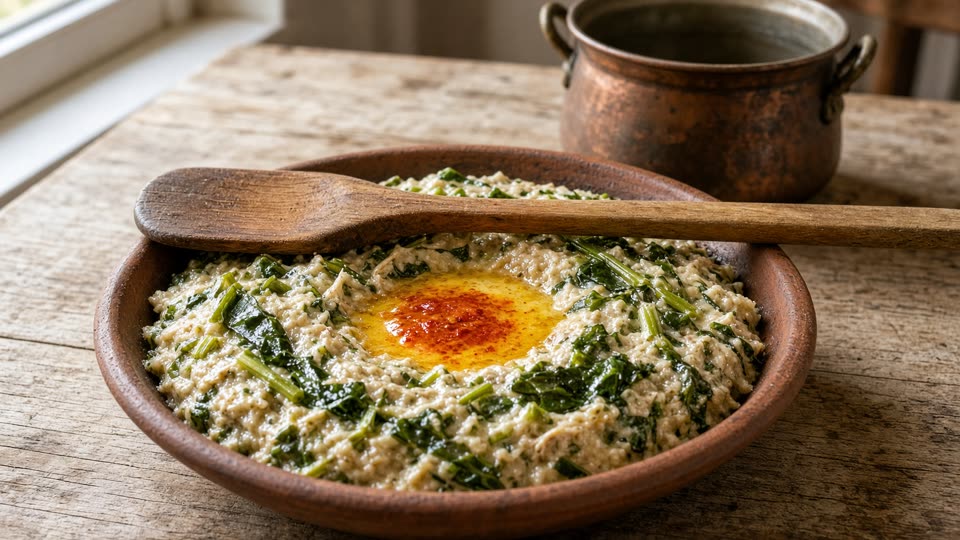
Harisa with chard pazılı harisa (keşkek) · «Mariamacaş»
Wheat and meat pounded together for hours into a thick porridge — the dish Turkish has as keşkek and Armenian as harisa — made for Christmas with chard through it.
Among the Armenians of Sasun it had another name: Mariamacaş, the Virgin Mary's dish. The Armenian weekly lists it among the things a Christmas table could not do without.
The verb it is described with is the reported past, which in Turkish marks something told rather than witnessed. So this is a remembered regional custom of Anatolian Armenian communities rather than a claim about what is cooked in Istanbul this year.
Widely repeated claims about Christmas in Turkey that do not survive
checking. Each one says what is actually the case, because a correction
with nothing in its place leaves you worse off than before.
Oversimplified
Santa Claus is Turkish
What is actually the case. The bishop is. The man in the red suit is not, and the distance between them is about fifteen hundred years and an ocean.
Nicholas was born at Patara and was bishop of Myra, both in what is now Antalya province, and the Turkish state says so on its own museum page. His feast is 6 December and Orthodox visitors keep it at Demre every year.
The figure who brings presents is a later invention somewhere else. A historian quoted by the BBC describes him arriving in nineteenth-century America «no longer as a Christian bishop but as an elf of sorts, something mischievous», then being fixed by the poem The Night Before Christmas and by cartoonists; Coca-Cola's advertising from the 1930s entrenched the look rather than creating it.
And the Turkish version of the claim was refused by a Turkish scholar forty years ago. Writing in the journal of the Turkish Historical Society in 1987, Aygen Erdentuğ argued that deriving the Noel Baba of the Turkish New Year from the saint of Myra — or the tree from a Hittite goddess, or from the tree cults of Central Asia — is not enough to explain the custom that exists, which she treats as a borrowing from Western Europe.
What is actually the case. Something real is being seen and it has the wrong name on it. Fir trees, presents, Noel Baba and a family dinner are all genuinely there in a Turkish December — on 31 December, for New Year, which is the holiday the law gives.
A Turkish theology journal calls the conflation a mistake in as many words, and then concedes why it keeps happening: New Year in Turkey is not an entirely secular occasion either, because the tree, the turkey, the presents and Noel Baba were all carried over into it.
Christmas itself is kept by the country's Christians — Catholics and Greek Orthodox on 24 and 25 December, Syriac Orthodox on the 25th, Armenian Apostolic Christians on 6 January — in churches, in four or five languages, and with no day off.
What is actually the case. For the largest Christian community in the country it is on 6 January, and that is not a Julian calendar date.
Armenian Apostolic Christians keep Surp Dzınunt, the joint feast of the Nativity and the Theophany, on 6 January, with the water blessed at the liturgy for Christ's baptism. The Greek Orthodox also hold something on 6 January — Fota, the Epiphany — but they have already kept Christmas on 24 December.
So three dates are in use in one country: 24 and 25 December for Catholics and Greek Orthodox, 25 December with the Yaldo rites for Syriac Orthodox, and 6 January for Armenians.
Santa Claus comes from Turkey and gets no day off there. Turkey's holidays are fixed by one law with a closed list — the national day on 29 October, three official festivals in April, May and August, the two religious festivals, and then 1 January, 1 May and 15 July. Nine occasions, and 25 December is not one of them. Nor is 6 January, the day most of Turkey's own Christians keep as Christmas. The only winter holiday on the Turkish calendar is New Year's Day, which is why the tree goes up for the 31st and not for the 25th.
The Turkish state dictionary keeps Noel and yılbaşı in separate entries, and the sentence it prints to illustrate the first is sharper than the definition. Noel is «Hristiyanların her yıl 25 Aralık'ta Hz. İsa'nın doğum gününü kutladıkları yortu», the feast Christians keep on 25 December. Yılbaşı is «Ocak ayının birinci günü», the first day of January. Under Noel the dictionary gives this quotation: «Bizim çocukluğumuzda Noel ve yılbaşı gâvur bayramları idi» — in our childhood Noel and New Year were the infidels' festivals. Under yılbaşı it gives another: «Ben, bizde yılbaşını kutlulamak diye bir görenek olduğunu bilmiyorum» — I didn't know we had any custom of celebrating New Year.
An Armenian New Year table at Rodosto, on the Sea of Marmara, took seven of everything. The Istanbul Armenian weekly describes the custom as it was: seven dishes suited to the fast, and seven glasses of rakı that the adults had to drink before anyone could start, a ritual called okhdı rakhi, the vow rakı. A copper or silver coin was hidden inside the bread, and whoever found the metal was reckoned the lucky one of the year. At Kozan, when a couple had newly married, the groom's family sent a tray of food to the bride's house, and that had a name too: sini donatmış.
Yeni yıl ve Noel sofralarında buluşmak — Agos (Istanbul, Armenian weekly), Dença Değirmenci, 31 December 2024. Retrieved 2026-10-28.For the fourth-century account: «4. yüzyılda Batı Roma Kilisesi, paganlar tarafından 25 Aralık'ta kutlanan ‘Güneş Tanrısı'nın Doğuşu' bayramının etkisini azaltmak amacıyla İsa'nın sembolik doğum gününü bu tarihe taşımıştır. Ancak İsa'nın doğumunu ve vaftizini aynı günde kutlayan eski Hıristiyanlık ritüellerine sadık kalan Ermeni Kilisesi bu değişimi benimsememiş.»
Last Christians gather in ruins of Turkey's quake-hit Antakya — Al-Monitor / AFP, December 2025. Retrieved 2026-10-28. archived 19 April 2026For the collapse of the congregation: «Since the earthquakes, Antakya city has emptied and the Christian community has shrunk from 350 families to fewer than 90, Father Dimitri Dogum told AFP.»
Wheat is wealth — Aylin Öney Tan, Hürriyet Daily News (column). Retrieved 2026-10-28. archived 17 February 2026The column’s own words: «The pudding is called anuş abur, literally translated as “sweet soup,” traditionally made for Christmas, which is celebrated on Jan. 6 every year by Orthodox Armenians. Some families that celebrate the Catholic Christmas make it on Dec. 24 and have it on New Year's Eve.»
Turks celebrate Father Christmas as local hero — BBC News, 24 December 2014. Retrieved 2026-10-28. archived 19 March 2025For the 2005 statue swap and its reversal: «In 2005, the town's mayor replaced a bronze statue of St Nicholas with a Disney-like plastic cast of Santa. After protests, the original was put back and Santa moved across the road.»Its caption is also the clearest short statement of the national position: «Turkey does not officially celebrate Christmas but in Demre “Noel Baba” is still embraced as a local hero.»
St. Nick's Hometown Capitalizes on Santa Image — NPR, Ivan Watson, 21 December 2006. Retrieved 2026-10-28. archived 5 July 2025For the Russian diplomats and for what the bronze actually showed, from the photograph caption: «Last year, Russian diplomats criticized local Turkish officials, who replaced a bronze statue of a haloed Saint Nicholas, holding a Bible, with this more secular symbol of Christmas.»
Aziz Nikolas (Noel Baba) Müzesi — T.C. Demre Kaymakamlığı (the district governorship, Antalya). Retrieved 2026-10-28. archived 14 December 2024The second official Turkish page, and the one that disagrees with the ministry about the dates: «M.S. 243'te Patara kentinde doğdu», settled at Myra in 285, «M.S 326 yılında ölümünden sonra bu kilisenin içine gömülmüştür».
Aziz Nikolaos Kilisesi Müzesi — açıklama — T.C. Kültür ve Turizm Bakanlığı (Ministry of Culture and Tourism), muze.gov.tr. Retrieved 2026-10-28. archived 9 April 2026The page hedges the death and the tomb — «Noel Baba'nın sonsuz uykusuna bu mekanda daldığına inanılıyor», it is believed that he fell into his endless sleep in this place.
Ulusal Bayram ve Genel Tatiller Hakkında Kanun, Kanun Numarası 2429, madde 1–2 — T.C. Mevzuat Bilgi Sistemi (Cumhurbaşkanlığı) — Resmî Gazete 19/3/1981, sayı 17284. Retrieved 2026-10-28. archived 9 December 2024Article 2 then enumerates the general holidays: «Aşağıda sayılan resmi ve dini bayram günleri ile yılbaşı günü, 1 Mayıs günü ve 15 Temmuz günü genel tatil günleridir» — 23 April, 19 May and 30 August; the two religious festivals, Ramazan Bayramı for three and a half days and Kurban Bayramı for four and a half, both starting at one in the afternoon on the eve; and, under clause C, «1 Ocak günü yılbaşı tatili, 1 Mayıs günü Emek ve Dayanışma Günü ve 15 Temmuz günü Demokrasi ve Milli Birlik Günü tatilidir».
Güncel Türkçe Sözlük, entries «Noel» and «yılbaşı» — Türk Dil Kurumu (the state language institution). Retrieved 2026-10-28. archived 31 October 2026The dictionary's own illustrative quotation under Noel is worth reading beside the definition: «Bizim çocukluğumuzda Noel ve yılbaşı gâvur bayramları idi» — in our childhood Noel and New Year were the infidels' festivals.