No. 25 December is an ordinary working day in Afghanistan. Observance of it is restricted. Afghanistan, in the 2024 Annual Report — United States Commission on International Religious Freedom (USCIRF)
What people get wrong
Widely repeated claims about Christmas in Afghanistan that do not survive
checking. Each one says what is actually the case, because a correction
with nothing in its place leaves you worse off than before.
Contradicted
There are no Christians left in Afghanistan.
What is actually the case. There is no count, which is a different thing from there being nobody.
The United States State Department says in as many words that «Reliable estimates of the Baha'i and Christian communities are not available», and in the same report describes what those communities do: worship «only privately and in small groups, at home or in nondescript places of worship», live «in constant fear of exposure», and keep their religious identity from everyone. A community that cannot be counted because it cannot be seen is not an absent one.
What can be said is that the visible, institutional Christianity of Afghanistan has gone. The chapel inside the Italian embassy was abandoned in 2021 and the only Catholic priest in the country was flown out on 25 August that year. Afghan Christians are overwhelmingly converts, and conversion is the thing that is dangerous: press reports hold that a convert would be considered an apostate and subject to execution under strict interpretations of sharia.
The claim also has an author. USCIRF, reporting on 2023, records that «fewer than 10,000 Christians remained in 2023, despite the Taliban’s previous claim that no Christians are present in the country». So the thing being corrected here is not a traveller’s misconception — it is a position taken by the government of the country, and the body contradicting it is a United States federal commission.
Catholic worship in Kabul goes back to 1921, and to a bargain. Agenzia Fides: «It was 1921 when King Amanullah agreed to requests for Catholic religious assistance from Western diplomats.»
Italy had been among the first states to recognise Afghan independence from Britain, so Pius XI entrusted the mission to the Barnabite order, and an agreement was made between the Afghan and Italian governments and the Holy See. It has never been revoked. It carried «only one real condition: avoiding any form of proselytism among the local population, almost all Muslims».
The chapel stood inside the Italian embassy compound. In 2002 John Paul II raised what had been spiritual assistance inside an embassy to a Missio sui iuris — a church structure of its own, for a country with one priest in it.
The building itself was a long time coming and was kept deliberately quiet. The chapel was authorised in 1933, the year the mission passed to the Barnabites, and was not completed until 1960; Christian symbols on it were limited to a small cross at the entrance.
Its last years were quieter still. Father Giovanni Scalese, describing the pandemic: «The embassy was subjected to a strict lockdown, so for several months I was forced to celebrate alone.» The nuns came back for the Sunday liturgy in October 2020, and for everybody else — the handful of foreign Catholics still in Kabul — there were two occasions in the year: «The other few faithful who remained had the opportunity to participate in the Eucharist only at Christmas and Easter.»
Father Giovanni Scalese was the only Catholic priest on Afghan territory. He was repatriated «last August 25, precisely in the most critical days of the evacuation of Westerners from Kabul», and he did not leave alone.
His own message on landing: «Mission accomplished. I arrived this afternoon at Fiumicino airport with 5 nuns and 14 disabled children they looked after in Kabul. We thank the Lord for the success of the operation. And I also thank all of you who in these days prayed for us. Continue to pray for Afghanistan and its people.»
The children had been at a day centre in Kabul run by the Pro Bambini di Kabul association. Four months later, at Christmas, the Vatican's own news agency ran his last four words as a headline.
The United States State Department's religious freedom report for 2021, on a population of 37.5 million: «Reliable estimates of the Baha'i and Christian communities are not available.»
It is not an oversight. Sunni Muslims are about 80 to 85 per cent of the country and Shia about 10 to 15, and «Other religious groups, mainly Hindus, Sikhs, Baha'is, and Christians, together constitute less than 0.3 percent of the population» — and inside that fraction the Christians are the ones nobody can count, because counting would mean being found.
The same report: «Baha'is and Christians continued to live in constant fear of exposure and were reluctant to reveal their religious identities to anyone.»
Two years on, nothing had changed in the counting and something had changed in the country. The 2023 report puts the population at 39.2 million and repeats that reliable estimates of the Christian community are not available.
One body does put a number on it. USCIRF, the United States federal commission on international religious freedom, reports that «An estimated 50 Hindus were in Afghanistan in 2021, while eight Sikhs and fewer than 10,000 Christians remained in 2023». Eight Sikhs is a count. Fewer than ten thousand Christians is a ceiling with nothing under it — which is the honest shape of the answer, and still not the same thing as none.
The same report describes the practice rather than the belief: «Christians and Ahmadiyya Muslims reported they continued to worship only privately and in small groups, at home or in nondescript places of worship, to avoid discrimination and persecution.»
Converts are the risk. «Christian groups reported public sentiment, as expressed in social media and elsewhere, remained hostile towards converts and to Christian proselytization. They said individuals who converted to or were studying Christianity reported receiving threats, including death threats, from family members.»
And what the law is held to say about them: «According to press reports, Christian converts would be considered apostates and subject to execution under strict interpretations of sharia, as had occurred during the time of the Islamic Republic and under the Taliban from 1996 to 2001, when apostates were sentenced to death.» At the end of 2021 the report recorded no case of the Taliban having directed such a punishment at a convert.
Open Doors, a Christian advocacy group that publishes an annual country dossier, describes the same thing from the other side: «Almost all Afghan Christians are converts from Islam and are not able to practice their faith openly», «There is no publicly accessible church in Afghanistan», and after the Taliban took control on 15 August 2021 «most Christians tried to leave the country and/or went into hiding». Its own estimate of how many there are is the word «thousands».
And the legal position is firmer than the phrase «press reports» suggests. The State Department’s 2023 report: «Conversion from Islam to another religion is apostasy, according to the Hanafi school of jurisprudence», and proselytising is also illegal under the same school, «which is applied in the courts», with those accused of it «subject to the same punishment as those who convert from Islam». Telling somebody is treated as the same offence as believing it.
Afghan Christianity is not an import of the last century. The Church of the East — the Syriac church that spread east along the trade roads rather than west into Europe — established a bishop in Herat in 424, and by the sixth century Herat was a metropolitan see, the rank above a bishopric.
A Christian community is recorded there until at least 1310, nearly nine hundred years. Outside the city there is still a district called Injil, which is the Arabic, Dari and Pashto word for Gospel.
Nothing says how, or whether, any of those people kept Christmas.
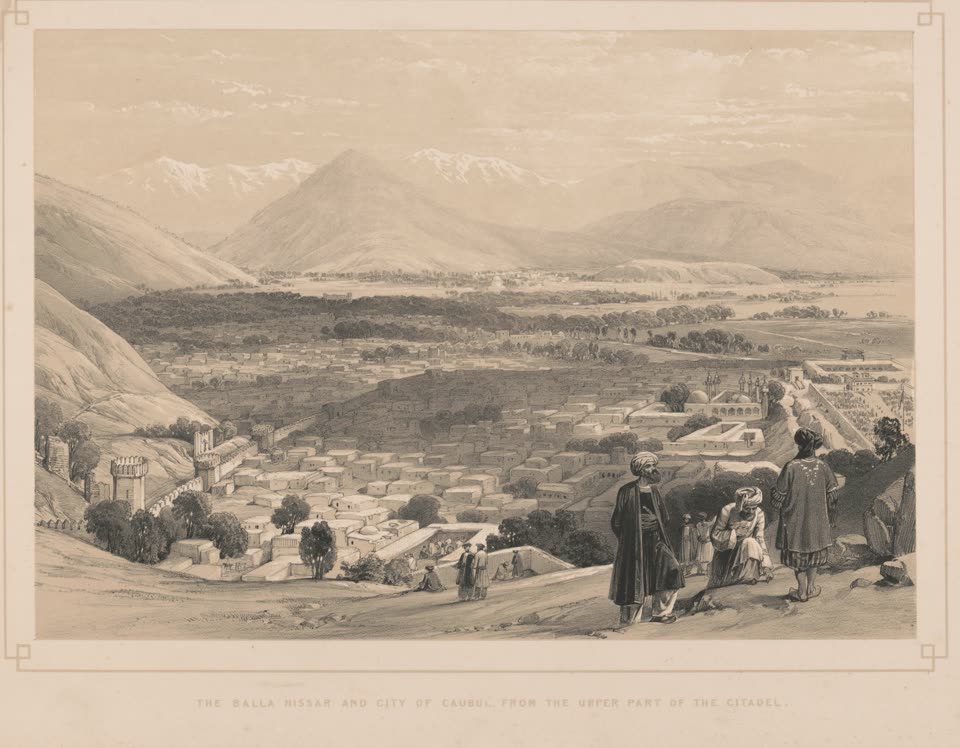
A small Armenian Christian community lived in Kabul in the nineteenth century and had a church of its own, near the Bala Hissar — the fortress above the old city.
British troops destroyed it during the Second Anglo-Afghan War, between 1878 and 1880, and it was never rebuilt. The last Armenians left Kabul for Peshawar in the 1890s.
So the church that a European army demolished was the oldest continuously used Christian building in the country, and the army that demolished it came from a Christian one.
A church for Kabul’s foreign community was dedicated in 1970, with a stone reading that the building is dedicated as «a house of prayer for all nations» in the reign of King Zahir Shah.
It stood for three years. It was destroyed in 1973, and since then «no place of worship has been authorized for Protestant Christians».
USCIRF’s account of 2023 puts the two together in consecutive sentences. «The Taliban in September detained 18 NGO workers, accusing them of promoting Christianity.» And: «Under Taliban rule, Hindus, Sikhs, and Christians face severe restrictions, including on their dress and appearance, and have been prohibited from celebrating their religious holidays publicly.»
The report does not say the detained workers were Christians. What was alleged against them was promoting Christianity, which under the Hanafi position the courts apply is the same offence as converting.
Afghanistan, in the 2024 Annual Report — United States Commission on International Religious Freedom (USCIRF). Retrieved 2026-11-03. archived 24 October 2026USCIRF’s 2024 report, on conditions in 2023: «Under Taliban rule, Hindus, Sikhs, and Christians face severe restrictions, including on their dress and appearance, and have been prohibited from celebrating their religious holidays publicly.»
2023 Report on International Religious Freedom: Afghanistan — United States Department of State, Office of International Religious Freedom. Retrieved 2026-11-03. archived 11 October 2026The 2023 report, for the population and for the estimate that still does not exist: «The U.S. government estimates the total population at 39.2 million (midyear 2023)», and «Reliable estimates of the Baha’i Faith and Christian communities are not available.»
Our Lady of Divine Providence Chapel, Kabul — Wikipedia. Retrieved 2026-11-03. archived 1 August 2025For the chapel’s dates: «The chapel was authorized in 1933» and «It was completed in 1960», with most Christian symbols limited and «just a small cross having been allowed at the entrance».
Christianity in Afghanistan — Wikipedia. Retrieved 2026-11-03. archived 16 October 2026An encyclopaedia article, and said to be one: «The year 424 also marks the establishment of a bishop in Herat», «In the 6th century, Herat was seen as a Metropolitan See», «The Christian community was present in Herat until at least 1310», and «there is a district outside of the city named Injil, The Arabic/Dari/Pashto word for Gospel».