Christmas Day in Guyana is 25 December. It is a public holiday.
How to say it
English
Merry Christmas
Merry Christmas
A synthesised voice — not a recording of a person — saying Merry Christmas
in en-GB.
English is Guyana’s official language and the wish is the English one. What is Guyanese about it is who says it to whom: the season here runs across the religions, and a columnist on conversationtree.gy puts it as «In Guyana, Hindus and Muslims join in with equal fervor. It is truly a national occasion.»
Christmas — Conversation Tree (conversationtree.gy), a Guyanese opinion site
How Christmas is kept
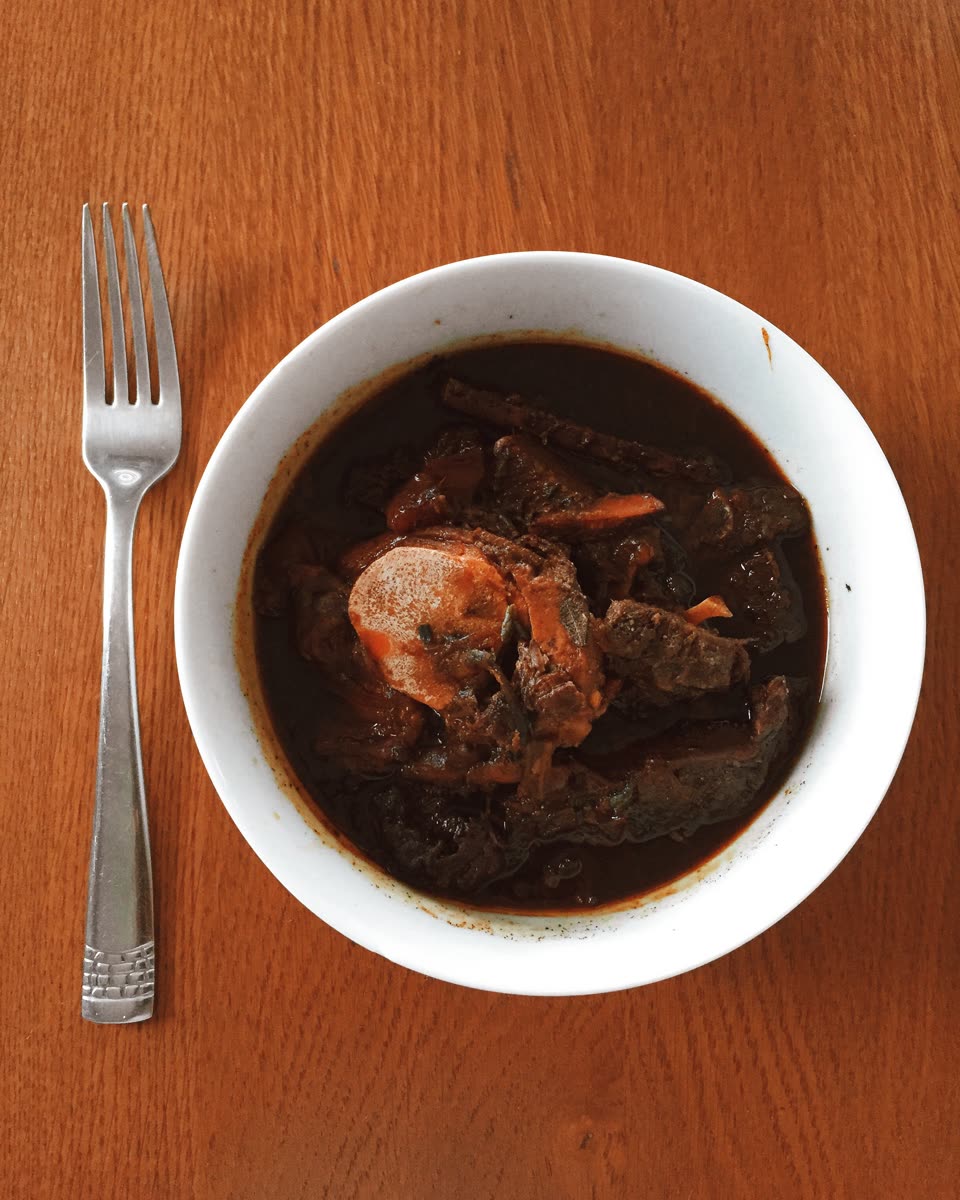
Christmas morning starts with pepperpot
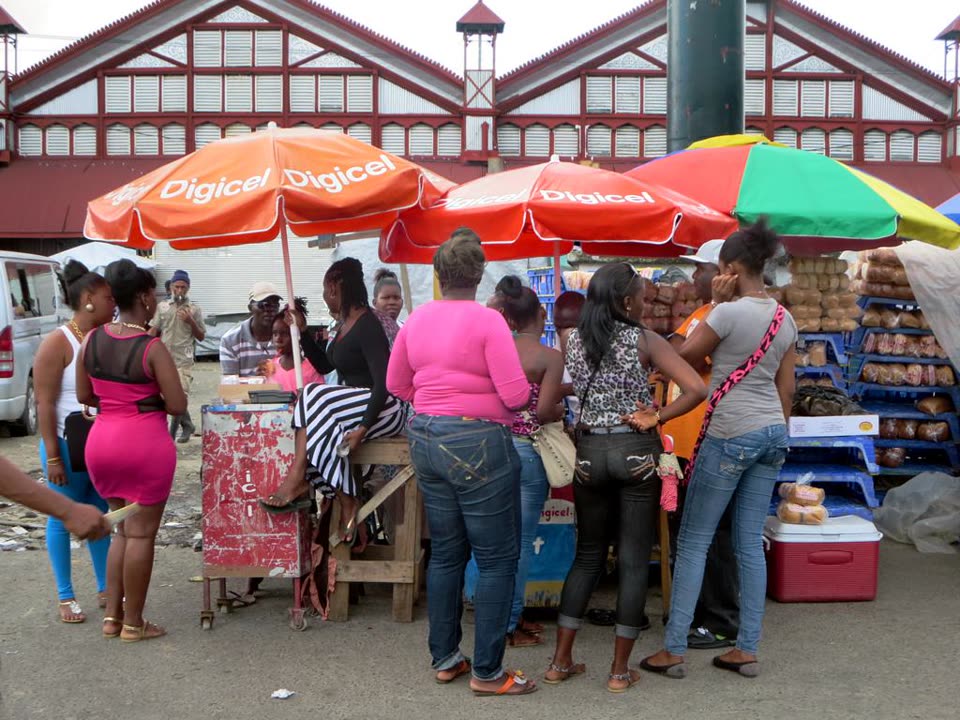
The first meal of the day is a dark stew of meat simmered in cassareep, eaten with bread. News Room Guyana, photographing the markets in December 2022, put it plainly: «With pepperpot as the undisputed Guyanese Christmas dish, especially on Christmas morning, casareep- the key ingredient for Pepperpot- is a big seller».
It keeps and reheats, which is part of why it is a morning dish: the pot is made before the day and goes back on the fire.
The pot is adapted so that everyone can eat from it
A Guyanese columnist describes the Christmas pot changing shape to fit the household eating from it: «Pork has been eliminated from pepperpot by Muslims. And what many may regard as sacrilege, many Hindus make pepperpot with chicken.»
The same writer lists the cooks the food came from — «Amerindian, African, Indian, Portuguese, Chinese and British, have all left their mark». This is one columnist’s account of his own country rather than a survey.
Christmas — Conversation Tree (conversationtree.gy), a Guyanese opinion site
Regent Street, new blinds and a tin of Danish butter cookies
The Georgetown shopping season has its own fixed objects. News Room’s 2022 photo essay names «Danish Butter cookies, found in a circular tin», «Imported apples and grapes», and the household purchase it treats as compulsory: «Because is it really Christmas unless your house has a new set of blinds?»
New curtains and new tableware before Christmas are the same impulse as the new clothes bought elsewhere in the world — here it is the house that gets dressed.
Costumed bands move through Georgetown and the coastal villages over the season. Stabroek News: «The masked, costumed performers dance along the streets at Christmas time accompanied by a small ensemble of musicians. Foremost in the dance are the flouncers».
The music is a boom drum, a kettle drum and a flute — the fife — «which improvises, but often plays the melodies of known songs, including Christmas carols». The form belongs to a family: «a genre of the varied traditions known in Jamaica and Belize as Jonkunnu or Maskarade, and in Guyana as Maskarade».
Stock characters: the Mad Bull, Bam Bam Sally and the Tall Lady
Stock characters include the horned Mad Bull (or Mad Cow), which charges at the crowd; Bam Bam Sally (Mother Sally), a female character in old-fashioned European dress traditionally played by a man; and the Tall Lady on stilts.
Stabroek News describes the bull as «a costumed figure in the form of a bull with large horns leaping about dangerously and threateningly», and a veteran masquerader remembers what that meant to a child: «the children them used to run yelling, ‘Look the Mad Bull!’ and running and ducking under beds».
You throw coins, and picking them up is part of the dance
Jerome Cumberbatch, who has masqueraded for decades, explained the transaction to Stabroek News in 2014: «people throw down the money and see how you dancing and they throw down the coins and you pick it up with style and thing. You can’t pick it up too quick you know!»
Stooping for the money without breaking the step is the skill being paid for.
Midnight mass on Brickdam, and a Festival of Carols before it
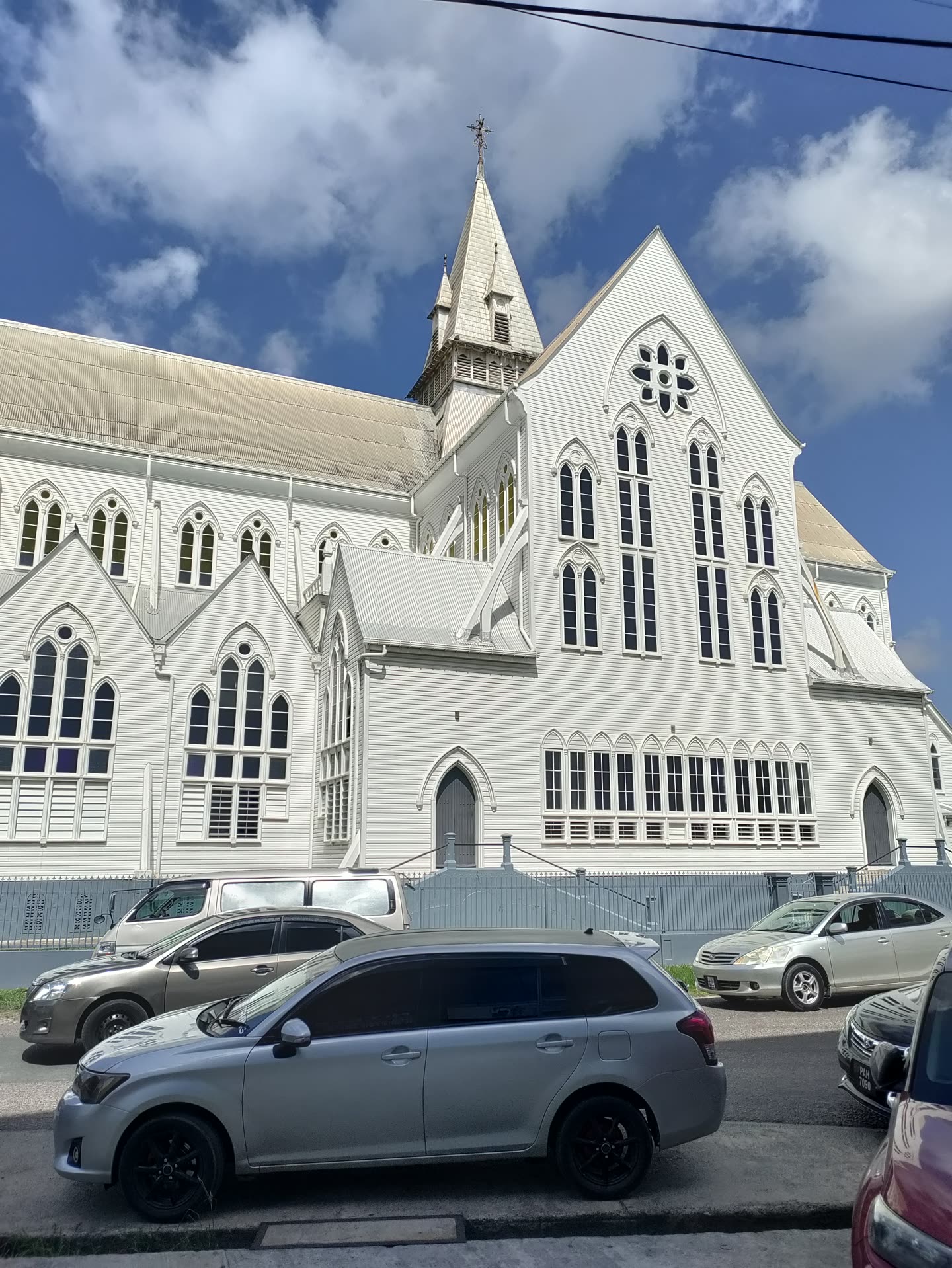
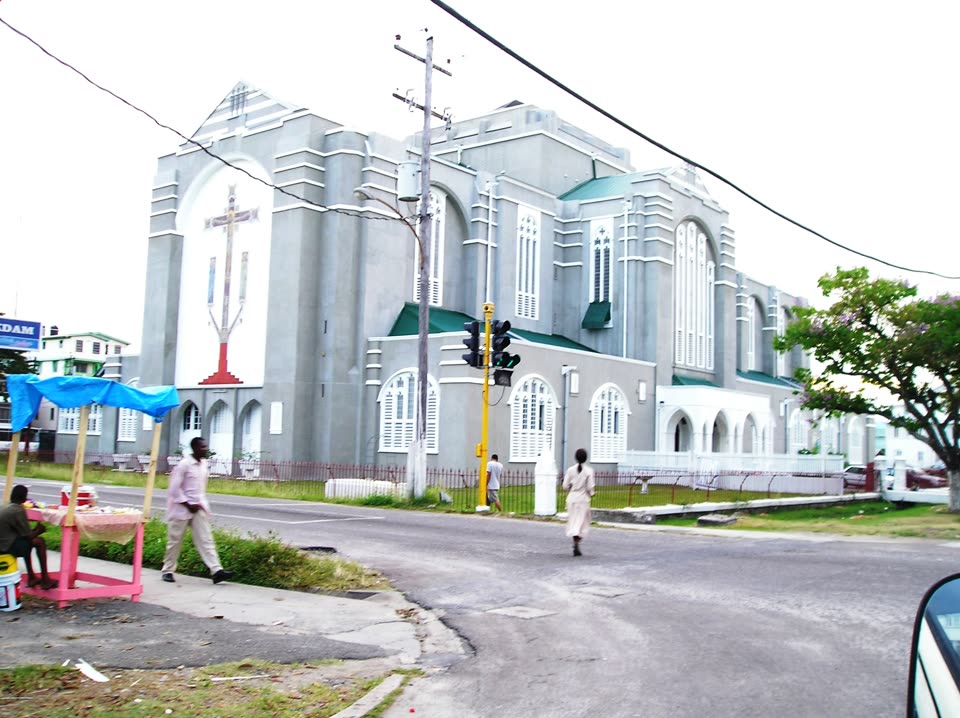
On Christmas Eve «dozens of people gathered at the Brickdam Cathedral, Georgetown, for mass just before midnight».
Earlier in December the same cathedral fills for its Festival of Carols, which reached its 54th edition in 2025 with the Woodside Choir, the Bishops’ High School Steel Band and «the traditional community singing by the audience». Tickets were $500 and children under twelve went free. The Cathedral of the Immaculate Conception was that December marking 100 years since it opened.
In the Indigenous villages there is a second pepperpot, and it is called kadakura
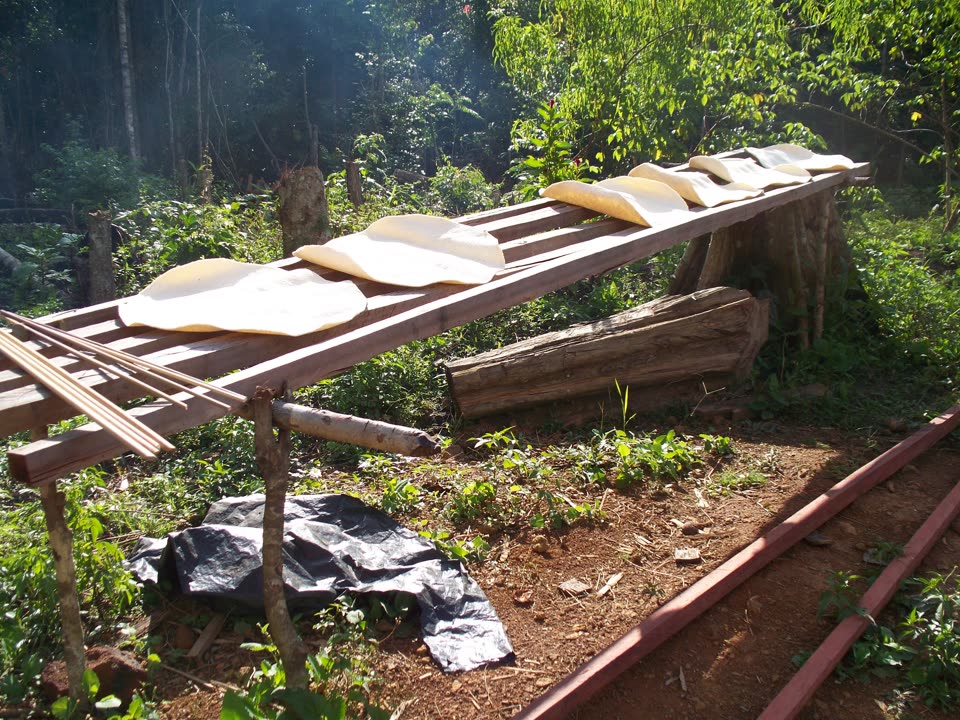
Graham Atkinson of Santa Rosa, in Moruca, described the New Year table to Stabroek News: «So it’s cook up at midnight and the next day another round of the real pepperpot we call kadakura which is cooked from the cream of the cassava water, and which is skimmed off when the cassava water is boiled to make cassareep. We cook that with fish, bush meat or chicken.»
That is the coast’s Christmas dish described from the other end of the process: the same boiling cassava water yields the cassareep the coast buys, and the cream skimmed off it makes a different pot entirely.
Meat simmered slowly in cassareep, the dark syrup boiled down from the juice of bitter cassava, which both flavours and preserves it. A Georgetown shopper told the government’s information agency how she meant to introduce a visitor to his first Guyanese Christmas: «I’m gonna give him some nice Guyanese pepperpot with the Pomeroon Cassareep inside… and then some nice local bread, baked in my oven. When I done with him and he drink the blackwater he must come back».
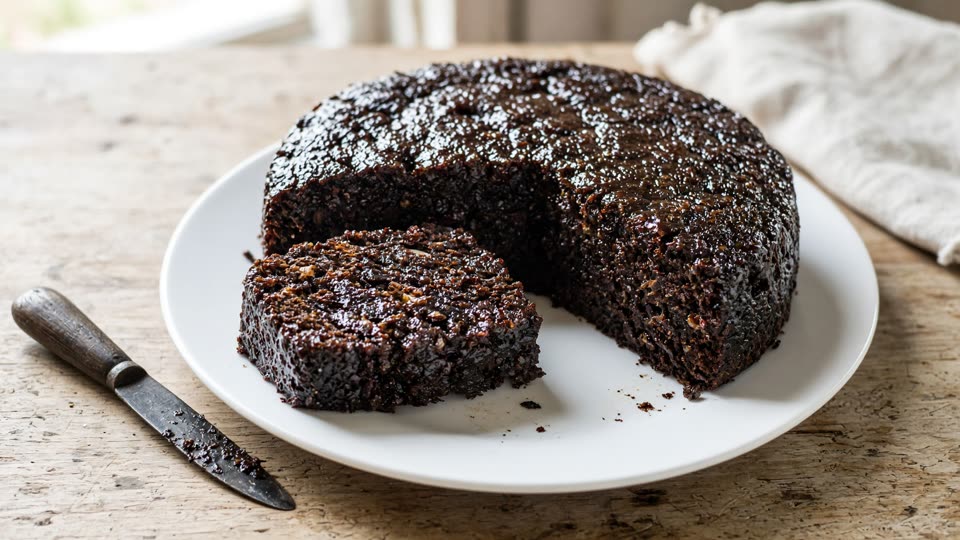
A dark fruit cake whose fruit is steeped in rum or wine long before baking, and which is given more alcohol after it comes out of the oven. The Stabroek News cookery column is exact about the timing: «prick the cake all over the top with a tooth pick or cake tester and drizzle or brush with whatever alcohol with which you plan to ‘feed’ the cake. Do this several times during the first hour of the cake coming out of the oven. The cake will best absorb and distribute the extra moisture when it is still hot/warm rather than cool.»
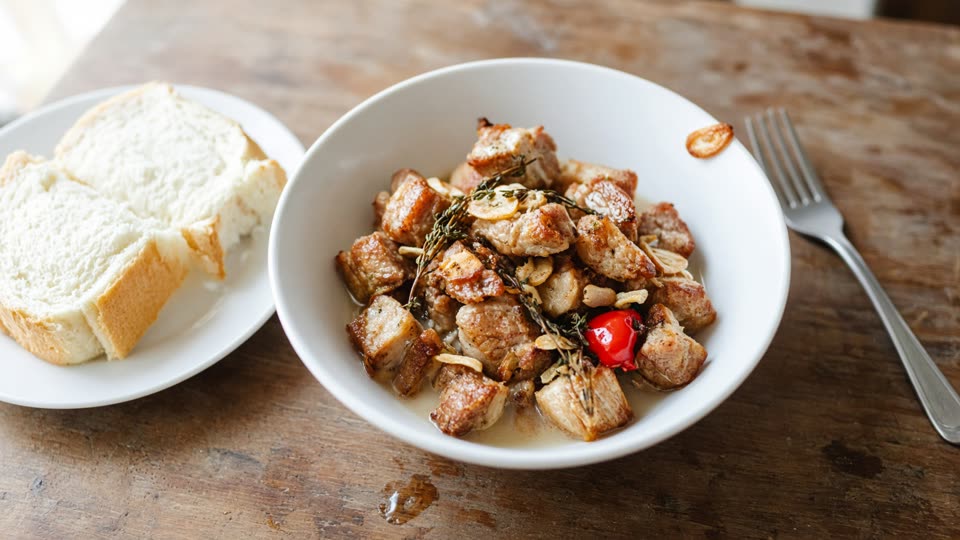
Pork steeped in garlic and vinegar, and one of the three dishes Guyanese name first when they list the Christmas table. A shopper interviewed by the government’s information agency gave the whole menu in nine words: «Pepperpot, garlic pork, black cake. Christmas Day is bake chicken, macaroni and cheese, your salad».
Guyana declares its public holidays one at a time, by notification, and the Christmas one is a single sentence. The gazette of 7 December 2024 reads «PURSUANT TO THE PROVISIONS OF SECTION 3 (1) OF THE PUBLIC HOLIDAYS ACT, CHAPTER 19:07, OF THE LAWS OF GUYANA, WEDNESDAY DECEMBER 25, 2024, THURSDAY DECEMBER 26, 2024 AND WEDNESDAY JANUARY 1, 2025 ARE HEREBY DECLARED PUBLIC HOLIDAYS», signed by the Minister of Home Affairs.
The same Act and the same procedure produce the gazettes for Phagwah, Deepavali and Youman Nabi. Christmas is not a special case in Guyanese law; it is one notification among several, each naming a different religion’s day.
About two thirds of Guyanese are Christian, and the largest single church is not the one with the cathedrals. At the 2012 census «64 percent of the population identify as Christian, 25 percent Hindu, and 7 percent Muslim» — and within that Christian share, «Pentecostals comprise 23 percent of the population; Roman Catholics, 7 percent; Anglicans, 5 percent; Seventh-day Adventists, 5 percent; Methodists, 1 percent».
So Pentecostals outnumber Catholics, Anglicans, Adventists and Methodists together, in a country whose two landmark Christmas churches are Catholic and Anglican.
Writers have called the street masquerade a fading tradition for more than a decade, greeted «with mixed reactions, moving from nuisance to nostalgia» (Stabroek News, 2017). Bands from villages such as Victoria on the East Coast of Demerara were still dancing in Georgetown at Christmas 2022.
One Kaieteur News columnist wrote in 2025 that more Guyanese from non-Christian traditions have begun to step back from actively celebrating Christmas, while still respecting it. In his words they «respect the season, admire the joy it brings others, and do not oppose it. Yet they choose not to participate».
He sets it against the Guyana he remembers, where «Hindu and Muslim families bought toys for the children, exchanged gifts, cooked lavish meals, and visited friends». It is one columnist’s reading of a change, not a measurement of one.
The hinterland keeps a careful account of what the season has lost. In the villages Stabroek News visited, «piwari and casiri, byproducts of the cassava, which are no longer made for these celebrations»; the «‘Banchikillis’, the traditional Spanish Arawak quarto band, or live string-bands… have been replaced by all recorded stereo set music»; and «Hunting and fishing in groups to gather meat for the holidays are no longer done since the animals have either retreated deeper into the forests or they are not found in abundance as in the past.»
From Mahdia, Boniface Fredericks put the whole of it in one line: «There is nothing indigenously traditional about breaking New Year’s here.»
Every claim carries its own citation. They are collected below, so you
can see what the page rests on and how much of it comes from where.
Christmas — Conversation Tree (conversationtree.gy), a Guyanese opinion site. Retrieved 2026-11-04. archived 9 June 2026«In Guyana, Hindus and Muslims join in with equal fervor. It is truly a national occasion.» On the pot: «Pork has been eliminated from pepperpot by Muslims. And what many may regard as sacrilege, many Hindus make pepperpot with chicken.» The same piece lists the cooks who shaped the food: «Amerindian, African, Indian, Portuguese, Chinese and British, have all left their mark».
What’s on your Christmas menu? — Department of Public Information, Guyana, 24 December 2019. Retrieved 2026-11-04. archived 10 May 2026A shopper, Anita Geoffrey: «Pepperpot, garlic pork, black cake. Christmas Day is bake chicken, macaroni and cheese, your salad». Another, Karen, on feeding a visitor his first Guyanese Christmas: «I’m gonna give him some nice Guyanese pepperpot with the Pomeroon Cassareep inside… and then some nice local bread, baked in my oven. When I done with him and he drink the blackwater he must come back».
A changing Christmas in a changing Guyana — Kaieteur News, 5 December 2025. Retrieved 2026-11-04. archived 6 January 2026Of the past: «For decades, Guyanese of every religion participated. Hindu and Muslim families bought toys for the children, exchanged gifts, cooked lavish meals, and visited friends.» Of the present: «In recent years, more Guyanese from non-Christian traditions have begun to step back from the active celebration of Christmas. They respect the season, admire the joy it brings others, and do not oppose it. Yet they choose not to participate».
Fairy lights and busy streets — it’s Christmas in Guyana — News Room Guyana, 25 December 2022. Retrieved 2026-11-04. archived 4 December 2024«With pepperpot as the undisputed Guyanese Christmas dish, especially on Christmas morning, casareep- the key ingredient for Pepperpot- is a big seller». Also «Danish Butter cookies, found in a circular tin, are a Christmas staple in households», «Imported apples and grapes are also staple Christmas items», and, of the shopping, «Because is it really Christmas unless your house has a new set of blinds?»Of the masqueraders: «These masqueraders travelled from Victoria, on the East Coast of Demerara (ECD) as part of concerted efforts to keep this tradition alive». Of the church: «dozens of people gathered at the Brickdam Cathedral, Georgetown, for mass just before midnight on Christmas Eve».
2023 Report on International Religious Freedom: Guyana — Office of International Religious Freedom, United States Department of State. Retrieved 2026-11-04. archived 26 February 2026«According to the most recent national census conducted in 2012, 64 percent of the population identify as Christian, 25 percent Hindu, and 7 percent Muslim (mainly Sunni, and a small Ahmadiyya Muslim community).» On the shape of that Christian majority: «Among Christians, Pentecostals comprise 23 percent of the population; Roman Catholics, 7 percent; Anglicans, 5 percent; Seventh-day Adventists, 5 percent; Methodists, 1 percent». And «the Inter-Religious Organization of Guyana (IROG), whose members include representatives of the Christian, Hindu, Islamic, Rastafarian, and Baha’i faiths, held interfaith programs».
Extraordinary Gazette, 7 December 2024 — NOTIFICATION: The Public Holidays Act (Christmas Day, Boxing Day, New Year’s Day) — Official E-Gazette of Guyana, Ministry of Legal Affairs. Retrieved 2026-11-04.It is made «UNDER THE PUBLIC HOLIDAYS ACT (CAP 19:07)» and reads «PURSUANT TO THE PROVISIONS OF SECTION 3 (1) OF THE PUBLIC HOLIDAYS ACT, CHAPTER 19:07, OF THE LAWS OF GUYANA, WEDNESDAY DECEMBER 25, 2024, THURSDAY DECEMBER 26, 2024 AND WEDNESDAY JANUARY 1, 2025 ARE HEREBY DECLARED PUBLIC HOLIDAYS.»
Reviving the Maskarade tradition — Stabroek News, 16 December 2012. Retrieved 2026-11-04.«The masked, costumed performers dance along the streets at Christmas time accompanied by a small ensemble of musicians. Foremost in the dance are the flouncers». On the family it belongs to: «a genre of the varied traditions known in Jamaica and Belize as Jonkunnu or Maskarade, and in Guyana as Maskarade».The characters: «Bam-bam Sally a female figure played by a male in European fancy dress», and «The Bad Cow or Mad Cow is a costumed figure in the form of a bull with large horns leaping about dangerously and threateningly.» The band: «a boom or bass drum, a kettle or kittle drum played with sticks and a flute (a folk instrument called a ‘fife’ in Jamaica) which improvises, but often plays the melodies of known songs, including Christmas carols».
Masquerade, a Christmas treat now in decline — Stabroek News, 25 December 2014. Retrieved 2026-11-04.Jerome Cumberbatch, a veteran masquerader, on the coins: «people throw down the money and see how you dancing and they throw down the coins and you pick it up with style and thing. You can’t pick it up too quick you know!» And on the children: «they coming around seeing the Tall Lady, the Mad Bull, and the children them used to run yelling, ‘Look the Mad Bull!’ and running and ducking under beds».
Festival of Carols at Brickdam Cathedral — Stabroek News, 7 December 2025. Retrieved 2026-11-04.«this is the 54th edition of the Festival», with «the Woodside Choir, a foundation participant at the Festival» and «The Bishops’ High School Steel Band», and «the traditional community singing by the audience». The programme «is expected to last around two hours», tickets $500, children under 12 free. «The Cathedral is this December observing 100 years since it was opened.»
Wanted: A rescue for the street masquerade bands — Stabroek News, Al Creighton, 31 December 2017. Retrieved 2026-11-04.«They make their annual appearance in the city each year at Christmas time and will remain through the season for a few days into the new year, then pack up their props and disappear until next December – perhaps.» And: «These bands are greeted with mixed reactions, moving from nuisance to nostalgia.»
Some traditions lost but others endure as hinterland communities greet New Year — Stabroek News, Miranda La Rose, 1 January 2023. Retrieved 2026-11-04.Graham Atkinson of Santa Rosa, in Moruca, on the second pot: «So it’s cook up at midnight and the next day another round of the real pepperpot we call kadakura which is cooked from the cream of the cassava water, and which is skimmed off when the cassava water is boiled to make cassareep. We cook that with fish, bush meat or chicken.»The losses are in the same piece: «piwari and casiri, byproducts of the cassava, which are no longer made for these celebrations», the «‘Banchikillis’, the traditional Spanish Arawak quarto band, or live string-bands… have been replaced by all recorded stereo set music», and «Hunting and fishing in groups to gather meat for the holidays are no longer done since the animals have either retreated deeper into the forests or they are not found in abundance as in the past.»Of Surama and Parabara in Region Nine: «much planning at the community level goes into the celebrations». Of Orealla: «Whereas Christmas is more a family-oriented affair in Orealla, on the Corentyne River, New Year is more community-oriented.» And from Mahdia, Boniface Fredericks: «There is nothing indigenously traditional about breaking New Year’s here.»
What’s Cooking: Christmas — Stabroek News, Tastes Like Home, Cynthia Nelson, 15 December 2018. Retrieved 2026-11-04.A Christmas-week cookery column answering readers’ questions about «baking ham, cake, making Pepperpot, Garlic Pork and other things related to cooking for the holidays». On feeding the cake: «prick the cake all over the top with a tooth pick or cake tester and drizzle or brush with whatever alcohol with which you plan to ‘feed’ the cake. Do this several times during the first hour of the cake coming out of the oven. The cake will best absorb and distribute the extra moisture when it is still hot/warm rather than cool.»