In Guaraní, Christmas is Arareñói — the day-birth — and Christmas Eve is Pyhare marangatu, the holy night. The greeting above is the one ABC Color's school supplement records people exchanging at midnight, in an account of how the Nochebuena of an older Paraguay was kept: «Pyharepyte og̃uahẽvo... opavave oñomomaitei, he'ívo ojupe VY'APAVẼ TUPÃRA'Y ARAREÑÓIRE.» Guaraní is an official language of Paraguay and is spoken by most of the country.
The older centre of the night. Children wait for the Child rather than for a figure in a red suit, and the presents sit at the foot of the little tree and the pesebre.
Present in plenty of households and resisted in others. A 2016 feature asking Asunción parents whether they kept him found mothers who preferred the Kings, and mothers who said the character was not theirs.
The pesebre is the centre of a Paraguayan Christmas, and it is built out of the countryside
The crib is framed with branches of ka'avove'i, a native shrub, which makes a green roof over it. Under that goes a little two-slope straw rancho for Mary, Joseph and the Child. Round the whole thing go the fruits of the season — grapes, pineapple, watermelon, melon, mangoes, plums.
It is a built thing rather than a bought one, and the materials are local by definition: what is in the yard and what is in the market in December.
A crib without flor de coco is not a Paraguayan crib
The one thing that settles it is a smell. Flor de coco — mbokaja poty, the flower of the native coconut palm — is sold in the streets and markets through December and laid on the pesebre, and it is the element Paraguayans name first when asked what makes the crib theirs.
David Galeano, who directs the Ateneo de Lengua y Cultura Guaraní, puts it as a substitution: what was frankincense, gold and myrrh in the older story is, here, flor de coco and the fruits. The historian Margarita Miró says it shorter — «un pesebre sin flor de coco no es pesebre paraguayo».
The palm, its flower and its fruit are all national emblems, and the law says why
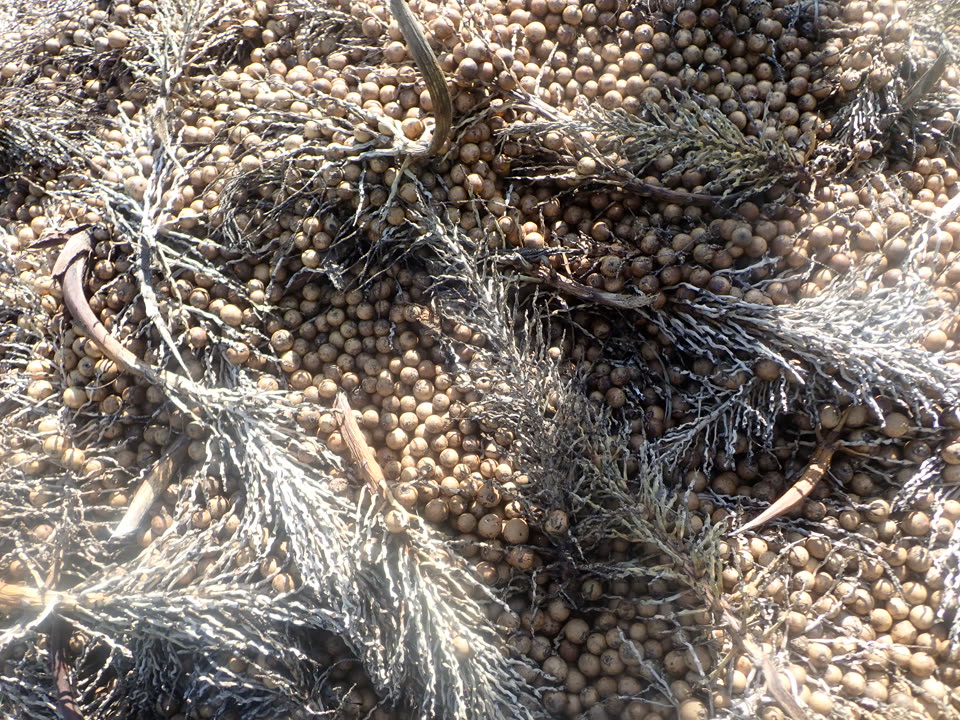
In 2024 Paraguay declared the mbocayá coconut palm — Acrocomia totai — its national plant, flor de coco mbocayá its national flower, and the palm's fruit its national fruit. Three articles, one tree.
The grounds put before Congress named Christmas directly: the flower of this palm, they said, is the obligatory ornament of the pesebre at the birth of the Child.
The crib often goes up after the eighth of December
Local custom, as reported in 2025, is to start assembling the pesebre once the feast of the Virgen de Caacupé is past — so the national holiday on 8 December opens the season, and the crib follows it. Plenty of houses begin earlier; the preparations in older accounts run from the first days of the month.
You go and look at other people's cribs, and you come home with their grapes
Visiting the pesebres of relatives, friends and neighbours is part of the season — pray for a moment, admire the crib, and be given something. In some houses the children who come are handed sweets, pan dulce or fruit.
The cultural researcher Fernando Yaguarón, describing the custom as it is kept in the interior, gives it its Guaraní name: the jepo'o of the pesebre, which means giving away the grapes.
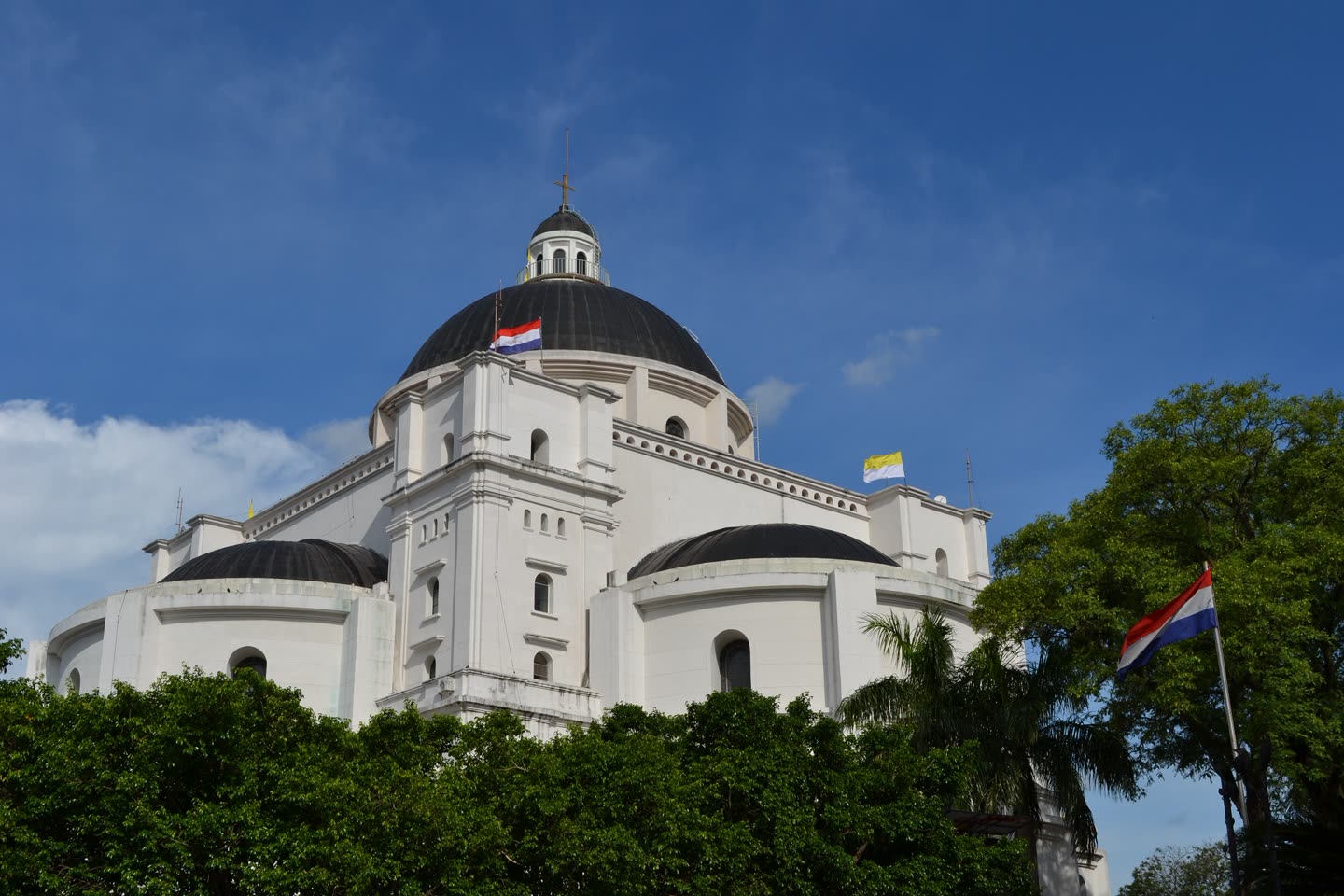
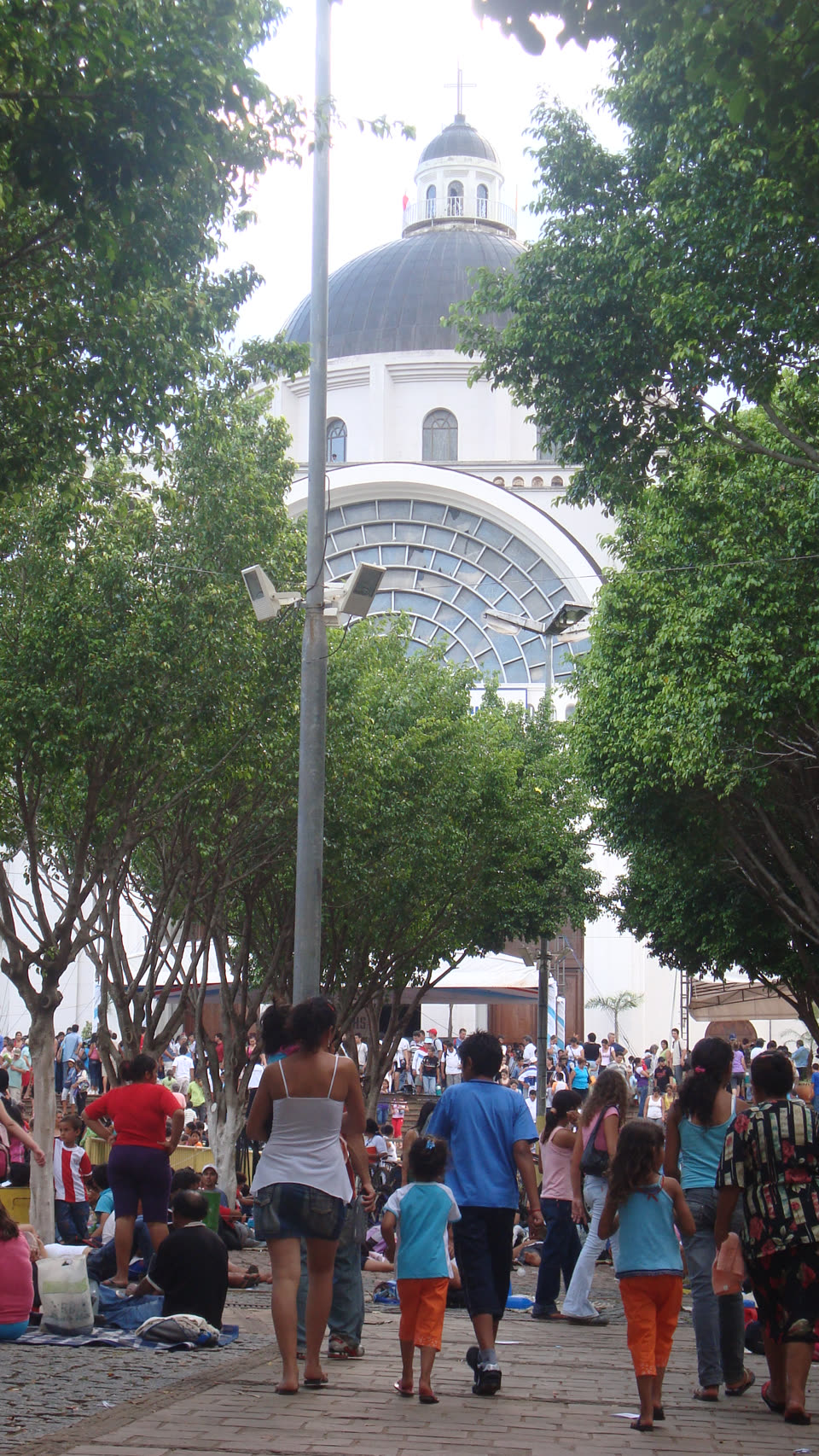
On the solemnity of the Immaculate Conception, pilgrims go to the basilica at Caacupé in the Cordillera, on foot, by bicycle and in convoy, to the Virgen de los Milagros. It is the largest Marian gathering of the Paraguayan year and the town is called the country's spiritual capital.
A novena runs up to it — in 2026 from 28 November — and the central day is 8 December, with a dawn Mass and others through the day. National, departmental and municipal authorities run a joint Operativo Caacupé for health, traffic, cleaning and security. In November 2026, preparing for that year's feast, Última Hora reported that Caacupé was expecting more than three million pilgrims.
Nochebuena is when the family gathers: around the pesebre, around the table, with Mass beforehand. At midnight everyone embraces and the greetings go round. Fireworks go off outside.
25 December is the holiday in law. The 24th is the evening everybody means.
The Christmas Eve Mass is called the Misa de Gallo, and it is not usually at midnight
Parishes celebrate the Mass of Christmas Night on the 24th, and Paraguayan papers call it the Misa de Nochebuena or the Misa de Gallo. The hour is a parish matter: in 2024 the Metropolitan Cathedral in Asunción began at eight in the evening, while other churches advertise later, some of them at eleven or at midnight.
In Tobatí the Kings arrive on the fourth of January
In the compañía Rosado of Tobatí, in the Cordillera, the Three Kings and San Baltasar are kept with a festival of their own. The promeseros start arriving on 4 January and gather in a private house to cook, prepare presents and keep their promises. A Banda Para'i goes from door to door for the Serenata del Alba, ending at the last house holding an image of a Santo Rey — a common thing to own in that neighbourhood. On the 5th every image is carried to the chapel of San Blas, with a serenata and performances while the day is waited for. The central Mass is on 6 January, and afterwards food, sweets and presents go to the children.
The saint at the middle of it is the Black king. ABC Color describes San Baltasar as «el “rey negro”, de origen mulato», and an artisan carves whichever of the three Magi the petitioners ask for.
Masked figures called kamba ra'anga are a fixed part of the days. In Guaraní kamba is a Black person and ra'anga an image or likeness, so the name means the image of a Black person; the newspaper glosses it as «el mulato». People put on costumes and wear the masks to dance. The masks are cut from the root of the timbó tree, which is soft and holds a great deal of water — it is dug up, dried, and carved with simple sharp tools.
The festival is older than the War of the Triple Alliance. Some Tobatí families already kept a Santo Rey before 1864; during the war people around Piribebuy and Barrero commended their promises to the Santos Reyes, and afterwards came to Rosado to pay them, from Primero de Marzo, Isla Pucú, Caraguaty and Barrero Grande.
The families and the mayordomos pay for all of it, and the mayordomos are the owners of the Santos Reyes themselves. It is Epiphany and not Christmas, and the distinction is worth keeping: the big night in Tobatí comes nearly a fortnight after the one in the rest of the country.
December in Paraguay is high summer. People dress for it, and in older accounts the Eve was the night to wear something new — dresses, shirts, trousers and shoes kept for it.
For Christmas Day 2025 the national meteorological service forecast a hot day across both the Oriental and the Occidental regions, with maximum temperatures of about 32 to 37 degrees, high humidity, and a chance of rain and storms.
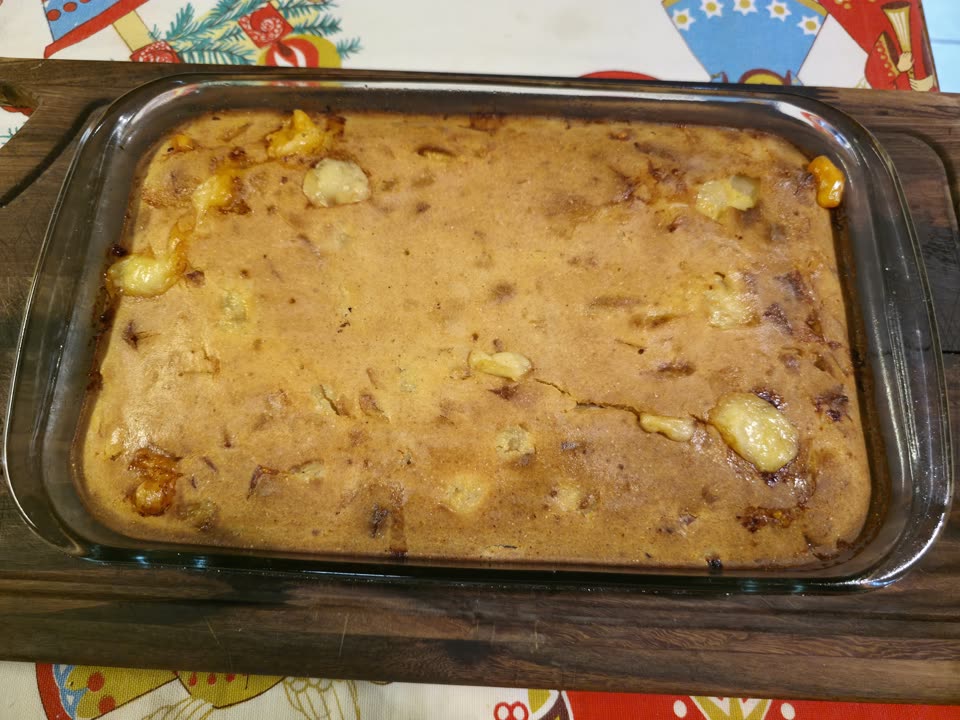
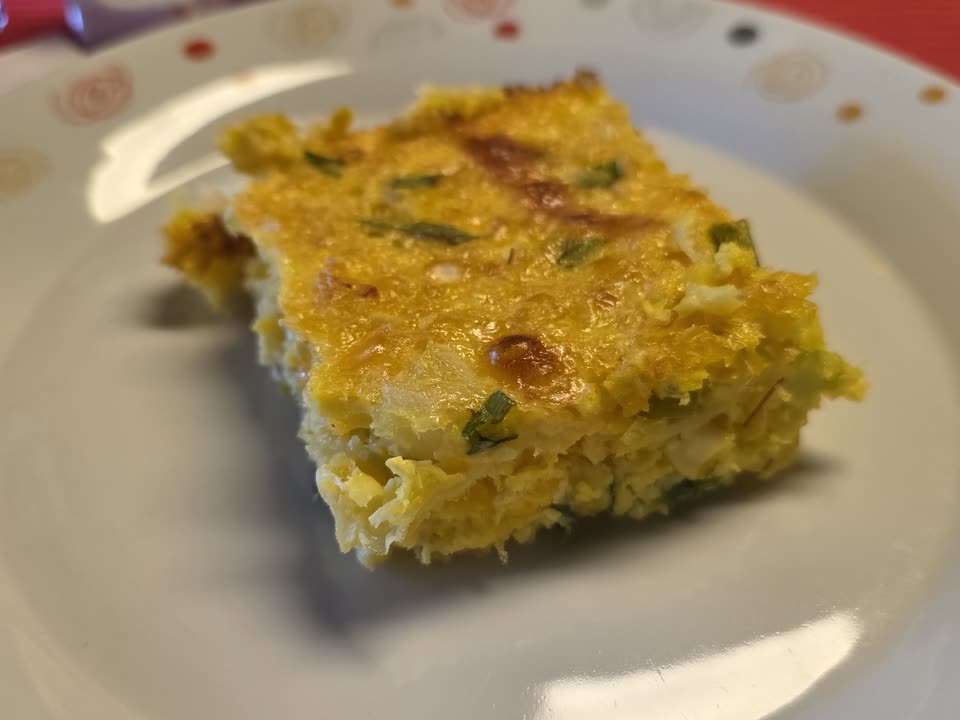
A baked cake of maize flour, cheese and onion, in spite of being called a soup, and the dish nobody leaves off the Christmas table. The work starts early: in older households the sound of the morning was the mortar, pounding the maize.
The other maize dish, and the one made from fresh corn rather than flour — kernels, cheese and onion baked into a loose, moist cake. It sits beside the sopa paraguaya, not instead of it, and both go on the table with roast or stuffed chicken, grilled meats, suckling pig and salads.
A cold cup of chopped seasonal fruit in wine or cider, drunk through Nochebuena in the heat. Recipes vary from house to house — white wine or red, cider, sometimes juice.
Paraguay's Ministry of Public Health says every December that the usual version contains alcohol and should not be given to children, and suggests fruit juices for them instead.
Pan dulce, sidra and ice cream pan dulce, sidra, helado
The sweet end of the table is a summer one. Pan dulce and turrón, fruit salad, and ice cream — the last for the plain reason that it is thirty-odd degrees outside. Cider is the festive drink poured for the toast.
Widely repeated claims about Christmas in Paraguay that do not survive
checking. Each one says what is actually the case, because a correction
with nothing in its place leaves you worse off than before.
Unsupported
The devotion at Caacupé goes back to a sixteenth-century Guaraní convert called Indio José, who carved the image after the Virgin saved him from his enemies behind a tree.
What is actually the case. The historian Claudio Velázquez, asked about it on the feast day in 2024 by Paraguay's state news agency, gives a much later and much firmer date: the first recorded instance of people making a pilgrimage to Caacupé is from 1875.
He also places the legend. After the War of the Triple Alliance, which ended in 1870, Father Fidel Maíz spread the story of the Indio José, and it is from there that it entered the popular account of the shrine's origins. A first temple in 1808 and a rebuilding authorised in 1879 come from the same interview.
The devotion is real, enormous and old enough. The carved image, the flood of Tapaicuá and a precise seventeenth-century year belong to the story told about it rather than to anything documented.
Papá Noel brings the presents in Paraguay, the way he does everywhere else.
What is actually the case. He is in plenty of Paraguayan houses, and he is not the older centre of the night and not the only figure in play.
The Child is what children are described as waiting for, and the presents sit at the foot of the tree and the pesebre together. A 2016 feature that asked Asunción parents directly found some who kept Papá Noel, some who preferred the Reyes Magos on 6 January, and some who said in as many words that the character was foreign to their culture.
Three figures, three different households, and no national rule.
The kamba ra'anga masks of Tobatí are a Paraguayan Christmas custom.
What is actually the case. The masked figures are real and they do fall inside the Christmas season — but at Epiphany, on 6 January, at the feast of San Baltasar and the Kings, and not at Christmas.
The masking tradition is not attached to that season at all. The Museo del Barro in Asunción, which holds a collection of the masks made between the nineteenth and twentieth centuries, files them with the feasts of San Baltasar AND of the Nativity of the Virgin at Tobatí, and of Saints Peter and Paul at Altos. The Nativity of the Virgin is 8 September. Saints Peter and Paul is 29 June.
So it is a masking tradition that serves patronal feasts through the year, one of which happens to fall twelve days after Christmas.
In February 2026 the national committee for safeguarding intangible cultural heritage, chaired by the Secretaría Nacional de Cultura, agreed to go ahead with two candidacies for UNESCO's Representative List: the chipa, and the tradition of the pesebre.
The pesebre file is Paraguay's first joint multinational nomination, put forward with Spain and Italy. It is a candidacy and not yet an inscription.
1 January, 8 December and 25 December are all feriados nacionales under the law of 2025, and article 2 of the same law pins them: they are not among the movable holidays, so they stay on their own dates every year whatever day of the week that is.
Nochebuena is not on the list. Neither is 26 December. Offices may shut early on the 24th; the law has nothing to say about it.
Paraguay's Vice Ministry of Worship estimates that about 88 per cent of the population is Roman Catholic and 6 per cent evangelical Protestant. The Association of Evangelical Ministers of Paraguay puts the second figure higher, at 9.6 per cent.
These are estimates reported by the ministry, not a published census table.
Every claim carries its own citation. They are collected below, so you
can see what the page rests on and how much of it comes from where.
Navidad del Paraguay: costumbres, aromas, sabores y la alegría del nacimiento de Jesús — ABC Color, 23 December 2023. Retrieved 2026-11-17.«el pesebre de arcilla con hojas de ka'avove'i... Bajo este techo natural se colocaba el rancho a dos aguas de paja... Se adornaba con uvas, ciruelas, mangos.» ABC's school supplement of 10 November 2026 gives the same list of fruit: «Alrededor del pesebre se colocaban frutas de estación, como sandías, melones, piñas y uvas, además de la infaltable flor de coco.»
Benedicto XVI desea ¡Feliz Navidad! en idioma guaraní — ABC Color, 26 December 2007. Retrieved 2026-11-17.«‘Ko Navidad árape che maitei ame'ê peême’ (en esta Navidad les hago llegar mi felicitación), dijo el Pontífice.»
Festividad de los Reyes Magos en Tobatí — ABC Color, 3 January 2022. Retrieved 2026-11-17.On the masked figures: «Es infaltable el “kamba ra´anga”, que en guaraní es el mulato. La gente se disfraza y utiliza máscaras.» On the saint: «San Baltasar es el “rey negro”, de origen mulato.» On the masks themselves: «Las máscaras que utilizan para realizar los bailes están hechas de la planta del timbó, que posee una raíz blanda que tiene mucha agua. La gente saca la raíz de esta planta, la seca y la talla con elementos rústicos.» The gloss «el mulato» is the newspaper's; the literal sense of the Guaraní is given alongside it rather than merged with it.
Cómo armar una mesa navideña típica paraguaya: tradición, platos y sabores — ABC Color, 6 December 2024. Retrieved 2026-11-17.«A nadie se le ocurre una Navidad sin sopa paraguaya.» ABC's memoir piece of 23 December 2023 has the preparation: «Desde temprano se escuchaba el ruido de los morteros, donde se pisaba el maíz para el chipa guasú. La harina de maíz para la sopa paraguaya se compraba del Mercado 4.»
Nochebuena invita a familias a compartir y celebrar el nacimiento del Niño Dios — ABC Color, Asunción, 24 December 2024. Retrieved 2026-11-17.Its school supplement of 10 November 2026, reconstructing an older Nochebuena, has the words and the gesture together: «Muchas familias cenaban juntas y, al llegar la medianoche del 24 de diciembre, se abrazaban y expresaban: «¡Feliz Navidad!»»
La Navidad en el Paraguay de antes — ABC Color, Suplemento Escolar, 10 November 2026. Retrieved 2026-11-17.«Los niños esperaban emocionados la llegada del Niño Jesús.» A memoir piece in ABC Color of 23 December 2023 puts the presents in the same place as now: «Los niños recibíamos regalos en casa de mi abuela... Estaban como hoy al pie del arbolito y el pesebre.»
Pesebre paraguayo — ABC Color, Suplemento Escolar, 15 November 2022. Retrieved 2026-11-17.«las ramas del ka'avove'i, que es un arbusto que se utiliza para darle el marco al pesebre, la flor de coco o mbokaja poty, otro elemento característico del pesebre paraguayo, que con su aroma da un olor característico a la Navidad.»
Tupãra'y Arareñói gueromandu'a (2) — ABC Color, Suplemento Escolar, 30 November 2021. Retrieved 2026-11-17.The feast's Guaraní name Arareñói is independently in the same paper's Guaraní-language school text of 10 November 2026, «Arareñói yma guare Paraguáipe».
De la leyenda del Indio José a la Basílica: la evolución de la devoción a la Virgen de Caacupé — Agencia IP, Instituto Paraguayo de Comunicación, 8 December 2024. Retrieved 2026-11-17.Velázquez: «El primer hecho que se tiene, en donde se reporta gente peregrinando a Caacupé, se da en 1875.» The agency's own summary places the legend's circulation: «cuando el padre Fidel Maíz difundió la leyenda del Indio José».
Ley N° 7544/2025, que establece los días feriados nacionales de la República del Paraguay — Biblioteca y Archivo Central del Congreso de la Nación (BACN). Retrieved 2026-11-17.Article 1: «Determínase como días Feriados Nacionales de la República del Paraguay de cada año, además de los días domingos, los siguientes: • 1 de enero, Año Nuevo. ... • 8 de diciembre, Día de la Virgen de Caacupé. • 25 de diciembre, Día de la Navidad.» Article 2 settles which of them move: «Los demás feriados mencionados en el artículo 1° de la presente ley no serán móviles, por lo que permanecerán en sus respectivas fechas cada año.»
Colecciones — Museo del Barro — Centro de Artes Visuales / Museo del Barro, Asunción. Retrieved 2026-11-17.«Entre las colecciones que integran su acervo, sobresalen las máscaras del Kamba Ra'anga, realizadas entre los siglos XIX y XX, pertenecientes a las festividades de San Baltazar y de la Natividad de la Virgen, en la localidad de Tobatí, y de San Pedro y San Pablo, en la localidad de Altos.»
Ley N° 7380/2024 — Congreso de la Nación Paraguaya. Retrieved 2026-11-17.Articles 1 to 3: «Declarar Planta Nacional del Paraguay al Cocotero Mbocayá (Acrocomia Totai Mart).» · «Declarar Flor Nacional a la Flor de Coco Mbocayá.» · «Declarar Fruto Nacional al Fruto del Cocotero Mbocayá.»
La flor de coco, el símbolo de la cultura guaraní que perfuma la Navidad en Paraguay — EFE, 13 December 2025, via SWI swissinfo.ch. Retrieved 2026-11-17.«El director del Ateneo de Lengua y Cultura Guaraní, David Galeano, indicó a EFE que esta flor es «parte de la ofrenda que se le hace al Niño Jesús».» And, in his own words: «Lo que en la antigüedad era incienso, oro y mirra, acá para nosotros es flor de coco y los frutos.»
Declaran planta nacional del Paraguay al cocotero — La Nación, Asunción, 20 December 2024. Retrieved 2026-11-17.Quoting the bill's own grounds: «Por sus flores, en las navidades paraguayas, la flor de coco es un adorno típico obligado de los pesebres en las celebraciones del nacimiento del Niño Dios.»
El clericó en las fiestas es cosa de adultos — Ministerio de Salud Pública y Bienestar Social, Paraguay, 24 December 2022. Retrieved 2026-11-17.«Es importante que los adultos tomen conciencia y no permitan que los niños ingieran el tradicional clericó, puesto que esta bebida por lo general contiene alcohol. Tampoco es recomendable que participen del brindis con sidra u otras bebidas con alcohol, mejor servirles jugos de frutas de estación.»
Feriados 2026: se suma nuevo día feriado y fines de semana largos para impulsar el turismo — Paraguay TV (state television), 24 December 2025. Retrieved 2026-11-17.For the 2026 calendar: «Virgen de Caacupé: 8 de diciembre, martes, no movible. Navidad: 25 de diciembre, viernes, no movible.» And «Año Nuevo: 1 de enero, jueves, feriado no movible», which is the 2026 date.
Chipa y Pesebre: Paraguay impulsa nuevas candidaturas ante la UNESCO — Secretaría Nacional de Cultura, Paraguay, 9 February 2026. Retrieved 2026-11-17.«aprobó avanzar con las candidaturas de la chipa y de la tradición del pesebre para su inscripción en la Lista Representativa del Patrimonio Cultural Inmaterial de la Humanidad de la UNESCO.» And: «En el caso del Pesebre, se trata de la primera postulación multinacional conjunta impulsada por Paraguay junto con España e Italia.»
Cuenta regresiva en Caacupé para recibir a más de 3 millones de peregrinos — Última Hora, Asunción. Retrieved 2026-11-17.«Este año, Caacupé espera recibir a más de tres millones de peregrinos.» The same report calls the feast «la principal celebración mariana del país» and the town the «Capital Espiritual del Paraguay», which is a conventional epithet rather than a title.
Papá Noel y Reyes: ¿Sí o no? — Última Hora, Asunción, 20 December 2016. Retrieved 2026-11-17.«Muchos de ellos mantienen viva la fantasía de que será Papá Noel quien les dejará los obsequios y que, unos días después, le tocará el turno a los Reyes Magos.» And, from parents who had decided otherwise: «el personaje de Santa o Papá Noel es ajeno a nuestra cultura».
2023 Report on International Religious Freedom: Paraguay — United States Department of State, Office of International Religious Freedom. Retrieved 2026-11-17.«The VMW estimates 88 percent of the population is Roman Catholic and 6 percent evangelical Protestant, while the Association of Evangelical Ministers of Paraguay estimates 9.6 percent of the population is evangelical Protestant.»