Svyatyi MykolaiСвятий Миколай · Sviatyi Mykolai · arrives 6 December
—days
—hrs
—min
—sec
Next: Friday 25 December 2026
When is Christmas in Ukraine?
Christmas Day in Ukraine is 25 December. It moved from 7 January in 2023. It is a public holiday, listed in the Labour Code, and suspended while martial law is in force.
How to say it
Ukrainian
Христос народився!
Khrystos narodyvsia!
say it: khrih-STOHS nah-roh-DIV-sya
A synthesised voice — not a recording of a person — saying Христос народився!
in uk-UA.
It is a question expecting an answer. The greeting is «Христос народився!» and the reply is «Славімо Його!» — Slavimo Yoho, let us glorify Him — and the Primate's Christmas letter both opens and closes with the pair, which is how the exchange is used rather than only how it is printed. The words are the vernacular form of a line from the service: the first ode of the Nativity canon is «Христос народжується – славте! Христос з небес – зустрічайте! Христос на землі – возносьтеся!», and the greeting is the first three words of it turned into the past tense. Two sounds English speakers get wrong: the г in Його is voiced breath rather than a hard g, nearer the h of "ahead" than the g of "go", and the в of народився is closer to an English w than to a v.
Різдвяне послання Предстоятеля — Православна Церква України (the Orthodox Church of Ukraine), the Primate's Christmas epistle, 3 January 2020
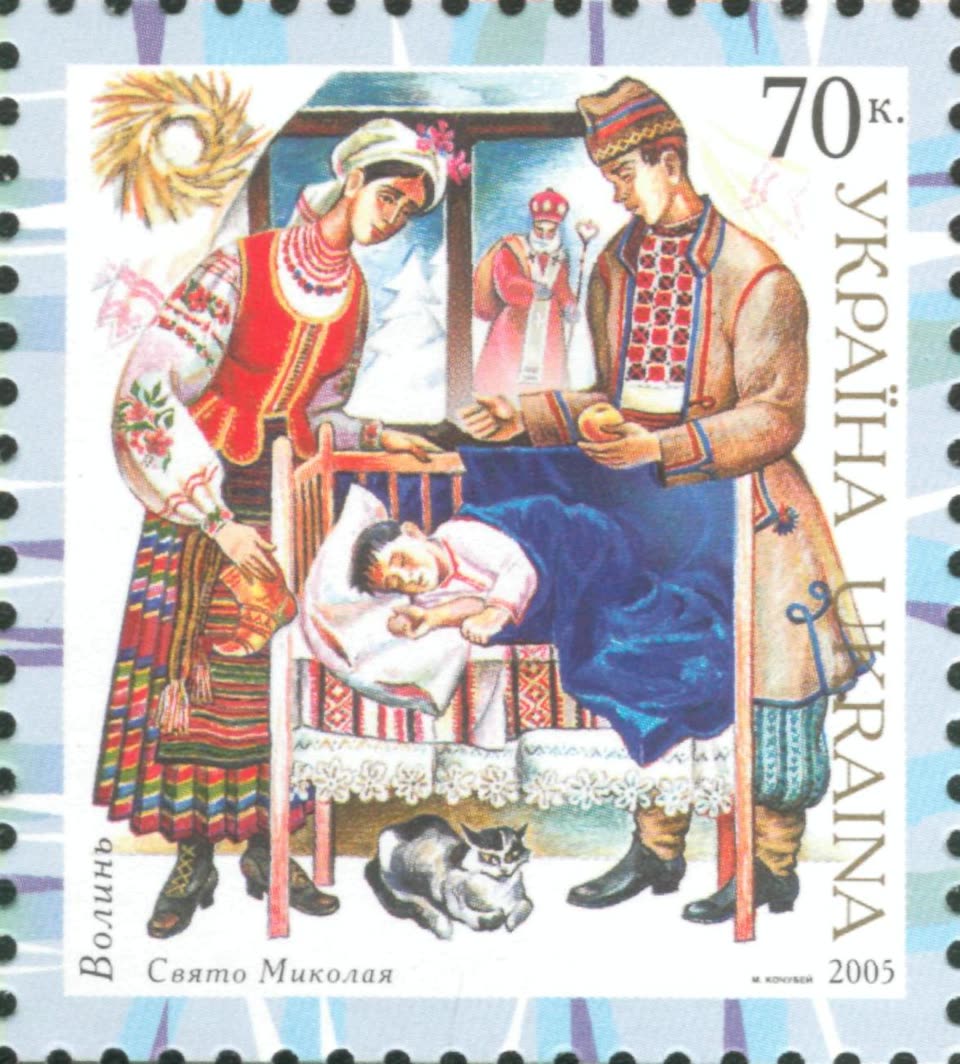
Saint Nicholas, and he comes nineteen days before Christmas rather than on it. His day moved with the rest of the calendar in 2023: the same church in Kyiv, Mykola Prytysk in the Podilskyi district, kept his feast on 19 December in 2021 and 2022 and on 6 December in 2023. When the custom was last measured across the country, two thirds of Ukrainian families gave presents on his day; in the west of the country it was nine families in ten.
The Holy Supper is twelve dishes, or an odd number of them, and nobody washes up afterwards
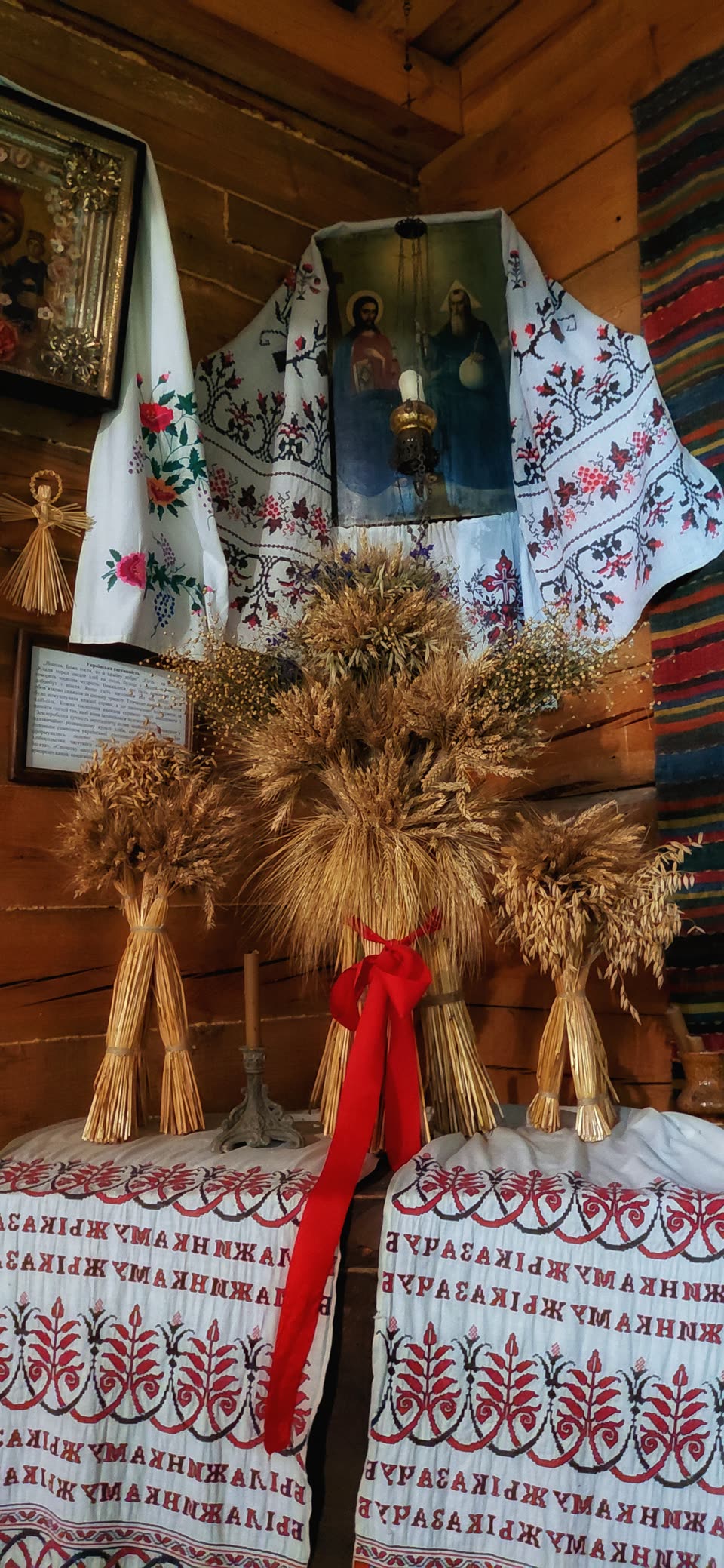
Sviata vecheria, the supper on Christmas Eve, is meatless and milkless from end to end, and the count is twelve dishes or else an odd number of them. The table is not cleared when it is over. Every dish and a lit candle stay out until morning for the people who are no longer at it, the spoons are gathered and stood beside the sheaf in the corner, and washing the plates that night is held to be a sin. A separate plate is made up with a spoonful of each dish, with a glass of water beside it covered by a slice of bread; in the morning it is fed to the cattle and the poultry, so that the livestock get the meal the dead were given. Hay goes under the tablecloth and another bundle under the table, and while it is being spread the children of the house roll about on the floor, which is done so that the ewes will lamb.
Атрибути Різдва та їхнє значення — Національний центр народної культури «Музей Івана Гончара» (the Ivan Honchar Museum, Ukraine's national centre of folk culture)
Дідух – Рай — Музей народної архітектури та побуту у Львові імені Климентія Шептицького (the Klymentiy Sheptytsky Museum of Folk Architecture and Life, Lviv)
A sheaf of grain is carried into the house, and the house uncovers its head to it
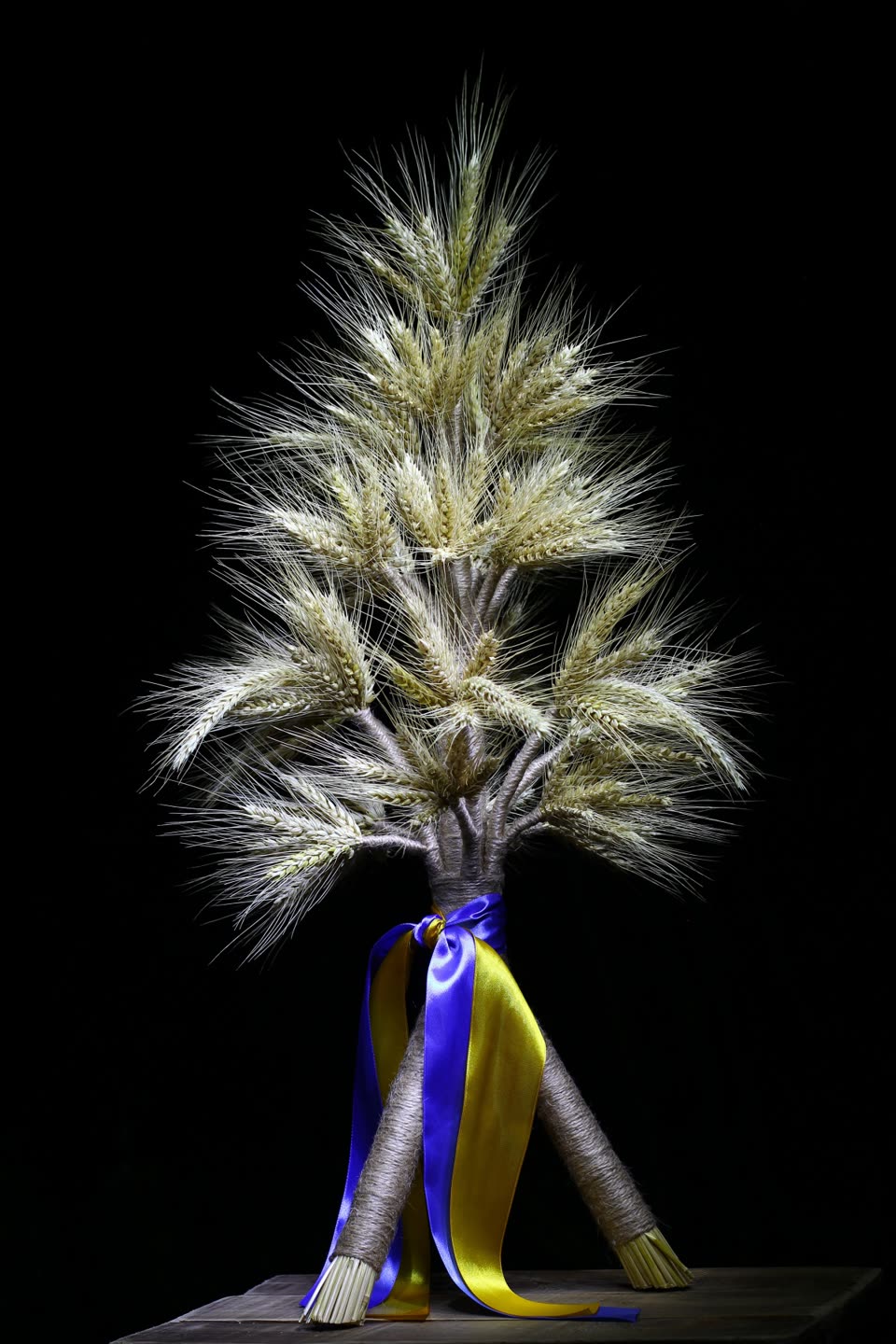
The didukh is the last sheaf of the wheat harvest, brought to the barn at the end of reaping and kept there until Christmas. It is also called Rai — Paradise — because it is where the souls of the household's dead are held, and since the souls are holy they must be in Paradise. On the eve the master walks his farmstead, satisfies himself everything is ready, and calls his son to bring the Holy Days indoors. The two of them go to the barn carrying holy water and three tied ears of grain, take off their caps to the sheaf and bow to it. The father sprinkles it and prays, with the boy repeating after him: Merciful God, and you, righteous Sun, a holy Christmas to you. Then they carry it in, the father saying let us take the Didukh, son, let us carry the Holy Days into the house, while the mistress opens the door and meets them with a loaf. He says the Holy Days are coming; the son answers that the Holy Days have come.
Дідух – Рай — Музей народної архітектури та побуту у Львові імені Климентія Шептицького (the Klymentiy Sheptytsky Museum of Folk Architecture and Life, Lviv — the Shevchenkivskyi Hai open-air museum)
Once the didukh is standing in the corner under the icons, the eldest in the family lifts the first spoonful of kutia to it. Only then does everyone pray and sit down. The grain is set on hay, and it is the mistress who carries the pot to the corner — wearing mittens, or with the pot wrapped in a cloth, so that the house should not be bare but should have plenty.
On the third day the sheaf is burned and read in its own ashes
The straw that has been under the kutia, on the floor and on the table is gathered on the third day of Christmas and made into a figure, which is also called the didukh. It is burned at the gate before dawn, with the crust of bread that had been left on the windowsill put inside it first. From the ashes a shape is made — a cross, or a person — and left at a crossroads.
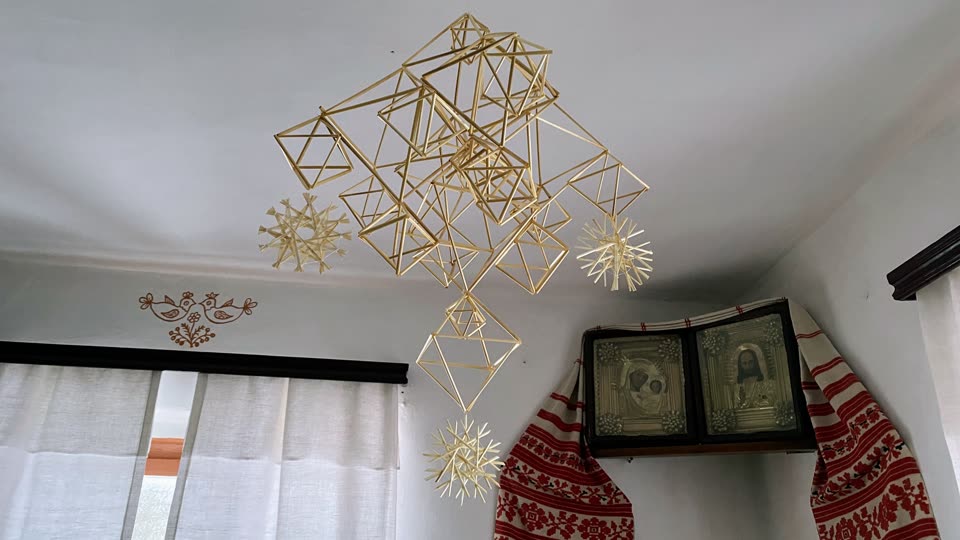
A straw spider hangs from the ceiling, and it is there for the cave rather than for the tree
A pavuk — a spider — is woven out of straw into a hanging construction, trimmed with coloured ribbons and fixed to the ceiling, along with doves made of straw or paper. The folk account gives it two jobs. The spider wove the world; and it wove across the mouth of the cave where Christ was born, so that Herod's soldiers, out looking for the child, walked past the cave without glancing inside.
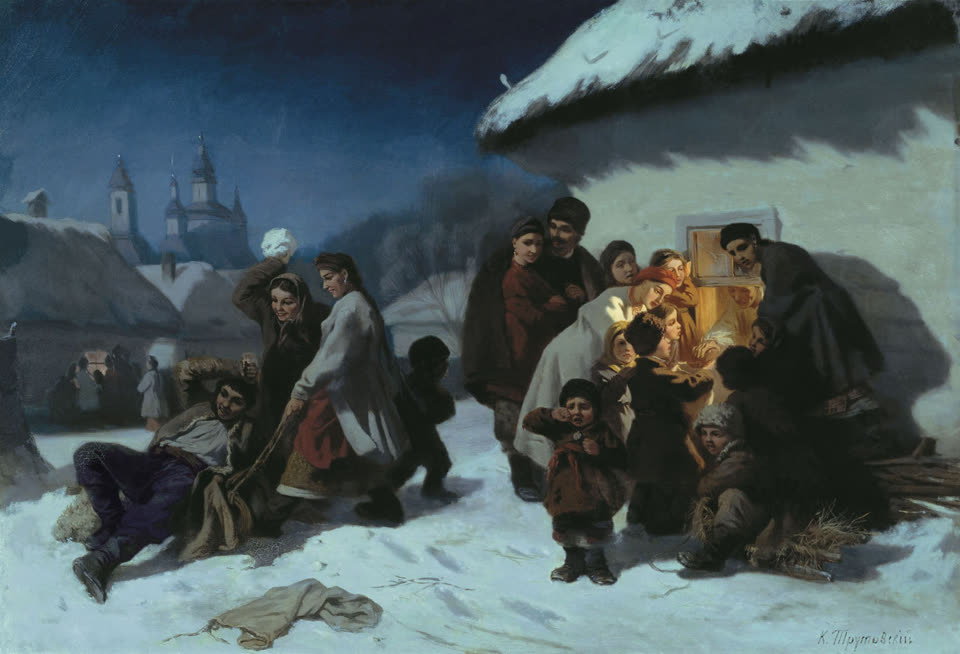
A carol is addressed to one person in the house and praises them by name
Koliadky are praise songs of the winter cycle, and they are not sung at the household in general. There is a carol for the daughter, a carol for the son and a carol for the master, and each one builds its subject up before asking for anything. The carol for a girl has her in the garden pinning roses and asking God for rye, wheat and buckwheat to come up — and then, in the same breath, asking the man of the house for a pastry. The Church fought the carols when they were still plainly pagan songs, and banned them, and lost. Groups begin gathering to rehearse, and to build their stars, masks and vertep box, as early as Pokrova in mid-October.
The vertep goes from house to house, and its cast has been taking on new members for a century
Vertep is both the cave at Bethlehem and the travelling play named after it. In Mizhhiria in Zakarpattia the vertepnyky go house to house on the first day of Christmas as the angel, King Herod, death, a Gypsy and a soldier. The cast is not closed. Among the figures in the modern play are a policeman who fines everybody, a doctor who tries to give everyone an injection or write them a prescription for expensive medicine, and a fortune-teller who pesters the room to have their palms read.
A parish could vote to keep the old calendar, and the church asked them not to hurry
The calendar change did not arrive as an order. A year before the general reform, the Holy Synod set out a route by which any parish or monastery that wanted the Revised Julian calendar could ask for it: the parish assembly decides, two thirds of the members have to support the request, it goes to the diocesan bishop and then to the Synod, and a blessing is granted parish by parish and listed in an appendix. The Synod attached advice to its own procedure — communities without a real pastoral need should not hurry, and should wait for the decision of the whole church — and the right to keep the old calendar was preserved for those who wanted it.
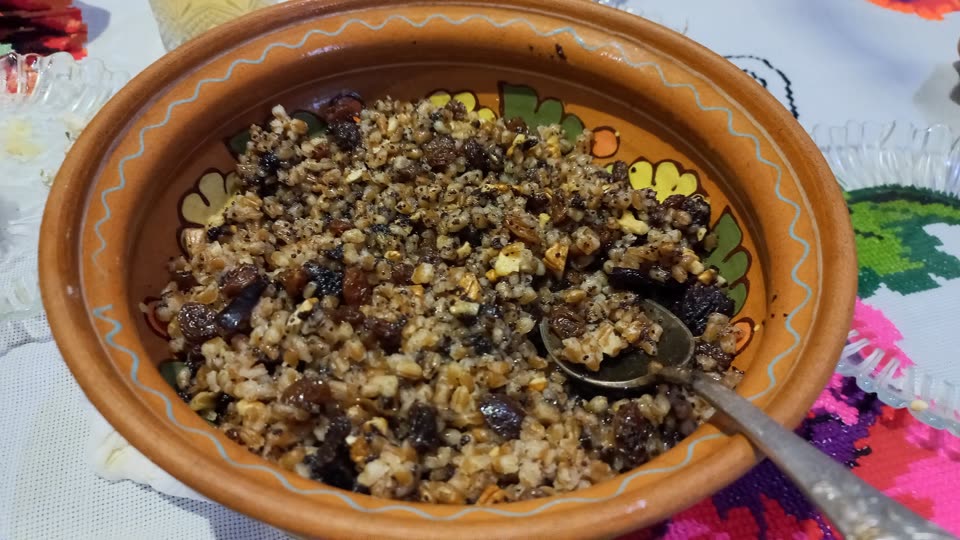
Whole wheat grains, pounded in a mortar, soaked in cold water for hours and boiled in a new pot. If it rises over the rim it promises a prosperous year. It is dressed with syta — honey let down with water — and with ground poppy seed, nuts and raisins; the poppy is ground in a makitra until it gives up a white liquid the cook calls milk. It is never made from rye. Rye is the grain that stands for life, and kutia is food set out for the dead.
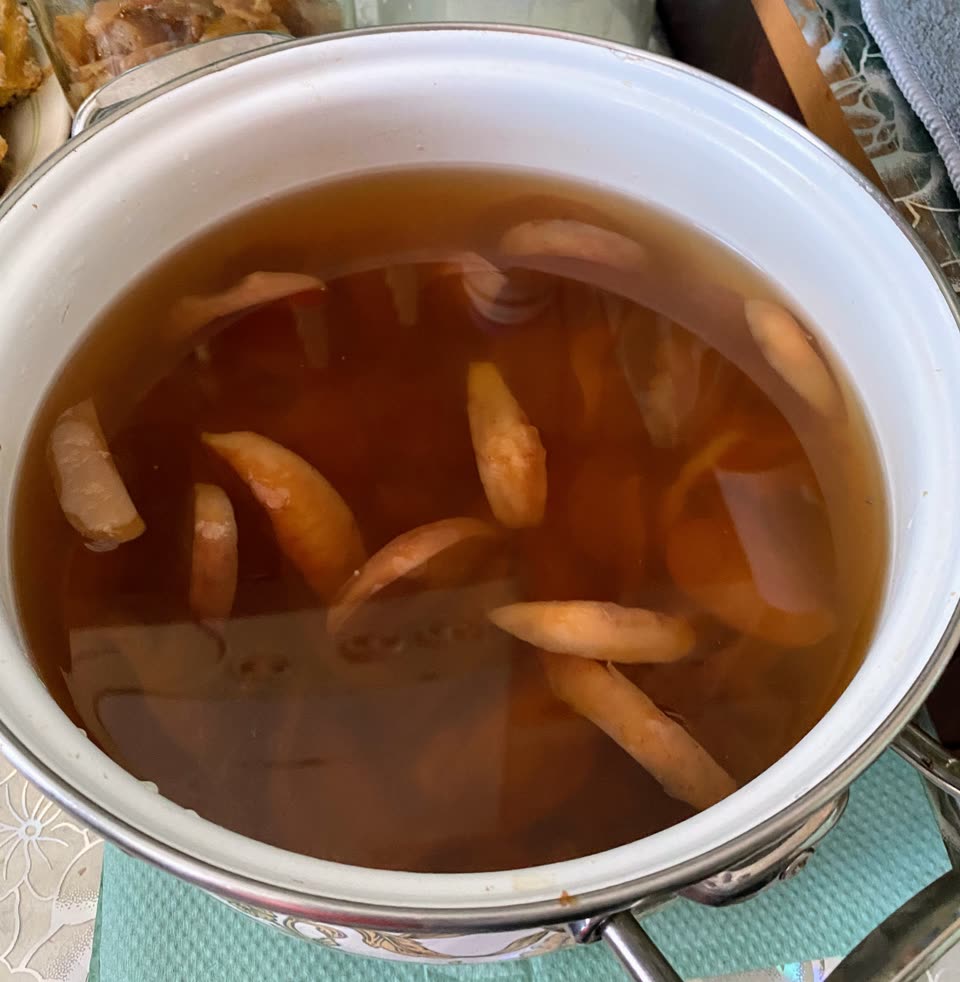
A jug of dried fruit boiled down — apples, pears, plums, cherries — sweetened with honey or sugar, and set on the table as the kutia's pair rather than served after it. Carrying the two to the corner has its own line: go, kutia, to the icon corner, and uzvar, to the market.
A rye loaf, more rarely a wheat one, shaped as a flat round with cuts around the edge; the petals the cuts make are folded into the middle and pressed down with a spoon. Its first job is to cover the pot of kutia on the table. Its second is to be given away — knyshi are what carollers are handed, and what people take to godparents and relatives over the holidays.
Дідух – Рай — Музей народної архітектури та побуту у Львові імені Климентія Шептицького (the Klymentiy Sheptytsky Museum of Folk Architecture and Life, Lviv)
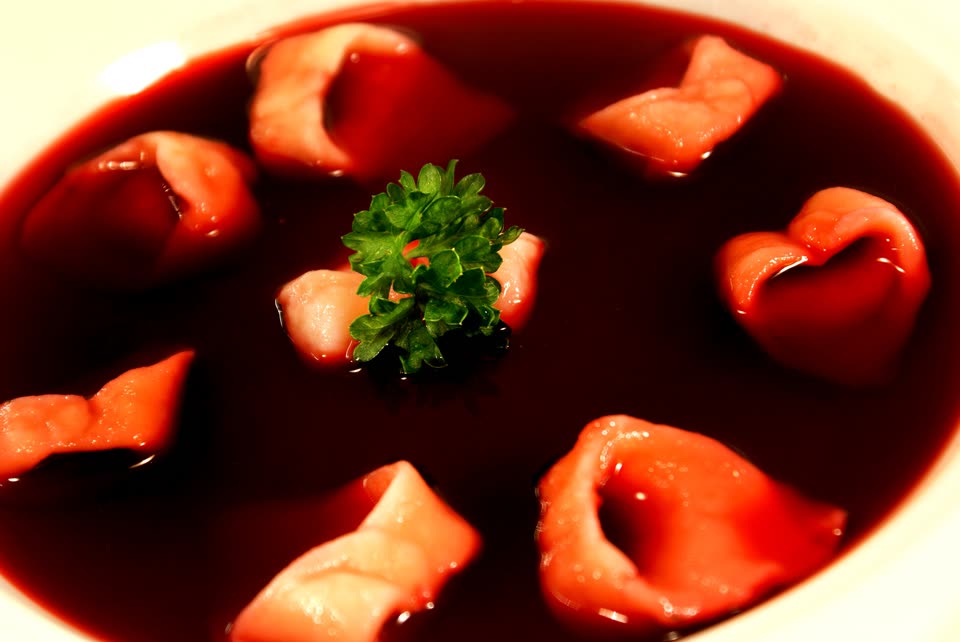
A meatless borshch with mushrooms, or with vushka — little ears, triangular dumplings the size of a thumbnail filled with mushroom. It is one of the dishes on the Holy Supper table in Boikivshchyna, in the Carpathian west.
Widely repeated claims about Christmas in Ukraine that do not survive
checking. Each one says what is actually the case, because a correction
with nothing in its place leaves you worse off than before.
Oversimplified
Carol of the Bells is a Ukrainian Christmas carol
What is actually the case. The melody is Ukrainian and almost everything else about that sentence is not. It is Shchedryk, a shchedrivka — a song for the New Year, not for Christmas — and its subject is a swallow that flies into a household to tell the master how much his livestock has increased. Mykola Leontovych made the choral setting from a folk melody of four notes; it was first sung in Kyiv in December 1916. The bells are the work of Peter Wilhousky, an American conductor of Ukrainian descent who needed a short piece for a radio broadcast and wrote English words for it, published by Carl Fischer in 1936 as «Carol of the Bells. Ukrainian Carol. Words by Peter J. Wilhousky. Music by M. Leontovych». His own account of what he did is unambiguous: he discarded the Ukrainian text «about 'shchedryk' — (the barnyard fowl)» and concentrated instead on «the merry tinkle of the bells which I heard in the music». There are no bells in Shchedryk. He heard them.
Ukrainian origin of Carol of the Bells — ukraine.ua, a project of the Ministry of Foreign Affairs of Ukraine; narrative, research and text by Tina Peresunko
What is actually the case. They did, and in law they no longer do. 7 January was a statutory holiday in Ukraine until 30 July 2023, when an amendment to Article 73 of the Labour Code struck it out and put 25 December in its place. The Orthodox Church of Ukraine moved its fixed feasts in the same year, by a Council of Bishops decision of 24 May confirmed by the Local Council on 27 July. What a visitor will find is a country most of the way through the change rather than finished with it: asked by Rating Group in May 2026, 51% keep 25 December, 21% keep both dates and 18% keep 7 January alone.
Orthodox Christmas falls on a different day from Western Christmas
What is actually the case. It falls on the same day, counted on a different calendar. Every Orthodox church keeps the Nativity on 25 December; the churches that have kept the Julian reckoning are thirteen days behind the civil calendar, so their 25 December lands on the civil 7 January. The head of the Orthodox Church of Ukraine said so in as many words while the question was being argued in his own church: the date of the Nativity «для всіх православних християн є спільною і вшановується 25 грудня, однак за двома різними способами обчислення календаря». Nobody has ever moved Christmas. Some people are counting from a different zero.
The legend of the Christmas spider, whose webs turned to silver and gave us tinsel, is Ukrainian
What is actually the case. Ukraine has a real Christmas spider and it is not that one. A pavuk is a geometric construction woven out of straw and hung from the ceiling of the house, not from a tree, and the story the Ivan Honchar Museum records with it has nothing to do with tinsel or with a poor widow: the spider wove its web across the mouth of the cave where Christ was born, so that Herod's soldiers, out hunting for the child, walked past the opening without looking in. The museum gives the spider a second and larger job in the same breath — it wove the world.
The twelve dishes of the Holy Supper are twelve because there were twelve apostles
What is actually the case. The number is not always twelve. The Ivan Honchar Museum's own account of the Holy Supper — which names the dishes, the fillings and the villages they were recorded in — says the table should carry «дванадцять або непарна кількість пісних страв»: twelve, or else an odd number of them. An explanation that only works for twelve cannot be the reason for a count that is sometimes eleven or thirteen. The apostolic reading is everywhere in popular writing about Ukrainian Christmas and it is nowhere in the museum's description of the meal.
Ukrainian children's presents come from Did Moroz, Grandfather Frost
What is actually the case. The figure the Ukrainian calendar attaches to present-giving is Saint Nicholas, and he arrives on his own feast day rather than at Christmas — 6 December since the 2023 calendar change, 19 December before it. When the custom was last measured nationally, two thirds of Ukrainian families kept it, and in the west of the country nine in ten did; among Greek Catholics it was 92%. Did Moroz belongs to New Year rather than to Christmas, and the two occasions are three weeks and a different calendar apart.
The law that ended Ukraine's January Christmas does not contain the date it removed. It is six lines long, it adds «25 грудня - Різдво Христове» to the Labour Code, and where 7 January used to be it says only: delete the third paragraph. To learn what the third paragraph said you have to go to a different document — a Cabinet of Ministers order arranging a long weekend, which names the day in passing while doing something else entirely.
Ukraine put Christmas into its Labour Code on a day when the Labour Code’s holiday article was not in force. Article 73 lists the public holidays, and a separate wartime law suspends it for as long as martial law lasts — along with the shortened working day before a holiday and the rule that moves a holiday falling on a weekend. Martial law has been in force since February 2022 and has been extended repeatedly, in ninety-day terms. The term now running began at 05:30 on 31 October 2026 and lasts ninety days, which carries it to 29 January 2027 — past Christmas. So 25 December has been the statutory date since July 2023 and has never yet been a statutory day off, and it will not be one in 2026 either. People work, or they do not, according to their employer.
Ukraine moved Christmas and left Easter where it was. The calendar reform of 2023 changed only the feasts with fixed dates; the rule for calculating Pascha was deliberately untouched, because it is the one piece of the calendar shared by every Orthodox church. So a Ukrainian parish now keeps Christmas on the same day as Rome and Easter on a different one.
The song the English-speaking world knows as Carol of the Bells left Ukraine as a diplomatic instrument. Symon Petliura heard Oleksandr Koshyts's choir in Kyiv on 1 January 1919 and ordered a hundred of the best singers assembled to tour Europe and sing for the recognition of Ukrainian independence at the Paris Peace Conference. Thirty of them dared to go. The choir got out of Kyiv on 4 February 1919, one day before the Bolsheviks took the city, and reached Paris nine months later because France would not give visas to singers from a state it did not recognise. Georges Clemenceau, who chaired the conference, never came to a concert.
Ukrainian origin of Carol of the Bells — ukraine.ua, a project of the Ministry of Foreign Affairs of Ukraine; narrative, research and text by Tina Peresunko
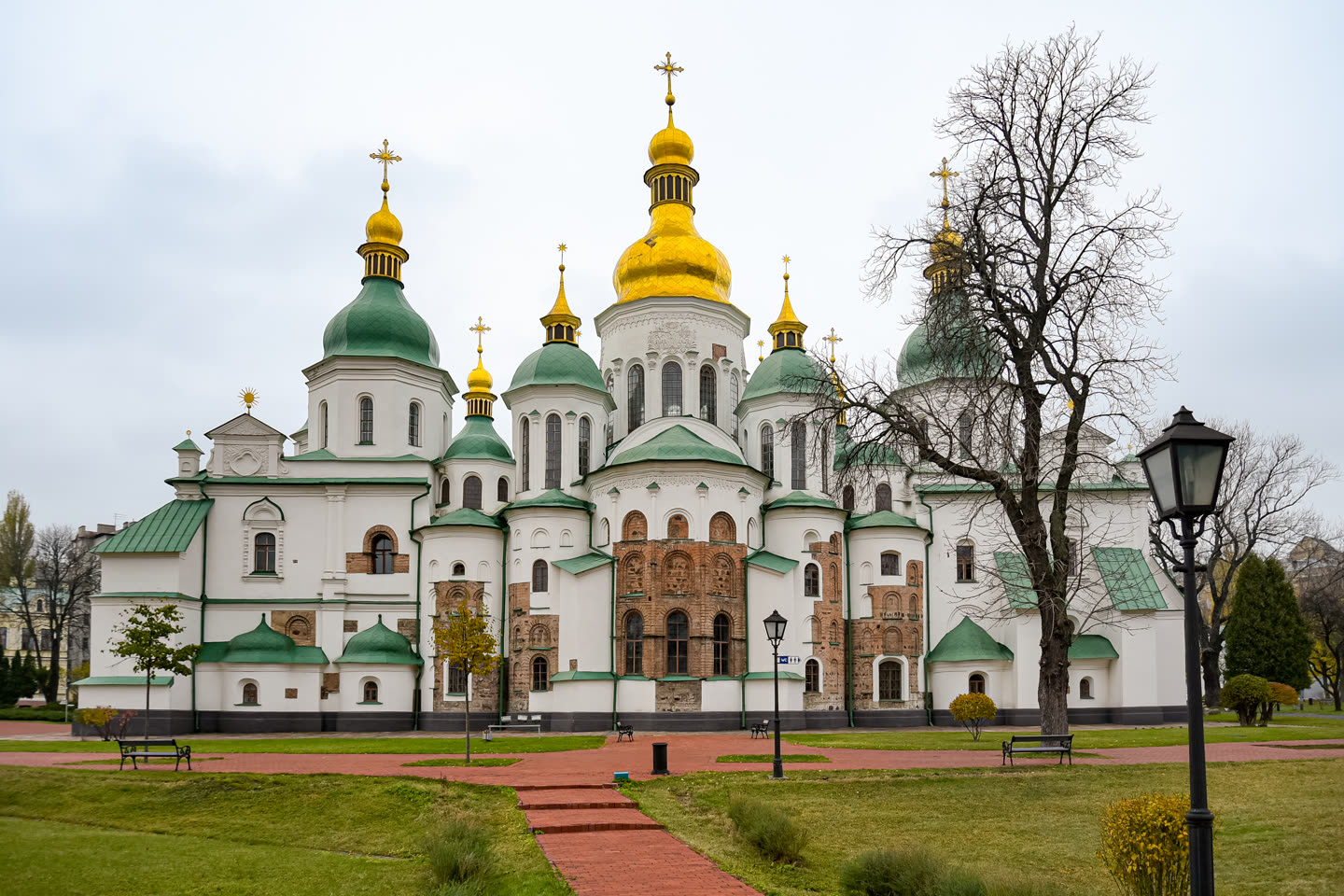
Saint Nicholas's day moved thirteen days in 2023, and the same church in Kyiv shows it. The Primate kept the feast at Mykola Prytysk, in the Podilskyi district, on 19 December in 2019, 2021 and 2022, and on 6 December in 2023 — a patronal feast, as the church's own report put it, marked on 6 December for the first time that year. It now falls on the Day of the Armed Forces of Ukraine.
The country moved, and it moved further than the law did. Asked in November 2022, eight months before 7 January was struck out of the statute book, 55% of Ukrainians said they would keep Christmas on 7 January, down from 71% a year earlier. Asked again by Rating Group in May 2026, three years after the change: 90% of Ukrainians keep Christmas at all, and the ninety divides as 51% on 25 December, 21% on both dates and 18% on 7 January alone.
Vertep means the cave. The word for the travelling Christmas play — a box theatre, or a troupe in masks going from house to house — is the Church Slavonic word for the cavern at Bethlehem, and Ukrainian ethnographers still use it in that plain sense: the spider in the folk story wove its web across the entrance of the vertep, the cave where Christ was born, so Herod's soldiers walked past it.
One of the dishes on the Christmas Eve table is on a UNESCO list of heritage in need of urgent safeguarding, and it was put there because of the war. Ukrainian borscht was inscribed in 2022 as a case of extreme urgency: not because anyone has stopped cooking it, but because the people who cook it have been displaced from the places they cooked it in, and because the destruction of gardens and farmland has cut them off from the vegetables it is made of.
Every claim carries its own citation. They are collected below, so you
can see what the page rests on and how much of it comes from where.
Ukrainian National Chorus, Thursday, October 5, 1922 at 8:15 PM, Main Hall — Carnegie Hall Performance History Search (Rose Archives). Retrieved 2026-10-19.The programme is there — «Ukrainian National Chorus / Alexander Koshetz, Conductor», presented by Max Rabinoff, noted as the chorus's US debut, with three Leontovych pieces among the Ukrainian items. That confirms 5 October 1922, and it disposes of the «5 October 1921» that circulates in English writing about the song: there is no 1921 Ukrainian National Chorus event in the database at all. But the catalogue lists the work as «Carol of the Bells (1914)», a title that would not exist for another fourteen years, so that line is a modern identification of the piece and not evidence about the 1922 programme book. Searching the catalogue for «Shchedryk» returns fifty-six events, the oldest from 1965, and not this one; «Leontovich» returns it first.
Указ Президента України № 1060/2026 «Про продовження строку дії воєнного стану в Україні» — President of Ukraine, official website. Retrieved 2026-11-09.The operative clause: «продовжити строк дії воєнного стану в Україні з 05 години 30 хвилин 31 жовтня 2026 року строком на 90 діб» — extend the term of martial law in Ukraine from 05:30 on 31 October 2026 for ninety days.
Culture of Ukrainian borscht cooking — nomination file No. 01852, inscribed 2022 on the List of Intangible Cultural Heritage in Need of Urgent Safeguarding — UNESCO, Intangible Cultural Heritage. Retrieved 2026-10-19. archived 16 October 2026UNESCO’s own summary, headed «Case of extreme urgency»: «The viability of the element, however, is threatened by various factors since the beginning of the armed conflict in February 2022, including the displacement of bearers from their communities of origin and from the cultural contexts necessary for the cooking and consumption of borscht in Ukraine. Moreover, destruction to the surrounding environment and traditional agriculture has prevented communities from accessing local products, such as vegetables, needed to prepare the dish.» What it says is that the practice «entails the recipe, cooking method and occasion, according to which a certain variety is prepared», and that borscht «is also used in ritual practices».
Закон України «Про організацію трудових відносин в умовах воєнного стану» від 15.03.2022 № 2136-IX, стаття 6 частина шоста — Верховна Рада України, open-data text of the act. Retrieved 2026-10-20.The sentence, in the wording given it by Law № 2352-IX of 1 July 2022: «У період дії воєнного стану не застосовуються норми статті 53, частини першої статті 65, частин третьої - п’ятої статті 67, статей 71, 73, 78-1 Кодексу законів про працю України та частини другої статті 5 Закону України "Про відпустки".»
Розпорядження Кабінету Міністрів України від 30 вересня 2020 р. № 1191-р «Про перенесення робочих днів у 2021 році» — Кабінет Міністрів України (Cabinet of Ministers of Ukraine). Retrieved 2026-10-18. archived 11 April 2026The 2023 law says only «абзац третій виключити», and to know what the third paragraph of Article 73 said you have to find the state saying it somewhere else. The government is arranging a long weekend here, and it names the day in passing: «З метою забезпечення раціонального використання робочого часу і створення сприятливих умов для святкування у 2021 році 7 січня — Різдва Христового, 24 серпня — Дня незалежності України та 14 жовтня — Дня захисника України».
Дідух – Рай — Музей народної архітектури та побуту у Львові імені Климентія Шептицького (the Klymentiy Sheptytsky Museum of Folk Architecture and Life, Lviv). Retrieved 2026-10-19. archived 22 April 2026A second museum, for the hay and for what the children do while it is laid: «Господиня ж забирає у чоловіка з-під пахви в’язочку сіна і розстеляє його на покуті, а господар урочисто ставить на ньому Дідуха. Хлопець свої принесені в’язки сіна ставить одну на стіл, а другу під стіл. Коли ж розстеляють сіно на покуті і на столі, то всі діти, які є в хаті катуляються на долівці, що мало сприяти приплоду худоби, щоб вівці котилися.»
Атрибути Різдва та їхнє значення — Національний центр народної культури «Музей Івана Гончара» (the Ivan Honchar Museum, Ukraine's national centre of folk culture). Retrieved 2026-10-18. archived 20 September 2026«На Святий вечір на столі має бути дванадцять або непарна кількість пісних страв» — twelve OR an odd number, where the usual reports give twelve flat. On the table: «Стіл після різдвяної вечері не прибирають, усі страви і запалену свічку залишають до ранку "для тих, кого нема вже з нами". Ложки збирають і ставлять біля Дідуха. Мити посуд після Святої вечері вважається за гріх.»
Колядки для дівчини, хлопця, господаря (текст, аудіо) — Національний центр народної культури «Музей Івана Гончара» (the Ivan Honchar Museum). Retrieved 2026-10-19. archived 12 May 2026«Колядки — величальні календарно-обрядові пісні зимового циклу свят, які походять з глибокої давнини. Колись колядки були язичницькими піснями, з якими Православна Церква спочатку вела безуспішну боротьбу, забороняла їх.» The carol quoted is the museum's own field recording from Zhytomyr–Luhyny–Putylovychi: «Ой там дівчина рожу щипала... Зароди, Боже, жито-пшеницю... Зароди, Боже, і жито-гречку... А ви нам дядьку, по пирожечку.»
Колядки та щедрівки: час готуватися! — Національний центр народної культури «Музей Івана Гончара» (the Ivan Honchar Museum). Retrieved 2026-10-19. archived 18 January 2026For the October start, which is the detail that makes carolling a season rather than an evening: «Подекуди аж від Покрови – 14 жовтня – починали збиратися майбутні колядницькі гурти, вспівувати колядки та щедрівки, майструвати зорі, маски та вертепи.»
Предстоятель очолив Божественну літургію в день пам'яті святителя Миколая Чудотворця — Православна Церква України (the Orthodox Church of Ukraine), 6 December 2023. Retrieved 2026-10-19. archived 13 July 2026«У день відзначення пам'яті святителя Миколая Чудотворця, архієпископа Мир Лікійських, 6 грудня 2023 року...» and, at the end, the Primate congratulated the parish on a patronal feast «яке вперше в цьому році відзначається 6 грудня» — marked on 6 December for the first time that year.
Постанова №52 Священного Синоду «Про порядок надання благословення парафіям та монастирям Православної Церкви України на використання новоюліанського календаря» — Православна Церква України (the Orthodox Church of Ukraine), Holy Synod, 2 February 2023. Retrieved 2026-10-18. archived 11 July 2026«Рішення про подання такого прохання має бути підтримане не менше, ніж двома третинами членів відповідної громади та належним чином документально оформлене. Отримання відповідного благословення є винятком, який здійснюється за ікономією, а тому Священний Синод рекомендує громадам і монастирям без реальної пастирської доцільності не поспішати з поданням прохань, очікуючи загальноцерковного рішення.» The resolution's own reasoning is worth reading for why the change was slow: «досвід впровадження календарних реформ у минулому свідчить, що поспішність впровадження... несуть ризик утворення розколу (схизми)», and it says plainly that calendar renewal had been discredited in this part of the world by having been imposed — «оновлення календарної традиції було дискредитоване її зовнішнім нав'язуванням, примусом до відмови від православної та національної ідентичності».
Різдвяне послання Предстоятеля — Православна Церква України (the Orthodox Church of Ukraine), the Primate's Christmas epistle, 3 January 2020. Retrieved 2026-10-19. archived 16 May 2026The letter's first two lines are «Христос народився!» and «Славімо Його!», and its last line is «Христос народився! Славімо Його!» again.
Богослужіння в день пам'яті святого Миколая Чудотворця — Православна Церква України, 19 December 2019. Retrieved 2026-10-19. archived 10 December 2024The other end of the same thread, and the same church: «В день пам'яті святого Миколая Чудотворця архієпископа Мир Лікійського, 19 грудня 2019 року... в храмі святого Миколая Чудотворця (Миколи Притиска), що розташований у Подільському районі столиці.»
Постанови Помісного Собору УПЦ (ПЦУ) — Православна Церква України, Local Council of 27 July 2023, St Sophia's Cathedral, Kyiv. Retrieved 2026-10-18. archived 21 May 2026The end of the process, and it is one sentence of a long document: «7. Остаточно затвердити Постанову Архієрейського Собору від 24 травня 2023 р. "Про врегулювання календарного питання в Православній Церкві України" та зміни, внесені у зв'язку з цим до офіційного Церковного календаря Православної Церкви України.»
Слово Предстоятеля з приводу святкування Різдва Христового і теми календарних змін — Православна Церква України, the Primate's address of 25 December 2022. Retrieved 2026-10-18. archived 19 May 2026«Всім слід ясно розуміти: йдеться не про одну лише дату святкування Різдва Христового, яка для всіх православних християн є спільною і вшановується 25 грудня, однак за двома різними способами обчислення календаря.» It is dated 25 December 2022, which is the year the church allowed any parish that wished it an additional Christmas service on that day — «це не зміна календаря, а пастирська можливість» — so the address is arguing against a reform he would preside over five months later, and the sentence quoted is a statement of what was never in dispute rather than a concession.
Дев'ятнадцяте загальнонаціональне опитування: святкування Різдва в Україні (20-21 листопада 2022) — Соціологічна група «Рейтинг» (Rating Group). Retrieved 2026-10-19. archived 3 October 2026«За останній рік дещо зросла кількість тих, хто святкує Різдво лише 25 грудня (з 4% до 11%), та тих, хто відзначає його в обидві дати (з 18% до 25%). Більше половини (55%) будуть святкувати Різдво 7 січня (у 2021 – 71%). 8% взагалі не святкують Різдво.» And on the question of moving it: «за рік значно побільшало тих, хто підтримує ідею перенесення святкування Різдва на 25 грудня: з 26% до 44%. Проти такої ідеї – 31% (у 2021 – 58%).» 1,000 respondents by telephone, margin 3.1%, excluding occupied Crimea and Donbas and areas without Ukrainian mobile coverage.
Оцінка релігійної ситуації в Україні (травень 2026) — Соціологічна група «Рейтинг» (Rating Group), published 3 June 2026. Retrieved 2026-10-20. archived 28 August 2026The sentence in full: «90% українців святкують Різдво, з них 51% - 25 грудня, 18% - 7 січня, 21% двічі – 25 грудня і 7 січня.» Fieldwork «4-9 травня 2026 року... опитала 2000 українців», by telephone.
Традиція дарувати подарунки на День Святого Миколая — Соціологічна група «Рейтинг» (Rating Group), survey of 25 November – 5 December 2011. Retrieved 2026-10-19. archived 21 April 2026«дві третини українських родин мають традицію дарувати на День Святого Миколая подарунки», against 29% with no such custom and 1% who did not know the day existed. The spread across the country is the interesting part: «Якщо на Заході традиція поширена серед 90% родин, то вже на Півночі (67%) і в Центрі (62%) менше, а на Півдні (56%), Сході (52%) і Донбасі (51%) ще менше.» 2,000 respondents, face to face.