Father Christmasle Père Noël · arrives 24 December
Who brings the presents
Saint Nicholassaint Nicolas · arrives 6 December
—days
—hrs
—min
—sec
Next: Friday 25 December 2026
When is Christmas in France?
Christmas Day in France is 25 December. It is a public holiday.
How to say it
French
Joyeux Noël
Joyeux Noël
say it: zhwah-YUH no-EL
A synthesised voice — not a recording of a person — saying Joyeux Noël
in fr-FR.
The ordinary greeting, and the one on the cards. Noël is from the Latin natalis; the same word uncapitalised, un noël, is a Christmas carol in the vernacular rather than the feast.
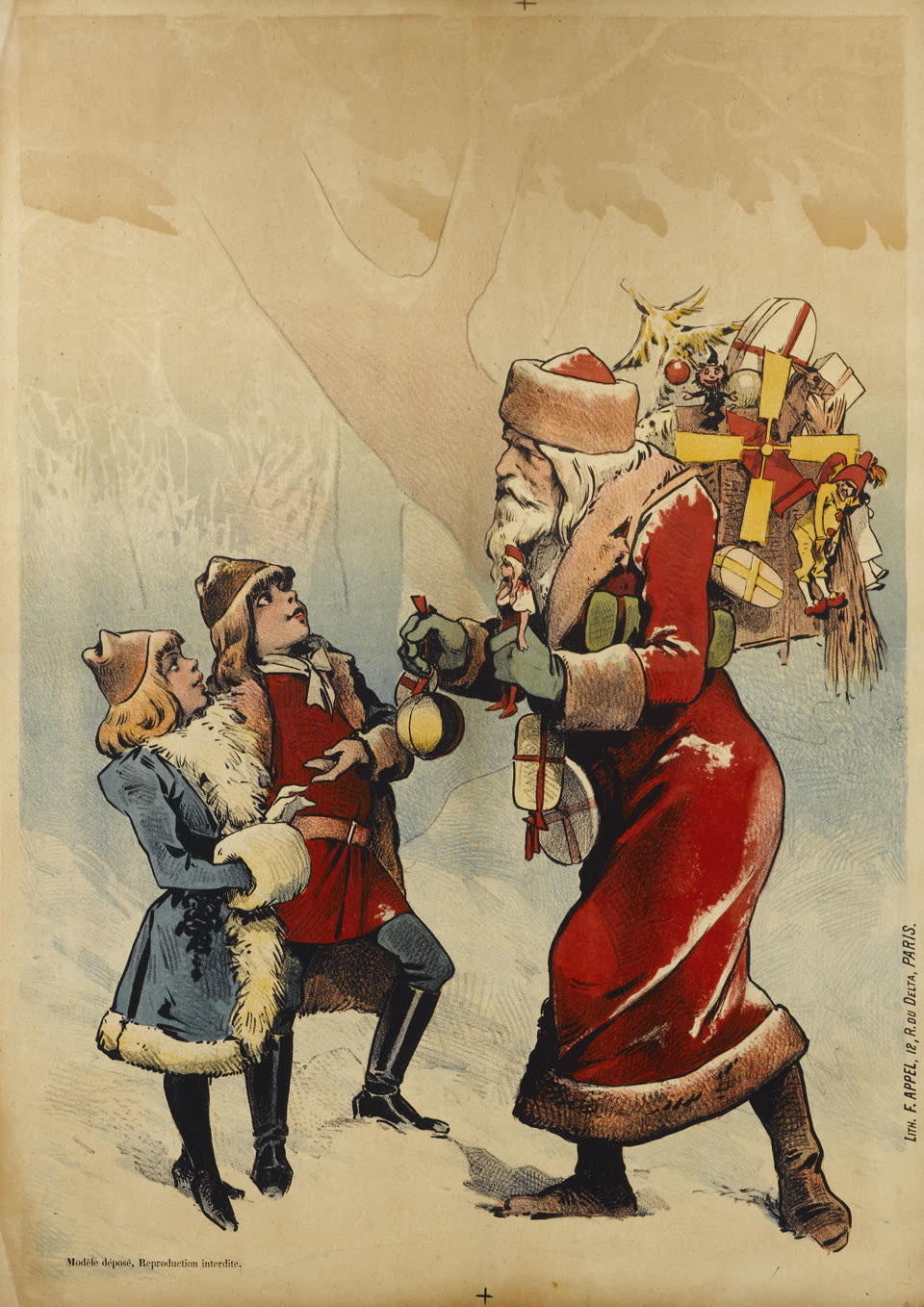
Comes in the night of the 24th, and the post office has answered his letters since 1962. Letters addressed to him do not need an address or a stamp: the words Père Noël on the envelope are enough to route it to a secretariat in Libourne, in the Gironde, where a staff of elves answers every one.
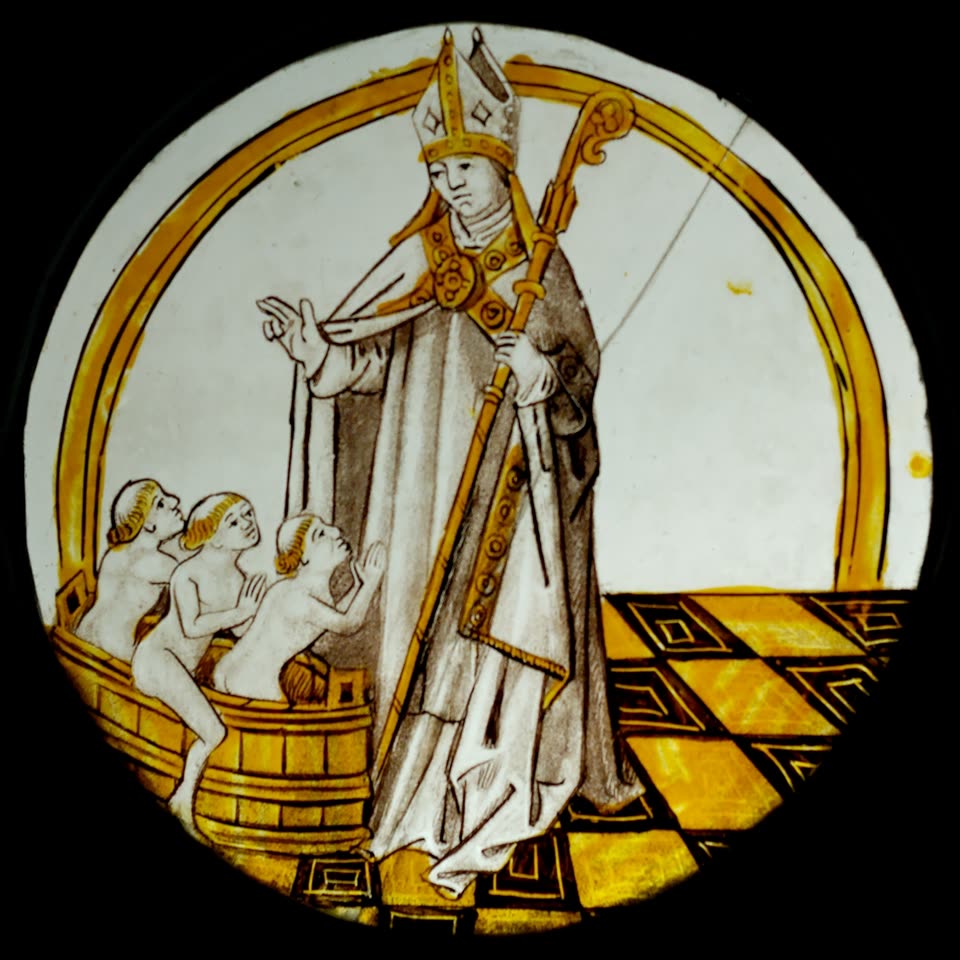
Brings sweets to children on 6 December across the north-east — Lorraine, Alsace, Bourgogne-Franche-Comté and Hauts-de-France — and he is the patron saint of Lorraine rather than a visitor to it. He does not come alone. The companion is Père Fouettard in most of that territory, Hans Trapp in Alsace, and in some places the Christkindel, a figure in white; what he carries is männele, the little brioche men, and coquilles.
In Lorraine the big December day is the 6th, and it has been since 1477
Saint Nicolas is the patron saint of Lorraine — Duke René II made him so after the battle of Nancy in 1477 — and in Nancy his feast, not Christmas, is the event the year is built around. Around a hundred thousand people watched the 2017 parade alone, and between fifteen and eighteen separate parades run across the twenty communes of the metropolis each December. The saint used to arrive on foot with Père Fouettard beside him; floats gradually replaced that, the first of them built in 1924. At Saint-Nicolas-de-Port, a few miles away, a torchlit religious procession has been kept for centuries on the strength of a vow made by a crusader who found himself freed from a prison in the East and standing on the church porch with his chains off.
Three départements get a second day of Christmas, because they were German for forty-seven years
France has eleven public holidays and one of them is Christmas. In Bas-Rhin, Haut-Rhin and Moselle there are two, and the difference is larger than a day. The Code du travail carries a chapter of local law for those three départements, and its article on holidays does not list days that are merely fériés — it lists days that are chômés, days nobody works. Twelfth on that list is «le premier et le second jour de Noël», the first and the second day of Christmas, which is how German law names them. Everywhere else in France the only holiday anyone is guaranteed off is 1 May. The three were annexed by Germany in 1871, returned in 1918, and kept the local law they had acquired. The same table gives them Good Friday as well — but only in communes that have a Protestant temple or a shared church.
A nativity scene in a French town hall is legal only if it is not too religious
France separated church and state in 1905, and article 28 of that law forbids public bodies to put up religious emblems in public places. That left a question the lower courts had been answering both ways: is a Christmas crib a religious emblem? In November 2016 the Conseil d'État decided it is both — a crèche has, in its words, a plurality of meanings, religious but also part of the secular decoration of the end of the year. So a town hall may install one temporarily if it is cultural, artistic or festive, and may not if it amounts to recognising a religion or marking a religious preference. The test is not what the object is. It is what the council is doing with it.
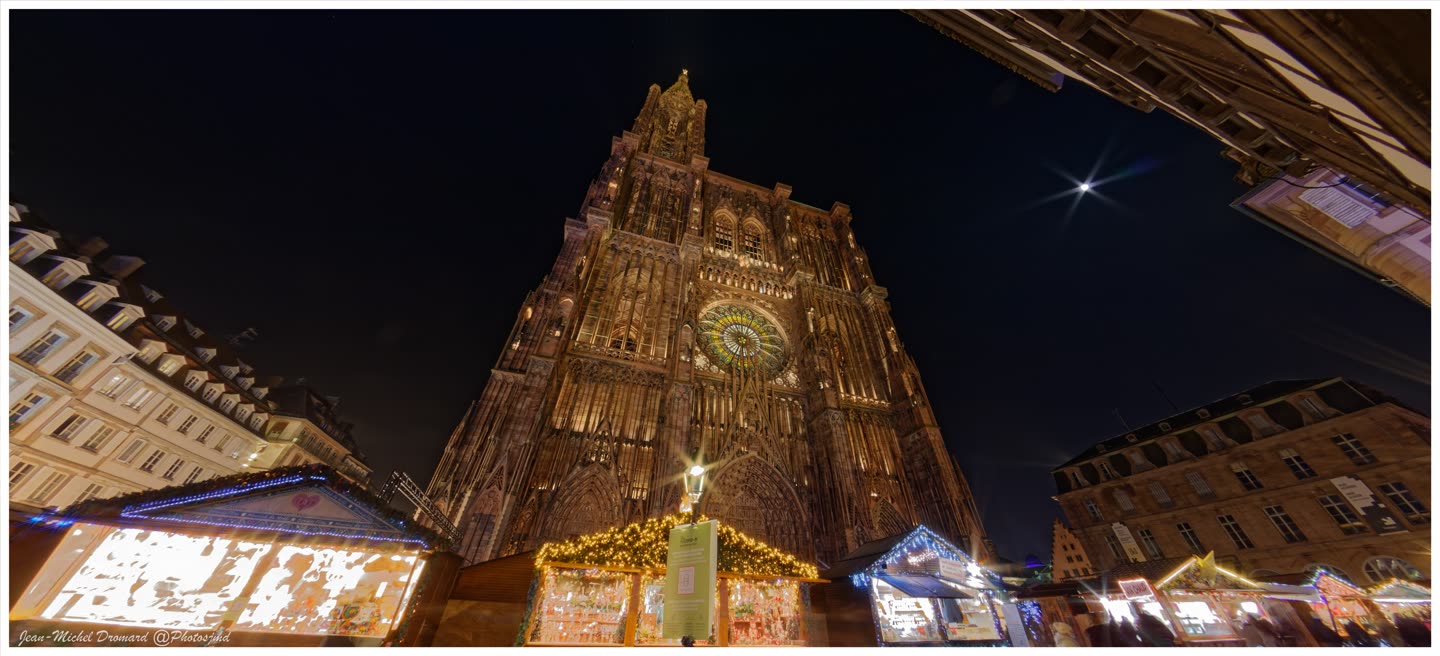
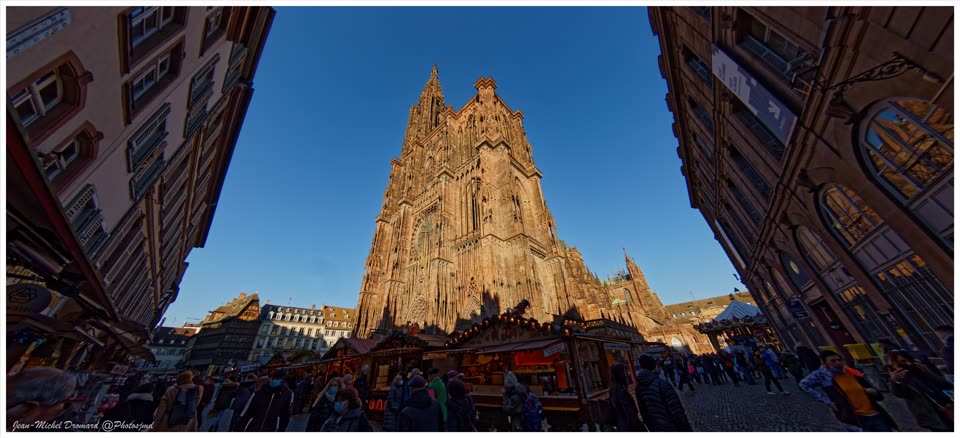
Strasbourg's market is named for the Christ Child, and dates itself to 1570
The Christkindelsmärik — the Christ Child's market, in Alsatian — is the one the city builds its December around, and Strasbourg's own history puts its birth in 1570 as «a market dedicated to the Infant Jesus». It moved to the place Broglie in 1870, took the name Strasbourg Capitale de Noël in 1992, and acquired the Grand Sapin on the place Kléber in 2000.
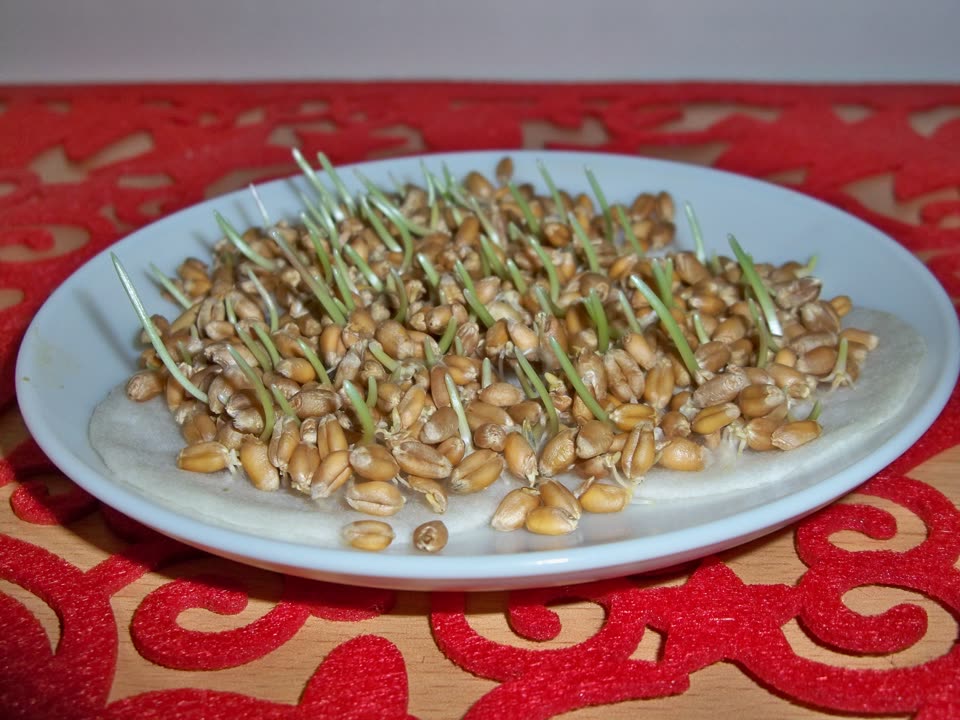
In Provence the season opens on 4 December with three saucers of wheat
On Saint Barbara's day, grains of wheat are set to sprout on damp cotton wool in three saucers, and on Christmas Eve the three go on the table. Good germination means a good year: Quand lou blad vèn bèn, tout vèn bèn — when the wheat comes up well, everything comes up well. The national heritage inventory is blunt that almost nobody can now say what the rite means, and treats that as the point: it is a gesture repeated because it is repeated.
The réveillon is long, late, and built to a shape UNESCO wrote down
Christmas Eve in France is a meal that starts late and goes on. It has a form, and the form is not a Christmas form — it is the French festive meal, which UNESCO inscribed in 2010 as a social custom for marking the important moments of a life. The sequence is fixed: an apéritif at one end, a digestif at the other, and at least four courses between them — a starter, fish or meat with vegetables, cheese, and a dessert. The inscription also covers the parts that are not food, including the pairing of dishes with wines, the laying of the table, and a particular way of smelling and tasting what is served. Christmas Eve is the night most of the country performs the whole thing.
The gros souper is the lean meal, and the réveillon is the other one
Provence eats twice. The gros souper comes before midnight mass and is deliberately meagre — shellfish, fish, vegetables or pasta, depending where you are — because it still belongs to the fast. The réveillon comes after mass and is the opposite: the heritage inventory says flatly that it «marque le temps du gras». Most accounts of a French Christmas Eve blur the two into one late dinner. In Provence they are separated by a church service and by the end of the fast.
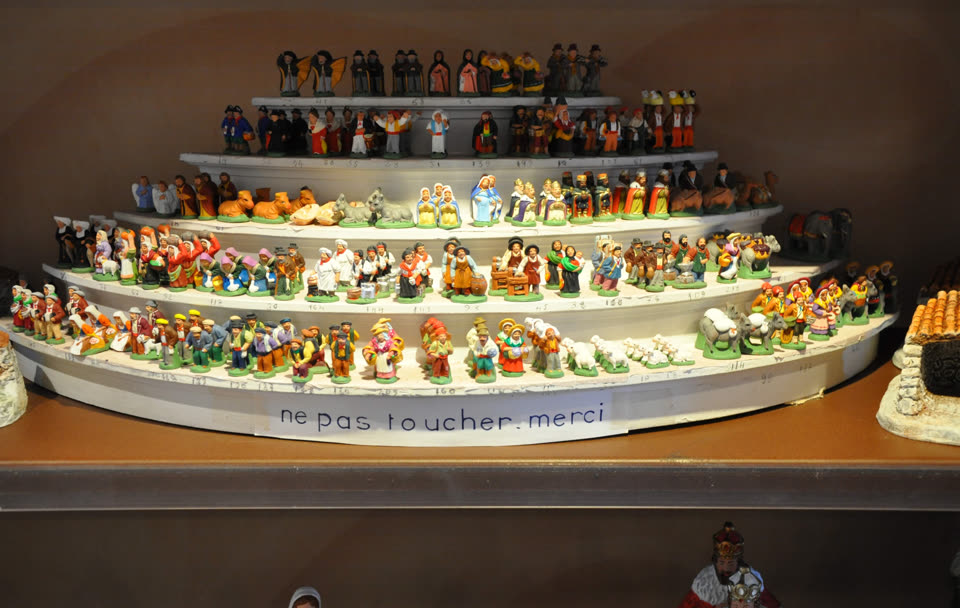
The santon is a clay villager, and it is younger than the Revolution
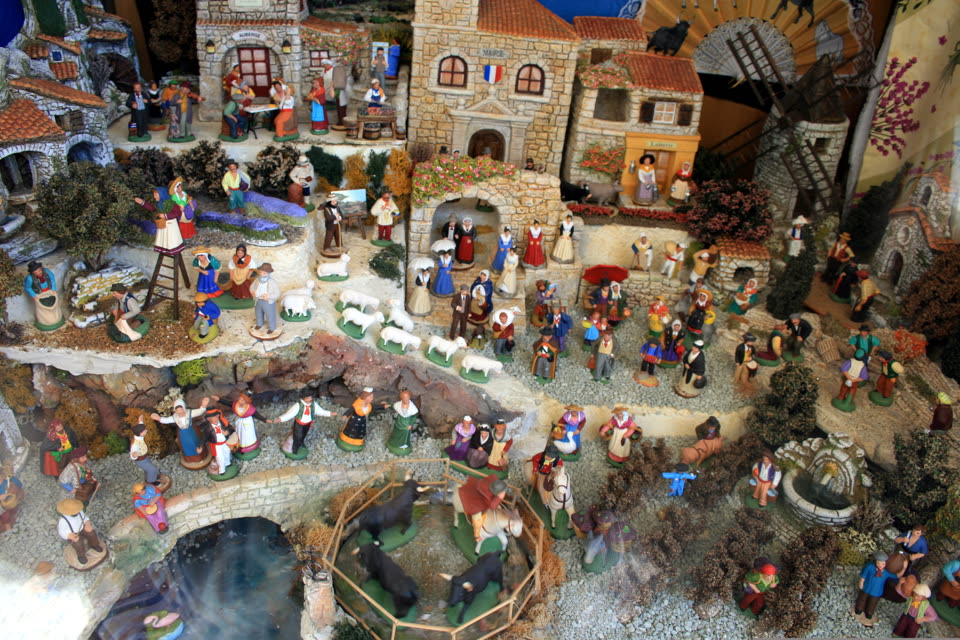
A Provençal crib is not only the Holy Family. It is a whole village in painted clay — the fishwife, the miller, the knife-grinder, the drum-major — walking towards the stable across a hill with a river and a bridge. The figures are santons, and they are not medieval: the Marseille potter Jean-Louis Lagnel, who died in 1822, worked them into the form still used, and they spread from the Concordat of 1801, when moulded clay figures began to be sold for churches and for homes. By the middle of the nineteenth century the Marseille Christmas fair had become the foire des santons. The clay is the red clay of Provence, much of it from the beds around Salernes, and a santon goes through seven stages and a firing at 800 degrees.
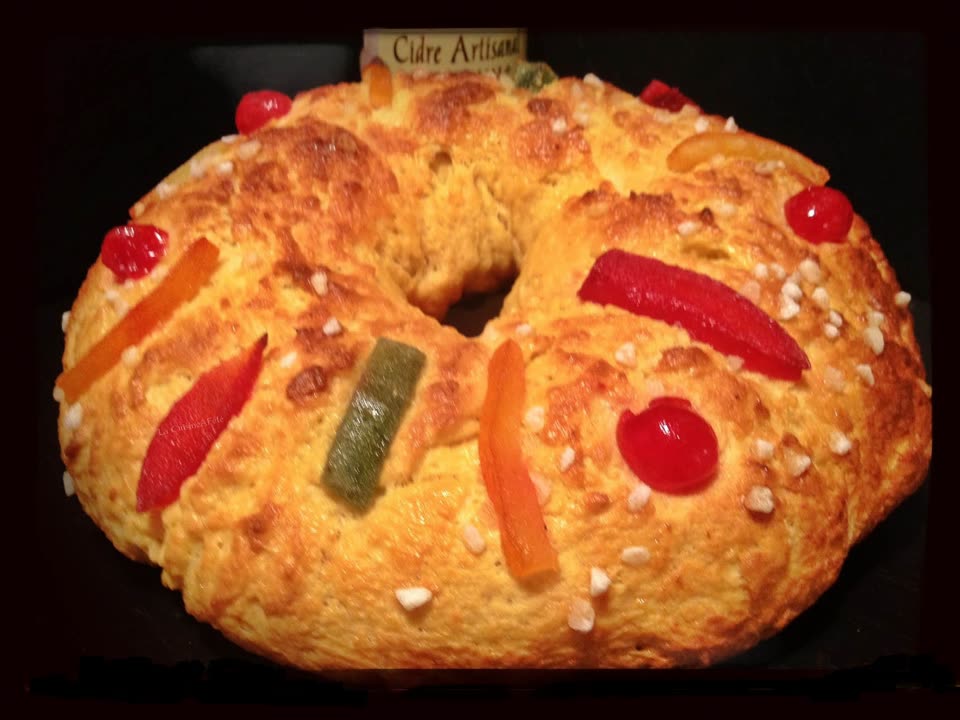
The Provençal king-cake is a brioche, and the youngest child hides under the table
Drawing the kings on 6 January is done across France, and most of the country does it with a galette feuilletée, a cake of flaky pastry. Provence uses a different one for the same rite: a ring-shaped brioche scented with orange-flower water, topped with candied fruit and sugar crystals, and it hides two things rather than one — a bean and a small santon. Before it is cut, the youngest person present goes under the table and calls out who each slice is for, so that nobody can be accused of steering the bean. Whoever gets it is king for the day and owes the next cake, which is how the thing keeps going until the 2nd of February.
Shepherds bring a lamb to midnight mass, and the Nativity is played in Provençal
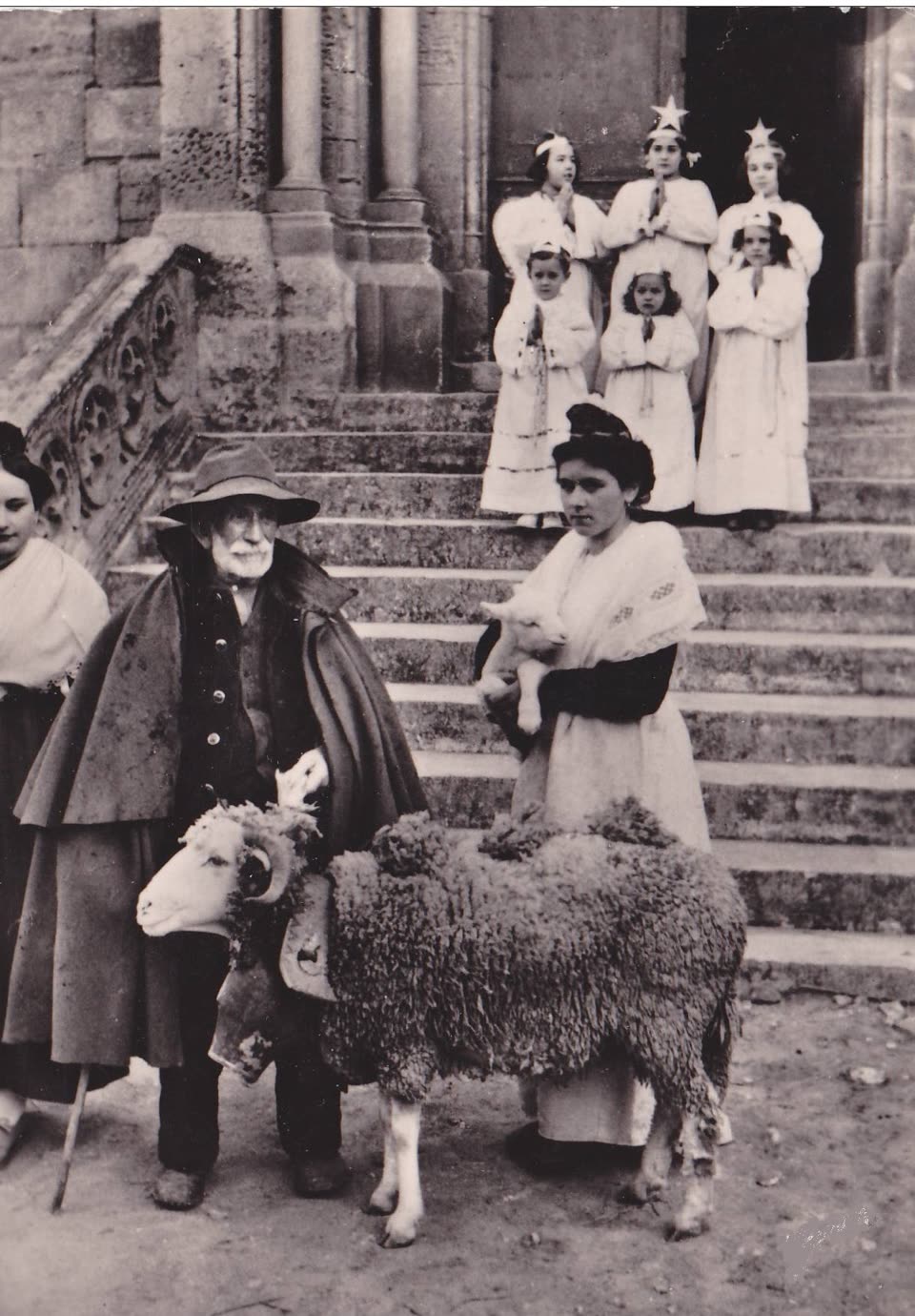
At midnight mass in Provence the service can open with the pastrage: shepherds in old or supposedly old costume bring a lamb up the aisle in procession, with fishermen and farmers carrying what they have produced. Pastre is Provençal for shepherd. Out of that procession grew the pastorale, a sung and spoken staging of the Nativity in Provençal, which now plays to full houses from Christmas Day to the 2nd of February. Because it is performed in a language most of the audience does not speak, it is almost unknown outside the region.
The season does not end until February, and it ends in Marseille with green candles
The Provençal Christmas is a période calendale running from the start of December to Candlemas on 2 February — nine weeks, not twelve days. It closes at the abbey of Saint-Victor in Marseille, where around eighty thousand pilgrims come for the biggest Marian feast in the city. They buy green candles, which only the parish council may sell, and navettes, hard boat-shaped biscuits made since 1781 at the Four des Navettes around the corner, the boat being the one that is said to have brought the saints to the coast of Provence.
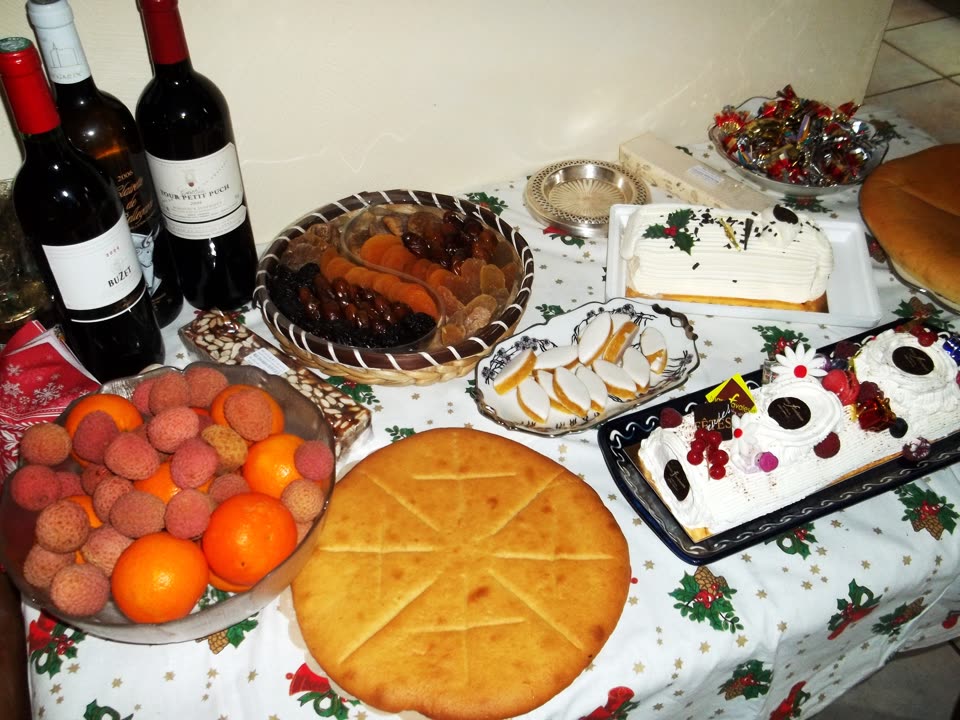
Eaten on the way back from midnight mass, and left out for days afterwards: dried figs, almonds, walnuts, hazelnuts and raisins — the dried fruits called mendiants — with fresh fruit, a green melon kept in grain, white nougat and black, and the pompe à l'huile. The thirteen are usually explained as Christ and the apostles. The number is younger than it sounds, and so is the list.
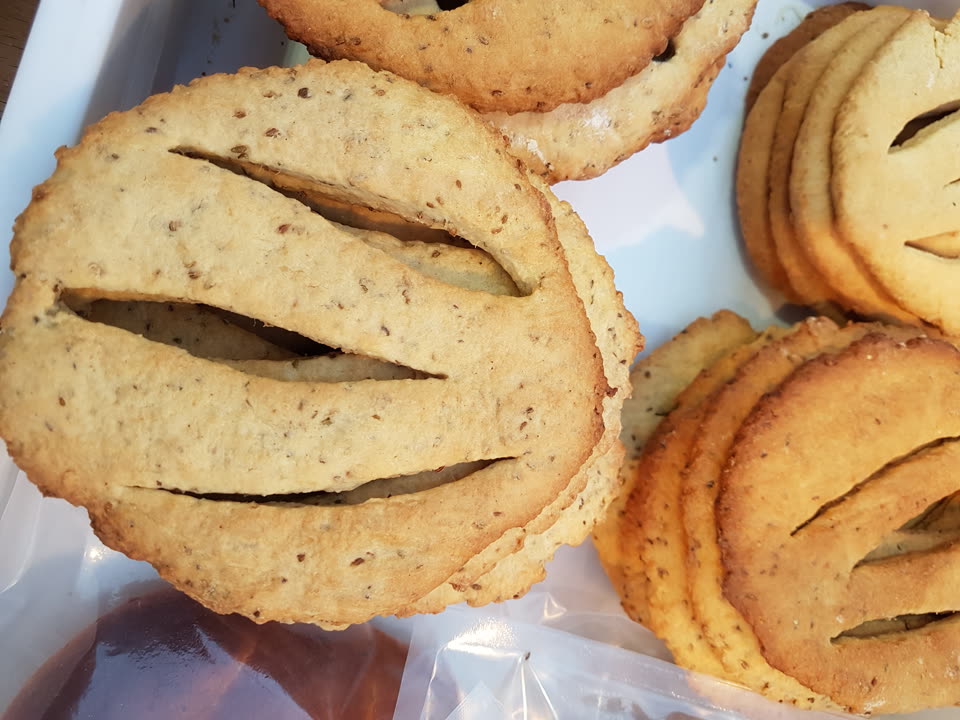
A flat, slashed, faintly sweet brioche made with olive oil rather than butter, and the one dessert of the thirteen that a Provençal Christmas is said to be impossible without. It is torn by hand, never cut with a knife — the usual explanation being that cutting it cuts your luck for the year. Frédéric Mistral called the pompe and the nougat the sacramental dishes of the table.
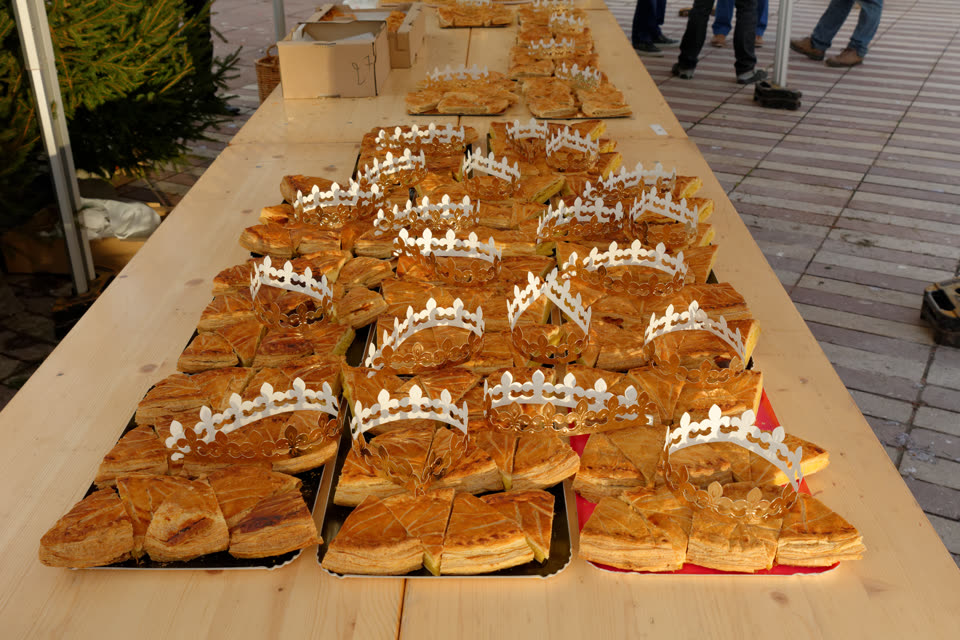
Eaten from Epiphany onwards, and in most of France it is a galette feuilletée, a cake of flaky pastry, with a charm baked inside, called the fève. The slice with the charm makes its eater king. In Provence the cake is a different thing entirely: a brioche ring, and there the charm has a santon for company.
Widely repeated claims about Christmas in France that do not survive
checking. Each one says what is actually the case, because a correction
with nothing in its place leaves you worse off than before.
Oversimplified
Strasbourg has the oldest Christmas market in Europe.
What is actually the case. It is very old and it is almost certainly the oldest in France: Strasbourg dates its Christkindelsmärik to 1570. But Dresden's Striezelmarkt has a document from 1434 — a privilege granted by Elector Friedrich II and his brother Duke Sigismund for a free market on the day before Christmas Eve — which is a hundred and thirty-six years earlier. The honest claim for Strasbourg is the oldest in France, not in Europe, and the city's own history page makes no European claim at all.
What is actually the case. It bans religious emblems in public places — article 28 of the law of 9 December 1905 — and in 2016 the Conseil d'État decided a Christmas crib is not simply one. Because a crèche carries several meanings at once, religious and also ordinary end-of-year decoration, a public body may put one up temporarily where it is cultural, artistic or festive, and may not where it amounts to recognising a religion or marking a preference. Cribs in French town halls are therefore sometimes lawful and sometimes not, and which one depends on the circumstances of the installation rather than on the object.
The thirteen desserts of Provence are an ancient tradition with a fixed list.
What is actually the case. The table is old and the list is not. France's own heritage inventory records that no text enumerates the Provençal Christmas desserts before the 1920s — they were the calenos, described by abundance rather than by number — and that the canonical thirteen were set out by the Arts et Traditions populaires museum of the Marseille terroir at Château-Gombert. Families add prunes and dried apricots to the dried fruit without anyone objecting, which is what a living custom does and a fixed list does not.
The thirteen desserts were not counted until the twentieth century. The national heritage inventory says that until the 1920s no text lists the Provençal Christmas desserts at all — before that they were simply the calenos, described as plentiful and sweet and not enumerated. The canonical list of thirteen was drawn up by a museum: the Arts et Traditions populaires collection of the Marseille terroir, at Château-Gombert.
Nobody in Marseille calls them mendiants. The dried figs, almonds, walnuts, hazelnuts and raisins of the thirteen desserts are known by that name in almost every book written about a Provençal Christmas — and the heritage inventory notes that outside Marseille and its edges the word is not used at all.
Père Noël has had a staff since 1962. France's post office runs a Secrétariat du Père Noël at Libourne in the Gironde, with a team of sixty elves, and it answers every letter. No stamp and no address are needed: the words Père Noël on the envelope are enough to get it there. In the season before its 2018 press release, La Poste took more than 1.1 million letters and 94,000 emails, from over 132 countries.
The oldest written Christmas tree anybody has found is French, and it is in a town that was German-speaking when the entry was made. Sélestat's municipal accounts for 1521 record four shillings paid to the foresters to guard the trees from Saint Thomas's day, 21 December. The town is careful about what that means: it did not invent the tree, it is simply where somebody first wrote one down — and a town only pays to guard its woods once cutting whole trees has become common enough to be a problem.
Every claim carries its own citation. They are collected below, so you
can see what the page rests on and how much of it comes from where.
Code du travail, article L3134-13 — Code du travail numérique, Ministère du Travail — the labour ministry’s own edition of the code. Retrieved 2026-10-20. archived 13 October 2026The article opens «Les jours fériés ci-après désignés sont des jours chômés :» and runs to twelve numbered entries, the last of which is «12° Le premier et le second jour de Noël.»Service-Public states the national rule beside it — «Parmi les fêtes légales, seul le 1er mai est obligatoirement chômé» — so the three départements hold the only statutory days off in France apart from 1 May, and there are two of them at Christmas.
Installation de crèches de Noël par les personnes publiques — décision du 9 novembre 2016 — Conseil d'État. Retrieved 2026-10-17. archived 1 August 2026The court's own summary: «En raison de la pluralité de significations des crèches de Noël, qui présentent un caractère religieux mais sont aussi des éléments des décorations profanes installées pour les fêtes de fin d'année, le Conseil d'État juge que leur installation temporaire à l'initiative d'une personne publique, dans un emplacement public, est légale si elle présente un caractère culturel, artistique ou festif, mais non si elle exprime la reconnaissance d'un culte ou une préférence religieuse.»The ground is «l'article 28 de la loi du 9 décembre 1905, qui pose l'interdiction de principe d'élever ou d'apposer des emblèmes ou signes religieux sur les emplacements publics».
Geschichte und Tradition — Kleine Marktchronik — Dresdner Striezelmarkt, Landeshauptstadt Dresden. Retrieved 2026-10-16. archived 6 July 2026Older claims than Dresden's exist and are not settled — Bautzen says 1384 on the strength of chronicles an archival study could not confirm, and Munich's beginnings are given by its own city as something that «sollen» lie in the fourteenth century.
81 % des enfants de 3 à 7 ans vont écrire au Père Noël cette année ; La Poste ouvre le Secrétariat du Père Noël le 7 novembre (communiqué de presse, 6 novembre 2018) — La Poste. Retrieved 2026-10-17. archived 15 June 2026The post office's own words: «Ce service gratuit initié par La Poste, depuis 1962, vise à répondre à toutes les lettres adressées au Père Noël, qui proviennent de plus de 132 pays dans le monde», and «La seule mention "Père Noël" sur l'enveloppe ou le colis permet son arrivée à Libourne.» The staffing is «une équipe de 60 lutins».The figures are for the season before the release, so they are 2017 and are given as such: «plus d'1,2 million d'enfants, des quatre coins du monde, ont écrit au Père Noël… plus de 1,1 millions de courriers adressés et plus de 94 000 courriers électroniques».The 1962 date is corroborated on the company's news site, which carries an item headed «60e anniversaire du Secrétariat du Père Noël».
Les fêtes de Noël en Provence — fiche d'inventaire du patrimoine culturel immatériel — Ministère de la Culture (France), Inventaire national du patrimoine culturel immatériel. Retrieved 2026-10-17. archived 16 February 2025«Il consiste en la plantation dans trois soucoupes, où l'on a préalablement étalé un peu d'ouate humide, des grains de blé dits de la Sainte Barbe. Lors du "gros souper", les trois coupelles de blé sont disposées sur la table. La bonne germination du blé, jugée un bon présage pour l'année à venir, est accompagnée de la formule "Quand lou blad vèn bèn, tout vèn bèn". Mais la signification profonde de ce blé verdoyant au cœur de l'hiver demeure majoritairement inconnue.»And the inventory's own reading: «Cette tradition apparaît comme un exemple de continuité en dépit d'un sens vague ou presque inexistant, consistant simplement en la répétition d'un geste ancestral, dont l'intérêt repose dans sa répétition.»
Jours fériés dans le secteur privé — Service-Public.fr, Direction de l'information légale et administrative (Premier ministre). Retrieved 2026-10-17. archived 20 September 2025France keeps eleven public holidays and exactly one of them is Christmas: the government's own table for 2026 gives «Noël — Vendredi 25 décembre 2026» and nothing on the 26th. The page cites «Code du travail : articles L3133-1 à L3133-3» for the list.For Alsace-Moselle the same page lists «1er jour de Noël — Vendredi 25 décembre 2026» and «2e jour de Noël — Samedi 26 décembre 2026», and above them «Vendredi Saint (dans les communes ayant un temple protestant ou une église mixte)».The detail that shows it is live rather than ceremonial is in the small print on the journée de solidarité, the extra working day France added after the 2003 heatwave: «En Alsace-Moselle, la journée de solidarité ne peut pas être accomplie les 25 et 26 décembre, ni le jour du Vendredi Saint.»Overseas, the same page records a holiday the metropolitan list does not have: «le jour de la commémoration de l'abolition de l'esclavage est un jour férié dans les Drom, à Saint-Barthélemy et à Saint-Martin», on a date that varies by territory.
Le repas gastronomique des Français — Liste représentative du patrimoine culturel immatériel de l'humanité — UNESCO, Convention pour la sauvegarde du patrimoine culturel immatériel. Retrieved 2026-10-17. archived 28 August 2026The structure is the inscription's own: «Le repas gastronomique doit respecter un schéma bien arrêté : il commence par un apéritif et se termine par un digestif, avec entre les deux au moins quatre plats, à savoir une entrée, du poisson et/ou de la viande avec des légumes, du fromage et un dessert.»And what else is inscribed: «le mariage entre mets et vins ; la décoration de la table ; et une gestuelle spécifique pendant la dégustation (humer et goûter ce qui est servi à table)».It describes «une pratique sociale coutumière destinée à célébrer les moments les plus importants de la vie des individus et des groupes, tels que naissances, mariages, anniversaires, succès et retrouvailles».
Etappe 1: Ausstellung „1521: Die Tradition des Weihnachtsbaums" — Ville de Sélestat. Retrieved 2026-10-16.The town's page gives the page number — «findet sich auf Seite 239 ein handschriftlicher Vermerk» — the four shillings, Saint Thomas's day, and the claim that this is «die weltweit älteste bisher bekannte schriftliche Erwähnung des Weihnachtsbaums» — the oldest known SO FAR, which is the town's own hedge.This town page gives only a German translation of its own manuscript, and that translation renders the key word as «Maisfelder» — maize fields — which cannot be what a 1521 Alsatian account book means in late December. Transcriptions do circulate: two German church-press pages give «Item IIII Schillings den förstern die meyen an Sanct Thomas Tag zu hieten» and a reference work gives «Item IIII schillinge dem foerster die meyen an sanct Thomas tag zu hieten» — singular forester against plural, different spellings.
Notre histoire — Strasbourg Capitale de Noël — Ville et Eurométropole de Strasbourg. Retrieved 2026-10-17.The city's own timeline, read at first hand: «1570 Naissance du Christkindelsmärik. En 1570, Strasbourg voit naître le Christkindelsmärik, un marché dédié à l'Enfant Jésus.» Then «1870 Installation place Broglie», «1992 Strasbourg Capitale de Noël» and «2000 Le Grand Sapin place Kléber».